In those days the best painkiller was ice; it wasn’t addictive and it was particularly effective if you poured some whiskey over it. –George Burns
Civilization begins with distillation. –William Faulkner
If you talk about whiskey with an “e” or whisky without an “e”, I usually align my sipping preferences with the scotch variety of single malt whisky, no “e”. My paternal ancestry was from Scotland, so my tastes are linked to that heritage. Scotch whisky is not typically sweet, and it doesn’t need to be mixed with anything else. A smidgen of water or a cube of ice, if desired. Neat if you prefer. It is a simple, straightforward beverage.
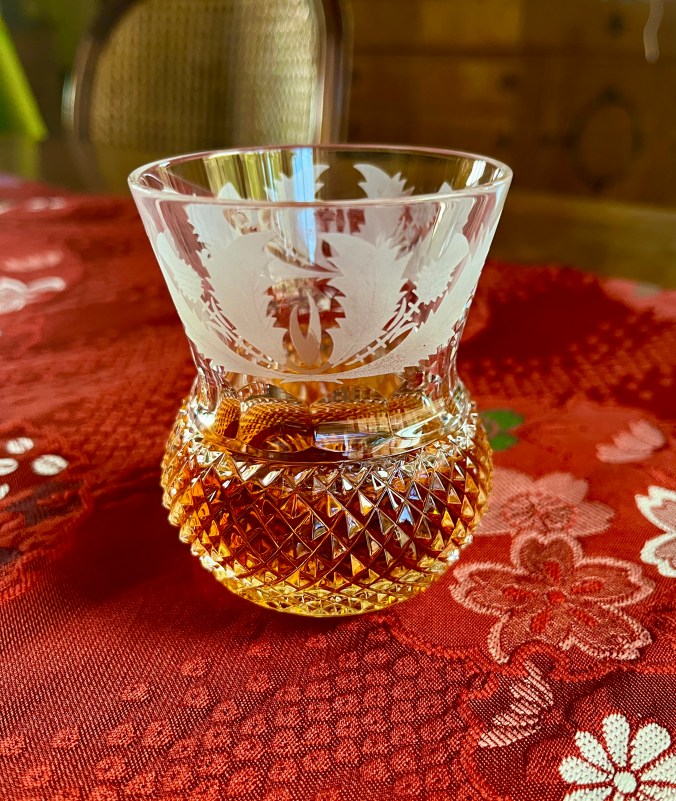
But there is another kind of distinctly American whiskey, with an “e”. And it has its own devoted following.

My friend, Craig, is of this category–a quintessential bourbon whiskey man. He has developed knowledge and interest in this classic American Spirit over decades. We have been friends since he married my best friend from high school exactly one week before my husband and I were married–many moons ago. I drink bourbon sporadically, in fact, only when Craig makes his signature Old Fashioned cocktail. But that happens infrequently because he lives halfway across the country.

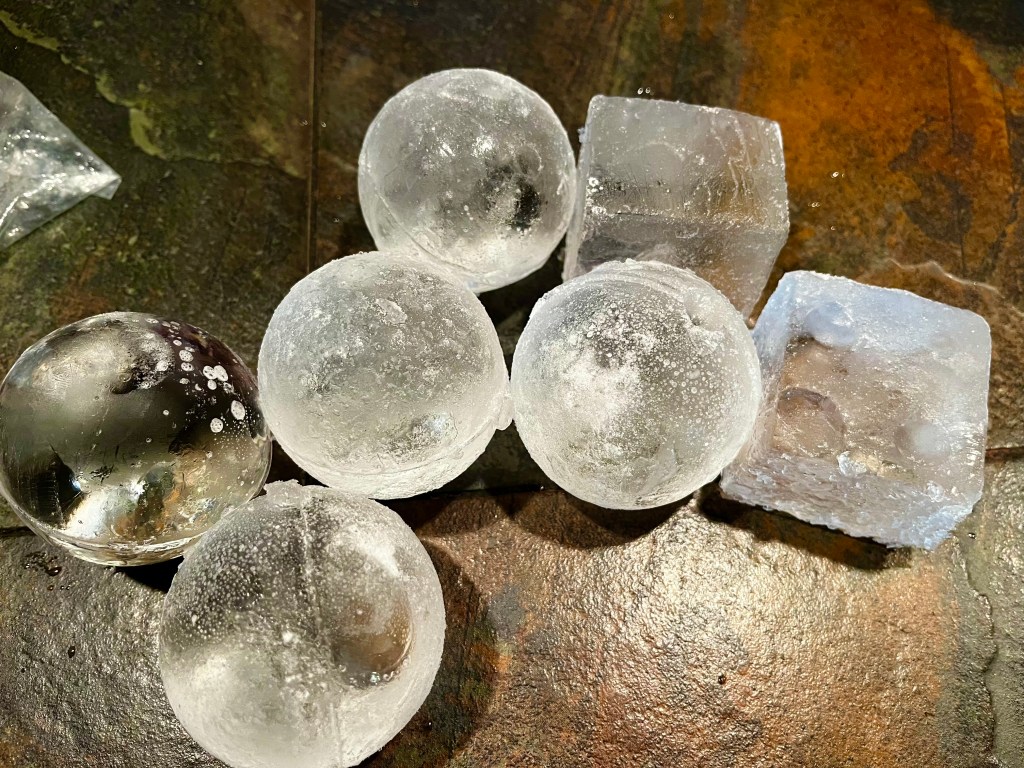
In the fall of 2024, as the leaves were turning and the air cooling, we visited Gail and Craig at their weekend mountain home in North Carolina. I asked Craig to talk to me about bourbon–specifically what he likes about it and why. Little did I realize I was about to go down a veritable rabbit hole of whiskey education and information. It started with rounds of varietal bourbon tastings as well as learning the necessity for clear ice cubes as the invisible coolant for his preferred Old Fashioned. I now make clear ice, too, which is beautiful and invisible in my preferred whisky dram.

Craig’s experience with bourbon began in college with a friend who regularly made Old Fashioneds which they enjoyed together socially. His undergraduate degrees in microbiology and chemistry led to an MS degree and a PhD in Food Science. Studying the science of food created a natural interest in fermentation and distillation. When he moved to North Carolina where bourbon drinking is customary, his interest in whiskey culture took off. As his son grew into adulthood, this became a shared exploration and enjoyment.
Bourbon is most often associated with the southern state of Kentucky. It is an American barrel-aged whiskey distilled from a minimum of 51% corn with the rest of the grains (the mash bill) coming from wheat, rye, or barley in varying percentages. After distillation, it is always matured in a new container of charred oak. The barrels are 100% white American oak, charcoal burned on the inside to give the requisite smoky, toasted, caramel, and vanilla flavors from the wood. The average maturation for bourbon is eight years, but it can be more than this, or less. However, over-aging can negatively affect the resulting flavor.


There are no additives in making bourbon except for water to adjust proofing–the arbitrary standard of alcoholic strength of a beverage. Unique to Kentucky’s topography, the water is iron-free and filtered through native limestone. Currently, Kentucky produces 95% of the world’s supply of bourbon whiskey.
The exact history of bourbon is rife with legend. It has been distilled in the U.S. since the 1700s and probably began with Scottish and Scotch-Irish settlers who came to Kentucky as farmers. There is an oft repeated story that Elijah Craig, a Baptist minister, was the first whiskey distiller, but that is not factual. He was known to be the first to age bourbon in charred oak barrels during the 1780s. Today, Elijah Craig Kentucky Bourbon or Rye is one of the top-selling brands in the market, recognized for its quality, boldness and depth, and with many loyal fans.
How did bourbon come to be so named? It might have come about after the Revolutionary War when immigrants began pushing west of the Allegheny Mountains. The Alleghenies, part of the great Appalachian Mountain range on the east coast of the U.S., run in a southwesterly direction from Pennsylvania, through Maryland, Virginia and West Virginia. In 1785, one of the first counties established by land seeking settlers was named Bourbon, in honor of the French royal House of Bourbons (including King Louis XVI) who aided the colonists during their revolt against England. But the name bourbon, referring to the beverage, may not have been in wide use until the 1850s.

In the beginning, bourbon production was centered in rural areas of the south, on small farms and distilleries. As a deterrent to spoilage, excess farming grains were used to make whiskey. With the mighty Ohio River providing transportation, it was easy to move and sell in areas with poor road infrastructure. Whiskey was its own form of currency in frontier times. When bourbon making became commercial in the late 18th century, both production and quality dramatically increased.
Then in 1919, Prohibition, the amendment to the Constitution prohibiting the manufacture, transport and sale of alcoholic beverages in the United States, devastated the bourbon industry for more than a decade. Illegal bootlegging was common but greatly compromised the quality.
After the repeal of Prohibition in 1933, bourbon culture didn’t pick up again in earnest until decades later. In the 1950s-60s, a cocktail renaissance was influenced by the New York City Madison Avenue advertising world. Classic cocktails, Manhattans and Old Fashioneds, using whiskey as the base, achieved new popularity.


In 1964, an Act of Congress, recognized bourbon as a distinctive product of the United States. Specific legal standards were set up for the industry. One of these was that to be able to label a bottle of whiskey as “bourbon” it must be produced within the 50 States, Washington, DC, or Puerto Rico.
By the 1980s other international cultures began paying closer attention to American whiskies, and today the bourbon brand enjoys global notoriety and a strong market following.
There were several turns in Craig’s career after university graduation. Initially, he worked for Frito Lay Corporation in Dallas, Texas. Then he moved his family to North Carolina. Two colleagues from Frito Lay followed. There they set up and ran their own snack food company, working every aspect of a start-up operation. When that partnership dissolved, Craig founded his own company and became a sought-after consultant across the food industry. He particularly loves new product development and has been designated Chief Innovation Officer for three major food enterprises.
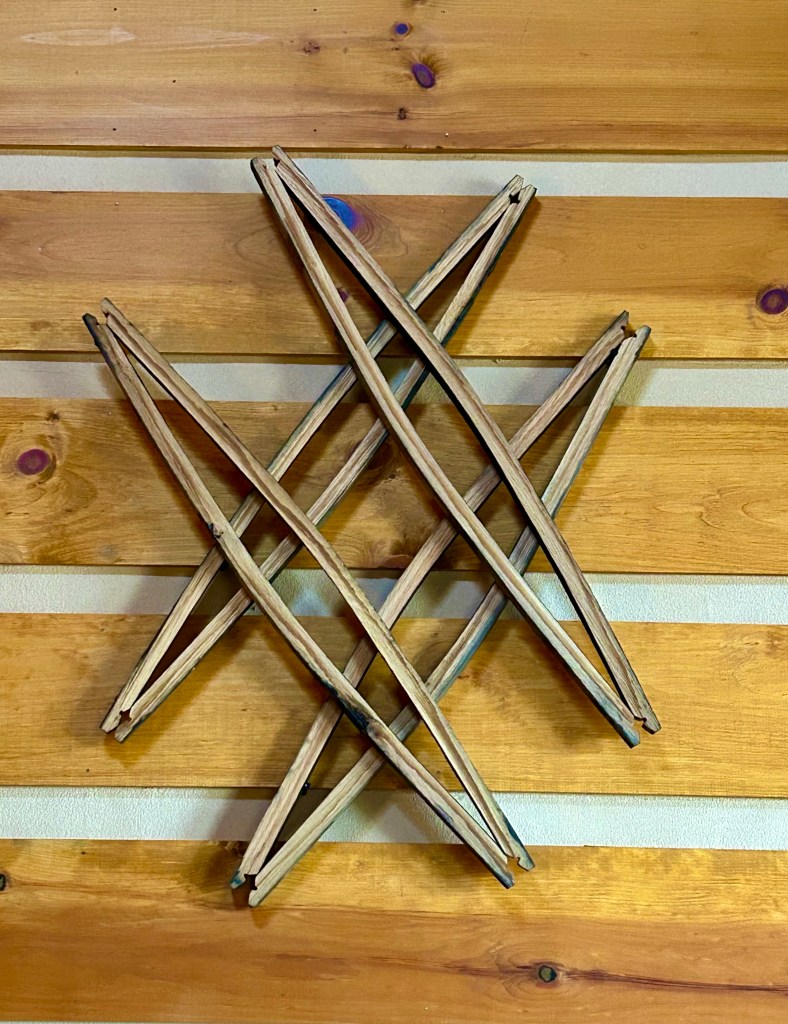
Craig is extremely creative and loves to build things in his workshop. He has designed and made birdhouses, colorful chairs from old skis, tables, chairs and decorative art built from used, dismantled whiskey barrels, lamps with bourbon bottle bases, a large Jenga set with wooden brick-shaped pieces, and an outdoor shower for the mountain home. He plays the guitar and loves the music that was popular when he grew up. His sense of humor is contagious.




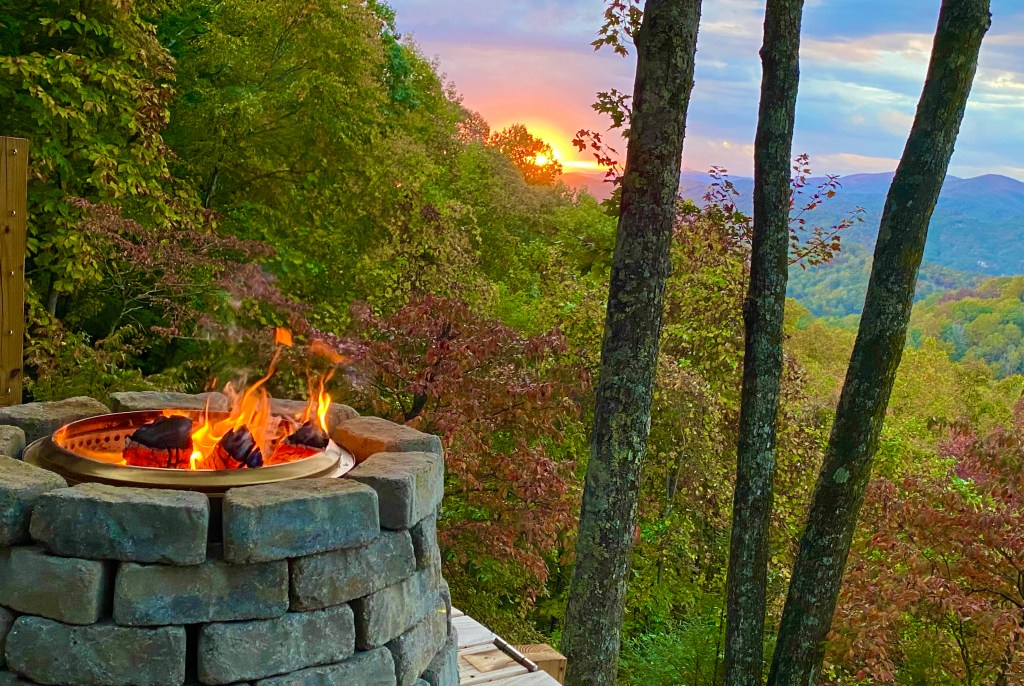
When Craig set up our first bourbon tasting session, no detail was left out. He had a set of Glencairn whiskey glasses in a wooden holder. The bottles lined up nearby. We had the added benefit of their infinity deck with a wood burning firepit and views of the Blue Ridge Mountains as backdrop. Perfect ambience.


Our most recent tasting was last summer. The range of bourbons went from mildest to spiciest–from wheat whiskey to malt whiskey to rye. We started with Woodford Reserve Kentucky Straight Wheat Whiskey. With a mash bill of 52% wheat, 20% malt barley, 20% corn and 8% rye, it was a clear light caramel color and had the smoothest taste overall. Woodford Reserve Kentucky Straight Malt Whiskey was next with 51% malt barley, 47% corn and 2% rye. It had some latent spice to it, and a medicinal astringent-like after taste. The rye was Bulleit Bourbon, 68% corn, 28% rye and 4% barley. I found it to be more earthy, less sweet, with a bit of rawness. Some added water softened it. Nice.
What I learned was that corn gives bourbon its sweetness, rye–the spiciness, wheat–the smoothness, barley–the nuttiness. The limestone filtered water of Kentucky impacts its own flavor along with different strains of yeast used in distillation.
In the late afternoons, Craig made his signature PBOF, which affectionately stands for Pawpaw Bair Old Fashioned. Pawpaw is what his grandchildren call him. Bair is his last name. On a regular basis, Craig uses Maker’s Mark*, a wheated bourbon. He likes its smoothness, without any harsh taste or spiciness, and its mid-price range. The distinctive difference between Craig’s PBOF and a classic Old Fashioned is there is no sugar, syrup or sweetener added. Just fruit. Plus, it is slightly diluted with a splash of soda water. Very sip-able and can be enjoyed in multiples with no after effect.
*Note: Maker’s Mark Bourbon Whisky is an exception to the spelling rule–no “e”.
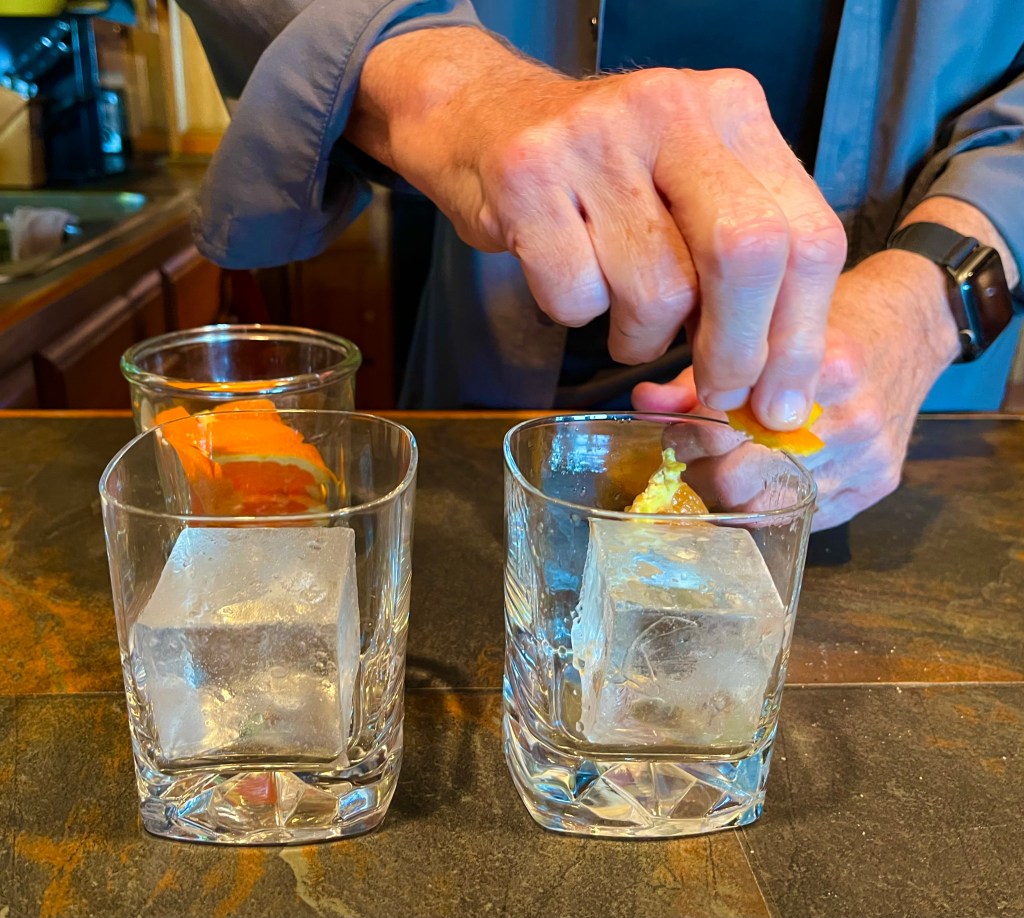


Craig’s Pawpaw Bair Old Fashioned (PBOF)
- Lightly muddle (or squeeze) one orange slice (Cara Cara variety preferred when in season) with one pitted Bada Bing cherry (from Tillen Farms by Stonewall Kitchen). Add about one spoonful of cherry juice and two shakes of bitters (any flavor, but spiced cherry is nice). Add a tiny bit of soda water to liquify.
- Pour this over a clear square or round ice cube in a cocktail glass. (Any drink is better over clear ice. See End Notes*)
- Add two shots of Maker’s Mark Kentucky Straight Bourbon Whisky.
- Add a very light pour of additional soda water and stir together.
- Enjoy with family or friends on a deck or screened porch with an awesome Appalachian mountain view at sundown.
The light music of whiskey falling into glasses made an agreeable interlude. –James Joyce



Recently, I embarked on a “scientific” experiment to determine my own preferred bourbon beverage. Trial-and-error Old Fashioneds, crafted at home, were tested on two friends who don’t drink bourbon but were enthusiastic participants. Then, a nephew in Las Vegas acted as my taste-tester for a weekend. Lastly, our son in California and a bourbon knowledgeable friend in Estes Park made their versions of whiskey cocktails for me.
The first thing I discovered is that I prefer rye whiskey as the base alcohol in a mixed cocktail. I like spicy. Spicy food, spicy taste. Apparently spicy bourbon too. Elijah Craig Toasted Rye is very drinkable and delicious in this category.
Secondly, my home-crafted Old Fashioneds tended to be muddled (or pulverized) with a lot of orange and cherry fruit, plus orange and cherry bitters and some orange sparkling water. There were varying amounts of bourbon (or rye) mixed in, too. These attempts can only be described as muddly-fruit-forward cocktails with a splash of booze and extra chewiness at the end. Tasty to some, but questionable or unacceptable to purists.
While visiting our son, I tried his Manhattan, as he enjoys making them and has all the accouterments. He made one with bourbon and one with rye. Again, rye for me please. Still, I returned home musing that my whisky preference remains without an “e” and distilled across the ocean.
The final bourbon taste trial was with my friend, Jim, who is on top of most things whiskey and whisky. He made his version of a traditional Old Fashioned using a wheat bourbon, (Weller Special Reserve), added locally made ponderosa pine syrup, (Rocky Mountain Mugolio), two different kinds of bitters, and garnished it with a slice of navel orange and one Luxardo brand cherry.
I supplied the invisible two-inch ice cubes.
When we tried the same recipe substituting Basil Hayden Rye Bourbon, I perked up with the noticeably spicier first sip.
In the end, as with most experiments, we conclude what we like. Subjective and idiosyncratic to the person. Summation: there is nothing sacred about any recipe or preference for a cocktail beverage. Whiskey for some. Whisky for others. Just enjoy the ritual.
To Craig, I raise my glass and thank you for opening a new world of knowledge. For patiently answering my questions and repeating what you know enough times for me to get it written down. I love your curiosity about so many things along with your creative carpentry skills–particularly with used whiskey barrels. Bourbon and rye and other topics of conversation over PBOFs on the infinity deck, with background music and some competitive and very loud Jenga games make me thankful for not only having you as my whiskey mentor, but a life-long friend.


*End Note:
There are different ways of making clear ice cubes at home. All of them are a good option for filling drinks with invisible ice which highlights the look of the beverage more than opaque white ice maker ice does.
One source: http://www.icemadeclear.com
It takes regular tap water, some freezing space, and an initial financial investment, but the results are worth it. Use the official company website rather than an Amazon variation.
Adam’s Manhattan (AJUM)
- Fill cocktail glass with ice to chill.
- Fill cocktail pitcher with ice.
- Add 2 shots plus a little more bourbon.
- Add 2/3 shot sweet vermouth. (Cocchi brand)
- Add 1-2 shakes bitters.
- Stir, stir, stir to mix and chill.
- Discard ice in glass. Use strainer to pour from pitcher.
- Add 1 (or 2) cocktail cherries.

A different story set in the North Carolina Mountains, about my friend Gail, is here: Carolina On My Mind
A story about dueling martini tastes between identical twins is here: Of Twins and ‘Tinis
Whisky from Scotland has its own story here: Scottish Highland Liquid Sunshine

