Breaking Bread in Taiwan

We lived overseas for 31 years and became acquainted with a variety of characters who chose the same lifestyle we did. Many were our close friends. When those friends moved to different international schools in other countries, it was difficult to stay in touch with each other’s lives. Now, when I think back on all the places we lived; Singapore, Cyprus, Taiwan, Germany and France, some of those people we knew well are no longer together and some are gone.

Yet the memory of a specific moment of friendship and fun surfaces instantly with the mention of a familiar name from long ago. Even when that moment contains elements of being less than perfect. And especially if remembering it makes me laugh.

We arrived at Taipei American School in Taiwan one August with a group of educators who bonded quickly. Relationships developed easily over shared activities and interests. We were all living outside of our home cultures, and we all sought connections and enduring friendships. In addition to sharing holidays, vacations and travel, one of the best connecting places was around the dining room table.

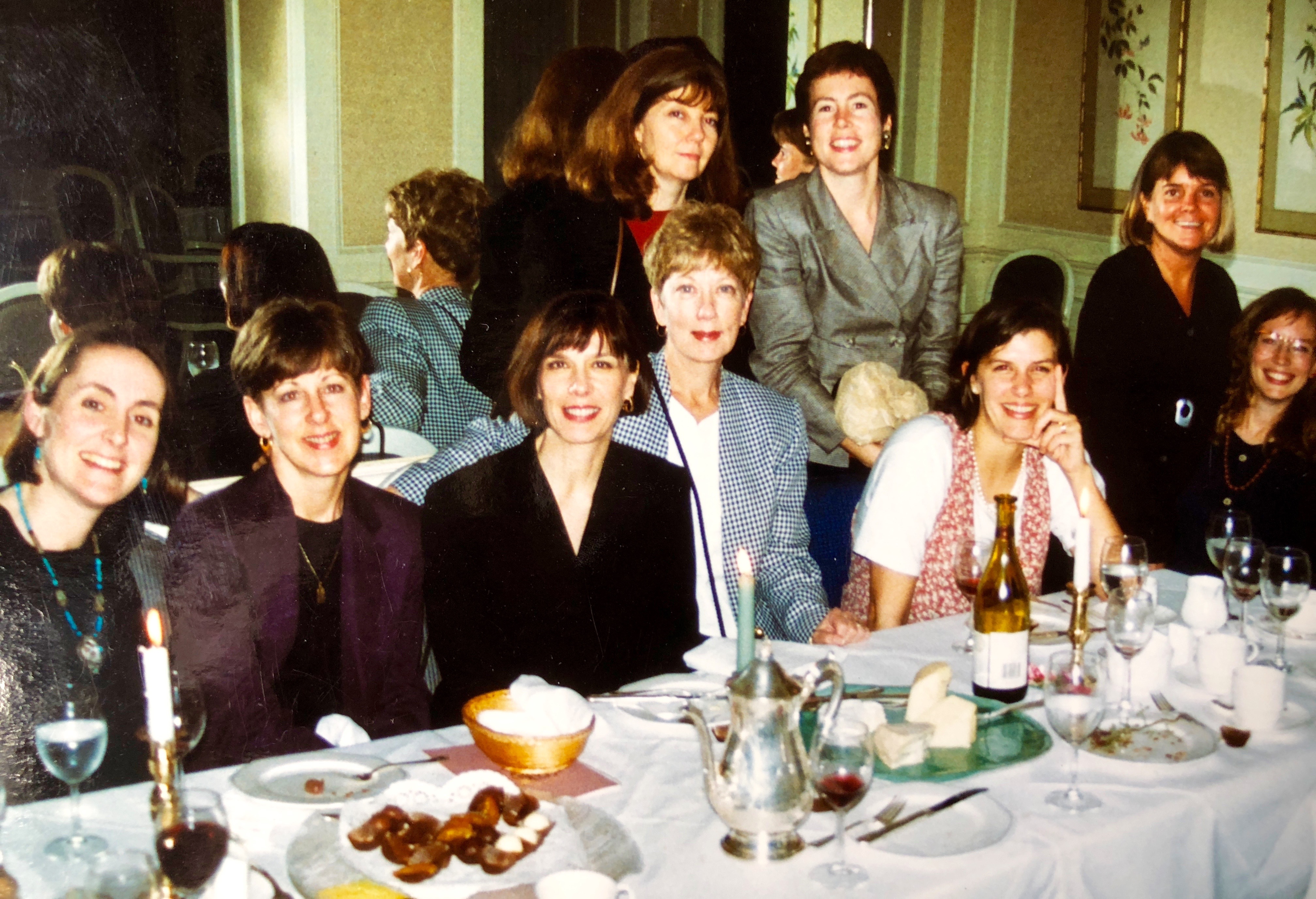
Bob and Valerie were married to each other when we knew them in Taipei. Bob was more than a decade older than Valerie, with a background in private schools in the U.S. before embarking on an adventure in overseas education. His everyday on-the-job attire included a bowtie which he pulled off with dress-for-success propriety. He loved literature and could discuss books at length. He was perfectly matched to his job in Advancement and Fund Raising at the school. A charmer who could talk to anyone. And then get them to donate large sums of money. He was also an excellent cook and throwing a dinner party to perfection was his gift to friends.

Valerie and Bob in Taipei days

In the years we lived in Taipei, eating out culture was yin and yang. All forms of excellent Asian food were readily available in restaurants. But, in our Tien Mu neighborhood, food was typically served and eaten in mediocre surroundings. This meant fluorescent lighting, small plastic stools and tables crowded together, throw-away chopsticks, transparent pink paper napkins, and flimsy plastic beer cups that dented inward when picked up. Maybe things have changed…

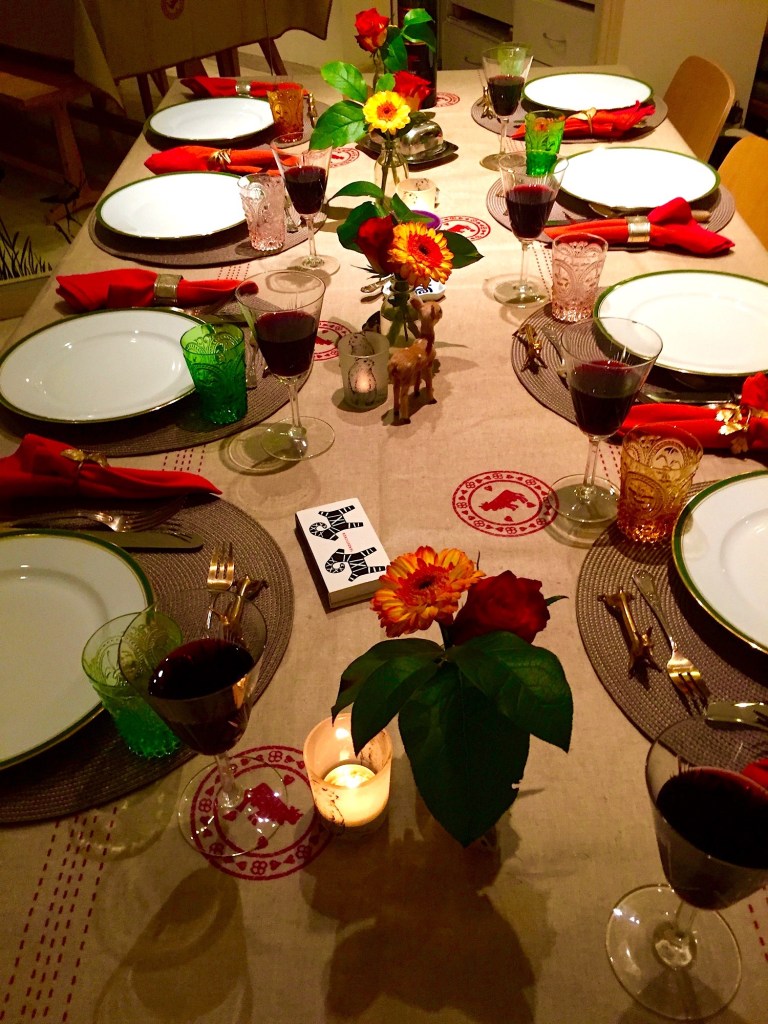
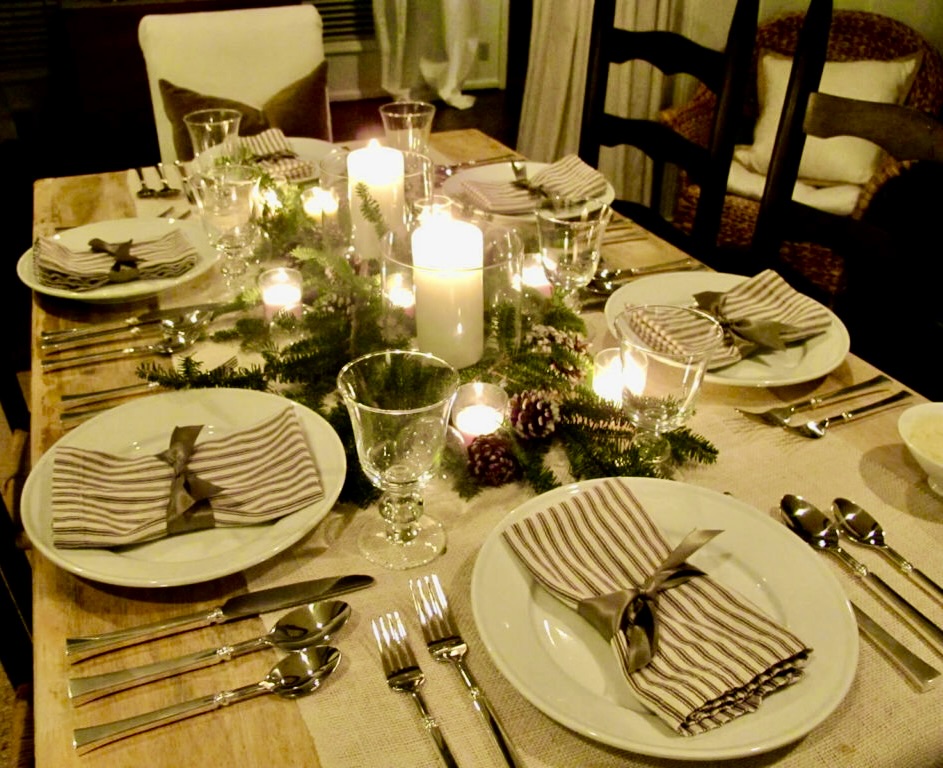
We chose a different way to spend weekend evenings. So began the years of rotating dinner parties in each other’s homes where welcoming friends planned and prepared delicious cuisine, set the table with china plates, linen napkins, and stemmed glassware. Candlelight reigned. It was a cultural lifeline we anticipated, embraced, and shared gratefully.
Bob was a masterful chef and skilled host. He prepared all the food for his wedding to Valerie, and nothing was too finicky for him to try. It was often challenging for any of us to find western food ingredients in the tiny “Mom and Pop” grocery stores in our neighborhood, but Bob did. Dinner parties were events to anticipate and enjoy.

neighborhood grocery shopping

Alec and his wife, Charlene, are overseas friends we have stayed in contact with since the Taipei days. As are Maddy and Cabby. With Valerie and Bob, they rounded out some of our weekend dinner friends. 

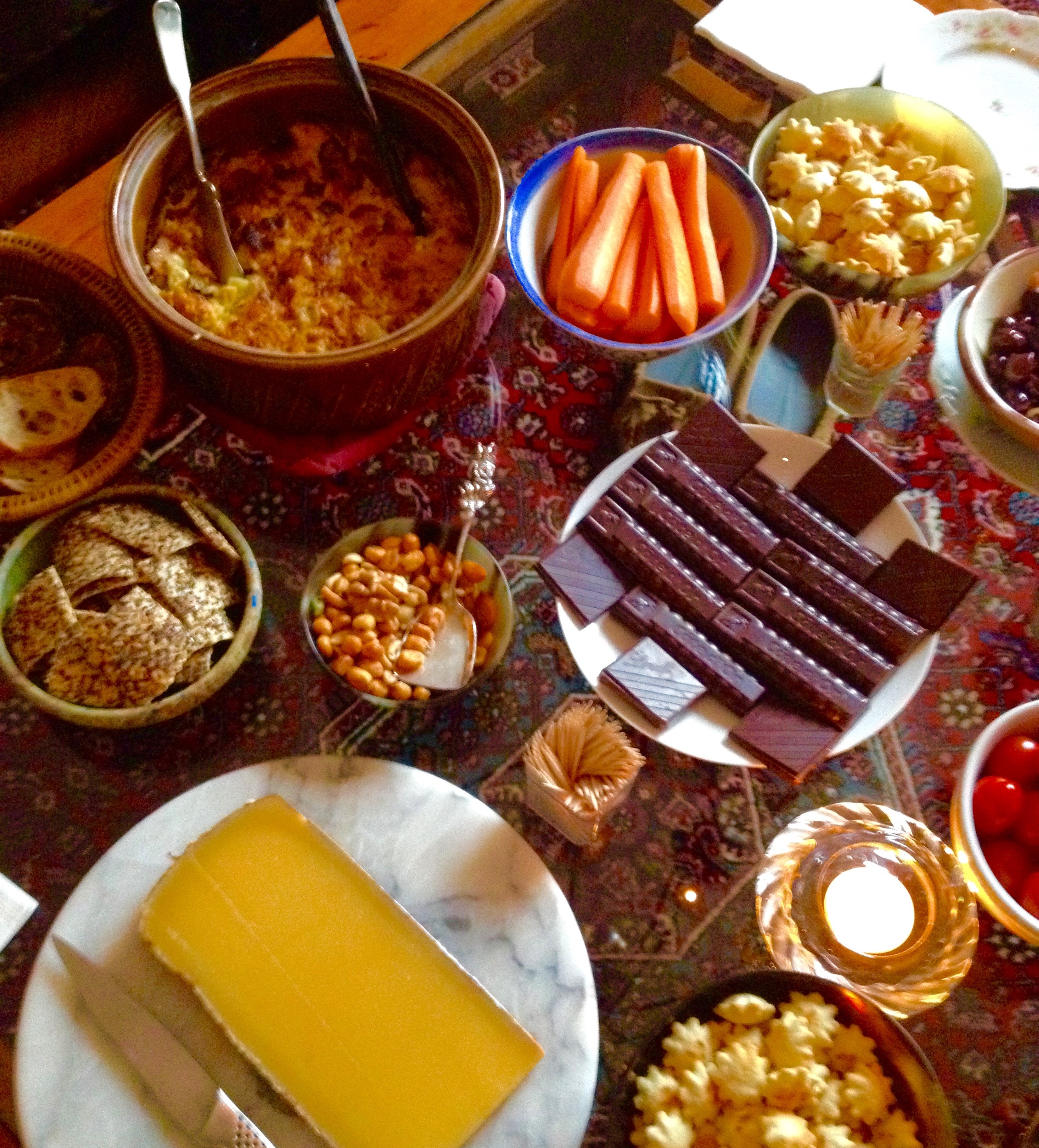
The six of us arrived one evening at Bob and Valerie’s apartment, with the usual gracious welcome and pouring of wine all around as a pre-dinner warm up. There was the quintessential appetizer that Bob almost always served, but no one ever ate. Small, dark-colored oysters from a tin, covered in a sheen of oil, with tiny crackers on the side. He was the only host who intuitively knew not to tantalize guests with a generous platter of hors d’oeuvres to fill up on before moving to the table.

tinned oysters as appetizer

We were ready to eat when it was time to gather table side.

Alec turns on his high energy self in public situations where he does everything faster than anyone else in the room: walking, eating, drinking, talking, and joking around. In the past, this created consequences like falling objects, breaking, spilling, and sometimes worse. We grew used to it and love him anyway. That night his quick reactions changed the course of the evening and saved the day.

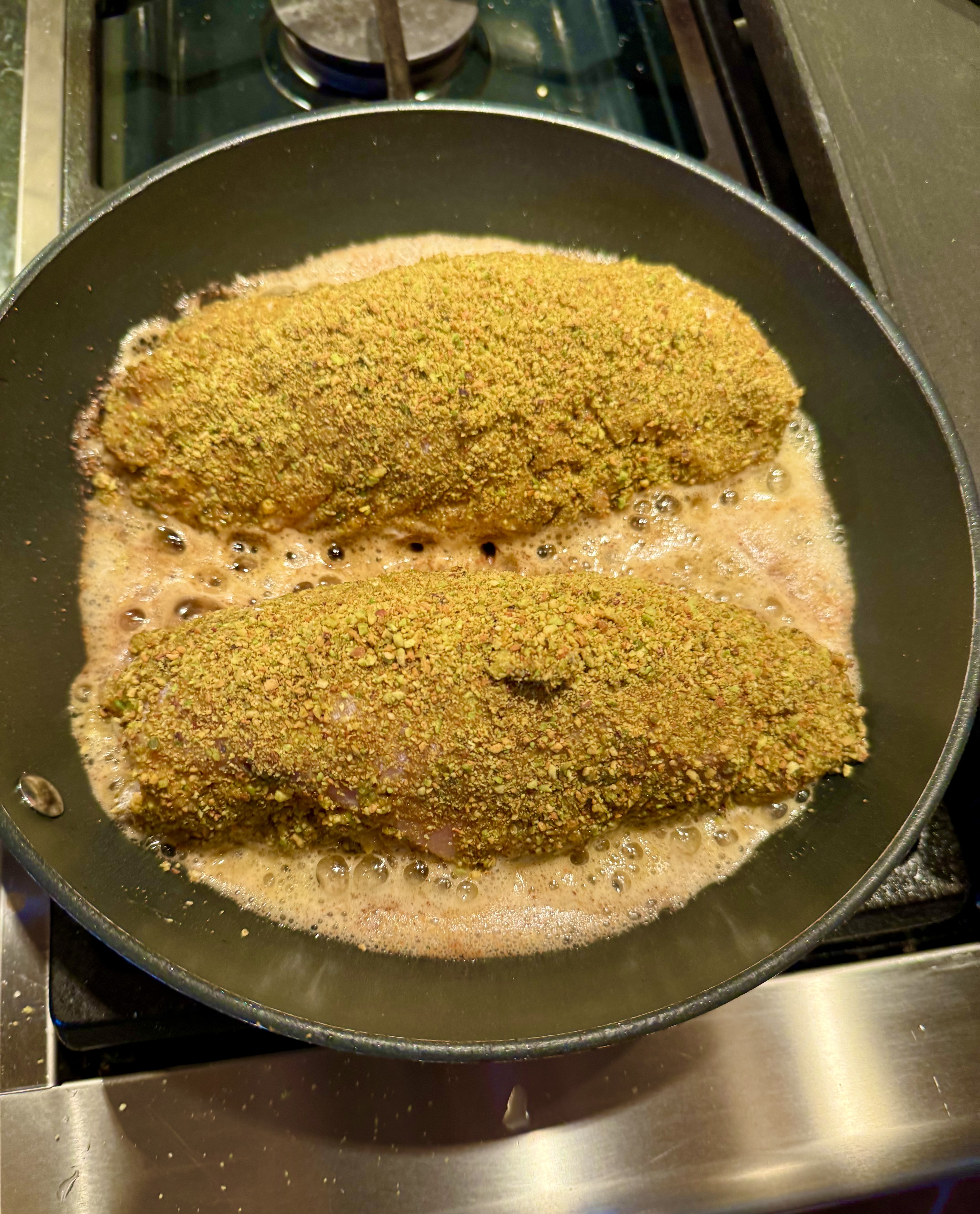
One of the recipes Bob was known for was Pistachio Chicken Breasts with Herb-Garlic Cheese Filling. It came from The Frog Commissary Cookbook. This dish was a crowd pleaser but it required time consuming preparation. There were no bags of shelled pistachios in Taipei, so eight portions required a lot of hand shelling and chopping. It also involved thinly pounded chicken breasts, stuffed with a portion of herby cheese, coated in flour, egg, and rolled in pistachios. The final steps were to brown it on the stove and finish by baking in the oven. We had enjoyed it more than once in their home.

The main course was plated in the kitchen and served to each guest. Alec, whose metabolism and hunger were always on overdrive, dove right into his first bite while the rest of us were talking and sipping wine. In a split second, before anyone else touched a knife and fork, he leapt to his feet, picked up two plates, and ran to the kitchen. Without explanation, he cleared every plate from the table while we sat in confused wonderment.

Bob followed him. We waited for a verdict. The chicken was raw on the inside. It had been nicely browned, but that was all. We breathed a sigh of relief before laughter erupted all around. Our host apologized profusely. The blunder ran counter to his normally professional preparation which included a detailed explanation of the menu just before it was served. All of which led to unmerciful teasing about trying to poison unsuspecting guests with raw meat and making them wait so long for dinner that the oily oysters started looking edible.

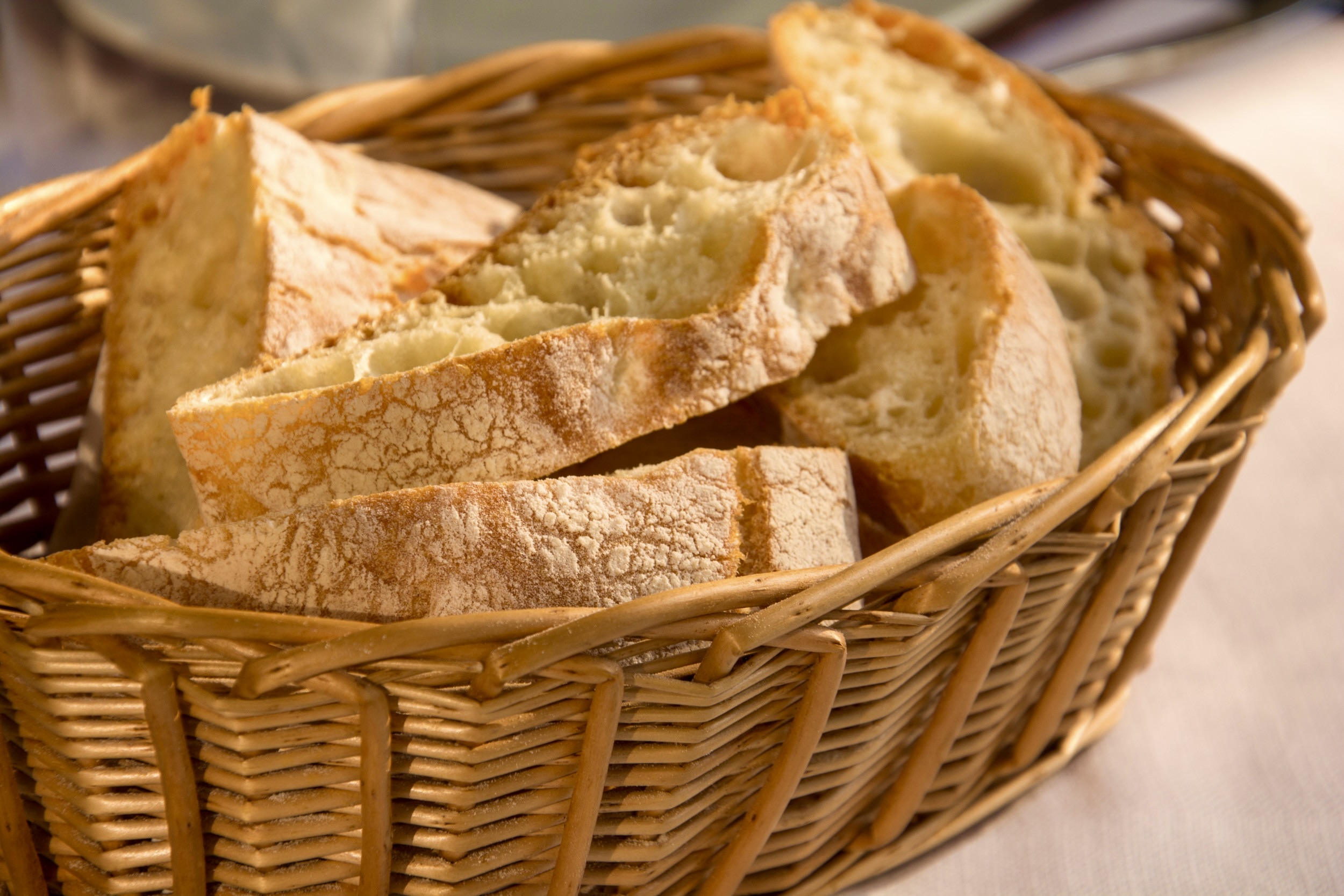
Back into the oven went the chicken. Alec, now well beyond his eating time, began devouring bread from a basket on the table. More wine was poured. Story telling began. 
Valerie admitted [confessed] that she still slept with a piece of her baby blanket, now the size of a small, thin handkerchief. She kept it under her pillow where she rubbed it before falling asleep. Other revelations followed including stories of cultural faux pas while living away from home. The laughter was contagious.

There was additional joking and teasing while we waited. Alec finished the bread. Finally, the main course was served. Dessert followed.

In looking back, the highlight was not the mistake of undercooked food, but the laughter and humor that kept us entertained and engaged in story telling until an excellent meal was presented and shared. 

Perhaps some of the best-remembered dinner parties are those with a mishap or gaff attached which lends to more vivid recall.  But in that moment of camaraderie, and candlelight, and good company around a dining table, I knew that we were part of something special. 

M.F.K. Fisher said it first. And best.

“There is a communion of more than our bodies when bread is broken and wine drunk.”

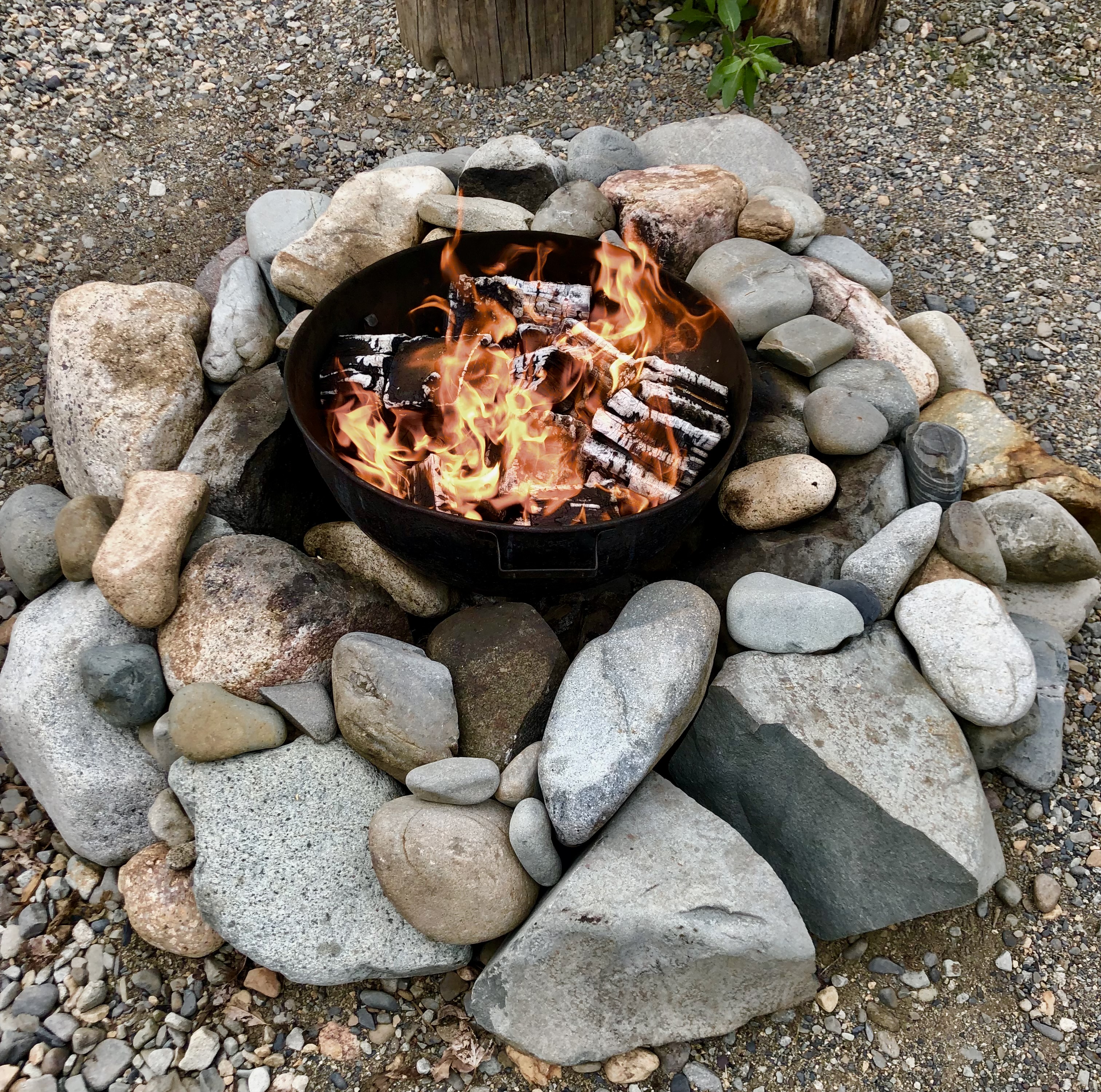
Some of life’s best moments of [im]perfection are simply like this. Friendship and food are never about one versus the other. Instead, in the right mix, the communing of friends and the blending of spirits around a dining table in Greece, or on a hillside picnic with roaming water buffalo in Yangmingshan, or around a campfire ring in the Rocky Mountains, or in the Mazama River valley are a perfect ending to any story.

Tennis/Hewitt dining table, Athens, Greece
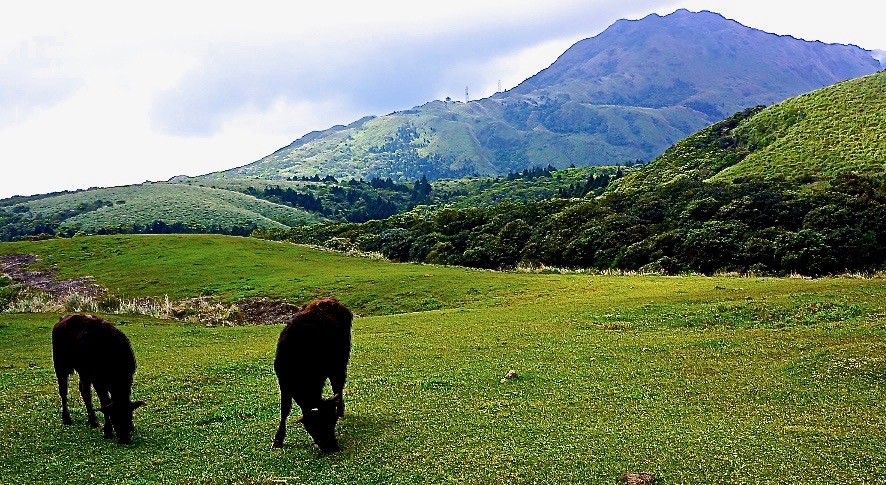
buffalo meadows, yangmingshan, taipei, taiwan
children and buffalo wandering in meadow before dinner


Pistachio Chicken Breasts with Herb-Garlic Cheese Filling

from The Frog Commissary Cookbook

Herb-Garlic Cheese Filling

  • 8 oz cream cheese, softened
  • 1 tsp minced garlic (or more!)
  • 1 T. minced parsley
  • 1/2 tsp pepper
  • 1-2 T. minced fresh basil or 1/2 tsp dried
  • 1/4 tsp salt

Chicken

  • 8 boneless skinless chicken breast halves
  • 1/2 C. flour combined with 1 tsp each salt & pepper
  • 2 eggs, beaten
  • 1 1/2 C. finely ground pistachio nuts [7 oz. shelled]
  • 1/4 C. clarified butter [we used regular butter]

Filling

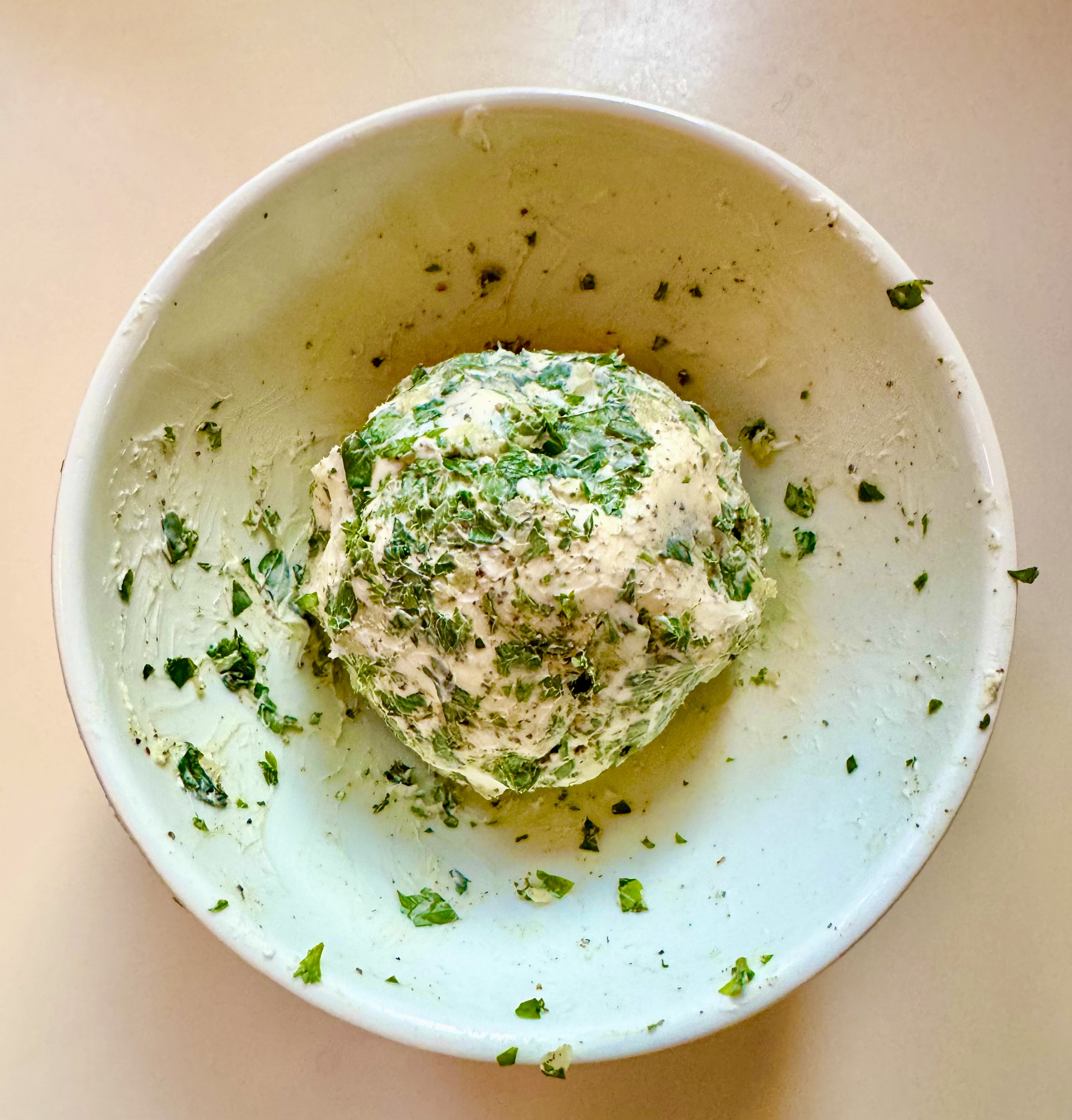
Combine the cream cheese with the garlic, herbs, and seasonings. Chill until firm and then form into 8 2″ long cylinders. Keep refrigerated until ready to use.
Chicken

Preheat oven to 350 degrees F. Gently pound chicken breasts between wax paper until 1/4″ thick. For each portion, place 1 portion of the filling along 1 edge of a pounded chicken breast and fold and roll the chicken over the filling to completely and securely enclose it. Repeat with each piece of chicken. Roll each piece sequentially in the seasoned flour, the beaten eggs, and finally the ground pistachios. Sauté in butter over medium heat for 1-2 minutes on each side or until lightly browned. Transfer chicken to a baking pan and put in the oven for 15-20 minutes. Serve hot. Makes 8 portions.

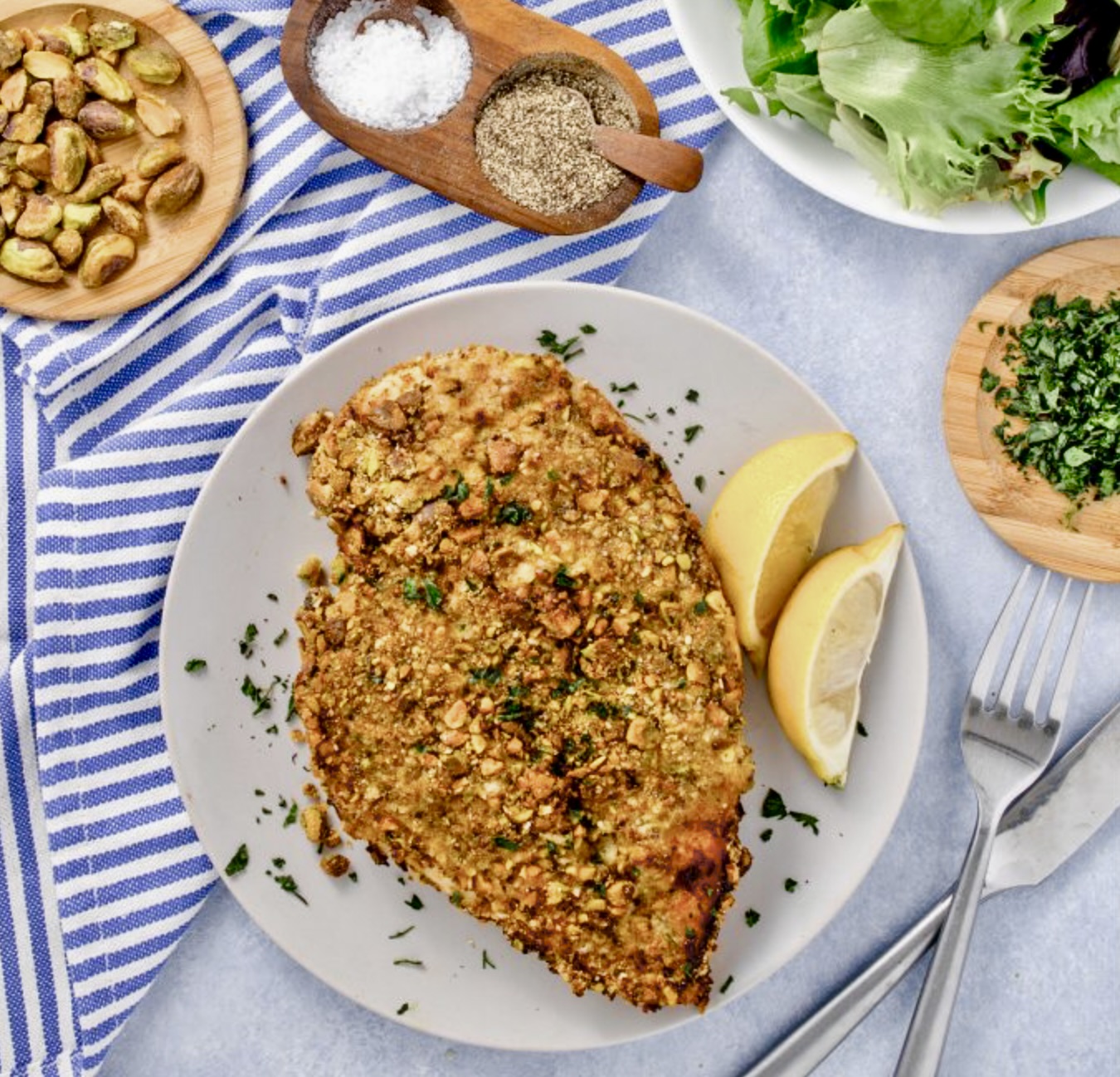
pistachio chicken breast, ideal version

Other overseas adventures with Alec and Charlene, Maddy and Cabby, found here :

Garlic and Girlfriends

How can I cook dinner tonight–we’re out of garlic! Aunt Josephine, from the Gilroy Garlic Cookbook

It’s not an exaggeration to say that an absence of garlic in the house could be, as far as dinner goes, a showstopper. Garlic simply makes things taste better. As Aunt Josephine makes the case, without it why bother?

IMG_1847
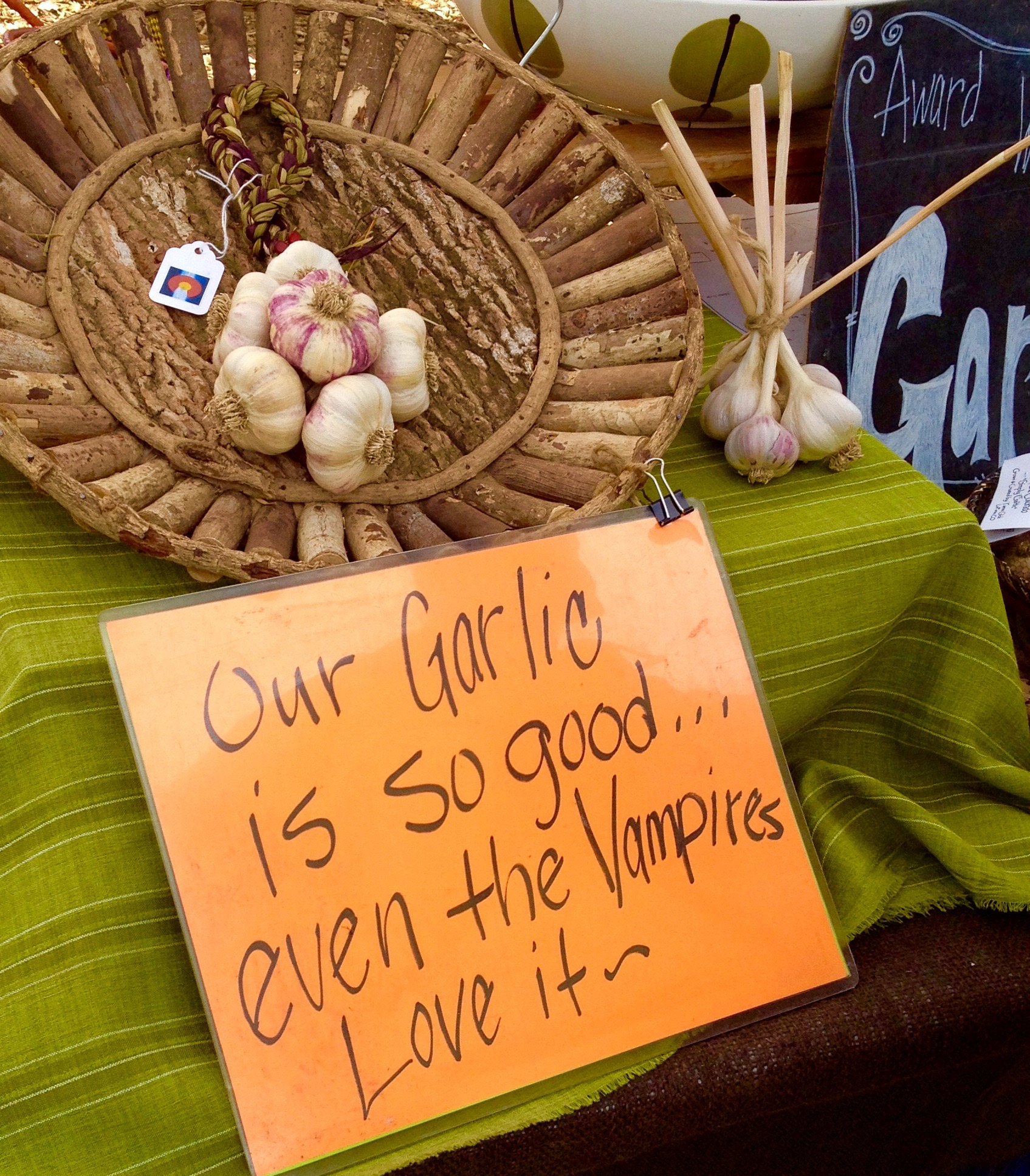
creative advertising, estes park market

There is more lore about garlic than any other food. As one of the oldest cultivated plants, it was thought to be a cure-all, to have mystical powers, and even to protect from evil spirits. It was used in Egyptian burials and placed on windowsills when babies were born.

Garlic is a member of the lily order of plants and the onion family that includes chives, shallots, scallions and leeks. But the most important thing about garlic is the magic it performs when blended into other foods, creating delicious, taste-enhancing flavors.

IMG_3926

I love garlic like I love my friends. Friends, carefully cultivated with time and circumstance, blended into my life, simply enhance everything. Friends going back to childhood at home in the U.S. and friends made while living all over the world.

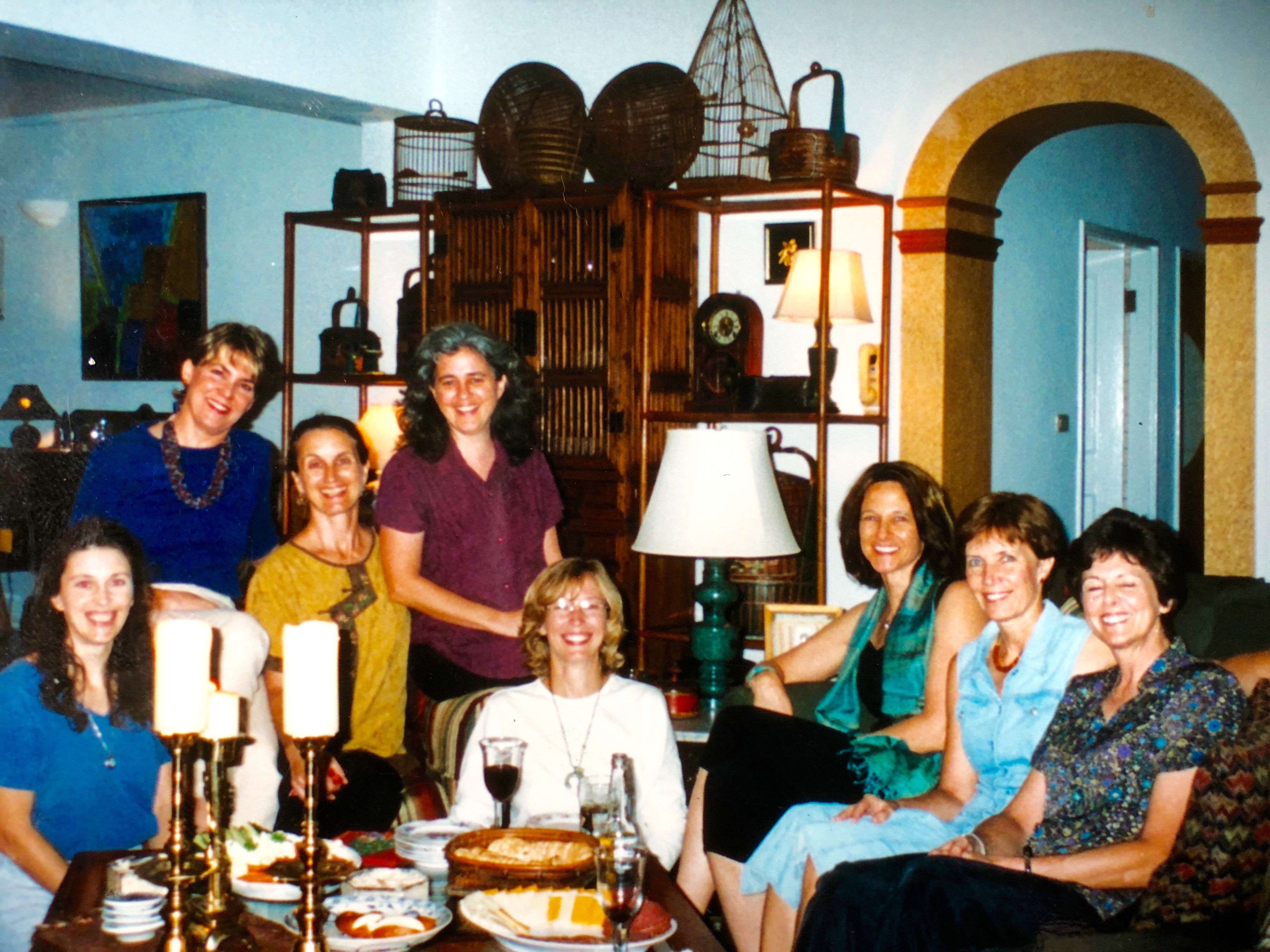
Our early years in Taiwan, in the 1990s, were the beginning of a ritual of rotating Friday afternoons among a group of women I grew to know and love. We took turns gathering in each other’s living rooms. Through the revolving door of overseas life, those Friday afternoons of “wine and unwinding” were highly anticipated.

IMG_9066
IMG_9067
sampling of TGIF friends, Taiwan, late 1990s

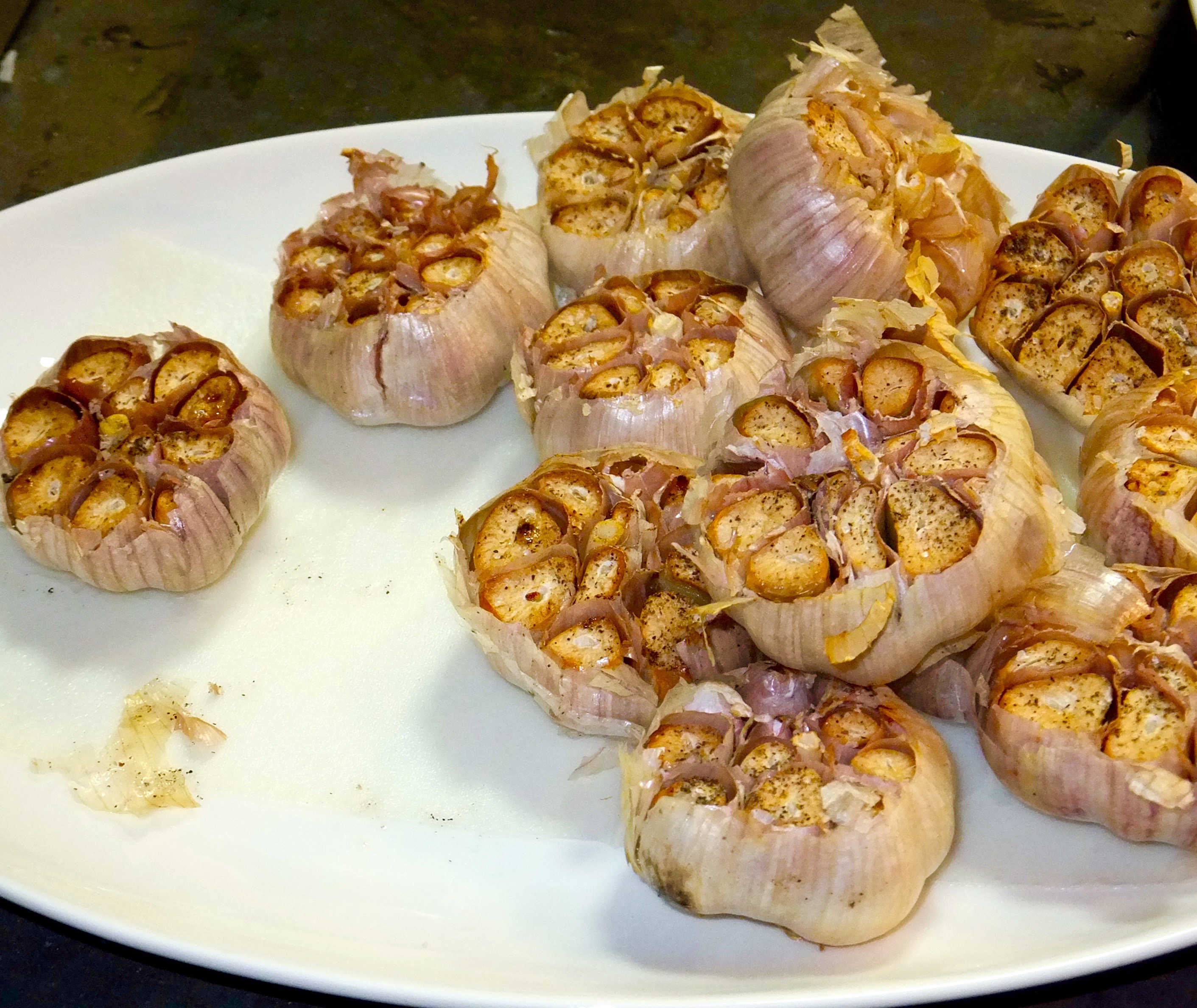
Food served invariably included a healthy dose of garlic. In certain seasons in Taiwan you could find big heads of garlic that were perfect for roasting whole. We squeezed warm, nutty, oil-soaked roasted cloves onto fresh bread or directly into our mouths. Open bottles of wine stood at attention, ready to replenish glasses.

DSCF1623

We let our hair down and put our feet up. The formula within the formula was that all ideas, problems, or dreams were fair topics. Laughter kept everything in check. We appreciated each other’s insights, intelligence and strengths. We learned to love the idiosyncrasies. And couldn’t wait to return to garlic and friendship a week later.

What garlic is to food, insanity is to art.Augustus St. Gaudens

10,000 years ago garlic was first discovered. It has evolved since then, having survived winters in the caves of our ancestors. Garlic is a natural antibiotic, fights bacteria and viruses, thins the blood, detoxifies the liver, decreases inflammation and lowers bad cholesterol. It is also low in calories–one or two per clove.

There are five elements: earth, air, water, fire and garlic…without garlic I simply would not care to live.Louis Diat

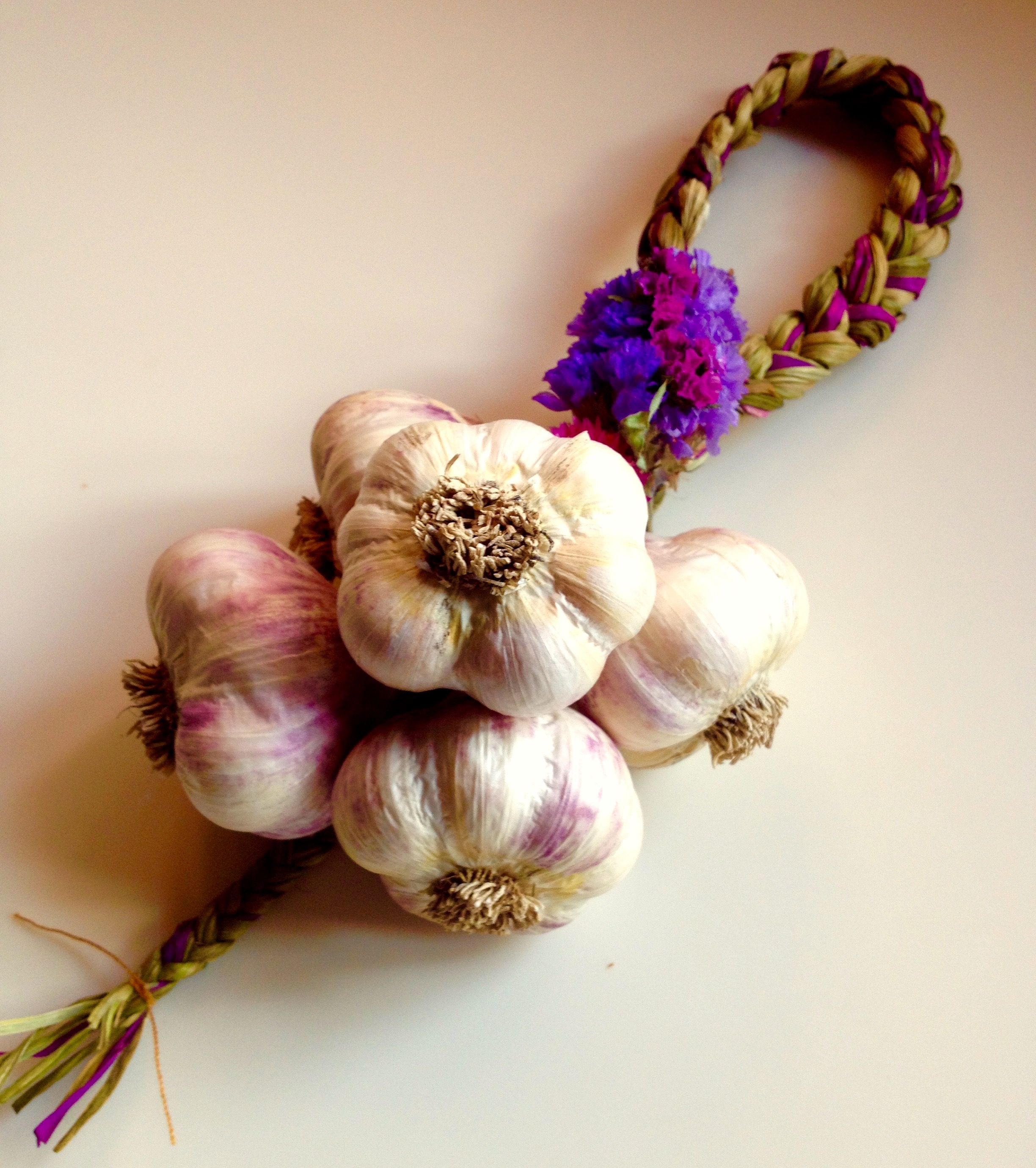
Store garlic in a cool, dry place with ventilation. Not above or next to the stove, sink, or in a window with sun exposure. Never in the refrigerator! Strands of garlic can be braided attractively into plaits, ready to pull off a head as needed.

There is no such thing as a little garlic.Arthur Baer

To eliminate garlic on the breath: chew fresh parsley or, my favorite, allow a piece of good, dark chocolate to melt slowly on your tongue and slide down your throat.

The best way to rid garlic odor on the hands is to wash with soap and water then rub fingers and hands back and forth on the chrome of the kitchen faucet. This works!

Avoid at all costs that vile spew you see rotting in oil in screw top jars. Too lazy to peel fresh? You don’t deserve to eat garlic!Anthony Bourdain

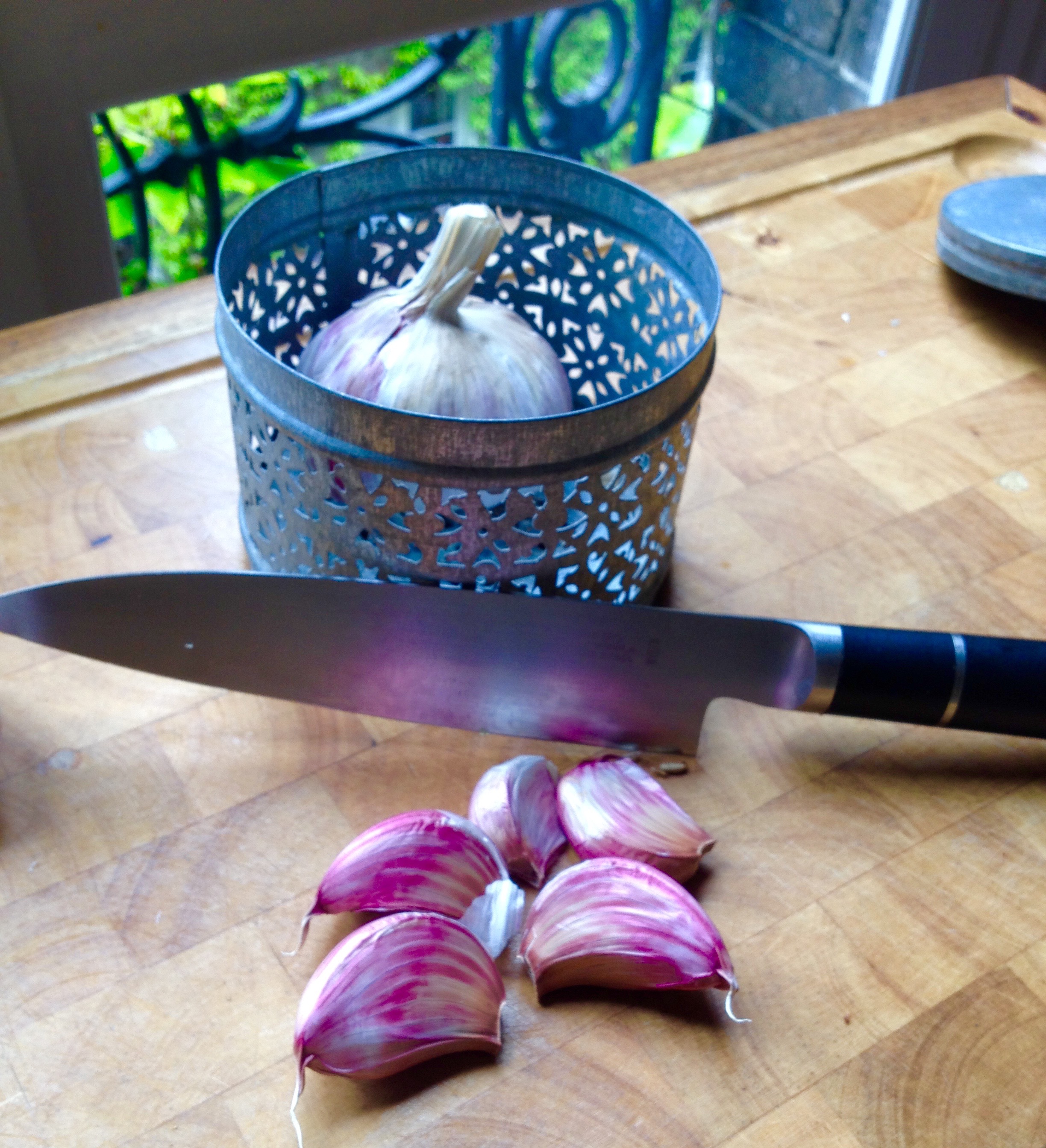
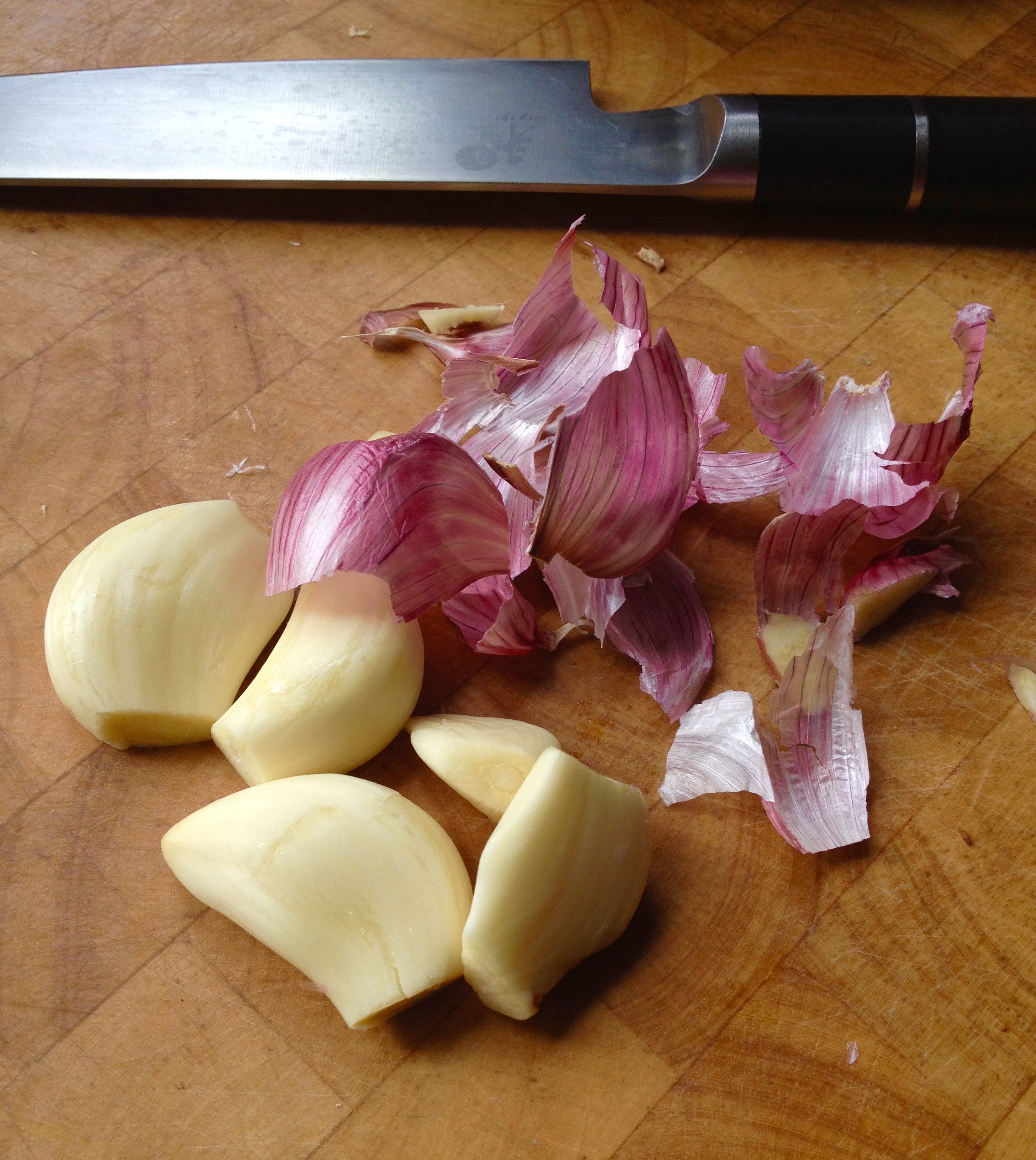
For easy peeling of cloves, separate them from the head. Smash each individually with the broad blade of a chef’s knife. Slip skin off. Or, from Dietitian Daughter, place cloves in a plastic container with lid and shake like crazy. The skin will loosen and separate, ready to be easily peeled away. For either method it helps to first cut off the stem ends.

IMG_3928

One little known use for garlic was as glue in the middle ages. It was used to affix gold and silver leaf to furniture, mend glass and porcelain. This seems like a natural idea when literally everything sticks to garlicky fingers after peeling and chopping.

Tomatoes and oregano make it Italian; wine and tarragon make it French. Sour cream makes it Russian; lemon and cinnamon make it Greek. Soy sauce makes it Chinese. Garlic makes it good.Alice May Brock

As good as the garlic was in Taiwan, it is even better in France. I’m partial to the big bulbs of rose garlic on my market street. [My Market Street] It has a pink purplish tinge to the skin unlike white garlic. Once peeled, all cloves look the same. Rose garlic cloves are uniform in size and have a less pungent smell and taste.

We went to a party in Paris one Christmas season. The dining table was laden with an impressive array of food, but I made a beeline toward a casserole of hot artichoke dip. It was perfuming the room with a warm, garlicky aroma that I could not resist. After the first taste, I spooned it directly into my mouth foregoing bread or crackers. I learned that a lot of garlic was the secret.

That recipe for garlic artichoke dip played center stage at the French version of “wine and unwind”, chez moi in Paris. Not all of the women knew each other well, but conversation and laughter flowed as effortlessly as it does among long time friends. Garlic seemed to be the tie that binds. And, well…a few bottles of memorable white and red Bordeaux [Les Hauts de Smith Blanc et Rouge] from my husband’s wine closet worked a bit of magic, too.

It is not really an exaggeration to say that peace and happiness begin, geographically, where garlic is used in cooking.Marcel Boulestin

I don’t cook everyday now, but I always have a bulb or two of garlic in the kitchen. I’m afraid of being caught in a pinch, like Aunt Josephine, unable to put a meal together because the garlic tin is empty. And, if some girlfriends are getting together, I’m ready with my go-to ingredient to enliven the party…and create a memory of food and friendship.


ROASTED HEADS OF GARLIC

  •  Cut ¼ to ½ inch off the top of head of garlic.
  • Cut off just enough so all clove ends are exposed.
  • Drizzle with olive oil. Salt and pepper as desired.
  • Rub oil in with finger or use a brush to evenly coat.
  • If roasting 1 or 2 heads, wrap each in foil and seal.
  • If roasting many heads, place them in baking pan with cut sides up. Cover the whole pan with foil.
  • Roast 45 minutes at 400 F. [205 C.]
  • Cool a bit.

Squeeze roasted cloves out of skins onto fresh bread, crackers or mix into potatoes or any pasta dish. Or place in oil and refrigerate to use later.


GARLIC ARTICHOKE DIP

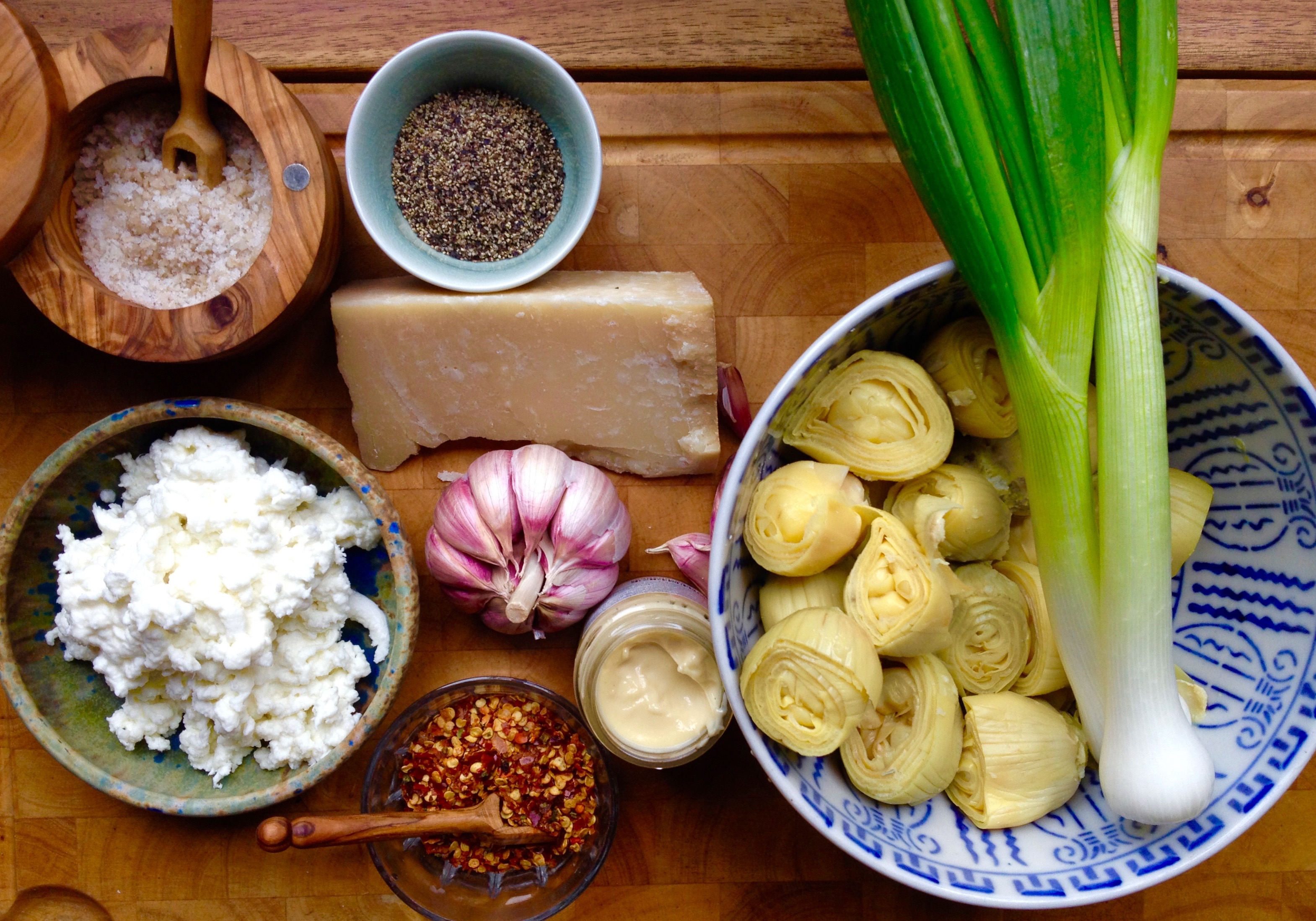
  • 2-15 oz. [400gm] cans artichoke hearts in water. Drain water.
  • 1 whole fresh jalapeno pepper
  • 3 large or 6 small green onions
  • 6 large cloves garlic, chopped, then smashed in mortar and pestle
  • 1 C. [250gm] grated mozzarella cheese
  • ½ to ¾ C. freshly grated Parmesan cheese
  • 2-3 drops Tabasco, Siracha or chili sauce
  • Salt and pepper
  • ½ C. [or less] good quality mayonnaise. Not Hellman’s. [just enough to bind ingredients]
  • Sprinkle of cayenne over top

Bake 350 F. [175 C.] for 30-40 minutes until bubbly and brown. Serve with bread, crackers, or vegetable crudités.

IMG_3595
ingredients for garlic artichoke dip
IMG_3609
serve with a side of friendship

SPAGHETTI JOSEPHINE from Gilroy Garlic Cookbook

This dish was prepared regularly for the family when we lived in Taiwan. You can add in other ingredients as desired. But I like it best Josephine’s way. Serve with a big salad.

  • 1 medium head cauliflower, separated into tiny flowerets.
  • 1 lb. [500 gm] spaghetti
  • 6 cloves garlic, minced
  • 2 T. olive oil
  • ¼ C. minced parsley [cut with scissors in tall glass]
  • ½ C. butter
  • ½ C. or more freshly grated Parmesan
  • Freshly ground pepper
  1. Cook cauliflower in boiling salted water until almost tender [~5 min.]
  2. Cook spaghetti al dente.
  3. Sauté garlic in olive oil ~1 min, then add butter and parsley.
  4. Cook on very low heat until hot and bubbly.
  5. Add garlic butter to spaghetti and cauliflower.
  6. Toss together. Add Parmesan and toss again.
  7. Serve immediately with additional grated cheese and the pepper grinder.

IMG_9070
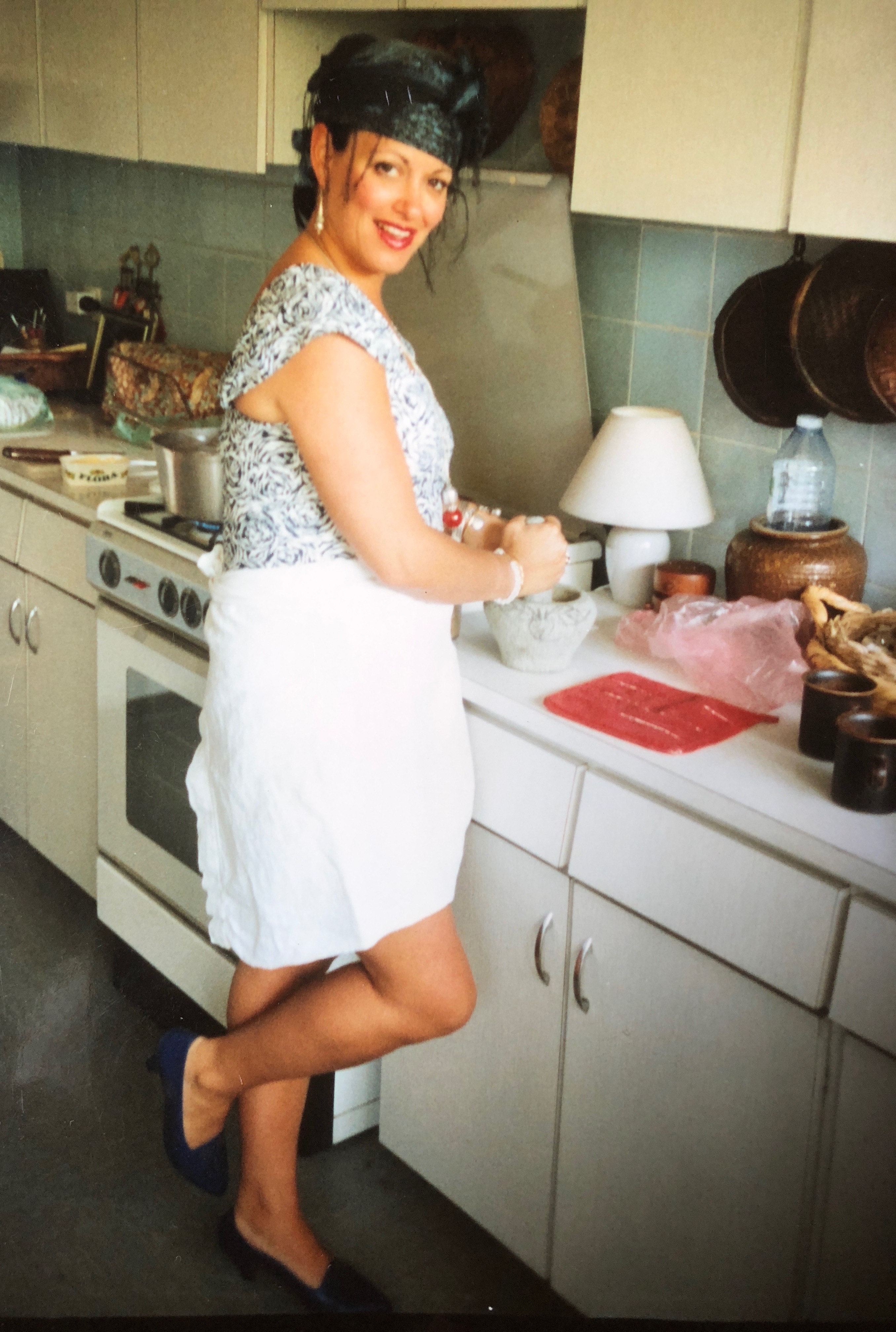
Janmarie with mortar & pestle & garlic, Cyprus circa 1992
IMG_1838

French-splaining American Thanksgiving

Before I was reading news digitally, I cut out an article by a humor columnist from a prominent international newspaper. The subject was why Americans eat turkey for Thanksgiving.

IMG_6521
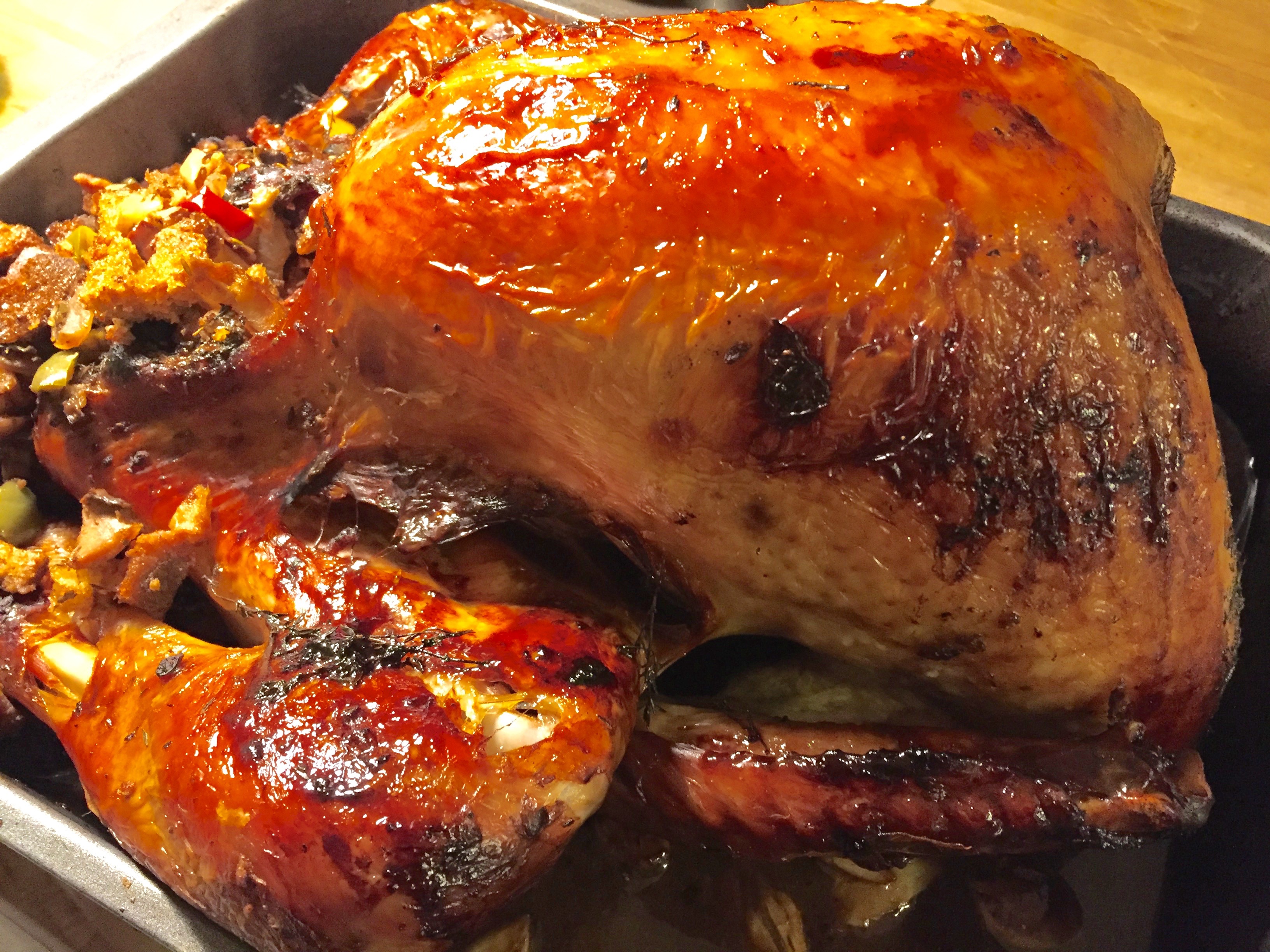
roast turkey or la dinde rôtie

In 1952, an earlier version of this article was published under the title “Explaining Thanksgiving to the French”. The back-story, which prompted the reprint I read, was that a woman in Maryland bought an old, yellowed newspaper clipping at a garage sale. She paid $10 for it. Someone-in-the-know, at the Library of Congress, told her it was worth $80,000 as a collector’s item. She framed it as art on the wall of her home.

We were living in Germany when I read the printed article. I didn’t speak French then, but found the story quirky enough to save. I understand French better now, so the literal translation reads even sillier.

For history buffs wishing to be enlightened without forking over $80,000, here is one version of why Americans eat turkey on Thanksgiving:

One of our most important holidays is Thanksgiving Day, known in France as le Jour de Merci Donnant.

 Le Jour de Merci Donnant was first started by a group of Pilgrims [Pèlerins] who fled from l’Angleterre to found a colony in the New World [le Nouveau Monde] where they could shoot Indians [les Peaux-Rouges] and eat turkey [dinde] to their heart’s content.

 They landed at a place called Plymouth [a famous voiture Américaine] in a wooden sailing ship called the Mayflower [or Fleur de Mai] in 1620. But while the Pèlerins were killing the dindes, the Peaux-Rouges were killing the Pélerins and there were several hard winters ahead for both of them. The only way the Peaux-Rouges helped the Pèlerins was when they taught them to grow corn [maïs]. The reason they did this was because they liked corn with their Pèlerins.

 In 1623, after another harsh year, the Pèlerins’ crops were so good that they decided to have a celebration and give thanks because more maïs was raised by the Pèlerins than Pèlerins were killed by Peaux-Rouges…

 …And so, on the fourth Thursday in November, American families sit down at a large table brimming with tasty dishes, and for the only time during the year eat better than the French do…1

Living overseas for 30 years, without extended family around, our Thanksgiving holidays have been celebrated sometimes untraditionally. During Taiwan years, there was an annual pig roast in Maddy and Cabby’s backyard, linen covered tables lit in candlelight, adults drinking wine and trading stories while children ran rampant until late at night.

Another year, we shared Thanksgiving with Chinese friends who delighted in the array of traditional-American-food-in-excess more than we did.

The year we became empty nesters, I said to my husband, “No more beige, brown and white food for Thanksgiving. Let’s check into a hotel and eat what we want.” So we did. Spicy Thai is what I remember because we still lived in Asia.

After moving to Europe, with both children permanently in the U.S., we continued to lay low during this holiday-that-was-never-a-holiday in the country where we were living.

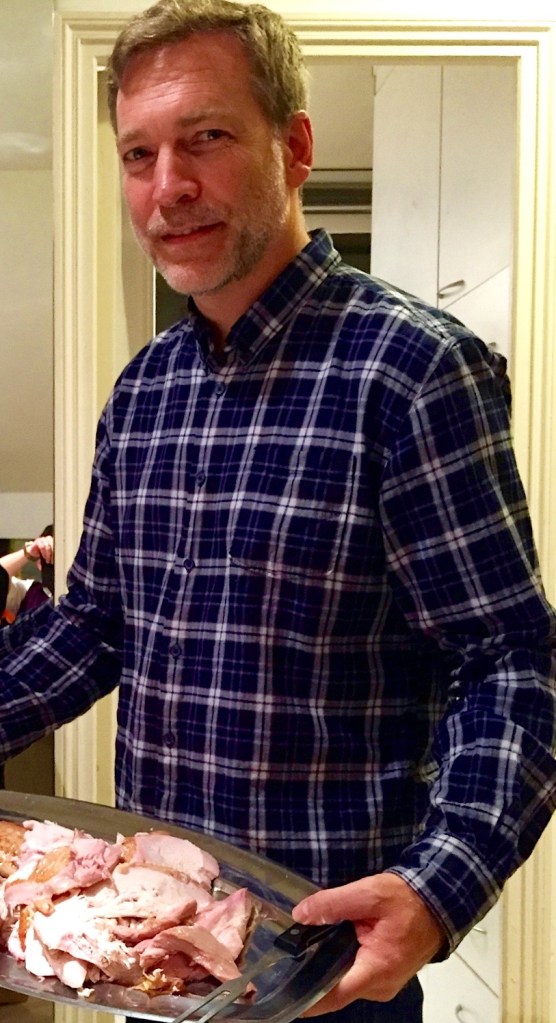
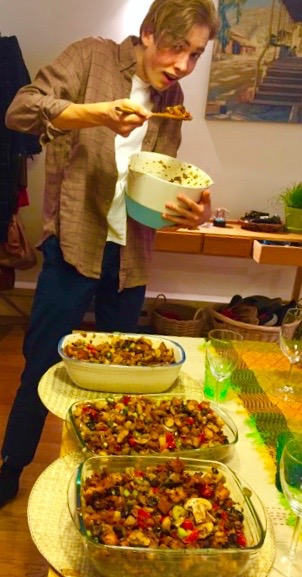
A couple of Novembers ago, we were invited to our friends’ Sally and John’s Paris apartment for Thanksgiving. It was an intimate group of eight, but international with one Spanish husband and one Italian boyfriend mixed among the Americans. We brought champagne, red wine, and something green to offset the neutrals of what would undoubtedly be served. Thanksgiving food, in brown and white, is traditional.

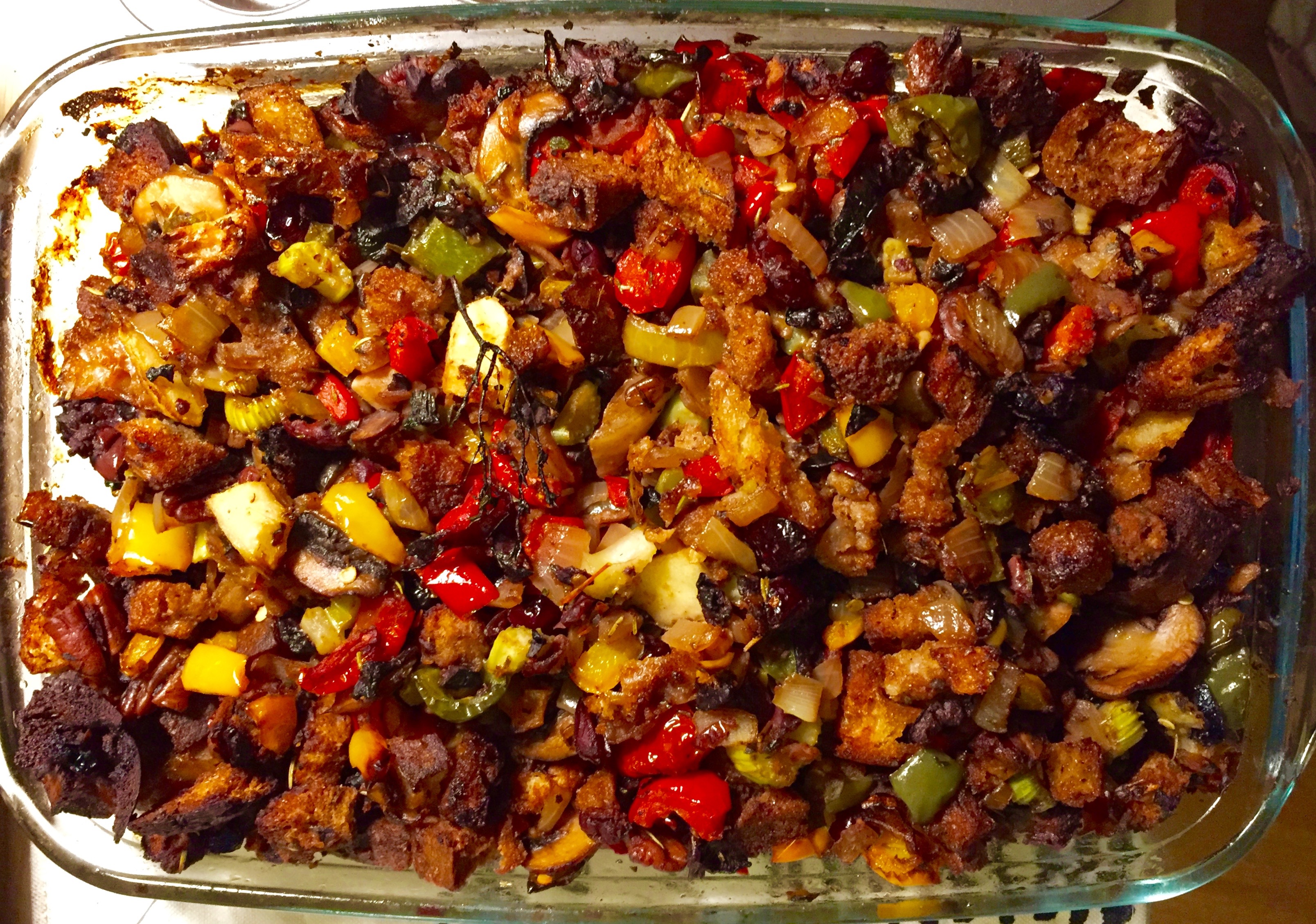
But then–I was completely turned upside down by the holiday dinner we had been avoiding for years. At John and Sally’s table there was color, there was taste, there was texture, and there was deliciousness in the one dish I detest the most–dressing.

Everyone in this family is creative. They are artists, film producers, film animators, screenwriters, painters, musicians, and, as it turns out, they are kitchen creative, too.

The dish I now call “John’s Original Holiday Dressing” is superior to the sage-y, soggy, overly bread-y brown mess I have skipped since childhood.

John’s dressing, rich with veggies, full of crunch, a hint of sweetness and tang, was the centerpiece to a remarkable meal in my favorite city [Paris] where Thanksgiving is not celebrated.

Last year, when we were invited again, I asked to learn the secret to the best dressing ever invented to be eaten with roast turkey on Thanksgiving. Like most naturally creative cooks, John uses no recipe. It varies from year to year, ingredients added or subtracted.

For the Benson/Bentley family legacy, as well as our own holiday celebrations, here, thankfully presented, is the most delicious stuffing/dressing recipe you will ever enjoy eating. Second and third helpings-yes! Next day leftovers if there happen to be any-yes!

There is room for your own creativity too. Play with the spice amounts and optional ingredients.

À chacun son goût. To each his own taste. The essence of French-splanation.

_______________________________________________________________________________________

­1.   Story excerpt from International Herald Tribune, November 5, 2005

JOHN’S ORIGINAL HOLIDAY DRESSING [serves 12]

IMG_6516

Ingredients:

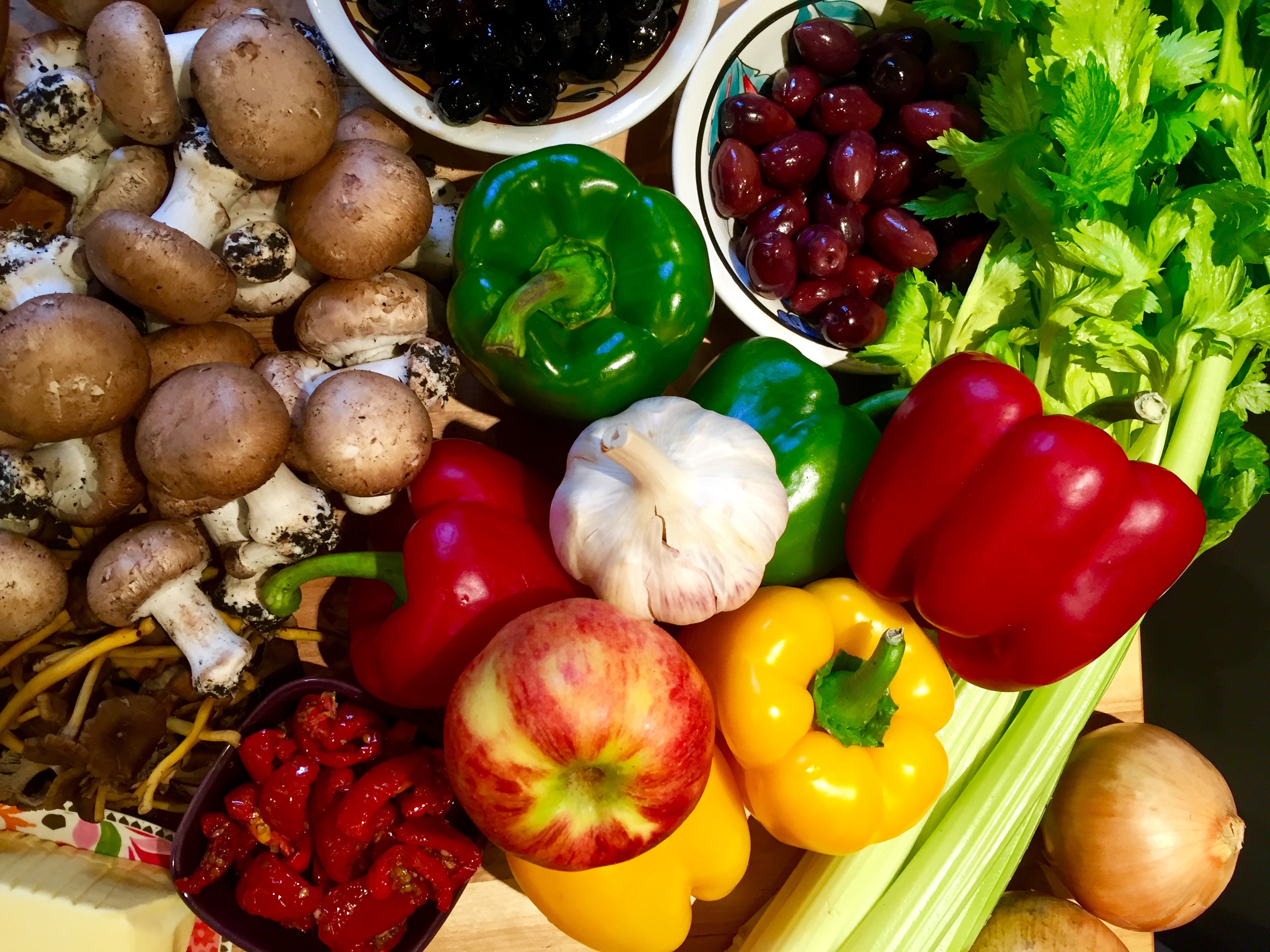
  • 1 head celery, chopped
  • 4 onions, chopped
  • 6 large cloves garlic [or more], chopped
  • 2 red bell peppers, chopped
  • 2 yellow bell peppers, chopped
  • 2 green bell peppers, chopped
  • Button mushrooms, sliced
  • Fresh bread croutons–explained below
  • 2 apples, chopped
  • Greek Kalamata or Moroccan olives, pitted and chopped-optional
  • Tomato confit [or sun dried tomatoes, softened with just enough hot water], chopped–optional
  • 1/2 to 1 lb. good butter, melted–as much as you want
  • 1 bay leaf
  • 2 tsp. thyme
  • 4 tsp. sage, rosemary, oregano and tarragon [approximate]
  • Turkey, chicken or vegetable broth, 2/3-1 Cup*
  • Olive oil
  • Several Tbs to 1/4 cup Maple syrup**

*For turkey broth: boil/simmer neck and chopped gizzard in 2-3 cups water, lightly covered, for an hour. You want 2/3 to 1 cup of liquid to add per casserole dish. Okay to use chicken [or veggie broth] as substitute.

**John’s turkey preparation involves brining it beforehand. He likes using the salty drippings and basting liquid to add to the dressing. He uses maple syrup during basting to caramelize the skin and add sweetness. If you don’t use the drippings with syrup in them, then add syrup, as directed, at the end of preparation.

Preparation:

1. In a large pan, sauté red, yellow and green peppers in olive oil on medium to high heat, until they are slightly browned and softened. Add in onions and finally garlic. Add spices–2 tsp. thyme, 4 tsp. each sage, rosemary and oregano during sauté. [Quantities are suggestions because he doesn’t precisely measure.]

It needs to smell herby-and good-as it is cooking!”–John Benson

2. In another pan [flat-bottomed] melt a couple tablespoons of butter. Place sliced mushrooms flat in pan without overlapping. Sprinkle tarragon over it all for a light coating. Brown both sides on medium to high heat. Keep adding butter to the pan as mushrooms soak it up. Don’t skimp on butter. Mushrooms should still be firm on the inside.

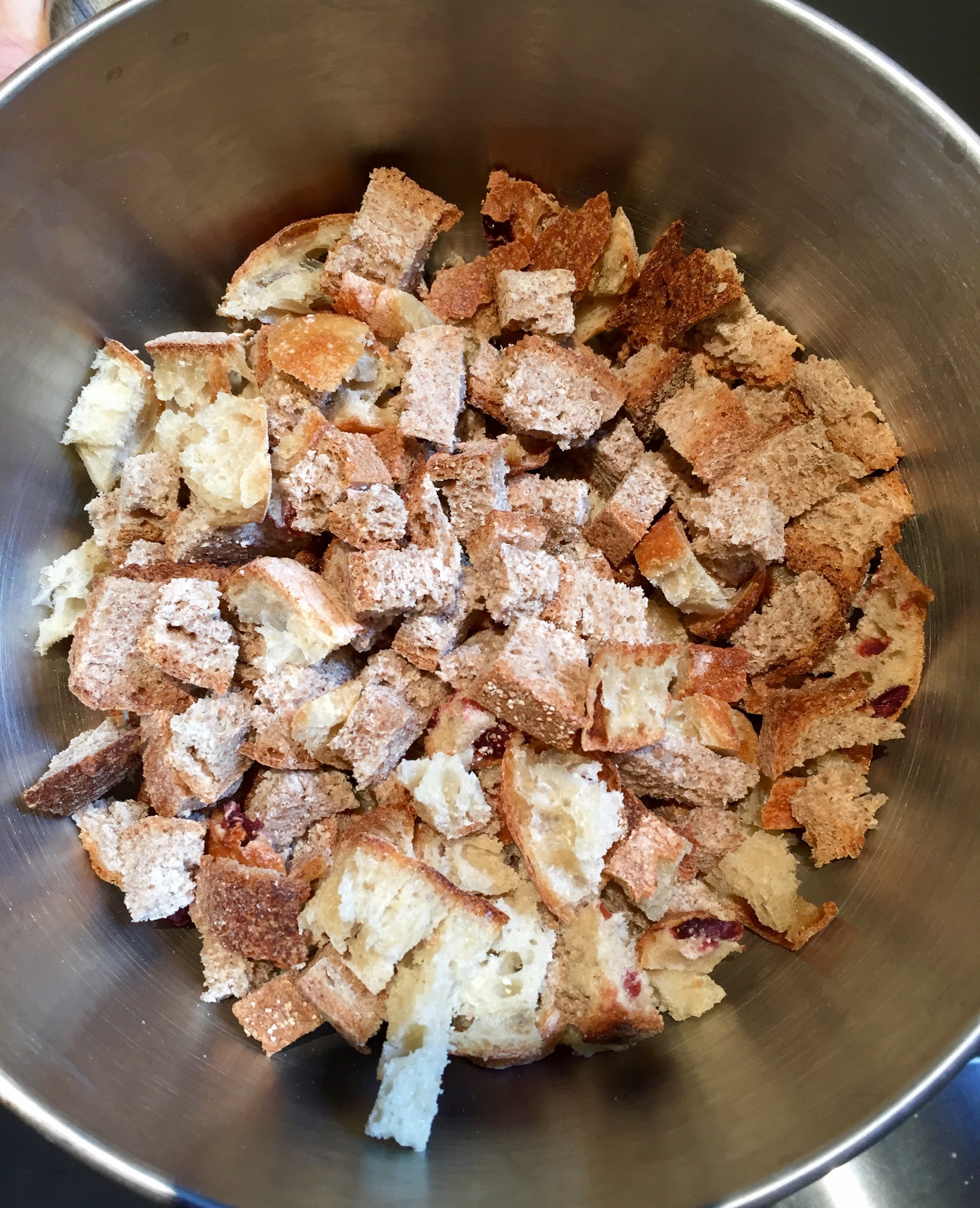
3. Make croutons by cutting day old baguette into cubes. Sprinkle olive oil and rosemary over them and toss together. Place in oven on low temperature until browned or crispy.

They should get oiled all around a bit, not soggy of course. Rosemary should be a light sprinkle.”John Benson

IMG_6513
cubed bread before oil/rosemary toss and crisping

4. Mix together all sautéed ingredients in a large bowl while still warm. Add prepared croutons.

5. Add remaining melted butter, at least 1/4 cup or 250 ml [melt more if you need it!]. Divide amounts evenly per casserole dish. Just pour it over and mix in. Use 1/2 bay leaf for each casserole.

6. Stir in broth, a little at a time until everything is mushy and moist, but not soggy.

Croutons should not crumble into crumbs if smashed. You will probably use 1-2 C. of broth, based on crouton softness.“–John Benson

7. Now add chopped celery, apple, seeded olives, and sundried tomatoes [or tomato confit]. These will add crunch, flavor, and a bit of tang.

8. Smell and taste. Perhaps add more butter or broth and drippings. Can also add sprig of fresh thyme or extra sage.

9. Stir in some maple syrup, a few tablespoons up to 1/4 cup per casserole.

10. Spread all ingredients into ovenproof dishes. Can place some inside turkey as stuffing. Grind black pepper over the top, if you think about it.

11. Bake uncovered 180 C. [350 F.] for about 1 hour. Halfway through, give it a stir to check for softness. If it’s too wet, stir again in 15 minutes to help with evaporation of broth. If still too moist after an hour, turn on broiler for a couple of minutes to brown and crisp the top. Watch carefully so it doesn’t burn!

Ingredients are already cooked so baking is to evaporate the broth and crisp everything. A good dried out, browned, crispy top is unbeatable. I think it’s the butter.”John Benson

IMG_6523
maybe the secret is in the butter, but it’s really much more than that…

Set a festive holiday dinner table. When seated among family and friends give thanks to everyone and everything for which you are grateful.

IMG_6781

Remember to raise a glass to those Peaux-Rouges and Pèlerins who started it all…

Joyeux Jour de Merci Donnant!

Happy Thanksgiving!


Sex in a Pan

img_2574
painting by gustave moreau, french symbolist, 1826-1898

Some “firsts” you remember and others you don’t. I can’t remember my first Sex in a Pan.

Many years ago, I was told Sex in a Pan was for women only. Men don’t like it. It is something you never do alone, always with others, preferably in the afternoon.

Hemingway once said, “Never go on trips with anyone you do not love.” I say, never have Sex in a Pan with anyone you don’t like–at least a little bit. Otherwise, why go to all the trouble?

What’s special about Sex in a Pan? It’s not the equipment, which is ordinary. It’s not the getting ready, which is straightforward. It’s not the result, which is pleasurable. It is when everything comes together.

I remember one Sex in a Pan party around my friend Linda’s table when we lived in Taiwan. The other guests were Asian women who had no idea what to expect. But, as with our American Thanksgiving dinners, they wanted to learn and share new customs. So they joined in…and loved it.

Sex in a Pan is like secretly swiping your finger across a thickly frosted cake. It’s what lingers in the memory after taste melts away. But Sex in a Pan is not cake. It is a decadent dessert of many layers–for sharing.

doc000

The recipe I have carried around the world is in someone else’s handwriting. That well-worn piece of paper is the key to unlocking where I was and who I was with my first time. It’s lost to memory now.

img_2535
author unknown

So, by default, Sex in a Pan is mine to offer anyone who loves smooth and creamy with some crunchy, slightly sour with some salty, chocolate-y, close your eyes, eat-with-a-spoon-kind-of-fun.

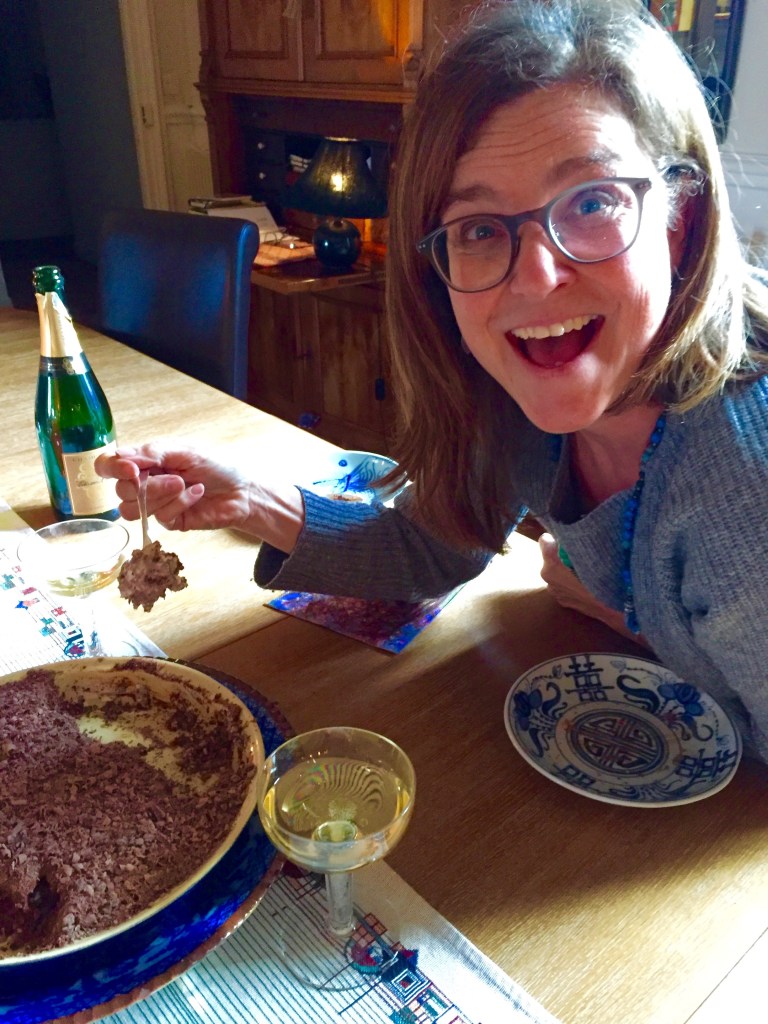
At the Taiwan party, inhibitions were safely shed around the table as we talked of taste and texture and guiltless self-indulgence while eating something fun. There was laughter and letting go among friends. And that, in its nutty crust, is what Sex in a Pan is about.

Since we live in France, the ingredient choices are different. Butter from Normandy embedded with crystals of sea salt, Chantilly whipped crème instead of Cool Whip, dark chocolate, shaved into curls, instead of milk chocolate.

We were four women around the table–two Americans, one French and one German. The other three had no forewarning except I needed help to write this story.

It doesn’t really matter who or how many you gather for Sex in a Pan. Once you invite people in, they are mostly curious, ready to dabble in the unconventionally offbeat, perhaps with a touch of “double sens”, [“double entendre”, which is strangely not the expression in France]. The truth about Sex in a Pan is that what’s in the pan is simply a channel for what happens around it.

img_6868
sex in a pan parisian party, champagne of course

In double-sens-speak, I learned that “sensuously seductive” is said to be “croustillante” in French or “eine heisse Affäre” in German. We romanticized taste by describing the salty [yes to French butter!] and crunchy [those pecans]. Layers of chocolate, sweetened cheese, and fluffy crème mingled. Tiny pellets of chocolate atop hid unexpected softness below. Voilà! Quelle langue!

We sipped Champagne and dipped into the communal dish. Late afternoon gave way to evening where everyone had different liaisons waiting…

When you host a Sex in a Pan party, try to keep the memory alive by having it again…and, then again.


SEX IN A PAN

img_6850

Ingredients:

  • 1 C. flour
  • ½ C. butter–best quality salted butter you can find
  • ¾ C. chopped pecans
  • 8 oz. cream cheese at room temperature
  • 1 C. icing sugar
  • 1 large pkg. instant chocolate pudding [6 ½ C. size]
  • 1 large pkg. instant vanilla pudding [6 ½ C. size]
  • 3 C. cold milk
  • 1 large container Cool Whip or any good whipped cream
  • 1 large dark chocolate bar

Preparation:

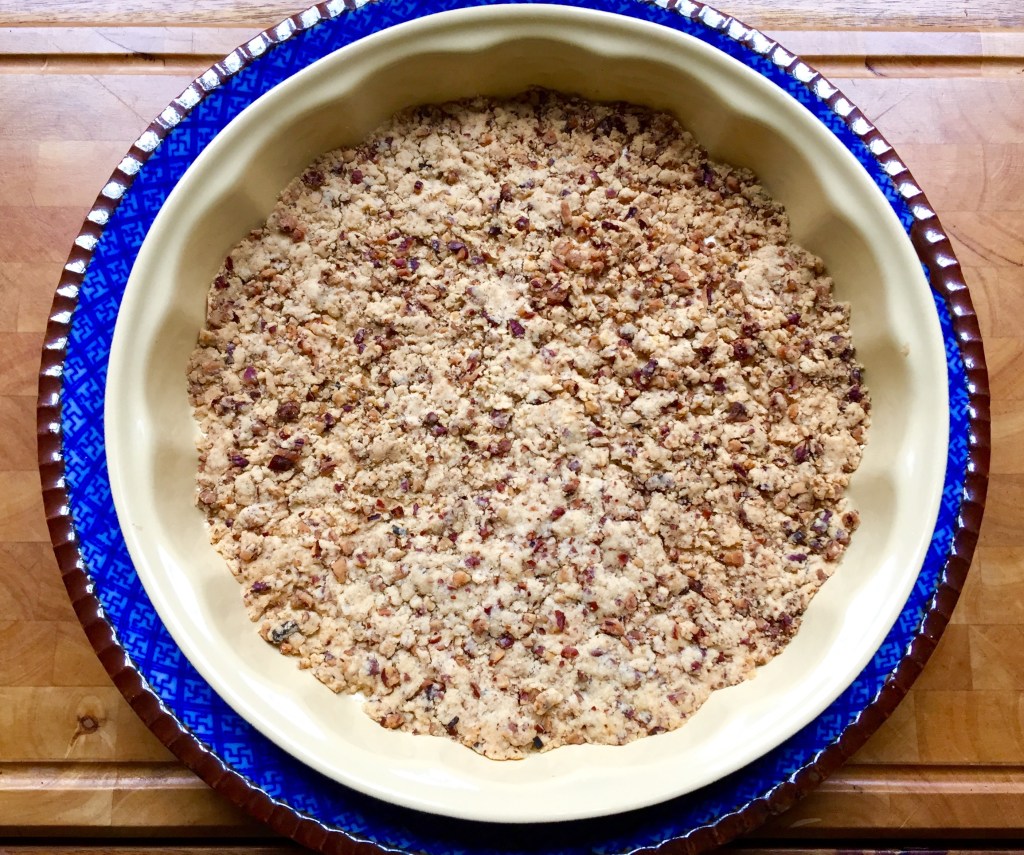
  1. Mix flour, butter and pecans and press into bottom of 8 1/2 x 11 inch [22 x 28 cm] pan. Bake for 20 minutes, 350 degrees F. [180 C.].
  2. Mix cream cheese and powdered sugar and spread on top of cooled crust.
  3. Spread ½ of Cool Whip or whipped cream over cream cheese layer.
  4. Mix together instant chocolate and vanilla pudding with COLD milk and beat by hand with a whisk until it starts to thicken.
  5. Spread over top of whipped cream.
  6. Spread remaining Cool Whip or whipped cream over pudding.
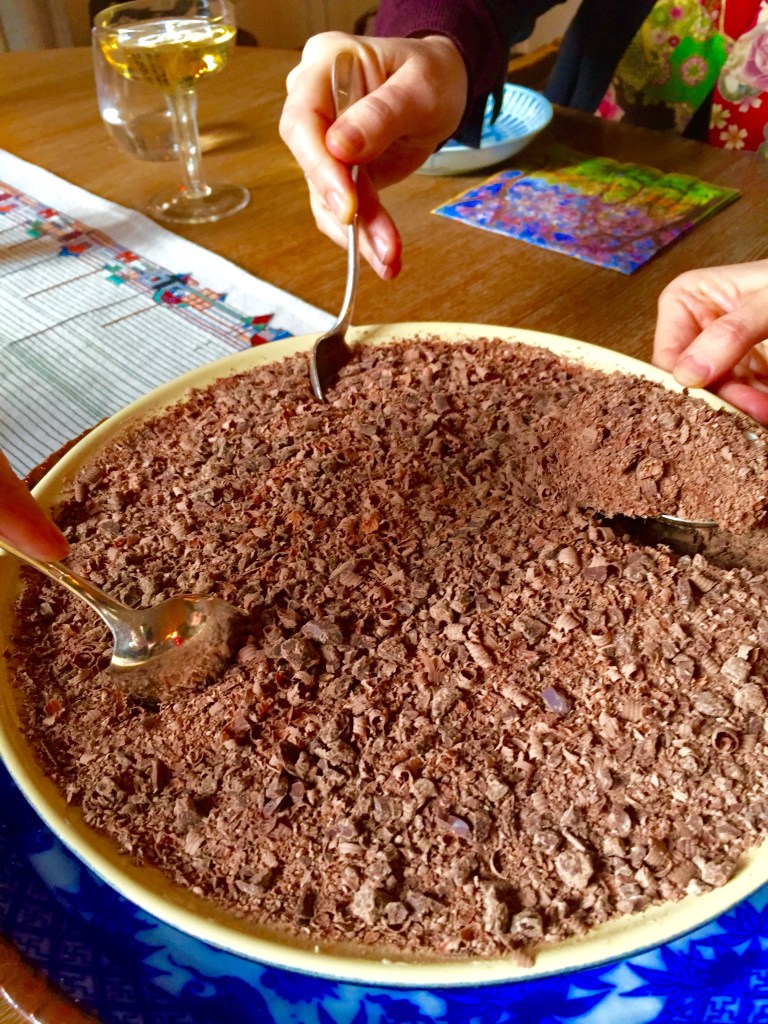
  7. Shave, grate and chop the chocolate bar. Sprinkle all over the top.
  8. Refrigerate until ready to serve.
  9. Serves 12-15 from one pan, depending on appetites.

Serving:

Pass out spoons, one to a person. Place Sex in a Pan in the middle of the table. In the spirit of communal adventure everyone dips in and eats spoonful by spoonful from the pan. Scoop all the way to the bottom with each bite.

So far, I’ve only known one man who said he enjoyed Sex in a Pan. He was able to rise above the gooey communal aspects others have no taste for. However, let it be known that my brother-in-law, Frank, is very partial to anything chocolate.

Transcendent Picnics

qiagtiangangcloudy
trail to buffalo meadows, taipei, taiwan

There is more than the communion of bodies when bread is broken and wine drunk. –m.f.k. fisher

M.F.K. Fisher [1908-1992] wrote that the best outdoor eating is on the side of a hill in the early evening. Her story of an unforgettable picnic took place in Switzerland in the 1930s. Sixty years later, in the 1990s, on a grassy meadow in Taiwan, we had a similar family experience. Continents and decades apart, the stories are interwoven because both Fisher’s memory and mine are reflections about more than the menu.

Fisher’s story went like this. She and her husband were building a small house above Lake Geneva, Switzerland, on a steep hillside surrounded by vineyards. Her parents came from California to visit. Late afternoon sun in June promised just enough warmth for an outside meal. The four of them carried baskets to the construction site, after workers had left for the day.

A table under the apple tree was covered with a checkered cloth and set with silver, ceramic plates and cloth napkins. Bottles of wine were placed in an ancient spring-fed fountain to chill. A fire was built, ringed with stones and roofing tiles, fueled with wood shavings.

The first spring peas were ready to harvest. As the men picked from the terraced garden uphill, Mary Frances ran baskets downhill to her mother who quickly shelled them into a pot. An iron casserole was set over the open fire where the peas “cooked for perhaps four or five minutes, swirling them in butter and their own steam”. Salt and pepper at the end, then table side.

On each plate lay a small roasted pullet. There was salad of delicate mountain lettuces, a basket of good bread, and fountain-chilled white wine generously poured. And those tender young peas–freshly steamed and seasoned! They shared the harvested feast and each other’s company as the surrounding hills turned rosy and the sun began to sink. Suddenly, in a neighboring field, “…a cow moved her head among the meadow flowers and shook her bell in a slow, melodious rhythm, a kind of hymn.” Fisher never forgot it.

In the spring of our first year in Taiwan, we went on a picnic where the alignment of people, place, and food replicated Fisher’s kind of perfection. More importantly, our young daughter began to understand the communal spirit created when food is shared in good company.

Yangmingshan is the national park north of Taipei. It was typically crowded on weekends with cooped up city people seeking fresh air, hiking trails, flowers and greenery. Friends Maddy and Cabby knew of an area in the park where water buffalo grazed freely and people were few. They organized a picnic in Buffalo Meadows on a late afternoon. We were four adults and three young children.

From the parking area we hiked uphill in a cloud so dense it moistened our hair and skin with droplets of water. At the top of the trail the landscape turned sunny and green with views all around. The soft grass was picnic perfect. Out of a backpack came a Frisbee and the men organized play on the hillside. Lara and Liza tired of running after a frisbee they couldn’t catch. They tried to follow a slow moving water buffalo. He wandered on.

lara, liza and water buffalo
girls thinking about things

Our nine-year-old daughter came over and sat down to watch the food preparation. There was a small camp stove along with a battered and blackened Japanese wok in which to put together the meal. Ingredients had been sliced, steamed, grated and pre-cooked at home. Once the stove was leveled, primed, and producing enough heat, assembly began. 

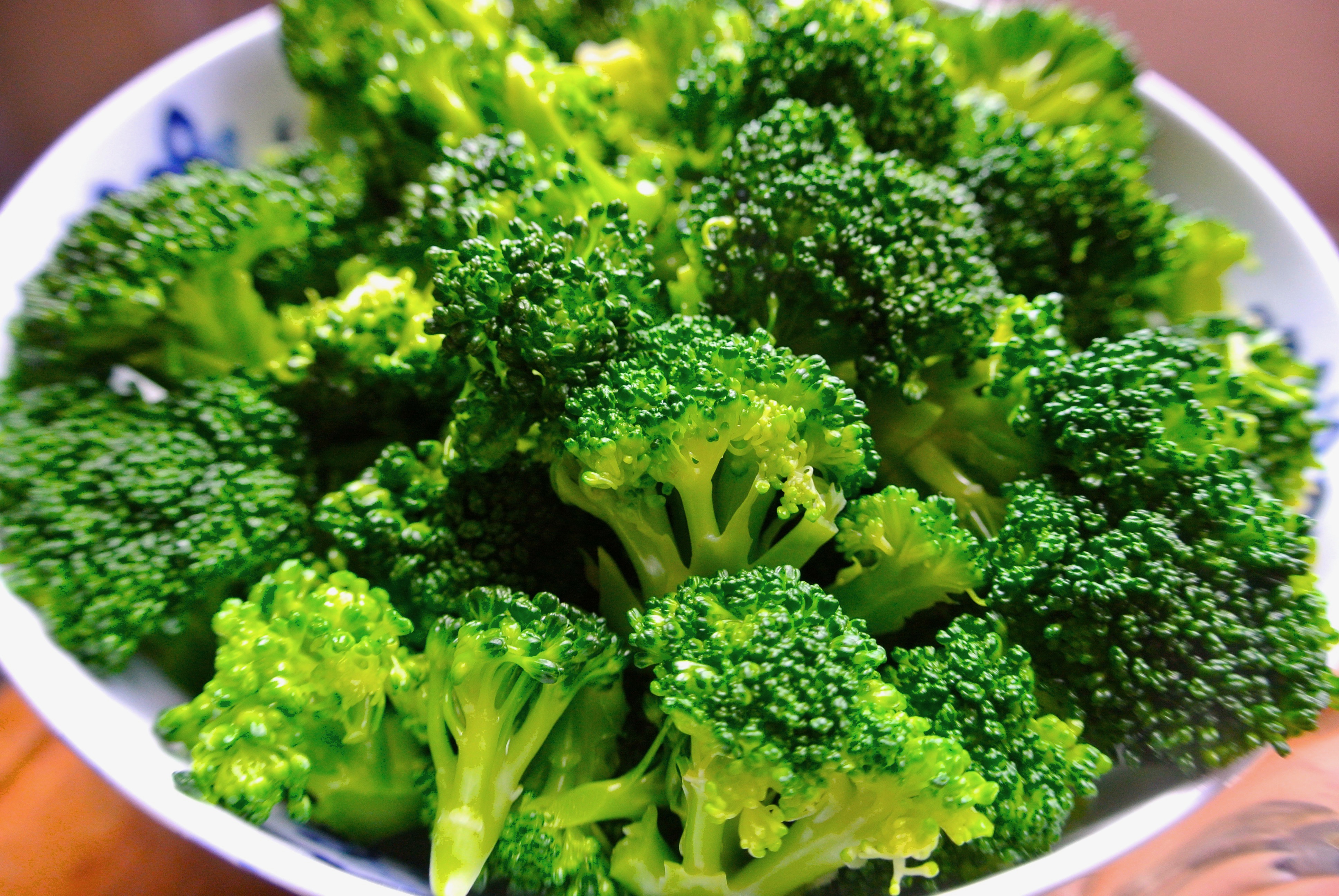
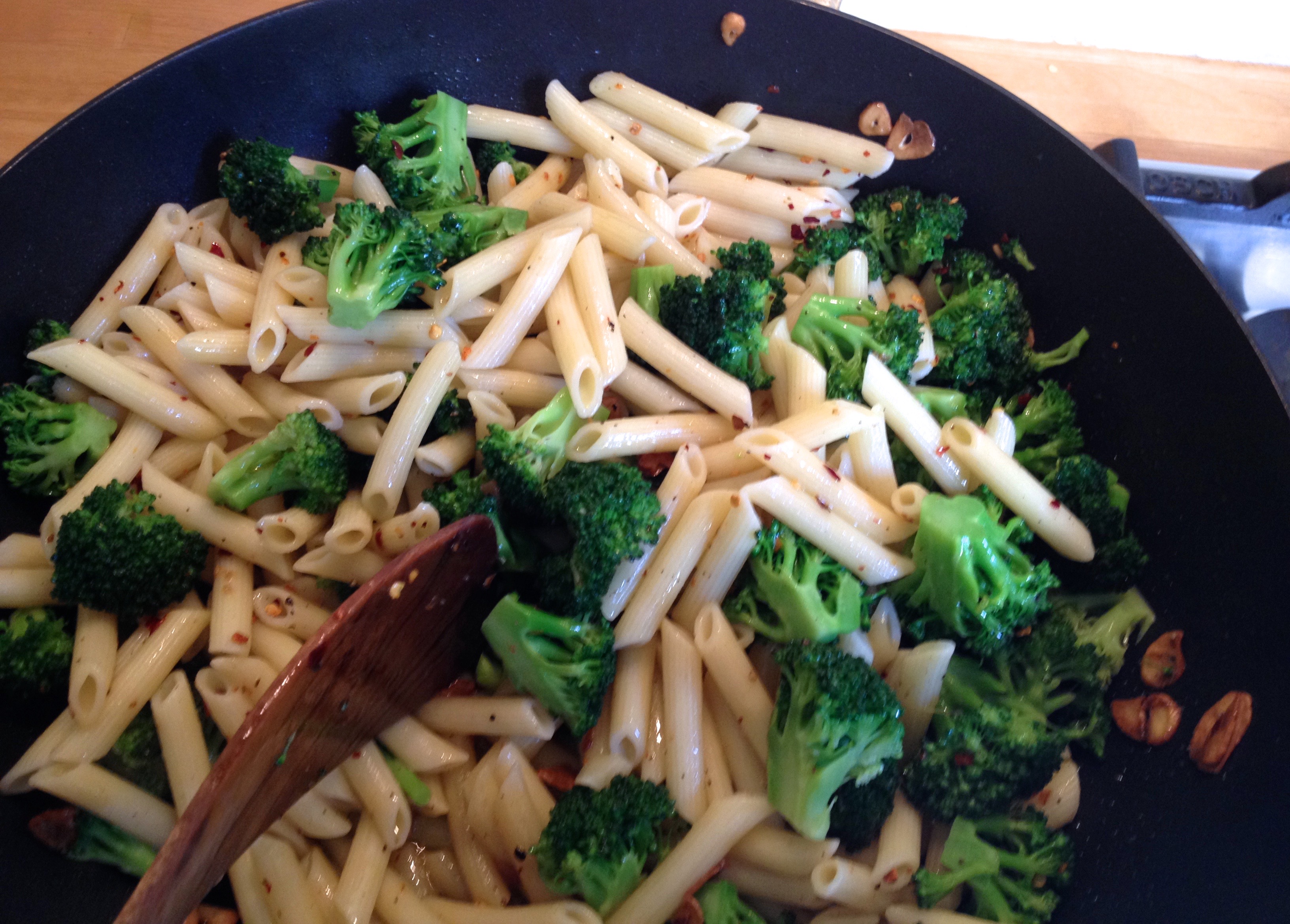
Olive oil was generously poured into the wok and heated. Thinly sliced cloves of fresh garlic were added to the hot oil. Shaking the pan continuously, the slices began to brown around the edges. Bite sized broccoli flowerets were stirred in with freshly ground pepper. Pre-cooked penne pasta was added along with butter. Everything was tumbled together with a large wooden spoon until thoroughly heated. Finally, freshly grated Parmesan cheese was layered on top and melted into everything. Lightly browned garlic slices gave toasted sweetness to the broccoli and pasta. A one-dish meal. Perfect.

Plates were passed. We sat side by side on blankets eating, laughing and talking. As the sun lowered over the far hills, the temperature cooled and we reached for jackets. Thimble sized portions of single malt whisky were passed among the adults. A breeze stirred and we leaned in closer, wrapping arms around children. Four-year-old Liza was zipped into the front of her father’s grey sweatshirt where she fell asleep curled into his chest, only the top of her blonde head showing. We talked quietly as darkness descended. The mist returned. It was time to go home.

Days later, our daughter asked if I could make that broccoli pasta. She had a faraway look in her eyes while she spoke of the picnic in Buffalo Meadows and how wonderful it had been. Looking at her face and listening to her speak I knew she had made a connection about more than the food. She was asking to go back to a feeling created on a tranquil hillside with close-knit family and friends. I never forgot her request. She had connected the dots that Fisher writes about so well–the communion of spirits when food and love are shared, around a table or on a hillside, with people who are important to us.

Perhaps this explains why a picnic, so many years ago, is vivid in my memory. Although I love reflecting on Fisher’s story of peas, a Swiss hillside, and a cowbell, my own recollection is this–a beat-up Japanese wok filled with steaming broccoli pasta, a grassy meadow, adults and children with arms around one another, and a water buffalo.


BROCCOLI GARLIC PENNE [from Silver Palate Cookbook]

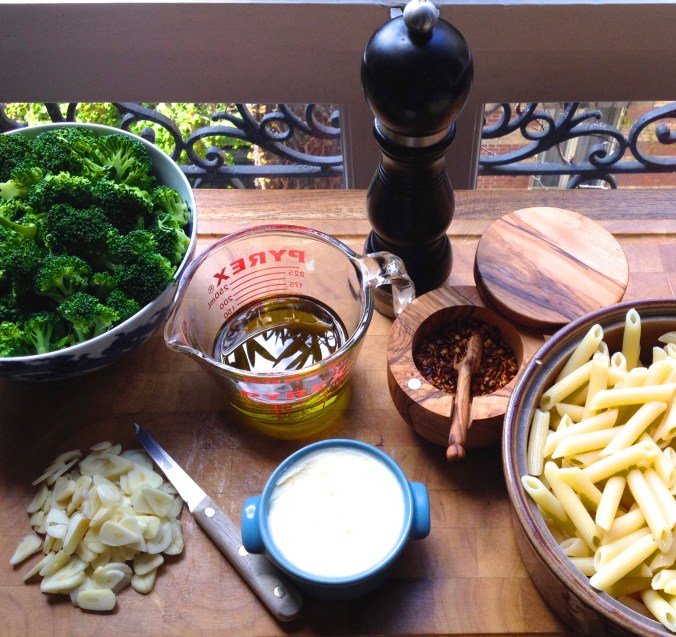
basic ingredients except for parmesan

Ingredients:

  • 1 lb. [500 gm] penne pasta, cooked al dente
  • 2 heads broccoli, cleaned and cut into small flowerets
  • ½ C. extra virgin olive oil
  • 10 [or more] cloves garlic, thinly sliced crosswise
  • Freshly ground pepper
  • 4 T. [1/2 stick] good butter
  • Freshly grated fresh Parmesan cheese

Assembly:

  • Boil penne, drain, rinse under cold water.
  • Simmer broccoli in boiling water 1-2 minutes, drain, rinse in cold water.
  • Heat oil ~ 1 min. Add garlic slices and cook, shaking pan until it begins to brown ~1 min.
  • Add broccoli, stir, grind pepper on top.
  • Add butter and penne, stirring continuously until well mixed and heated through.
  • Sprinkle with freshly grated Parmesan cheese.
  • Serve immediately.
  • Pass the pepper mill.
  • Add garnish and extra Parmesan.

For variety, add shredded or cubed cooked chicken, sliced black olives, or leftover veggies. Red or yellow bell peppers make a colorful addition. [Steam or stir fry before adding.] Red pepper flakes for added spice. Cherry tomatoes, cut in half, as garnish before serving.


Taiwan Green-Marble Pesto

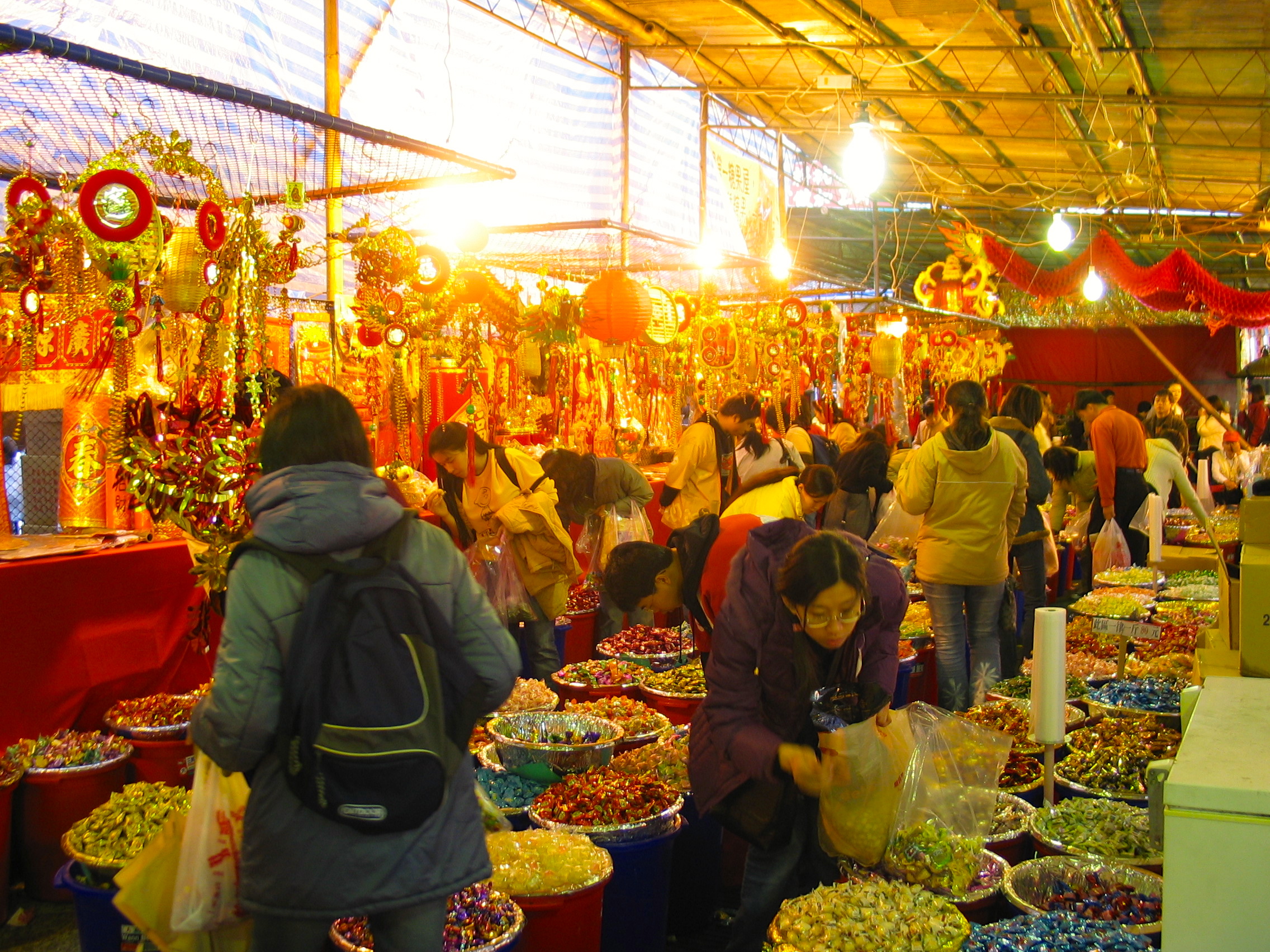
Our family lived in Taipei, Taiwan for twelve years, from 1993-2005. If you look for symbolism in numbers like I do, it was a complete 12-year cycle of the Chinese Zodiac calendar. Twelve Chinese New Years celebrated traditionally with red envelopes and NT [New Taiwan] dollars, deafening strings of firecrackers, and an annual assortment of snacks from the market on Dihua Jie.

IMG_0303.JPG
lara and friends, dihua jie, early 2000s
IMG_0301.JPG
dihua jie market, every chinese new year

In our Tien Mu neighborhood, we ate in local restaurants that served delicious and always freshly made Chinese food.  You signed off on ambience while dining out for taste. Formica tables, plastic stools, plates and bowls, disposable chopsticks with splintery ends, napkins like toilet paper, and strong fluorescent lighting–all standard dining décor. It was a good way to get the eating chore done, which we did often in favorite haunts. It was the opposite of cozy.

Desire bred creativity so we found another way of eating with excellent menus in ambient surroundings. Familiar friends around a candlelit table set with china or pottery plates, gleaming silverware and tall stemmed wine glasses became an almost-every-weekend event. It was regular “dining-out” that happened to be in each other’s homes.

Sourcing ingredients was an adventure in foraging. There was one grocery store with more than two aisles, which we fondly referred to as “Two L Wellcome”, as that was the spelling. Otherwise, there were tiny mom-and-pop shops where the nuances of supply, demand, and restocking necessitated flexible planning.

IMG_2974
tien mu grocer, of the mom and pop variety

There were several men among our group of friends who enjoyed preparing party meals. One of them was Alec. He inspired my husband to start cooking. Our own dinner parties became more elaborate over the years. Fortunately, Mark adopted Alec’s kitchen-to-table results rather than his in-kitchen “bull in a china shop” methodology.

It’s a fact that Alec operates on a high metabolism. He prowls the kitchen after midnight to down a bowl [or two] of cereal for hunger and insomnia in the wee hours. He bikes up mountains and through forests, he jogs, he talks quickly, and moves fast always. He makes us laugh when he pours coffee into his shirt pocket instead of his mouth or re-arranges pictures by knocking them off the wall. Luckily for his wife, he is the designated chef for their family by mutual choice. He nurtures both family and friends with home-cooked recipes.

Alec not only cooks and bakes, but makes jams and condiments, too. For several years, he brewed fruity varieties of brandied liqueur and tried to persuade us to love them. There were annual gifts of syrupy sweet alcohol and floating fruit. Our appreciation never ripened. We finally had to tell him we didn’t know what to do with the growing collection of unopened bottles.

Sometimes Alec and Mark teamed up for a special celebratory dinner in our home. We had a good-sized kitchen, but I learned to stay out of it during prep time. Unpleasant noises mixed with exclamations of “Oh no!” were normal. Things shattered on the floor and crunched underfoot when Alec was present. Our kitchen table accumulated a series of distressing gouges and missing wedges of wood. By the time we left Taiwan, it was designated firewood. Guests were blissfully unaware of what went on behind the scenes and completely charmed by the three-course meal.

IMG_2976
alec and mark prepping dinner, late 1990s

When Alec is wrestling with ingredients in any kitchen, mishaps happen. The first dinner party in their Taipei apartment foreshadowed the future doom of our table. We just didn’t know it at the time.

Six or eight of us were chatting amiably around the dining table while Alec’s final preparations were underway behind the swinging kitchen door. A loud metallic crash was followed by a muffled wail. Conversation stopped. We peeked into the kitchen. Splayed like a fan on the green marble floor was an enormous spilled kettle of spaghetti and basil pesto. It was a vivid image of green and white on green and white, with a touch of barely suppressed laughter. Using the well-known 10-second rule, there was hurried scooping, wiping and reheating. Flustered nervous systems settled. Tableside, we murmured gratefully over the best pesto pasta that ever shined a Taiwanese Hualien-marble floor.

miami+marble+floor+restoration
Hualien marble floor, made in Taiwan

My favorite recipe of Alec’s, and the most memorable, is this homemade pesto. Served immediately over hot pasta, it is a garlicky, basil-y, olive oil-y sensation. Each time we were invited to dinner I secretly hoped it was on the menu.

There are several advantages to making your own pesto. It’s easy and versatile and can be frozen if made in big batches. Aside from pasta, it can be stuffed into chicken breasts, spread on sandwiches, used as a dip, or an alternative base sauce for homemade pizza.

It’s up to the cook whether to use it to polish the kitchen floor.


ALEC’S GREEN-MARBLE PESTO

IMG_3898
basil pesto ingredients
  • 2 C. tightly packed fresh basil leaves
  • 6 large cloves garlic
  • ¾ C. extra virgin olive oil
  • 1 C. freshly grated parmesan cheese
  • ½ C. pine nuts or walnuts [or both]
  • ¼ to ½ tsp. salt and pepper [start light and adjust upward]
  • red pepper flakes [optional] for those who need some heat
IMG_2902
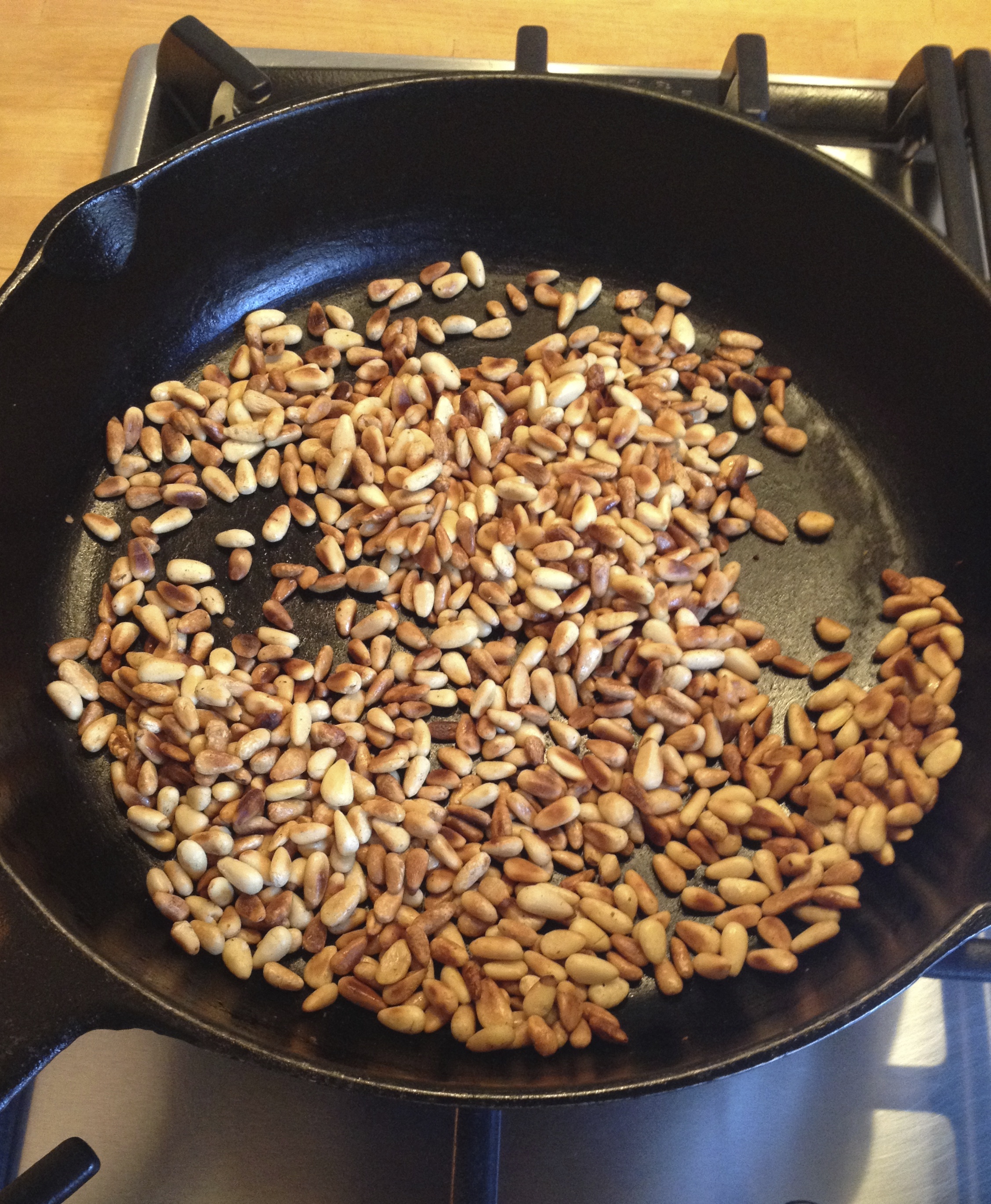
toast pine nuts in un-oiled pan

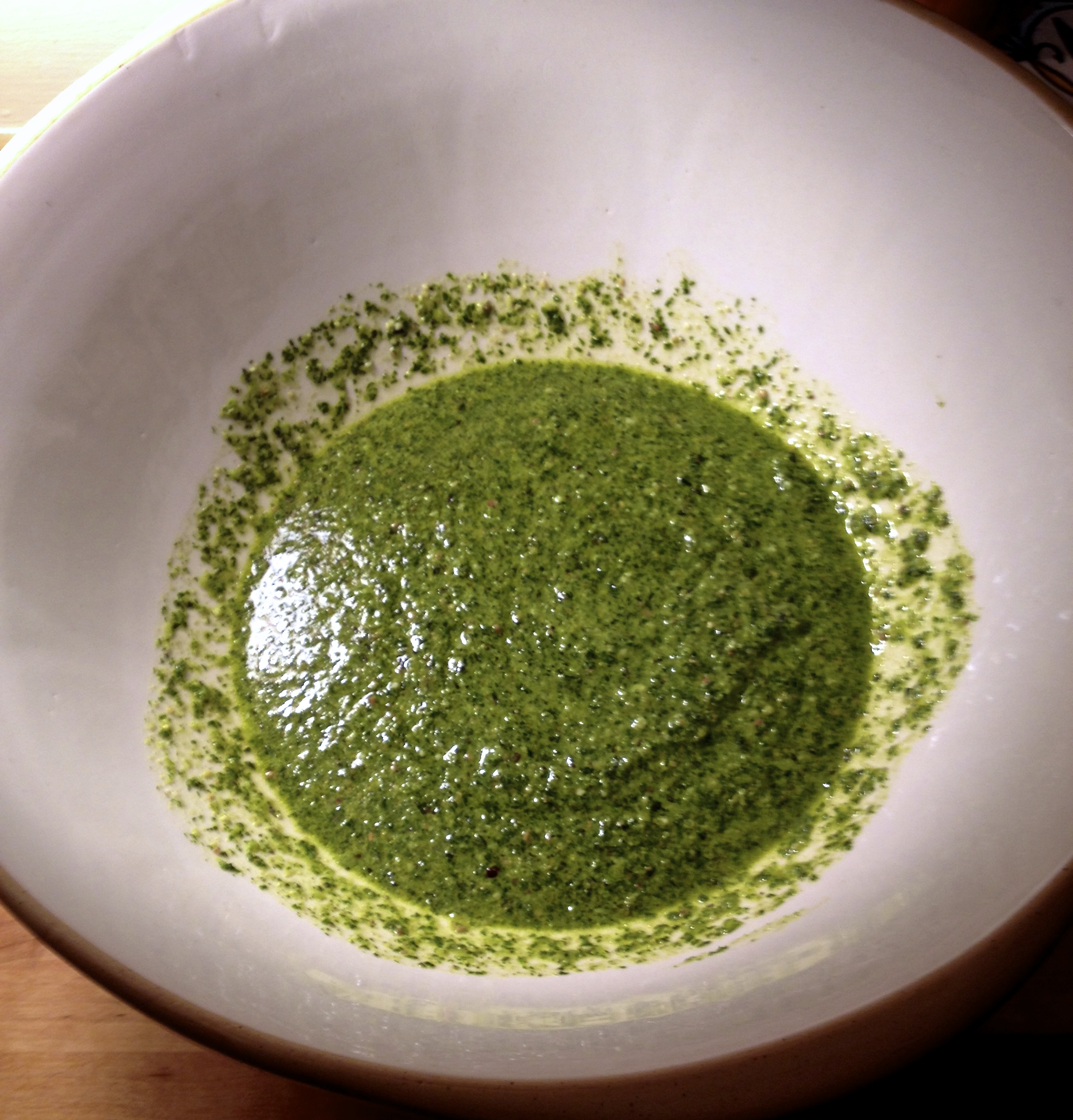
Blend ingredients in food processor until smooth. Taste and adjust S&P.  Dilute with a bit of hot water to mix easily with prepared pasta. Delicious on it’s own or add cooked chicken, sun dried tomatoes, artichoke hearts, black olives, or cherry tomatoes.

Recipe is sufficient for up to two pounds [1000 gm] of pasta. Adjust pesto amount to your taste. I tend to go on the lighter side when adding other ingredients. Store any extra in airtight container under a thin film of oil.

I have also made pesto à la Alice Waters [Chez Panisse] using only a mortar and pestle. This is a labor of love, and meditation, with a uniquely wonderful result. For pesto purists. Or those without food processors.

IMG_3917
the usual raw ingredients
IMG_2935
prepared for food processor or mortar and pestle: oil, garlic, pine nuts, basil, parmesan
IMG_2965
out of food processor—the color of green marble
IMG_2947
dilute with hot water before adding pasta
IMG_2967
stir into pasta and reheat slightly
IMG_3928
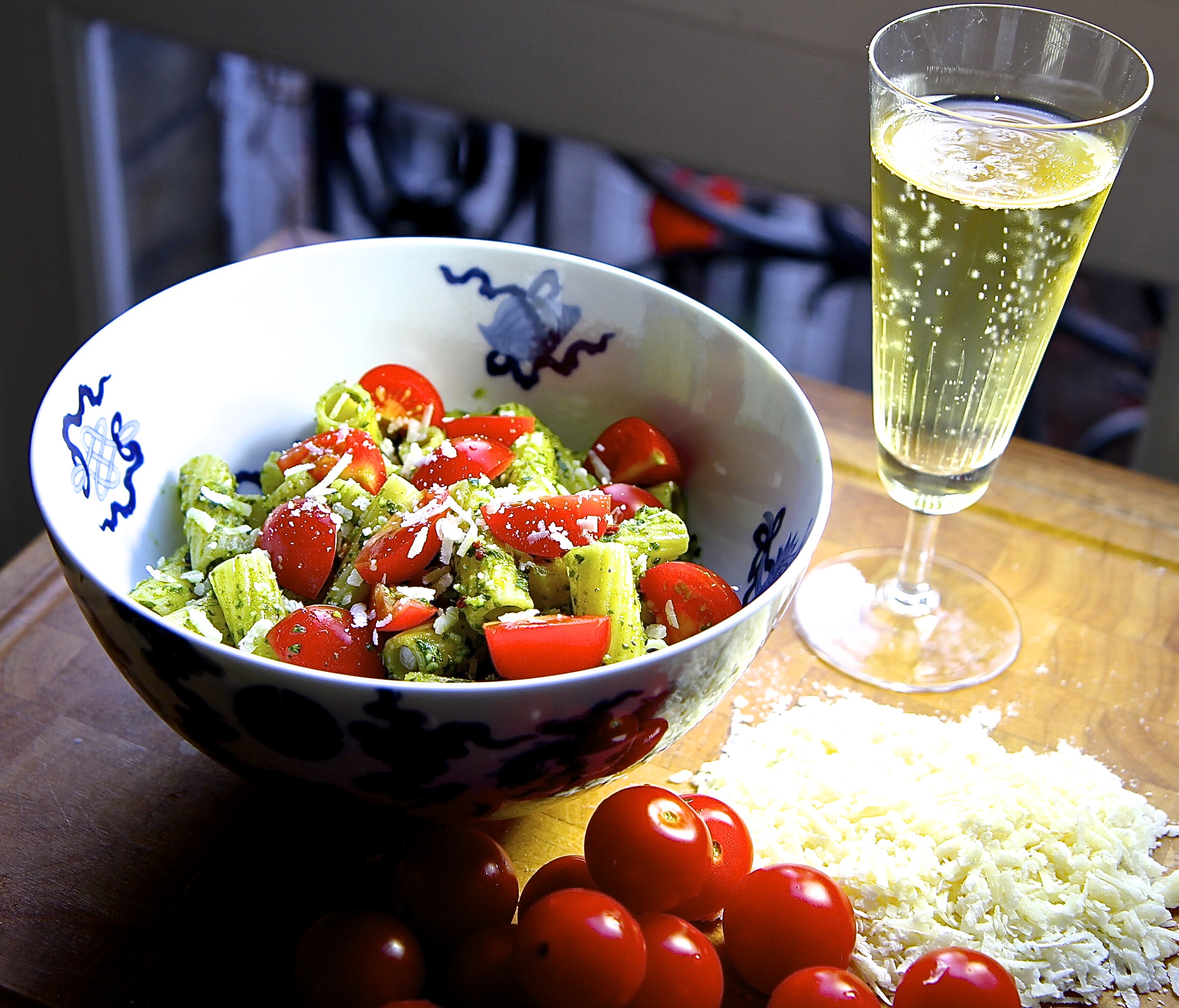
garnish with chopped tomatoes and parmesan
IMG_3942
glass of champagne always right
Eternal+Spring+Shrine
taroko gorge, taiwan, source of hualien marble