This article touches only on the FRANCO-AMERICAN aspects of D-Day, 70 years ago. Other members of the Allied Expeditionary Forces landed in Normandy at the same time, assuring the success of the invasion.
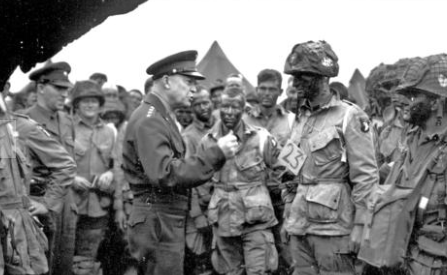
Throughout military history, the most well constructed plans often result in unexpected outcomes. It happened on D-Day, June 6, 1944. In the pre-dawn hours, American paratroopers of the 82nd and 101st Airborne Divisions were scattered all over the Normandy countryside. Most of them had completely missed their drop zones. As they reached the coast of France, heavy incoming anti-aircraft fire caused C-47 pilots to turn on jump lights too quickly.
Soldiers landed far from designated assembly areas, sometimes losing weapons and equipment in the hasty exit. In the Band of Brothers episode, “Day of Days”, Captain Richard Winters and a nervous private were walking through the darkness looking for orienting landmarks. The private asked, “Do you have any idea where we are, sir?” “Some,” came the answer. The soldier mused, “I wonder if the rest of them are as lost as we are.” To which Captain Winters replied, “We’re not lost, private. We’re in Normandy.”
And so were we. Unexpectedly. Seventy years later on June 6, 2014.
Just three days earlier the U.S. Embassy had issued an invitation for a small group from the American School Paris to attend the Franco-American D-Day Ceremony in Colleville-sur-Mer. Presidents François Hollande and Barack Obama would speak to guests and returning veterans at the American Cemetery overlooking Omaha Beach. For many soldiers it would be their last trip to the site where the tide of World War II turned. And, perhaps, their last time to honor fallen comrades.

The embassy established a strict timetable. Our bus had to pass inspection in Caen at 6:30AM. The engine number was registered in advance for security purposes. It was another hour’s drive to the memorial site and a second security checkpoint. We were to be seated by 9:30AM. Traffic between Paris and the Norman coast would be heavy, so an early start was scheduled. But, unexpected things happen.
We left from the school parking lot at 3:00AM. Students retreated to the back of the bus and immediately fell asleep. The three adults chatted quietly for the first two hours. I dozed off briefly, but was awakened by loud engine noises and a bad smell. The bus was not moving. The mechanical problem was serious and unfixable. It was 5:30AM.
A replacement bus would arrive from Paris in two or three hours. There was no chance of making the security inspection on time, nor would engine numbers match the original paperwork. Students woke up, but remained quiet. The possibility of missing the ceremony was unspoken and on everyone’s mind.
Around 6:15AM, a Secret Service convoy pulled up next to us. We explained our situation to the lead driver who told us that he was chauffeuring Mary Eisenhower, Dwight’s granddaughter from his son, John. Everyone perked up at the “celebrity” citing. Unfortunately, agents nixed the idea of our group hitching a ride with the VIPs. They pulled out and drove on.
One student mentioned that his father was leading President Obama’s embassy detail in Paris. We called to tell him about the broken down bus and the ruptured schedule. Awhile later, two French “Gendarmerie” [state police troopers] arrived on motorcycles.
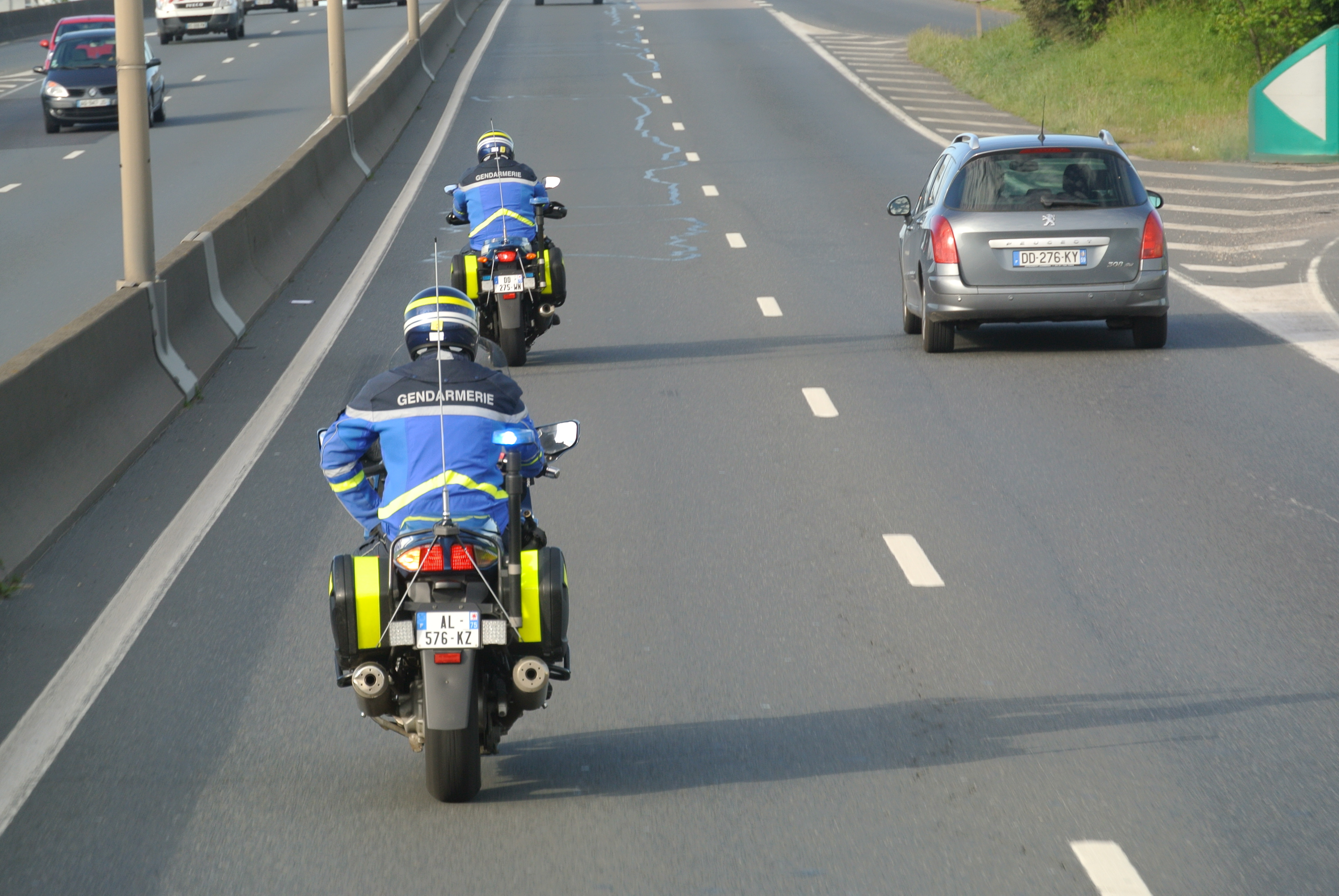
The boy’s father had arranged for a personal police escort to speed us through the inspection checkpoint and on to the Cemetery! By 8:15 AM, we were back on the road with a new bus and personal “Gendarmes” leading the way. Moods shifted to a higher gear.

At the first traffic jam, our escort turned on flashing lights and sirens and led us down the wrong side of the road. We skirted a long lineup of vehicles waiting to enter the inspection area. By 9:00AM, dogs had sniffed the bus, forms were stamped, and window stickers applied. Landing at Omaha Beach was next. Closely following the motorcycle brigade, we swerved around roadblocks and through roundabouts, literally holding onto our seats. Local residents lined the streets to watch the parade into the Memorial area.

Arrival…10:00AM! After thanking the Gendarmes, we inched forward with the crowd waiting to pass through security scanners. Overhead, President Obama arrived on Marine One with four accompanying Osprey helicopters.

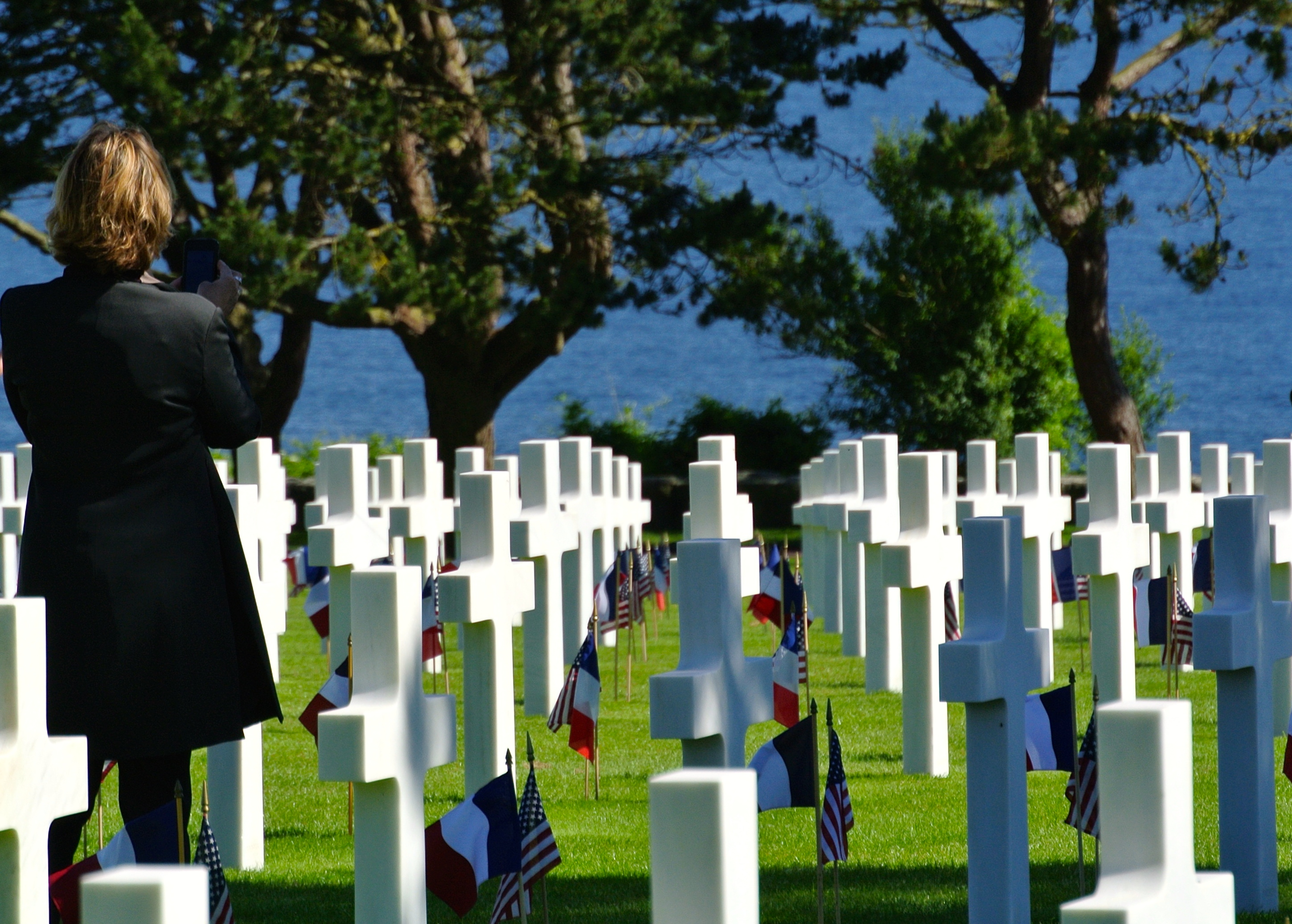
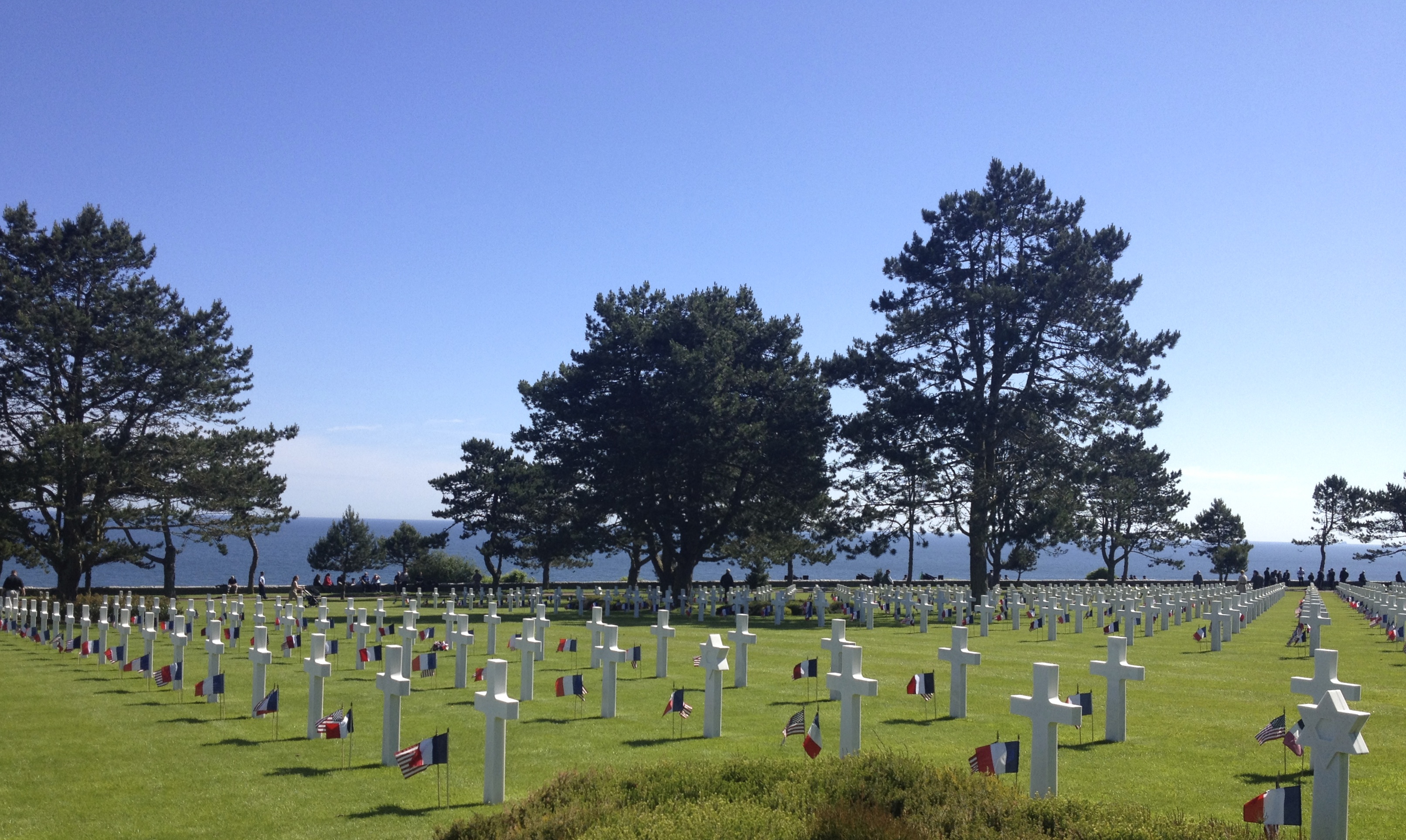
At the Memorial area, chairs overflowed with 15,000 people stretching down the grassy field between the white marble markers. More than 200 American veterans from D-Day 1944 were seated on the stage. Small French and American flags decorated each of the 9,387 grave sites. The sky and the sea, both deep lapis blue, created a stunning backdrop.
The Ceremony officially opened with the posting of the colors, French and American. The two national anthems were played, followed by a prayer. French President Hollande spoke first. He commemorated the day, 70 years before, using beautiful descriptive language. He spoke of France’s gratefulness to the American Allies. He thanked the United States for both her help and the ultimate sacrifice made by young men. On the first day of the invasion, 4,000 American soldiers died. The Battle of Normandy lasted three months, until Paris was liberated at the end of August. The total cost was 20,838 American lives.
During President Obama’s speech there were two standing ovations for the veterans seated behind him. He said, “We are here on this Earth for only a moment in time. And fewer of us have parents and grandparents to tell us what the veterans of D-Day did here 70 years ago. So we have to tell their stories for them. We have to do our best to uphold in our own lives the values that they were prepared to die for. We have to honor those who carry forward that legacy today.”
The President reminded us, “Whenever the world makes you cynical…stop. And think of these men. Whenever you lose hope…stop. And think of these men.”
Together, the two presidents laid a wreath for fallen soldiers, followed by a moment of silence. Three cannons poised on top of the cliff above Omaha Beach boomed a 21-gun salute. A trumpet played “Taps”. Finally, four F-15 jets flew over the cemetery in “Missing Man” formation, remembering those who didn’t return home.

Of all the unexpected events that had happened that day, the most meaningful took place when the ceremony was over. After the dignitaries departed, we approached the stage where some of the sturdier veterans lingered. We were able to listen to stories from the men themselves. I overheard an interview with one soldier, now 93 years old. His hand stayed cupped by his ear to hear the questions, but he answered each one clearly and modestly.
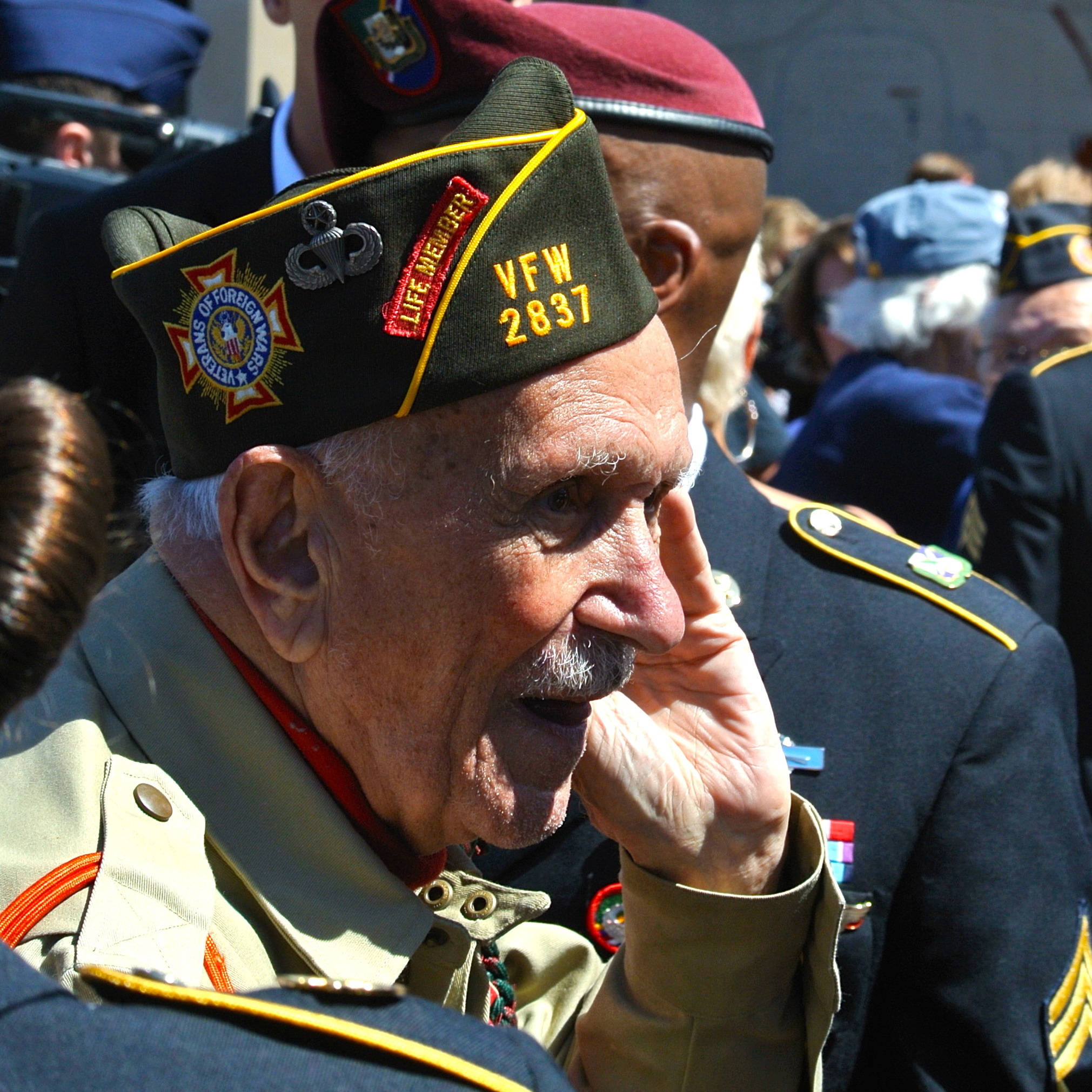


We shook hands with veterans in wheel chairs and on walkers, thanking them. The students listened intently to stories of the heroism of comrades who did not survive. Respects were paid to the men now resting in the serenity of the cemetery. Row upon row of white marble crosses stretch across the grass, each etched with a name, rank, company, hometown, and the day of death. They stand in perfect formation, like the soldiers themselves once did.

On June 6, 1944, the unexpected happened. That same day in 2014, none of us expected to feel such intense emotion and awe as we mingled with veterans. But we did. Every one of these men had been there on those bloody beaches or scattered across the countryside 70 years ago. What they accomplished changed the course of history for all of us. It is an impossible debt to repay.
Sharing this anniversary with American veterans from D-Day 1944 was an honor and a lifetime memory for everyone in our group. As the older voices continue to fade, it really is up to us to keep telling the stories, so the next generation and the next…will never forget the legacy left to us all.