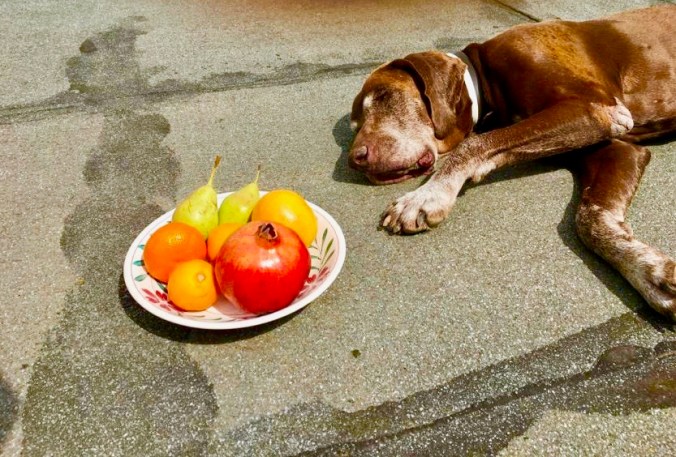
A year ago, I wrote a story about my friend Carla Walker in Athens, Greece. She is a dog lover since childhood, has a menagerie of her own strays (18), and for the past several decades has boarded dogs for owners who are traveling and need a home away from home for their pet. Since moving to a different rural location without any infrastructure five years ago, Carla has been seeking supportive ways to rebuild and resume her business while caretaking her own dogs. When I wrote her extraordinary life story, it offered the possibility of contributing to this mission. For the complete history and Carla’s connection with Cabby Tennis and Maddy Hewitt, read Carla’s Dogs.
Here is what has transpired over the past year through voluntary crowd funding. Last September a large cement base was constructed behind the “View House” where it is backed by the stone wall of the property. This was to serve as the foundation for three large individual kennels which were purchased and shipped, unassembled, on pallets from northern Greece.
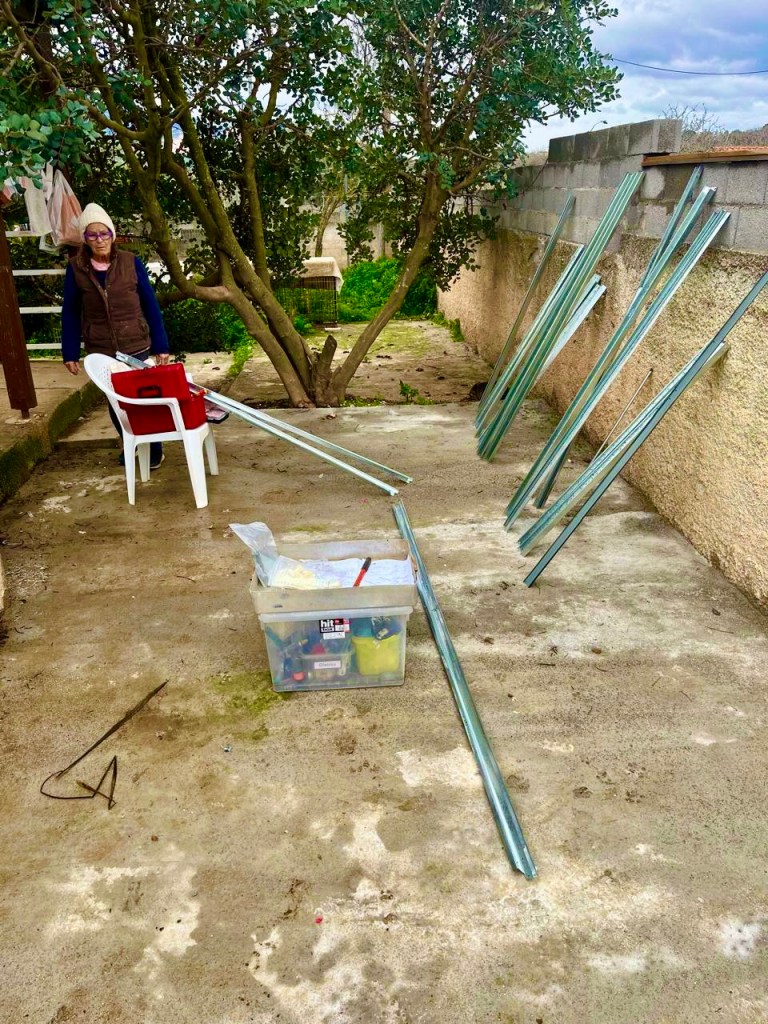
kennels arrive on pallets, cement slab foundation, quality control inspection
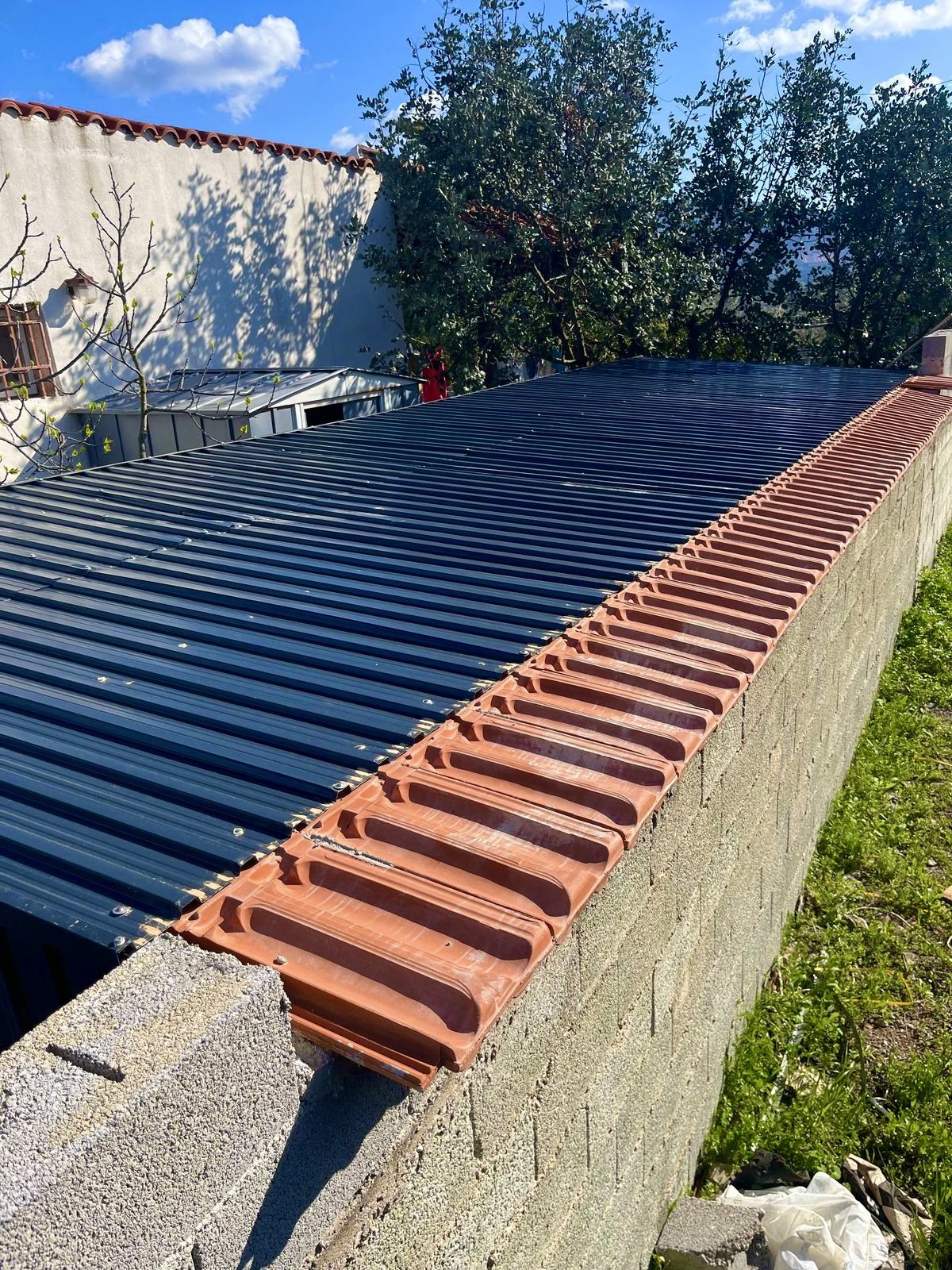
In February, Cabby Tennis spent days building three steel kennels consisting of many pieces, bolted them together and to the wall behind, with Carla assisting and supervising. The roof lines were angled and tiled to drain rainwater over the wall. Extra caulking was applied to the exterior and interior bases to also prevent water from running inside during heavy rains.
time lapse of one kennel construction with dogs running through it
first kennel assembled
3 kennels after assemblyroof tiling for drainage over wall
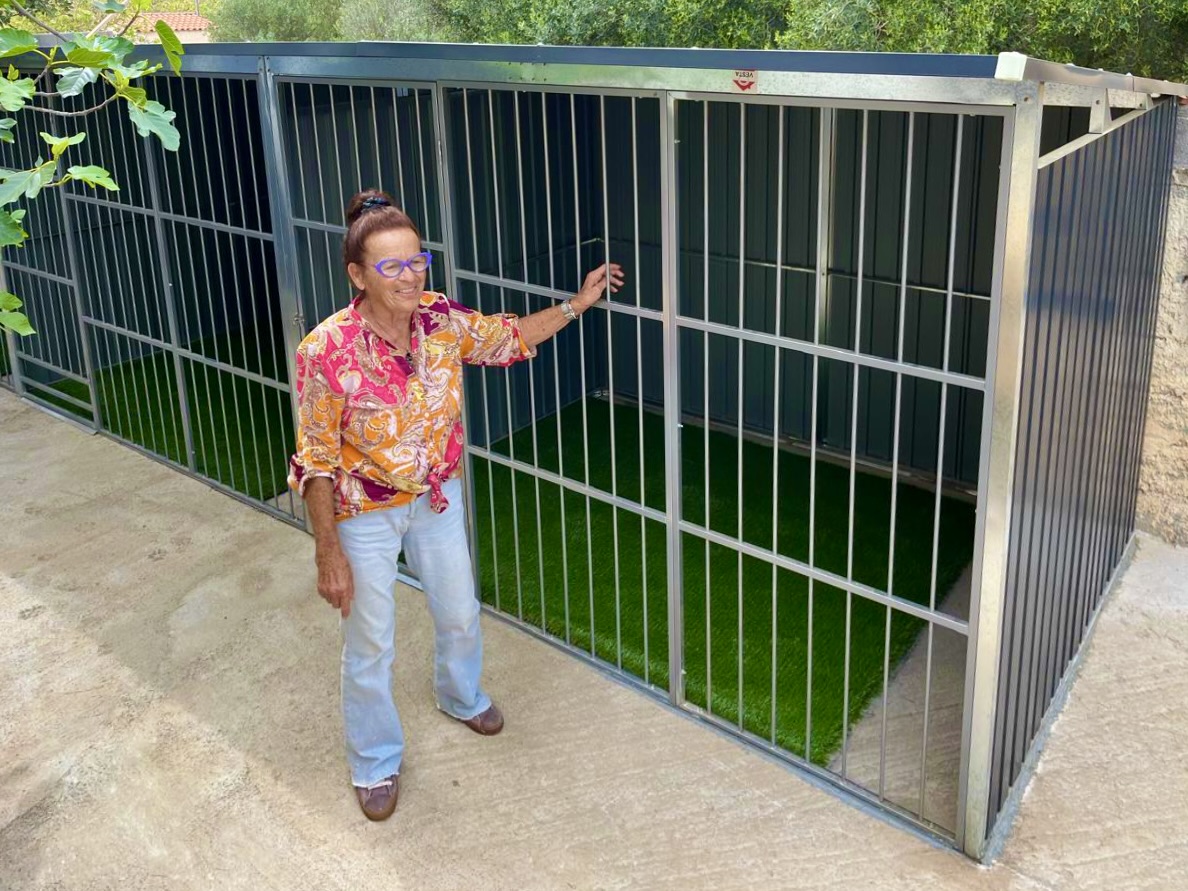
In April the kennels were carpeted with soft, green Astroturf for color and comfort. They are now ready to be outfitted with dog houses, and soon, animals for boarding.
carla with completed kennels, april 2025
Also, a computer was purchased so Carla now has the means to rebuild her website and advertise for short term dog boarding and the ability to Adopt-a-Pet virtually, which will contribute to consistent upkeep for food, vaccinations, medications, and vet care for the tribe.
For those who have donated to complete these projects over the past year, a heartfelt THANK YOU. There is still future work requiring financial support including exterior and interior painting, ceiling insulation and repair throughout the inside of the house to keep people and animals warm and dry in all seasons. There are ongoing monthly expenses for food, neutering and spaying, and vet care for the full-time resident dogs.
For anyone who loves dogs or a good dog story, there is a way to contribute or re-contribute to the future welfare and maintenance of Carla’s Magical Dog Kingdom.
You can donate to a VENMO account in the U.S. established for this purpose. If you already have an account, search the VENMO app for: Cabby Tennis @Dog-Kingdom. Be sure to include your name, mailing address, and email address on the form. For another way to contribute, contact Wendy at windowtoalifeoverseas@gmail.com
Carla is steadfast and unflinching in doing her part of good work in the world. She may have encountered more obstacles than many of us, but she is strongly committed to providing shelter and care for the four-legged creatures who live under her roof and run happily around the garden and olive orchard. Her unshakeable affirmation of purpose in providing animals with a good life is a reminder of how we can all make a difference, even with small acts of kindness.
Once, I was attacked by two pit bulls. The result was stitches and bruises. I’m not afraid of dogs. But I don’t love them unconditionally. And yet I know that dogs can be healers. Even abused and abandoned ones. My overseas friend, Carla Walker, proved this.
CARLA’S BEGINNINGS
Carla Gimbl was born in Germany, one year before the end of World War Two. She adored her Hungarian father who was seventeen years older than her German mother. Also in the home was an attentive but strong-willed grandmother who taught her the art and joy of cooking. Carla takes after her grandmother’s dominating spirit and cooking expertise.
Carla’s parentsand as a young girl
Until she was eight-years-old, Carla lived across the street from where the Nuremburg war trials were held. There were no other children nearby to play with. But, always, there were dogs—a beloved Airedale Terrier, or German Shepherds. They became her playmates and friends. She dreamed of owning a large property one day where she could live with dogs.
Tragedy struck on a foggy morning when her parents’ car collided head-on with a truck. Father was killed instantly and mother, although injured, survived. Carla wasn’t told of her father’s death until months later. It was her first experience with abandonment and loss.
Then her mother married a wealthy European businessman. While their life style improved, Carla’s stepfather was indifferent and abusive. At fourteen, she ran away from home and lived on the streets until authorities sent her to juvenile reform school for two years. When her parents were finally contacted to take her home, Carla’s mother arrived in a fur coat, fully embracing a life of luxury, looked at the girl and said, “That is not my daughter. I have no daughter.” More loss and abandonment. Carla never forgave her mother, and she never looked back. She was on her own.
In the early 1960s, still in Germany and working in a bar, Carla met 22-year-old Charles Walker, a U.S. Air Force policeman. She married him at nineteen. When they returned to the United States, the couple stayed with the extended Walker family in southern Georgia. Later, Carla lived in Las Vegas while Charles was stationed in Vietnam. Those were the wild partying years.
Then more tragedy.
Charles, a serial womanizer throughout the marriage, pushed Carla down a flight of stairs in her sixth month of pregnancy. She gave birth to a daughter, prematurely, who did not survive. This loss was a turning point for Carla. She was finished with people. She had experienced only disappointment and hurt from those closest to her.
By her own admission, Carla feels a strong bond with dogs, particularly stray dogs, as she sees the parallel between homeless animals and her own life. Living on the streets, abandoned, and surviving by resilience and grit. After her infant daughter died, she buckled down in fierce independence to live without asking for help or depending on anyone.
Carla filed for divorce after moving to Greece with Charles when he was stationed at the Air Force base in Athens. She left with only the clothes on her back, but supported herself with various jobs over the next decades. It wasn’t easy, but she worked as a bar maid paid on commission for drinks sold, cleaned houses for foreigners, babysat children. Her best paying job was with a large pharmaceutical company where she planned, shopped, cooked, and served food for all of their events and parties. The company eventually moved its base to Dubai. Carla was paid a large separation package, and then spent it all.
back in the daysa resilient young woman
When the American military base closed in Athens in 1988, the stray dog problem in Greece began. As families left the country, dogs were abandoned on the airport tarmac. Carla found them wandering around loose and starving. She started bringing them home. The first rescued dogs were adopted by families in Europe.
In the early 2000s, Carla began her business of boarding dogs. She moved to the rural outskirts of Athens where she rented a property with land and outbuildings. She had kennels built to her specifications in a former horse stable. She took in dogs while their owners travelled, and they went home happy. Her reputation spread. People brought her strays or dogs whose owners had died. She was alone, without people in her life, but happily living with her four-legged friends.
early advertisement for boarding with the dog lady
CARLA AND CABBY BEGINNINGS
I have known Cabby Tennis and his wife Maddy Hewitt for more than 30 years. We first became friends in Taipei, Taiwan with overseas school jobs and young families at Taipei American School. Cabby and Maddy are dog people. Now they live in Athens, Greece, travel often, but cannot always take their pet.
maddy and cabby
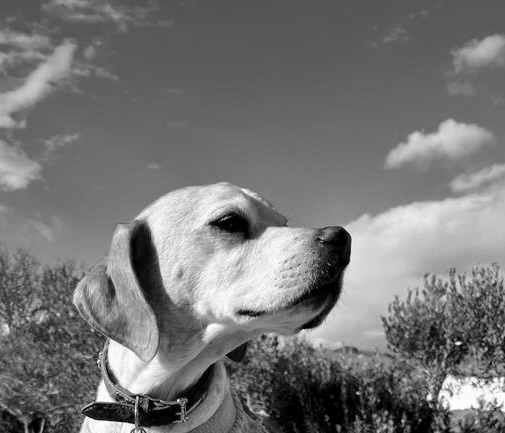
In 2019, after some unfortunate boarding experiences with their German short-haired pointer, Chop, a colleague of Maddy’s mentioned that a woman named Carla Walker operated a dog kennel outside the village of Markopoulo. Cabby took Chop out to the countryside to meet Carla. As they talked, Chop sat at Cabby’s feet in front of Carla. She stroked his ears. He closed his eyes and leaned into her. The connection was made. Chop’s first boarding at the dog kingdom equaled happy dog and happy owner.
Soon after, Carla told Cabby she had to close her business as the owner was selling the property with all the kennel infrastructure she had built into it. Luckily, she found an abandoned house for rent nearby. It had a large yard, wide-open views, and an orchard of olive trees. The grove was overgrown, the house vacant and stripped of everything by squatters and gypsies. It was literally four walls and a leaky roof.
Cabby, not about to walk away from the best boarding experience for Chop, insisted that together he and Carla could refurbish the house and property for her menagerie, which then numbered over twenty dogs. And so, a working partnership between two dog lovers began.
With Cabby’s intrepid can-do spirit, he and Carla [and Chop] worked for months installing plumbing, appliances and fixtures, doors, windows, and repairing the roof. They built fences and gates for the dog yard and orchard and established a garden area.
cabby, poppy, and romeo working inside the orchard
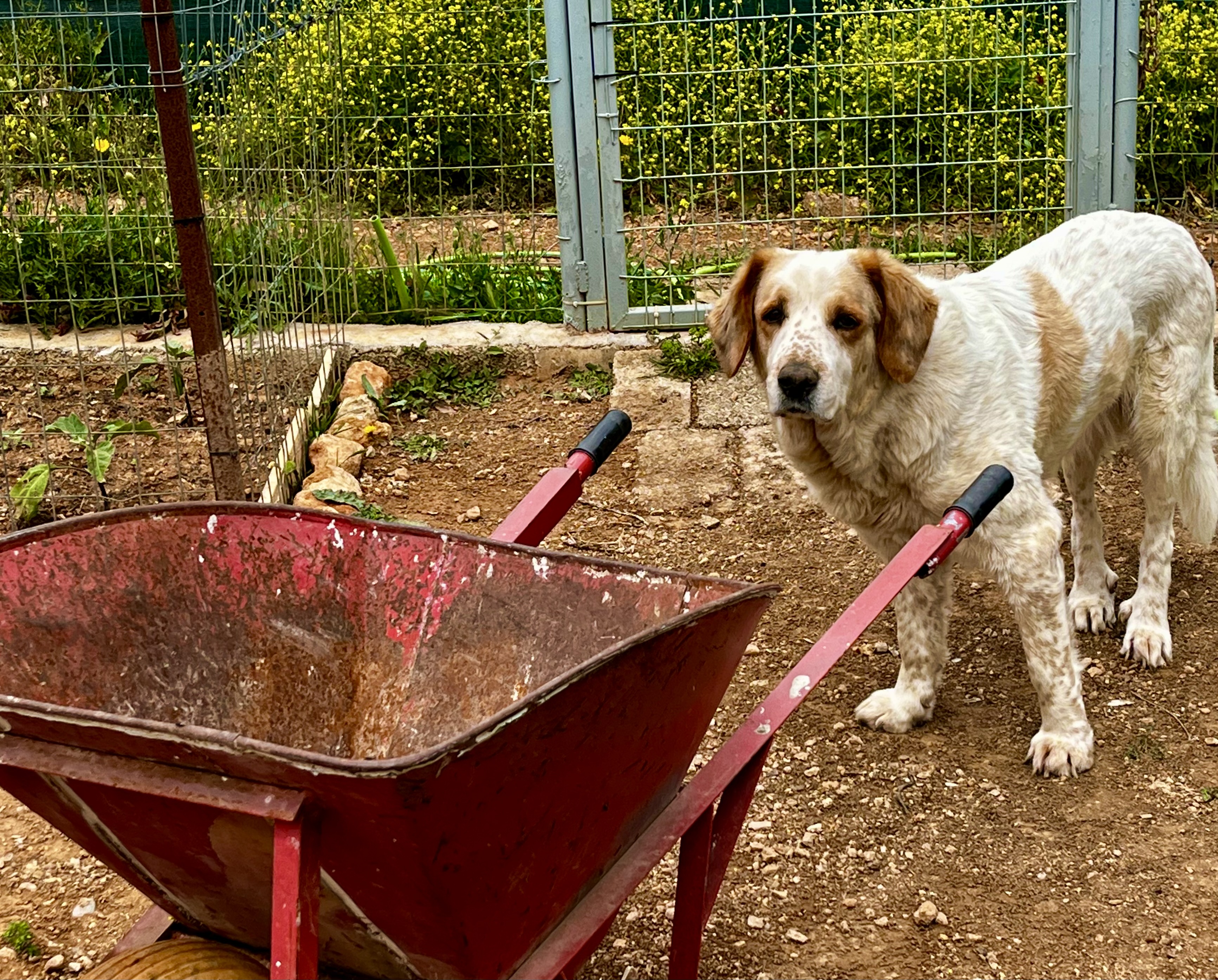
suzie and the wheelbarrow on the other side
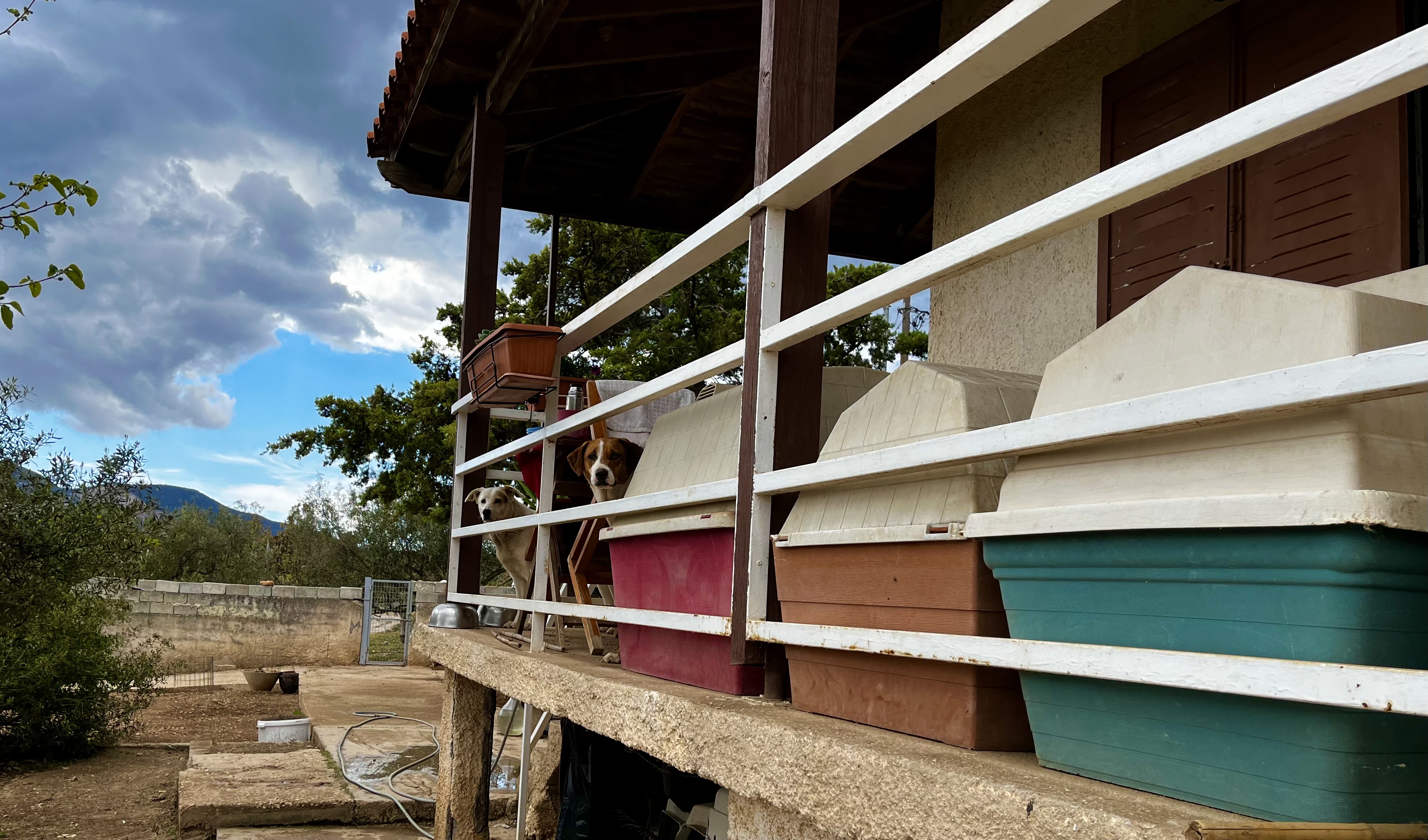
dogs and houses line the porch
regal rudisweet halvas
In 2020, Carla moved her furnishings and the dogs to “The View House” as she aptly named it. The collaboration between Cabby and Carla continued. They worked side by side with her tools [she taught him how to weld] and his heavy lifting to continue making improvements on the house and land. Of course, the work is ongoing and there is more to be done.*
the view house with [fence jumping] Rudi on his rounds
CARLA’S ABSOLUTES
Every animal whisperer is made of something the rest of us don’t really understand. Carla’s complete focus is on the dogs rather than herself. She is alert, attentive, and vigilant to their individual needs. The love between animal and human goes both ways.
carla and bubusharing the love
There is knowledge behind her diligence and devotion. While living in the U.S., Carla studied Dog Psychology and Canine Nutrition for three years. Each animal receives one-on-one time. They seek her out for attention, taking turns, and reflecting adoration back on their caregiver.
with rudiwith kiki
All of this comes from a well-honed formula Carla calls her Absolutes with Dogs. They must unfold in a precise order: 1. Rules established. 2. Discipline. 3. Respect for her and each other. After this, love comes automatically.
CARLA AND CABBY COLLABORATION
These two remarkable people are as different as they are alike. Carla is tiny and petite. She is playful and feisty and readily shares strong opinions. Cabby is a very tall athletic-framed man with a calm, reassuring demeanor. Seeing them stand next to each other is a contrast of proportions.
Carla has smoked since childhood and has the husky voice of a long ingrained habit. Her laugh is deep, resonant, and engaging. Cabby has continued to work out and row competitively since his university crewing years. His wide smile surfaces easily, especially when telling a story, which he does often and well. The circumstances under which Carla and Cabby grew up could not be more different–an abandoned street urchin in Germany versus a loving two parent, four child household in America.
Their similarities are notable, too. Carla and Cabby each possess a steely strength of character and self-assurance that runs to their core. They share a strong work ethic that brings joy and a keen sense of accomplishment with every task undertaken. They are head-over-heels for anything “dog oriented”. When Chop died of old age, Cabby commissioned a commemorative headstone and installed it in the orchard among the olive trees and poppies.
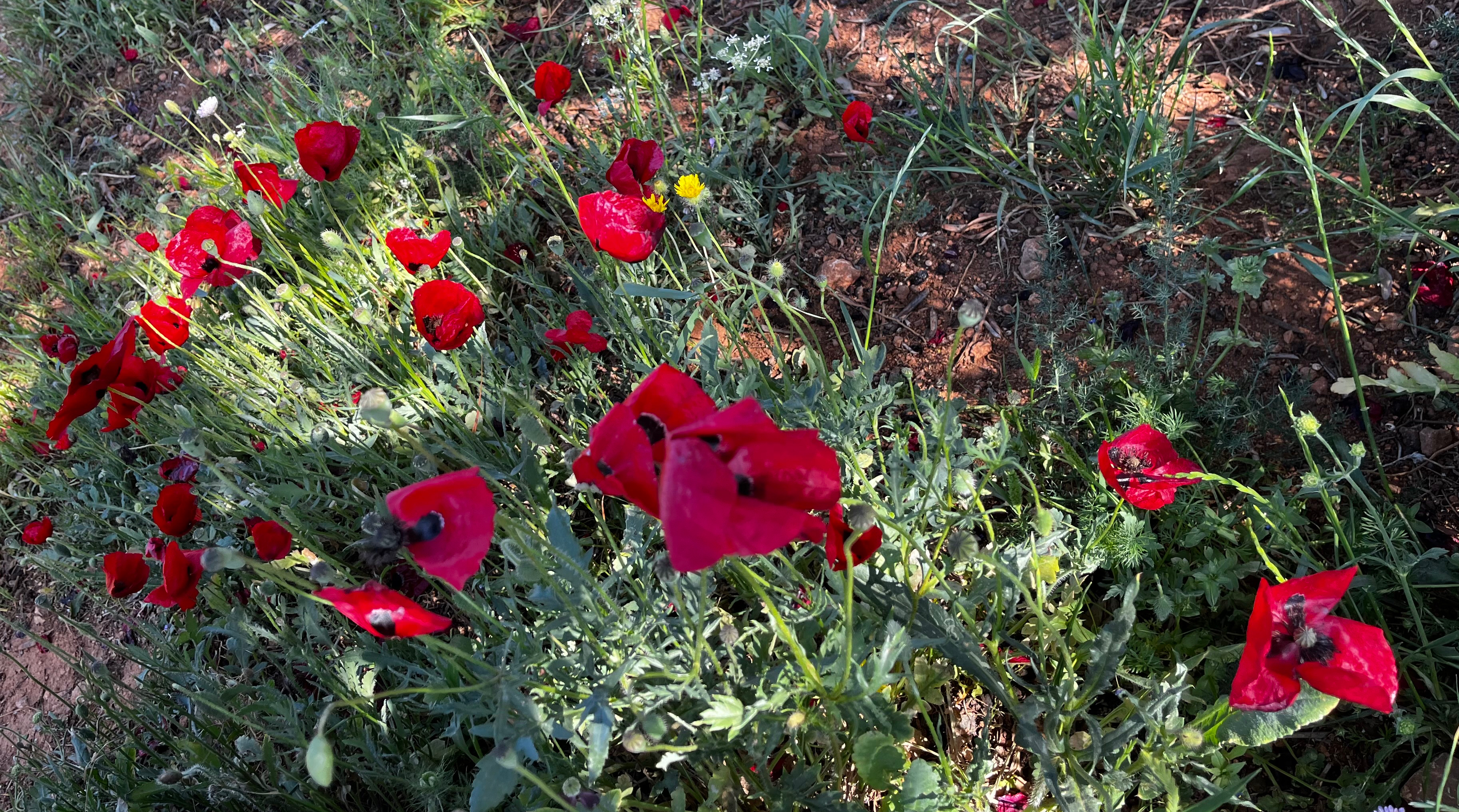
the orchard in poppy season
Relationships between people are not as easily defined as those between Carla and her dogs. By the time she turned 80 in February of this year, Carla lived many decades making independent decisions, getting things done on her own and in her own way without consulting anyone. Cabby, whom I have written about in other stories, is a Renaissance man with a multitude of gifts and talents. He can, and does, accomplish anything he undertakes as a project worth doing. He has a bottomless reservoir for giving time to others. People are drawn to his honest, ready assistance and hands-on approach.
Jumping in to help Carla set up and move into the View House is completely within Cabby’s character. But he was caught off guard by how this affected Carla’s independence and wariness in engaging with, or trusting, another person. He simply acts on what he thinks…let’s fix this. Then pitches right in.
Thankfully, for Carla, this was a karmic blessing of the right timing with the right person in the right place.
Four years later, Carla and Cabby continue to work toward the goal of creating the very best dog kingdom in Greece. They have overcome challenges and resolved friction about how to accomplish things. Two individuals with their own opinions have learned to listen with patience and compassion.
cabby and carla discuss future plans
I asked Carla and Cabby, separately, what has changed during their working friendship. Carla said that Cabby has become like a soul mate. He opened her to the realization that not all people with whom you grow close are going to hurt you or let you down. “Cabby has very good energy. He told me when he wakes up in the morning, he says to himself, ‘I’m going to be happy today.’” When he goes home at the end of a “Carla work day”, she often feels the positive energy leaving with him. She is not wired to wake up with optimism but she responds to it through Cabby.
Cabby, a man motivated by his “can-do” ethic, admits to developing humility from working with Carla. He takes time to listen and learn the back story behind Carla’s decisions. He respects her skill sets and holds back until there is agreement on what project to tackle next.
All of this has led to the best outcome for Carla and the dogs. She feels validated and loved in her relationship with both Cabby and Maddy. There is mutual respect. And there is true, deep, loving friendship. As Carla told me, “Cabby has made me softer. He was God’s gift when I was in a difficult situation.”
Dogs are Carla’s mission in life, her reason for being, and her touchstone to her own humanity. She has created a place of reciprocal need and love while living the life she envisioned as a child with a house and land for her animals.
From their first encounter, as Chop leaned into Carla’s soothing touch, it was clear to Cabby that this is a woman who lives life in joyful, meaningful work, founded on ability, confidence, and complete devotion to nurturing animals. Adding his labor and caretaking into the mix, Cabby mirrors back the importance, value, and beauty Carla brings, what they both bring…all for the love of dogs.
*ADDENDUM: Work Still To Be Accomplished
Carla is ready to take on next steps. She is not actively acquiring new strays or young dogs to raise, but currently has 19 animals depending on her care. She is eager to reopen another dog pension for financial reasons. The installation of sturdy, protected, outdoor kennels is a large project requiring funding for materials and labor.
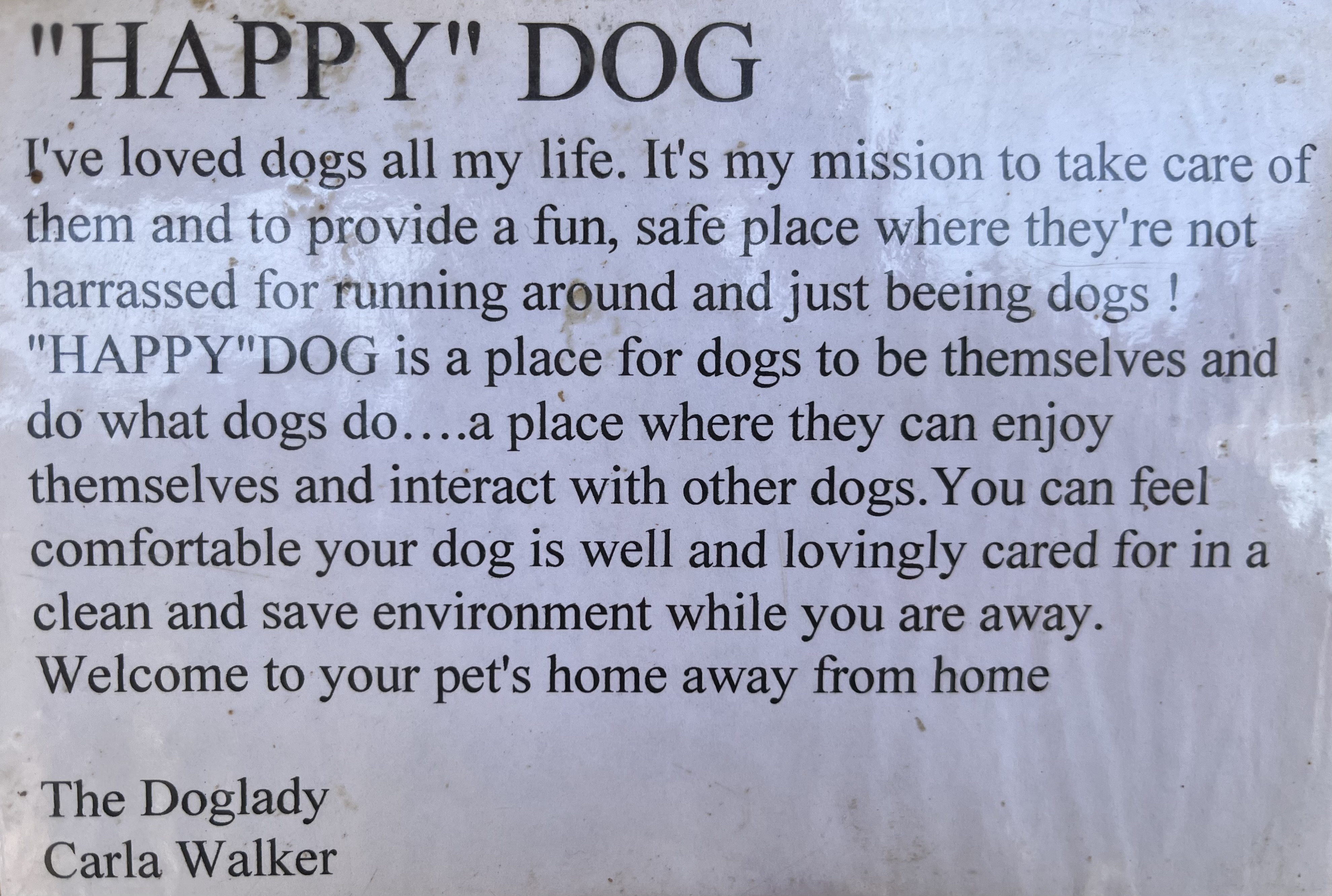
If you love dogs, or other people who love dogs, or a good human interest story, there is a way to help with restarting Carla’s Happy Dog Pension. Consider the gift of a donation in the form of a one time sum or ongoing annual sponsorship for a few years. All funds are designated for kennel construction and maintenance, supporting dogs with food, flea/tick collars for the tribe, spaying, neutering, and other veterinary care health needs.
In the U.S., a Venmo account entitled Cabby Tennis @Dog-Kingdom has been set up for Carla and the dogs. If you contribute this way, please include your name and email address in the notes. Information will be kept confidential, but we would like to be able to thank you personally.
It is also possible to contribute directly to the Dog Kingdom bank account in Athens, Greece. For transfer information into the Euro account, contact Cabby cmdkwalker46@gmail.com or Wendy windowtoalifeoverseas@gmail.com.
If writing a check is your preferred method, contact Wendy and the Venmo deposit will be made for you.
No donation is too small. Any and all financial gifts will help Carla’s Dog Kingdom grow into the future…
FUN PHOTO GALLERY
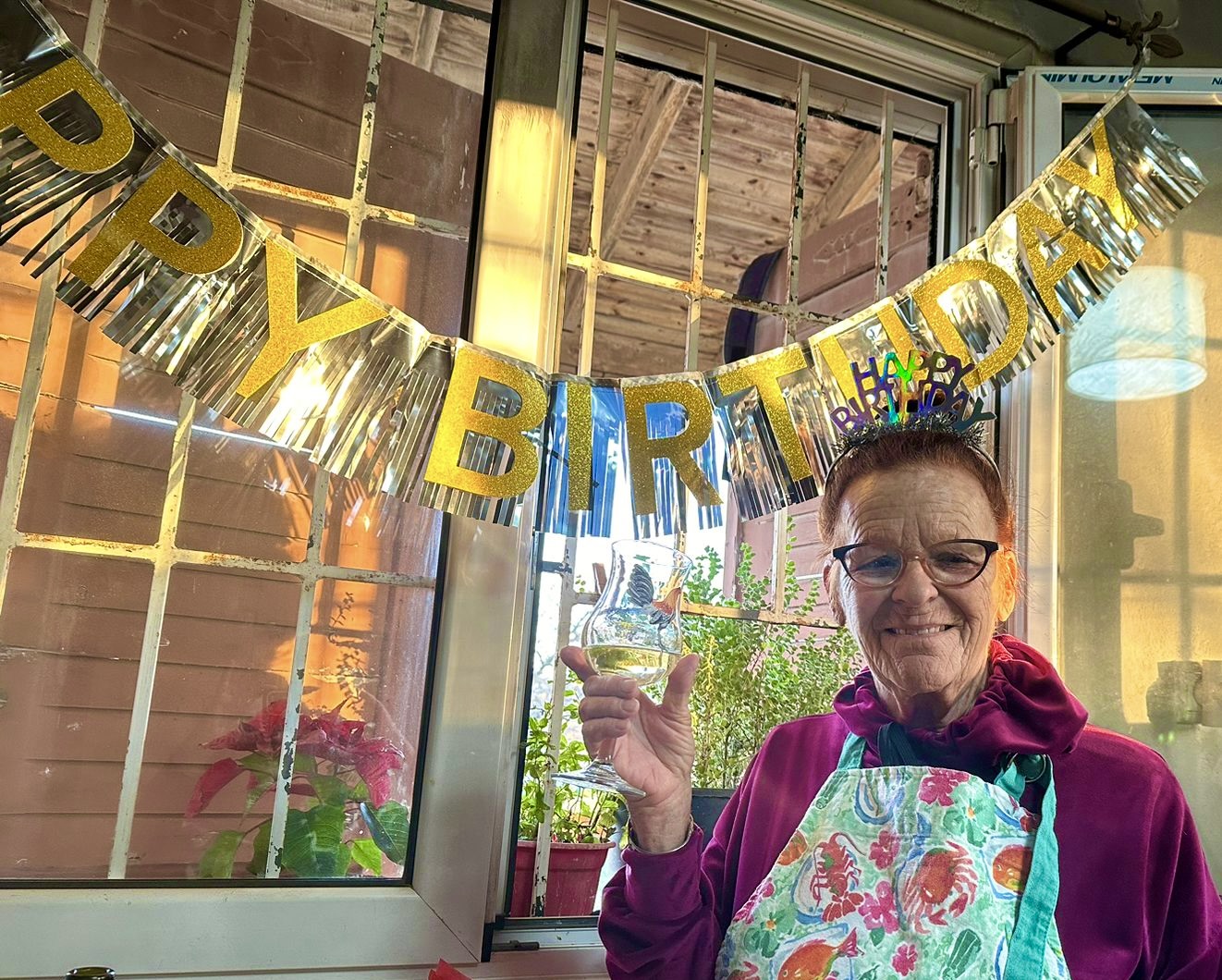
birthday party february 2024
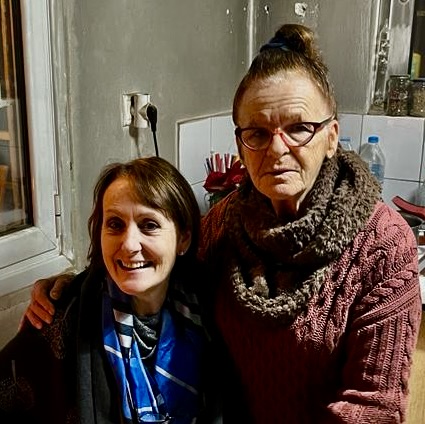
maddy and carla sassy and classy birthday cardtoasting with pinK champagnemodeling birthday boots
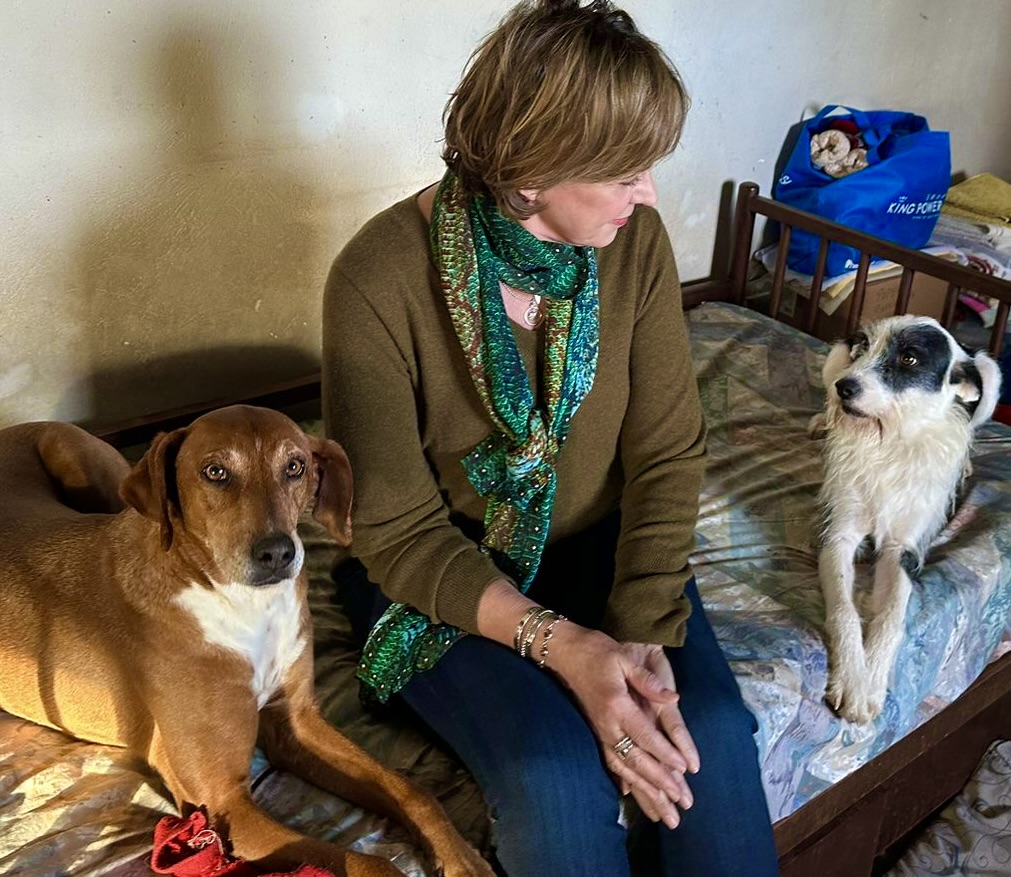
trying to bond with the dogs
the best I can do
hanging out with the dogs
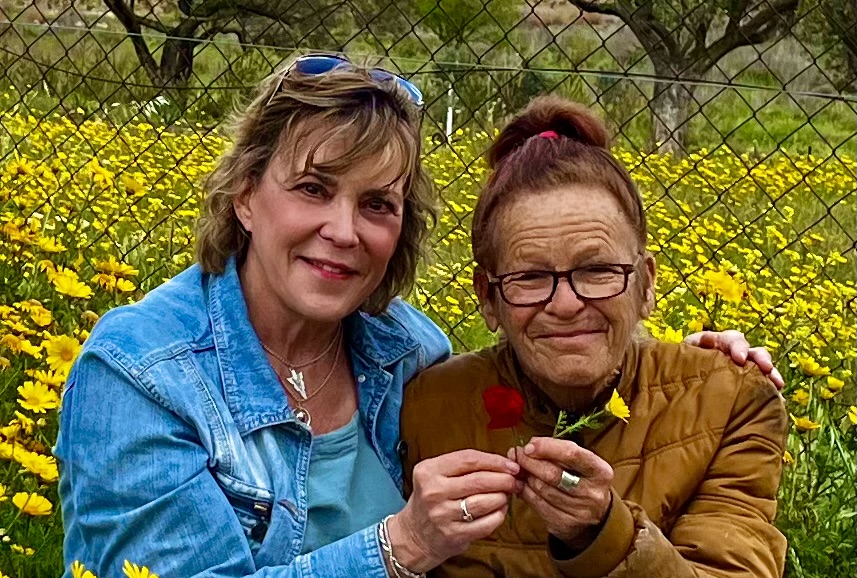
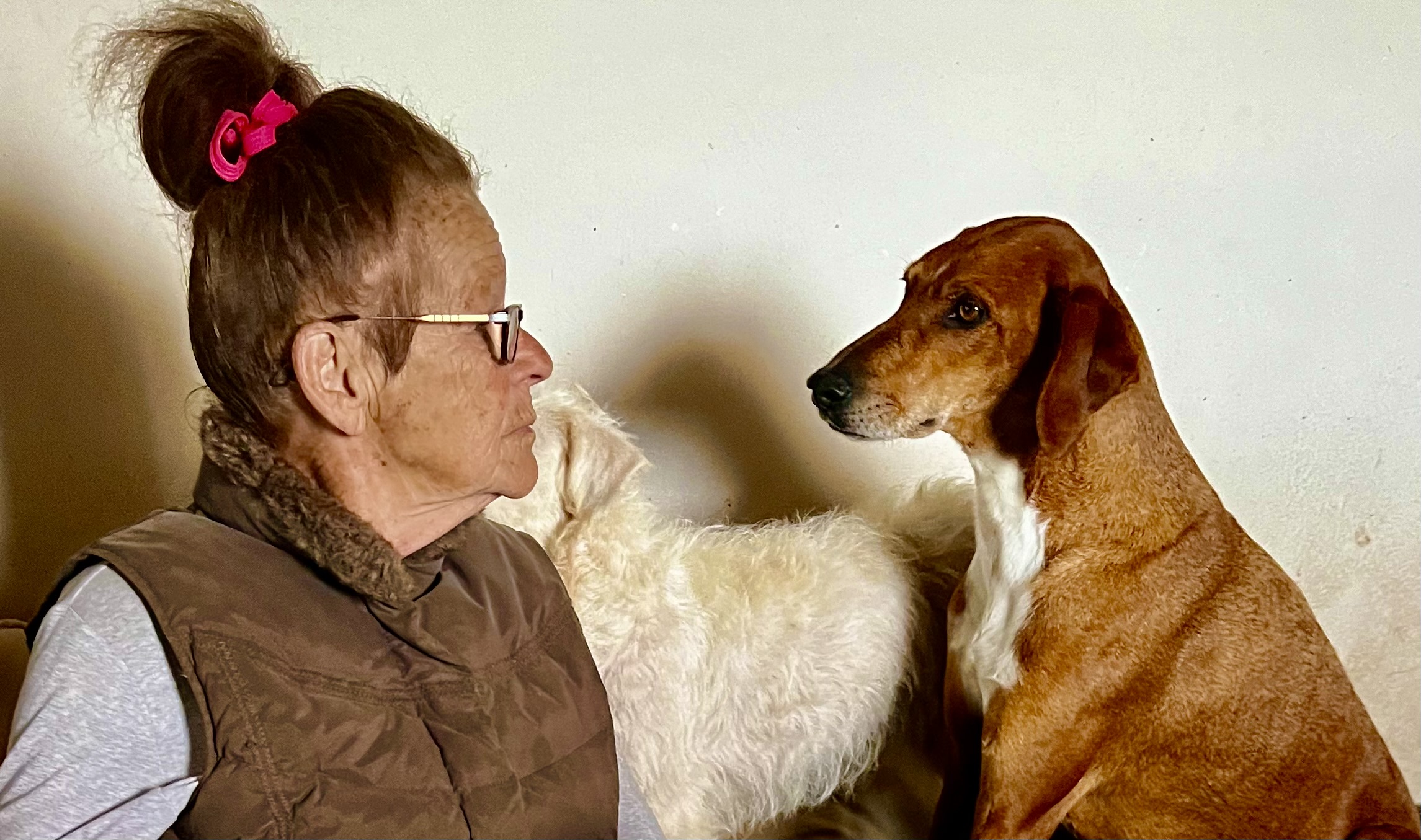
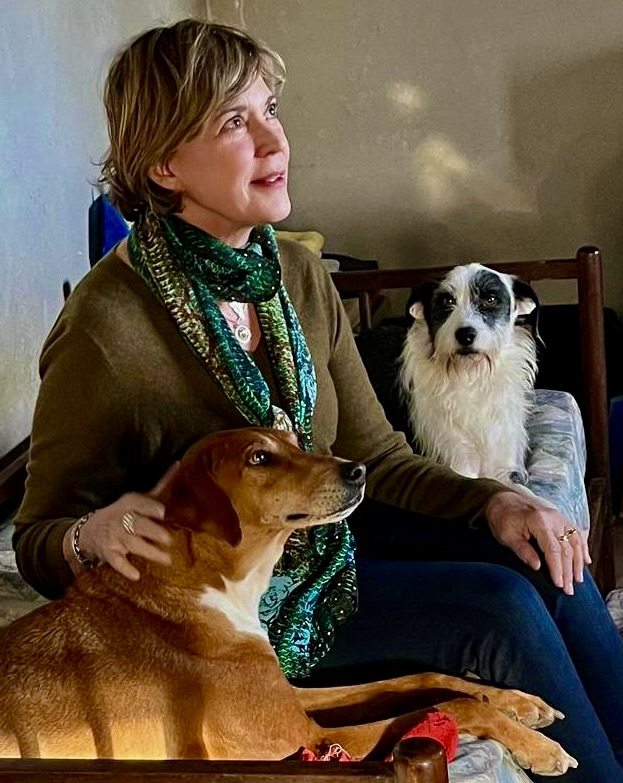
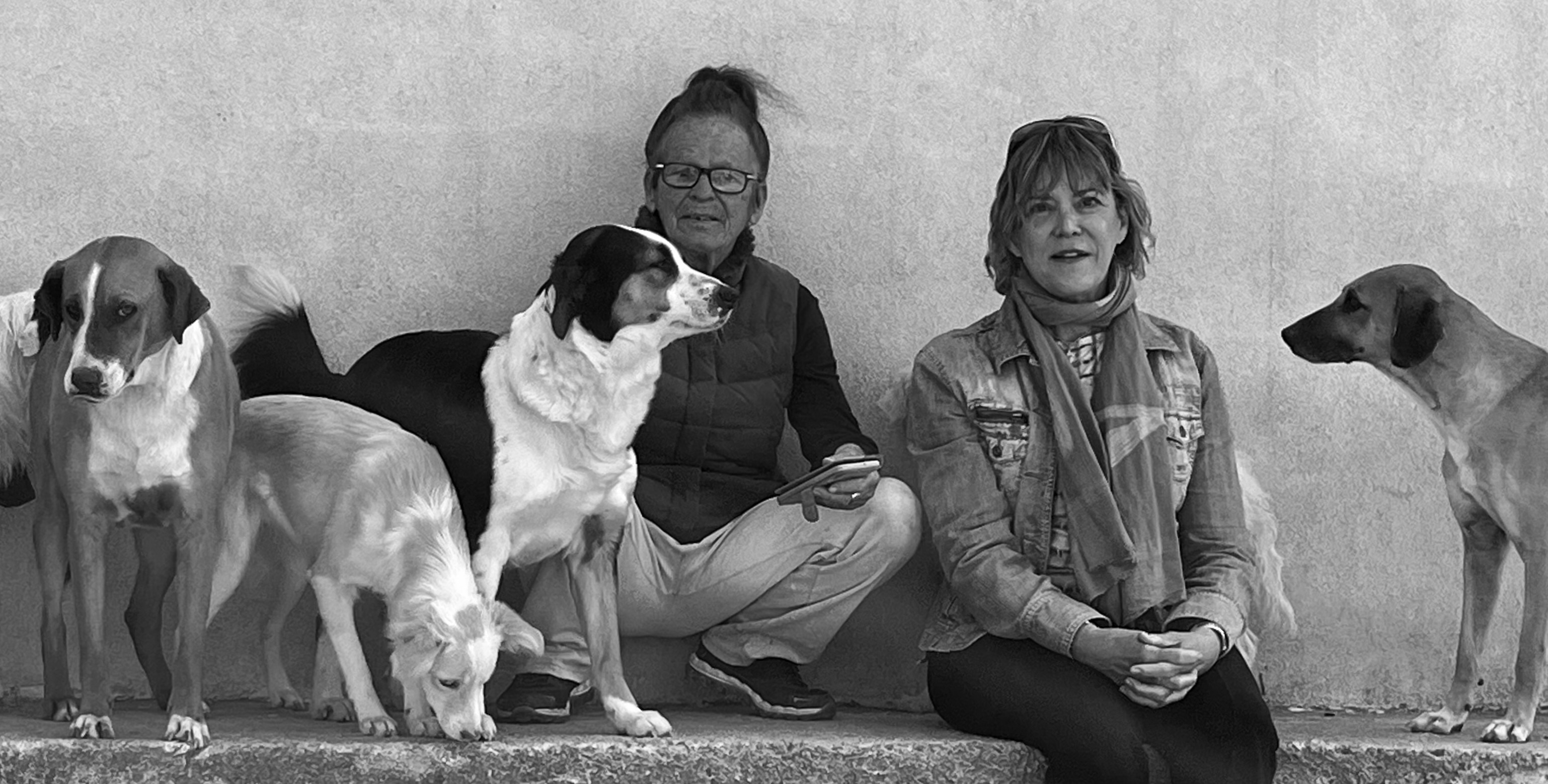
carla walker, dog lady extraordinaire
Click the link for the projects accomplished (with donations) in Carla’s Dog Kingdom over the past year.
Visiting an overseas friend who lives in Luxembourg, I found a book of poetry by Mary Oliver on a living room table. Awake early the first morning with jet lag, I settled into a comfy chair with a cup of coffee and thumbed through poems in the dim light. One entitled “Poppies” provided pause.
Oliver is known for connecting life lessons to her observations of love for the natural world. In “Poppies” her poetic sentiment contrasts the transient beauty of wild poppy fields with the inevitability of life and death.
“There isn’t a place in this world that doesn’t sooner or later drown in the indigos of darkness.”
To lighten the mood, she weaves in a moment of pure joy while visualizing poppies in the field.
“…But also I say this: that light is an invitation to happiness, and that happiness, when it’s done right, is a kind of holiness, palpable and redemptive. Inside the bright fields, touched by their rough and spongy gold, I am washed and washed in the river of earthy delight…”
While immersed in her river of delight, she circles back to darkness and loss, ending with a question.
“…and what are you going to do–what can you do about it–deep, blue night?”
Of course, there is nothing to do other than letting it go. Thus, exemplifying one of Buddha’s teachings that there is nothing anyone can successfully cling to in between the moment of conception and the moment of death.
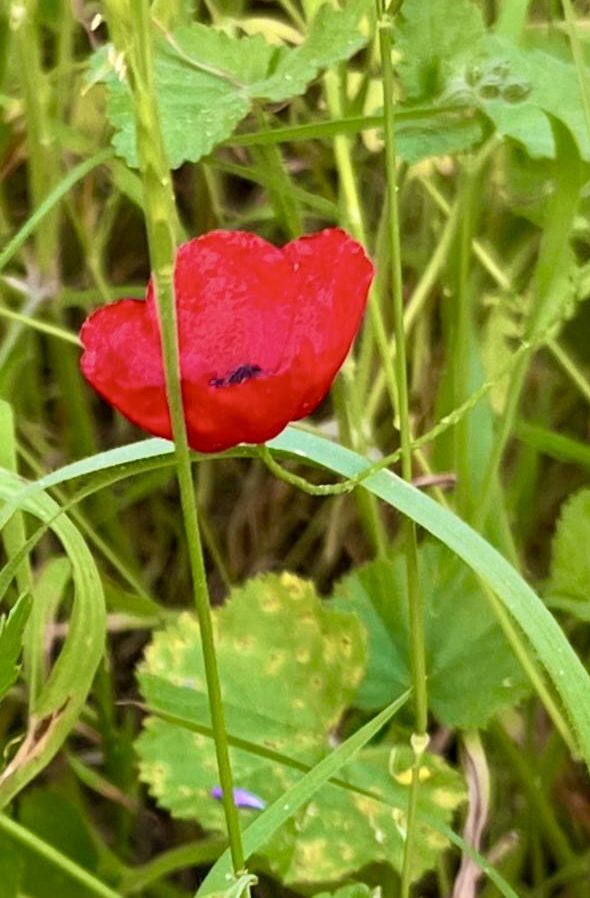
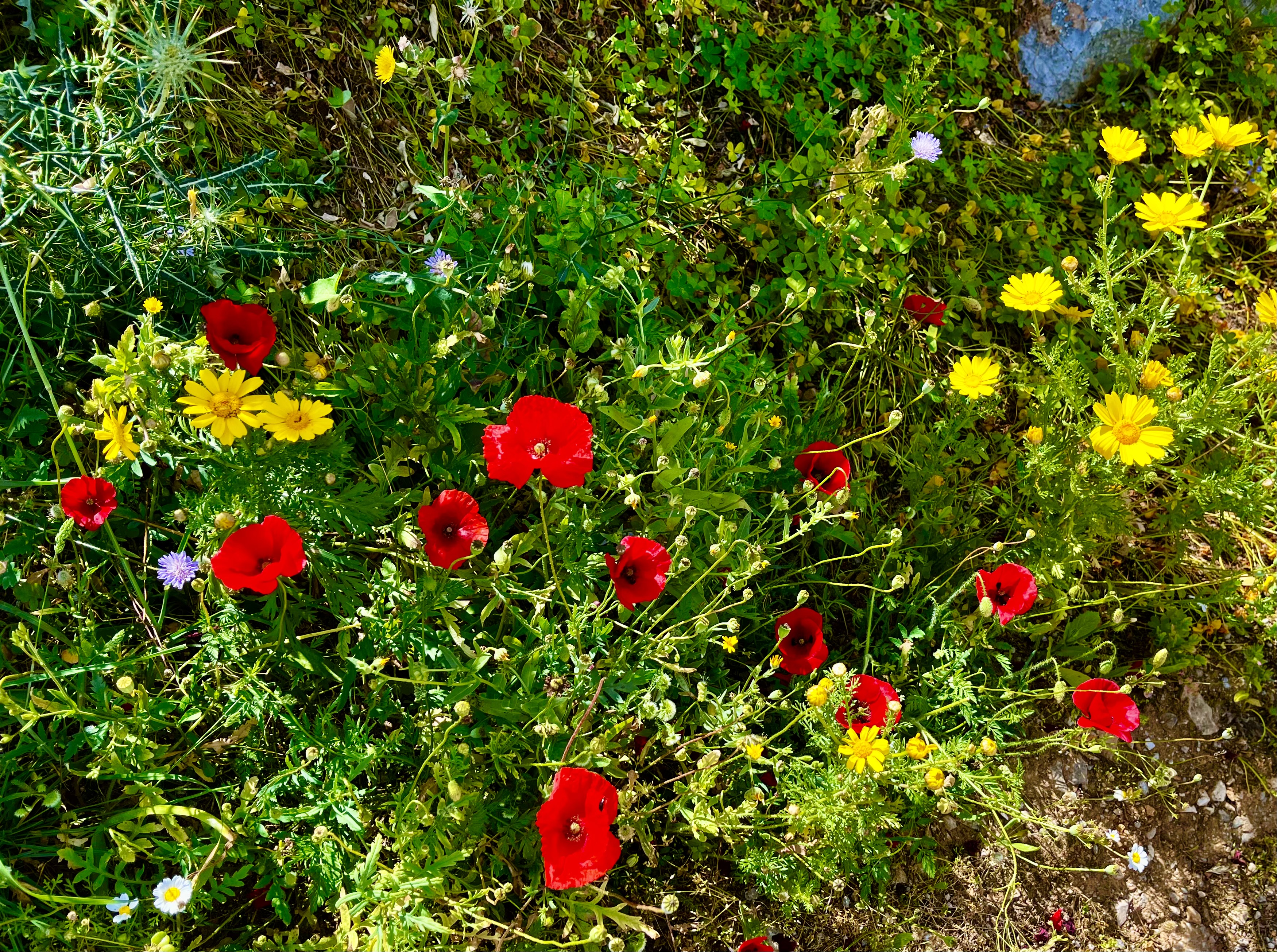
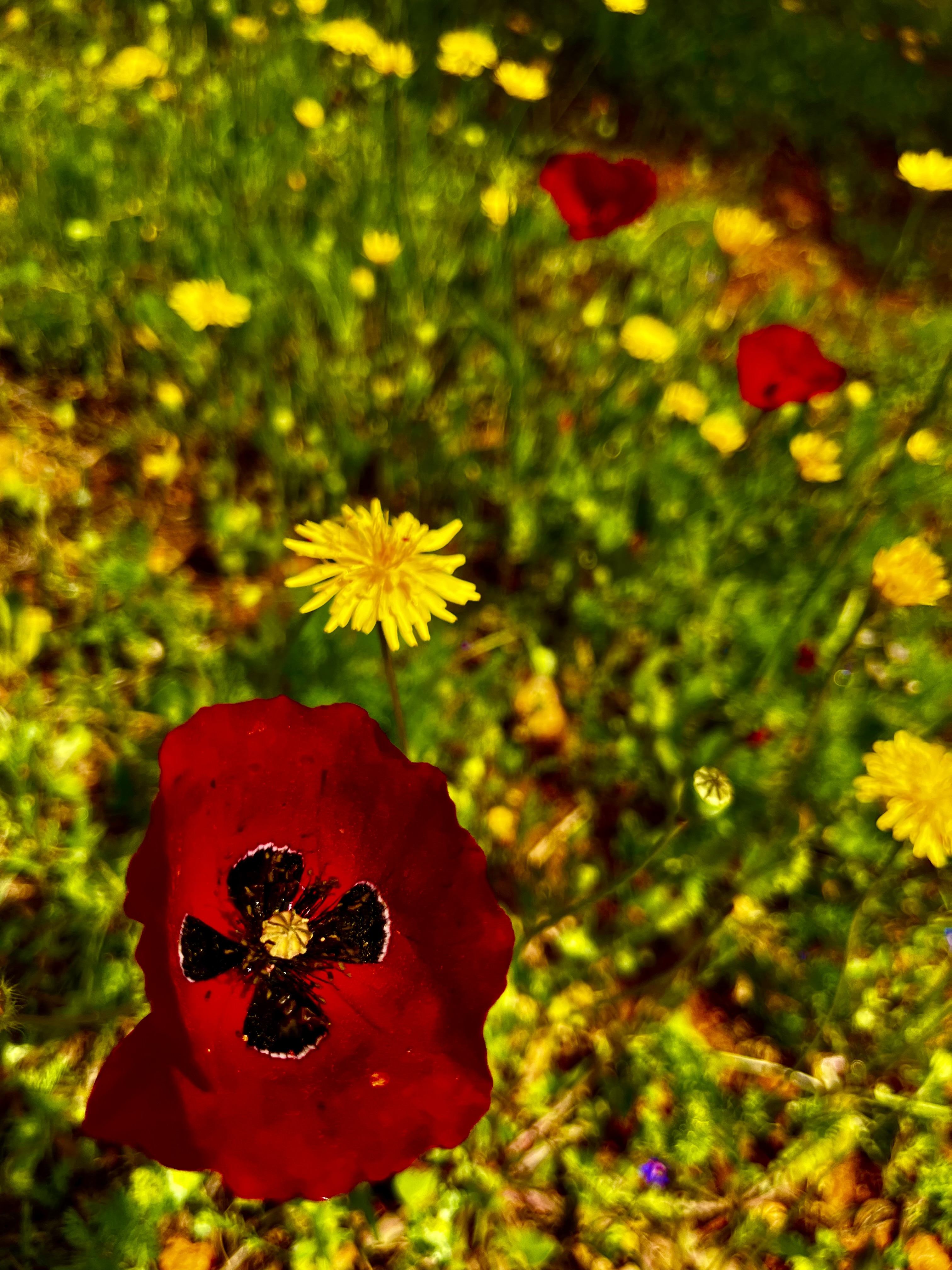
Poppies became my favorite flower when we lived on the island of Cyprus for three years. Every spring, deep red fields of poppy flowers bloomed in profusion all over grassy orchards, fields, and pastures. Shaped like a fine teacup, the crepe-paper-thin petals flutter freely in the breeze. En masse on a roadside or in a field or even in a small clump, they are spectacular. But poppy season is brief. Flowers wilt, fade, and fall to the earth as graying-red dust in a short time. Breathtaking in the moment and then gone. Another year passes.
Our children were young in those years. On weekends we drove out of Nicosia searching for a carpet of red and green to spread out our blanket and picnic. Spending an afternoon in a wild field of flowers and tall grasses is still a magical memory. It was stunningly beautiful, a family outing in the season of rejuvenation, and it made me happy to be there with loved ones.
Cyprus poppy field, circa 1991
During World War 1, [1914-1918], most of the fighting in Europe took place in open fields where poppies proliferated despite the death and mayhem all around. In 1915, Lt. Colonel John McCrae wrote his famous, historic poem, “In Flanders Fields”* after witnessing the returning spring bloom across red battlefields.
*Full poem at the end of story.
Since then, poppies have been a symbol connecting the blood and sacrifice of soldiers with remembrance, hope, and peace. They are also associated with the Greek God Morpheus–the god of sleep and dreams. Morphine and opium narcotics are derived from poppies, hence the reference to death and sleep.
What draws me to experience a profusion of blooming poppy fields whenever possible? Because, like Mary Oliver, I connect them to a personal lesson. They remind me of the nature of our own family’s life cycle. Beauty in learning and growth, and the eventual letting go as necessitated by time. There was uncertainty and risk taken by our young family of four when we made a decision to live and work overseas in the late 1980s. In geographies and life styles, that were not a reflection of our home culture, we adapted and grew in individual ways. Incorporating the very best of each country’s experience added significantly to our lives.
Now we are all back living full time in America. Our children are young adults with children of their own. They each have a personal perspective about growing up in other countries for thirteen and sixteen of their formative years. My hope is that it enhanced and deepened their awareness as global citizens, as more thoughtful inhabitants to contributing to the health of the world and our planet for their own children’s future.
I think about these things along with the light and dark life cycle of the seasonal poppy. The lightness, the brightness, the earthly delight when seeing them massed in peak glory. The dark side of “here and now” beauty is knowing that it is fleeting. It will leave. Which must occur in order to be ready for the next opportunity to grow.
poppies fadeas beauty has its season
This past spring, the seasonal return of poppies in the wild offered an opportunity to re-experience an assault of red on the senses. We were in Greece in April. Poppy season was on, but had passed its peak in Athens. Then we traveled to the island of Hydra. Asking others to be on the lookout, someone said they saw “a whole field of poppies in bloom” on a hike.
It wasn’t exactly like that. What we found was a roadside of brilliant red flowers crowning a cliff high above the Mediterranean Sea, still lacy and vibrant and swaying in the breeze. It was a sought-after reminiscence, perfect for the moment, the contrasting beauty of vibrant red petals and deep blue sea.
…and it was enough, before moving on down the path.
We live in a world where people think happiness is a condition, but it’s not; it’s a sensation. It’s momentary.–Fran Lebowitz
This existence of ours is as transient as clouds. A lifetime is like a flash of lightning in the sky, rushing by, like a torrent down a steep mountain.–Buddha
You can’t say I’m not happy ‘cause happy’s not an action, you just feel that way. –Ambersunshower, from the song, ‘Walter T’, 1996 [Only available on YouTube.com]
POPPIESby Mary Oliver
The poppies send up their
orange flares; swaying
in the wind, their congregations
are a levitation
of bright dust, of thin
and lacy leaves.
There isn’t a place
In this world that doesn’t
Sooner or later drown
In the indigos of darkness,
but now, for a while,
the roughage
shines like a miracle
as it floats above everything
with its yellow hair.
Of course, nothing stops the cold
black, curved blade
from hooking forward–-
of course
loss is the great lesson.
But I also say this: that light
Is an invitation
to happiness,
and that happiness,
when it is done right,
is a kind of holiness,
palpable and redemptive.
Inside the bright fields,
touched by their rough and spongy gold,
I am washed and washed
In the river of delight––
and what are you going to do––
what can you do
about it––
deep, blue night?
IN FLANDERS FIELDSby John McCrae
In Flanders fields the poppies blow
Between the crosses, row on row,
That mark our place; and in the sky
The larks, still bravely singing, fly
Scarce heard amid the guns below.
We are the Dead. Short days ago
We lived, felt dawn, saw sunset glow,
Loved and were loved, and now we lie,
In Flanders fields.
Take up our quarrel with the foe:
To you from failing hands we throw
The torch; be yours to hold it high.
If ye break faith with us who die
We shall not sleep, though poppies grow
In Flanders fields.
poppies sown in Colorado fields, courtesy of Harrington’s ranch
Many of the most rewarding relationships in my life are friendships formed when we lived in Asia, the Mediterranean, and Europe. Our family friendship with the people in this story, Nancy, Maddy, and Cabby, began in Taiwan in the 1990s. We forged relationships in the midst of howling typhoons and bed-shaking earthquakes, during Thanksgiving pig roasts, in delivery rooms birthing babies, on hillside picnics with roaming water buffalo [transcendent-picnics], at uncountable dinner parties in each other’s homes, and on apartment rooftops.
In 2018, we decided to have a reunion in Greece. Shortly before Easter, Nancy flew from New York to Paris where I was living. Together we traveled to Athens where Maddy and Cabby are now living.
In Greece, we shed our Asian history and jumped right into a mix of antiquity and contemporary adventures. As we climbed to the rooftop of their home, the Acropolis and Parthenon appeared stage center before our eyes. Hellooooooo Athina.
Acropolis and Parthenon, Athens 2018
Mornings began with breakfast carried to the roof–an image imprinted forever in my mind. Strong French-pressed coffee, a bowl of Greek yogurt with sour cherries spooned on top, a basket of buttered toast, hardboiled eggs. And that view…
chop checks out petit dejbrekkie with a view
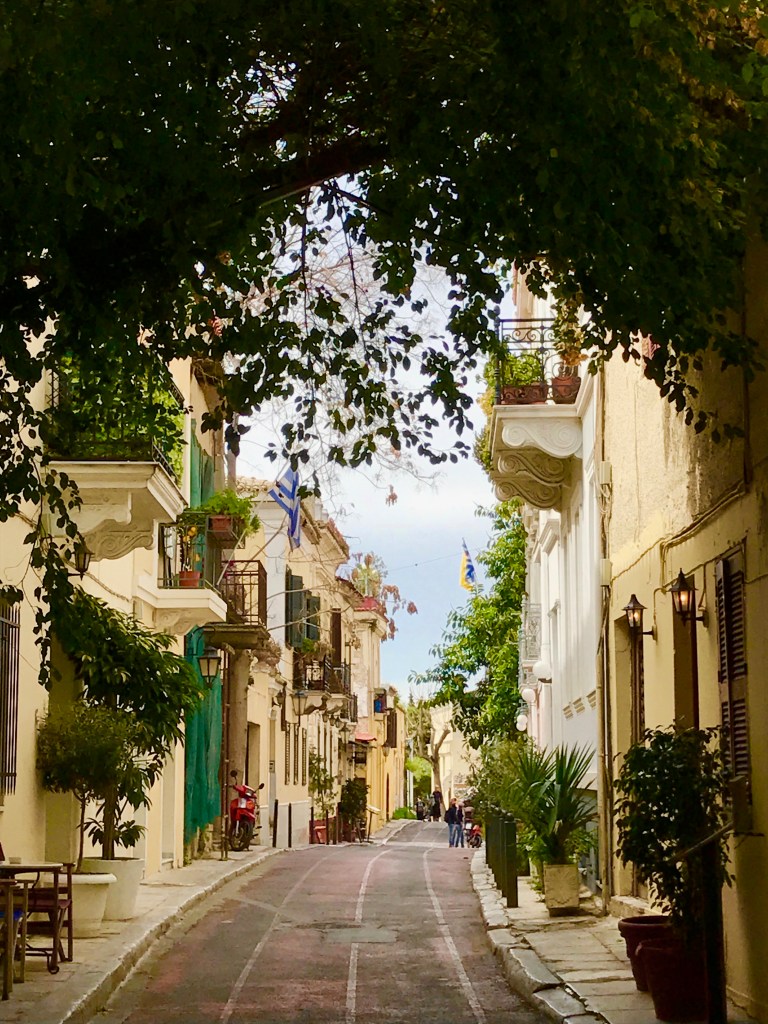
streetscape on the plaka, athens
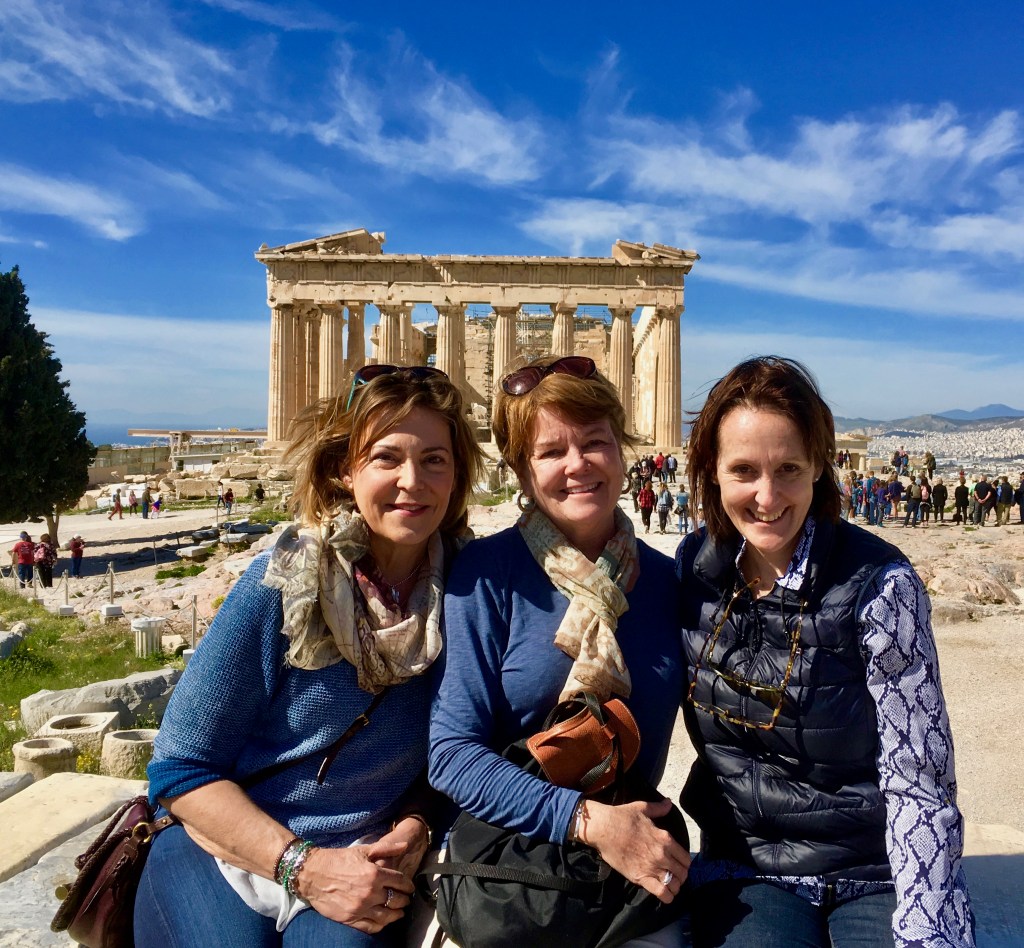
top of the acropolis, wendy, nancy, maddy
seaside, temple of Poseidon, nancy, wendy, maddy
Family and holiday traditions are often a shared experience with friends overseas. During the Taiwan years, when our children were young, Maddy and Cabby hosted an annual family-centered party at Easter time. Eggs, dyed and decorated, were hung from dried branches standing upright in a tall vase to form a colorful egg tree. Multiple families were invited. There was food and a ceremony involving candles and a song. Then the eggs were selected from the tree, one to each person, and taken home in carefully packed containers.
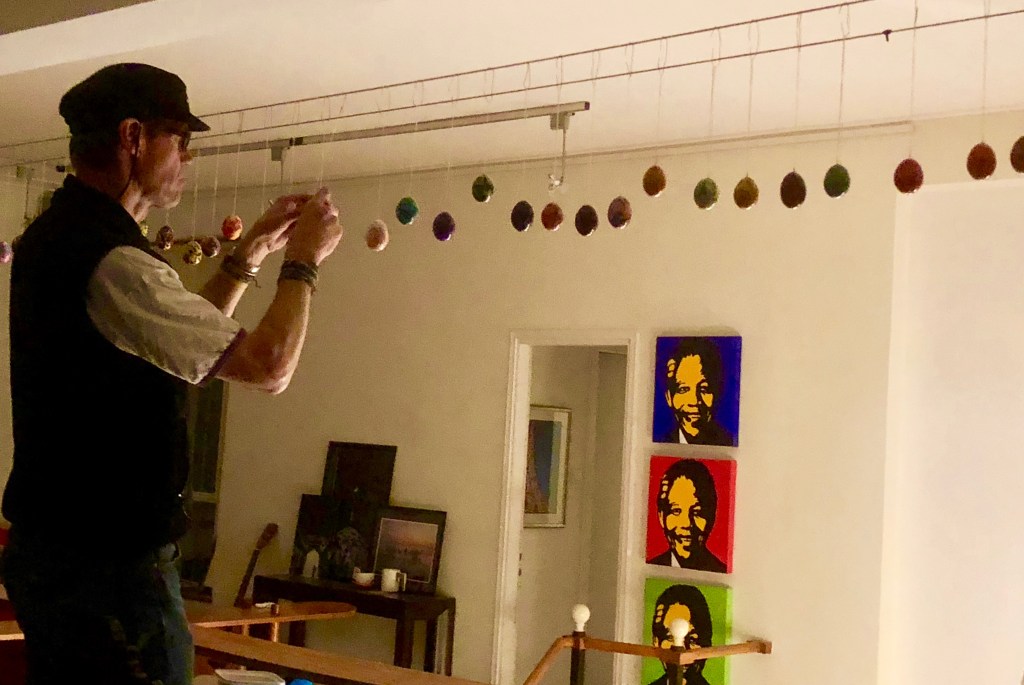
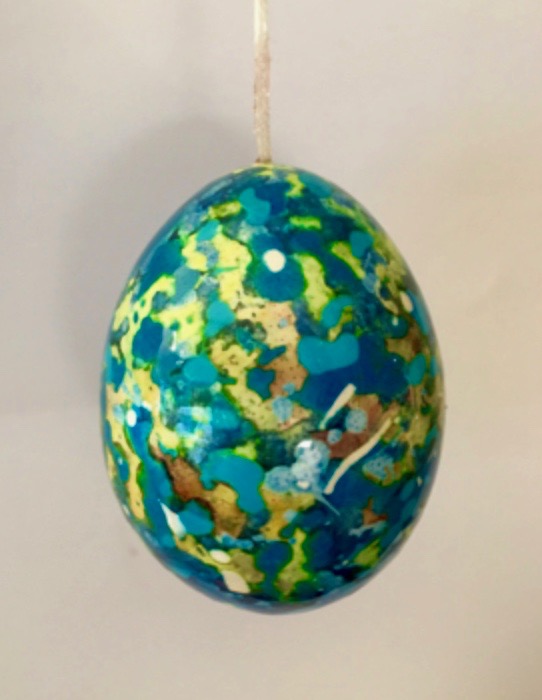
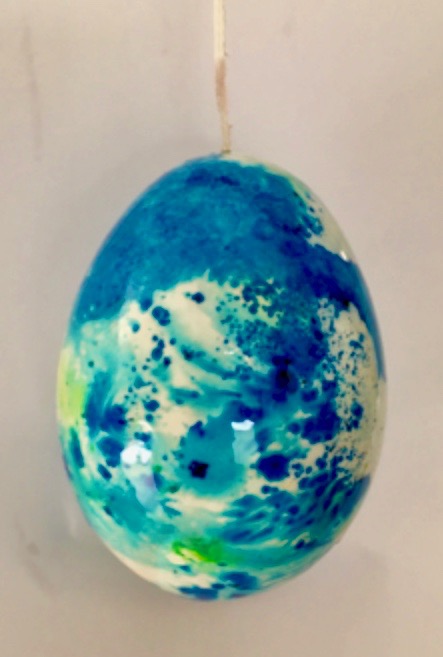
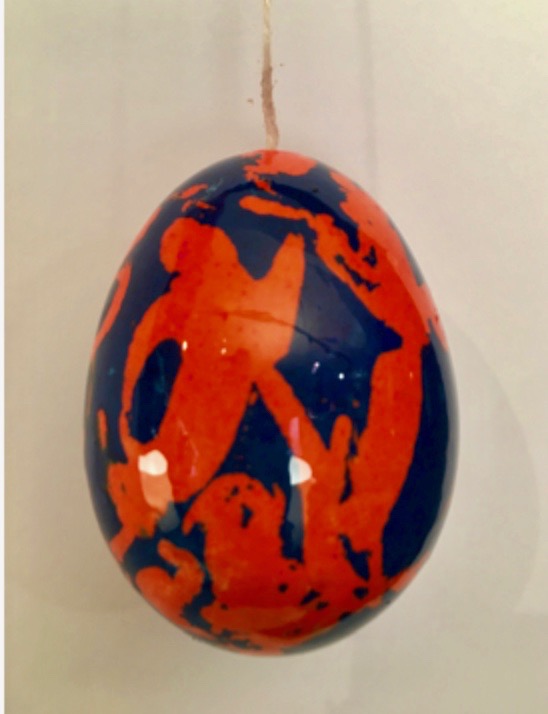
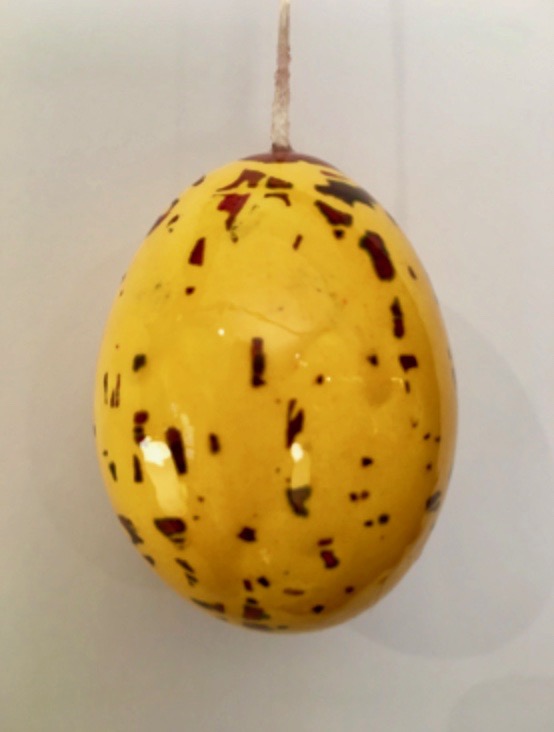
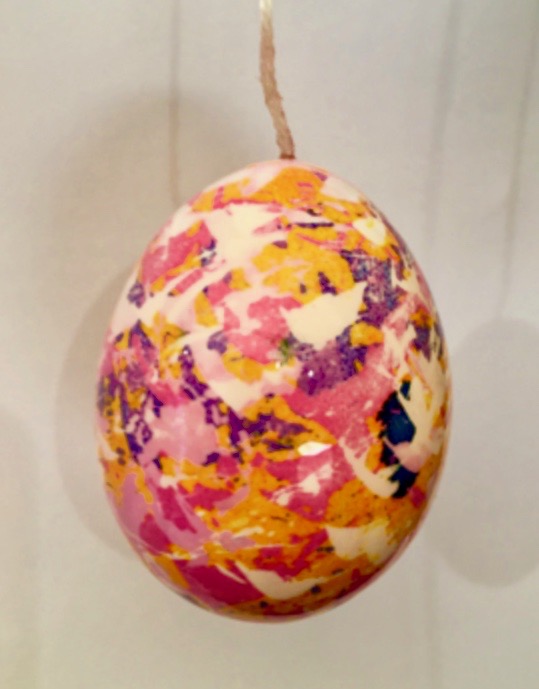
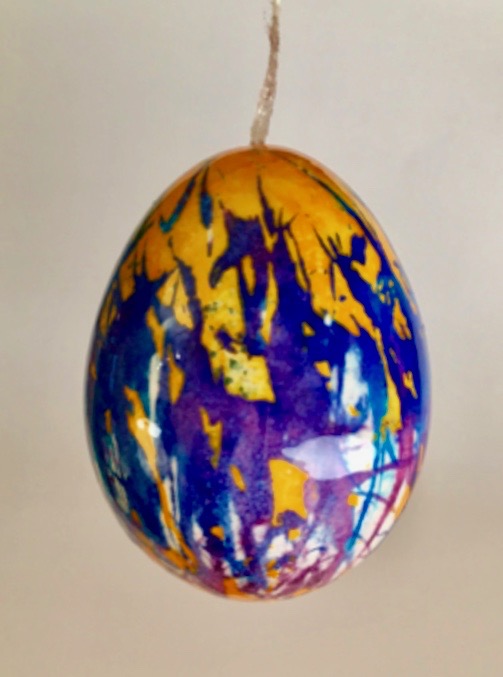
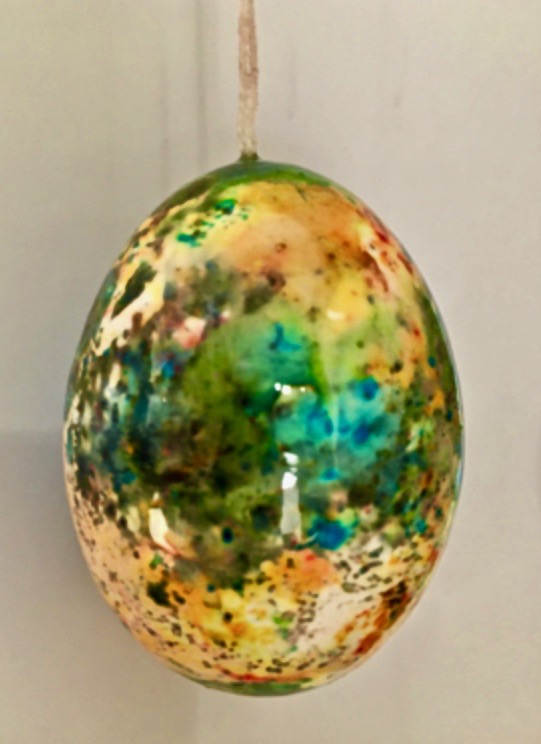
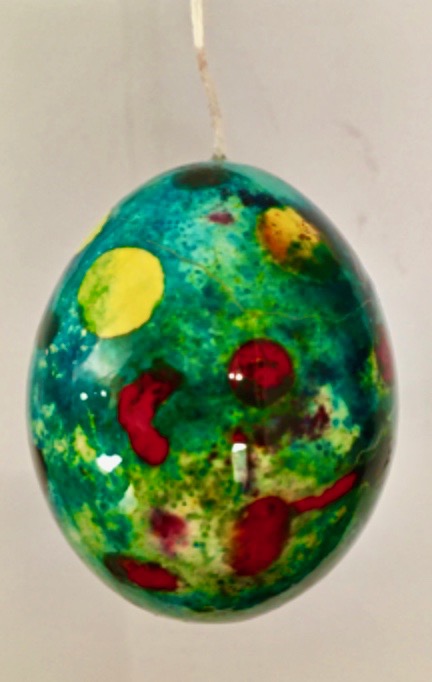
Twenty-five years later, Cabby was in the final phase of decorating 60 eggs hanging over the second floor balcony. I don’t mean simple-dipped-in-one-pastel-color-dyed eggs. I mean Eggs As Art.
sample of the 2018 egg line up
last step–lacquering
In the 1990s, decorating small bare tree branches as “Easter Egg Trees” became popular in the United States. In the Tennis/Hewitt family, the first egg tree was produced in Cambridge, Massachusetts when their first-born, Liza, was a toddler. It consisted of a single branch decorated with a few colored eggs taken to a party of graduate school friends.
Following graduate degrees and the birth of a second child, Maddy and Cabby moved to Taiwan. In succeeding years, their egg tree tradition was shared with international school families from Taipei, to Cairo, to Johannesburg, to Saudi Arabia.
Watching the tradition unfold in Athens, I realized that an important annual event, merged with artistry, had created outreach and a ripple effect in international relationships. Families from different countries and cultures invited to the Egg Tree celebration often carried it forward. They began new traditions that passed on beyond the Tennis/Hewitt family.
Maddy inspires action. Cabby implements details. It’s one of the ways they complement each other. Together they prioritize the importance of nurturing the family they created with lasting traditions.
maddy inspires
cabby implements
Cab also has a knack for research and prototyping. Since crafting the first egg tree, he experimented and fine-tuned the “how to” process of taking a raw white egg and turning it into something spectacular. The steps from A to Z are not for the impatient or the faint of heart. But, the results are dazzling.
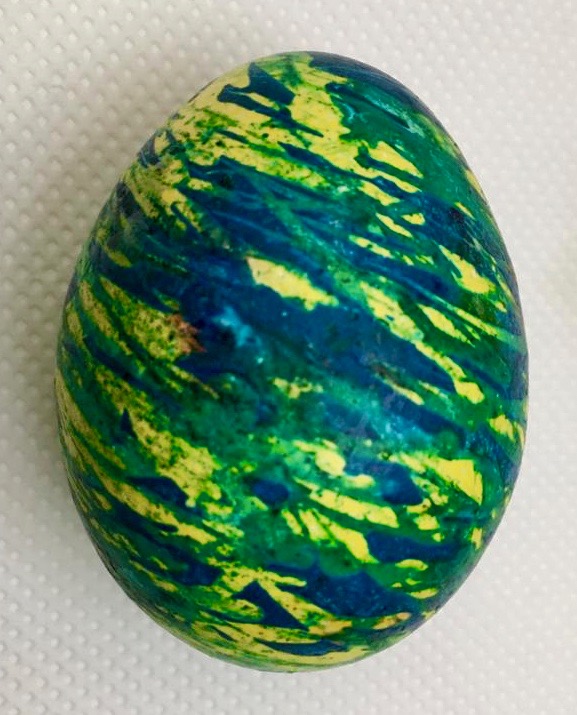
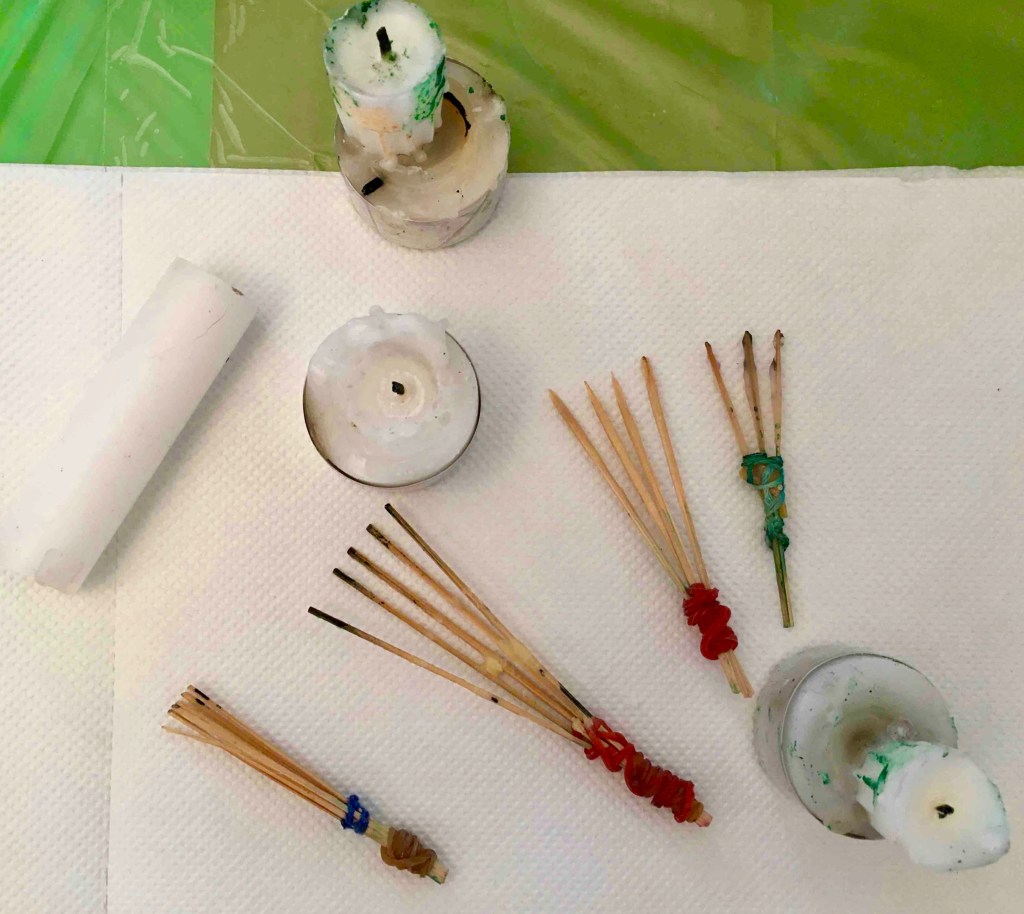
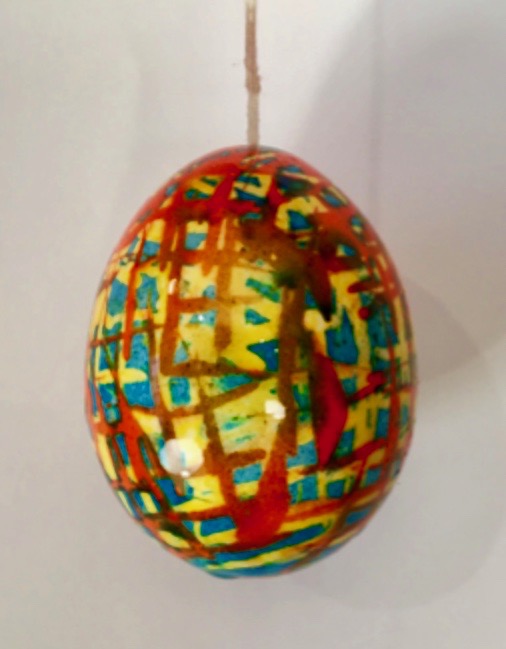
In the beginning, there was trial and error. He blew out the egg interiors as a first step only to realize that empty eggs don’t sink in bowls of dye. There was year-by-year evolution, advancing the dyeing/waxing techniques used today. For example, randomly splattered candle wax creates only one type of pattern underneath–spots. So Cabby made small tools from toothpicks and wooden skewers that allow painting stripes, swirls, and even plaid patterns onto the shell with hot melted wax. Complexity and depth magically emerge after rounds of dyeing/waxing/dyeing/waxing on a single egg. Each egg reveals a surprise ending.
The bleaching process arose from a mistake of leaving an egg too long in one dye. Because it turned an ugly dark color, he wondered why not lighten it with bleach. A new step was added when he discovered bleaching enhanced the depth and range of dye colors.
Growing up overseas, the three Tennis children spent time around the table with their parents learning the egg dyeing craft. One Christmas, when they were older, each of them received a complete supply kit with containers, dye packets and tools to build their own egg tree and carry on the tradition after leaving home.
Oldest son, Whiting, took on the challenge first as a university student. Now married and teaching in an international school overseas, he produces spectacularly decorated eggs and invites faculty families to participate in the Egg Tree Party.
2020 egg tree
After leaving Athens, I thought about the generosity of sharing this family-centered tradition all over the world and how comfortably it links people together in international communities. Cabby and Maddy exemplify a natural ability to build and create inclusiveness in every one of their relationships.
The Tennis Family Egg Tree Tradition is one way their family has fostered love and respect in their global and personal family and friends network. It begins at home with a circle of people gathered around a bare branched tree covered with kaleidoscope colored eggs.
I’m reminded of the ending to the movie Annie Hall. The main character muses about the nuances of relationships, suggesting they are sometimes irrational, usually complex, and often absurd. He tries to sum up his feelings with a joke:
…A guy walks into a psychiatrist’s office and says, hey doc, my brother’s crazy! He thinks he’s a chicken. The doc says why don’t you turn him in? The guy says, I would but I need the eggs.
And, he’s right. We strive to hold onto each other in love, support and caring, because, actually, all of us…need the eggs.
This is the definitive “How-To” for dyeing and decorating eggs in the Tennis/Hewitt tradition. Instructions are by Cabby Tennis. There is minor editing on my part for clarity.
THE TENNIS FAMILY EGG TREE
WHY GO TO ALL THIS TROUBLE FOR A FEW COLORED EGGS?
It brings family and friends around the table working creatively together.
There is hands-on learning––coordination, art, safety, chemistry, physics, perseverance, patience and the final “wow” factor with each finished egg.
There is grace and humility in overcoming a “Humpty Dumpty” moment of loss on the kitchen floor.
Cover surface of worktable with taped together garbage bags, a vinyl tablecloth, or shower curtain liner. Layer of newspaper on top absorbs spills. Do not work over carpeting! Outside picnic table is ideal.
Set up table with plastic gloves, liquid dye containers, plastic spoons, eggs, paper towels [pre-torn into a stack of single sheets], empty egg cartons, waxing tools [explained below], 3 bowls for bleach and rinse water, candles for waxing, small saucepan for hot melted wax, scissors, pen, scotch tape.
the set up
EGGS – Unstamped white eggs are best. Large [not XL] range free eggs tend to have stronger shells. Rinse under water–no soap. Eggs are dyed raw because they are heavier and will sink. Blowing them out comes later.
CONTAINERS FOR LIQUID DYES – Any glass jar [preferably with lid] such as jam jars, canning jars, etc. One plastic spoon per jar to prevent color mixing as eggs move between dyes. Leftover dye can be kept year to year, so save the jar tops. If not enough jars, use water glasses.
one spoon per jar, labelwith dye color, keep the lids
DYE MIXING – 1 packet powdered dye diluted with ¾-1 cup boiling water. Add 1 T. white vinegar. Apple or grape vinegar is ok. (Exception: No vinegar for orange dyes because they will curdle.] Follow package directions for diluting liquid concentrate dyes. Cut off color name from dye packet and tape on jar for reference.
WAXING METHODS
Partially used taper candles set into aluminum tea candle base for dripping or sprinkling wax over eggs.
A small saucepan with hot melted wax to use with tools [see below] or for complete immersion of egg into wax. Leftover candle remnants can be melted over low heat in saucepan on stovetop, camp stove, or hotplate. If no candles at home, purchase 2-3 thrift store pillar candles [any color] as melting base.
old candles to melt down, saucepan with solidified wax ready to heat
WAYS OF APPLYING WAX – Time to get creative. Holding a lit candle above egg, drip or shake/splatter wax onto shell. You can also use tools made from several toothpicks or split bamboo skewers bound with rubber bands to paint on wax. Repeatedly dip wooden tool into melted wax in saucepan, then touch or tap the egg with the tool. Egg color underneath the wax will be preserved and not take on next dye color. This is how you create different color patterns by waxing stripes, dots, or splatters on the dry egg. The number of colors on the egg depends how many times it goes through the cycle of 1. Wax 2. Dye 3. Dry.
candle set up for waxing, wooden tools made from toothpicks and skewersresults of using waxing tools
DUNK DYEING – Place waxed egg into any dye jar, then remove and gently dry with paper towel before waxing on a new layer of stripes or splatters. Repeat sequence as many times as you wish. Each wax application retains the color underneath it. Dyeing sequence is from light colors to dark. Begin with yellow [or any light color] moving toward darker colors each time you 1. Wax 2. Dye 3. Dry. Creativity and patience are keys to this technique.
BLEACHINGas part of the dunk dyeing process – An optionalbut effective way to reverse the usual light to dark dyeing sequence. Bleach lets you cut through any final dye color [even black] that is un-waxed on the egg. Once the dark color is bleached, a lighter color can be dyed over it. This takes deft handling. Three bowls recommended. One with 1 part bleach to 2 parts water, and two [or 3] rinsing bowls with plain water. Dip the egg into bleach solution. Then move it through the rinse cycles, swirling thoroughly through each bowl. Egg continues to bleach with each step. Dry with paper towel. Note: The bleach will creep under some of the wax edges so be quick with the steps. You can do several rounds of 1. Bleach 2. Rinse 3. Dye 4. Wax 5. Dye and then repeat.
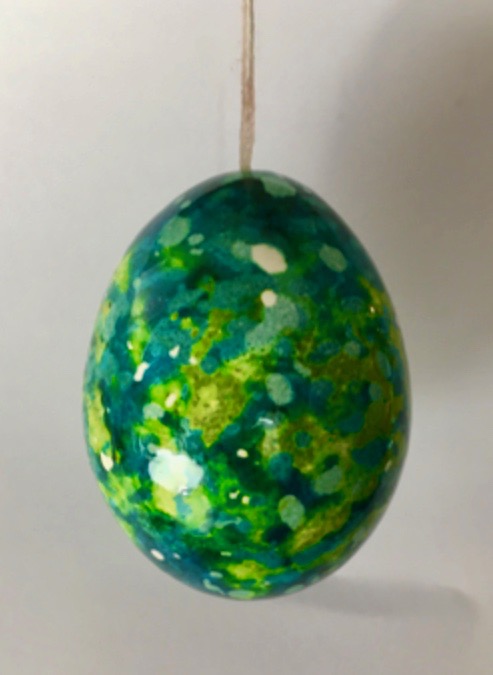
POWDER DYEING – This is a simple and efficient one step method to achieve beautiful eggs with the look of Monet water lilies or a ‘60s tie-dye experience. Eggs must be moist after soaking in plain water or liquid dye. Use leftover powder remnants [from envelopes used to make liquid dye] or open new ones specifically for this technique. With previously opened packets, write the color name on the outside to identify the powder inside.
METHOD FOR POWDER DYEING – Wearing clean, dry gloves lift a wet egg from bowl and hold each end between thumb and fingers. Tap the powder dye envelope against the egg to sprinkle grains onto the moist surface. Upon contact they will explode into fireworks shapes. Turn the egg and keep applying powder until it has the look you want. Use different colors, but be careful of combinations. Red, green and blue used together will turn brown. When desired color is achieved, quickly pat dry and immerse in saucepan of hot melted wax to seal. Or splatter with candle wax.
results of powder dyeing
DE-WAXING EGGS – Wear gloves. Place used candle stubs or pillar candles into small saucepan over low to medium-low heat on stovetop. You need enough wax to completely immerse an egg. Have a stack of prepared paper towels nearby. With a slotted spoon, lower egg into the pan and stir gently, watching for wax coating to loosen and shed. [Stirring speeds up wax removal.] When the coating is clearly melted, add a second egg to the pan and lift first egg out. Rub loosened wax off first egg with paper towel. It should feel smooth with no rough spots and have a shiny patina. When wax in the pan starts to film over, time to re-heat on low temperature.
Safety note: Heat wax only until it liquefies. If it starts to smoke, it’s too hot and should be removed from heat.
Economy note: Place the saucepan of wax in the refrigerator overnight. The solidified wax will pop out the next morning. Store for re-use the next year.
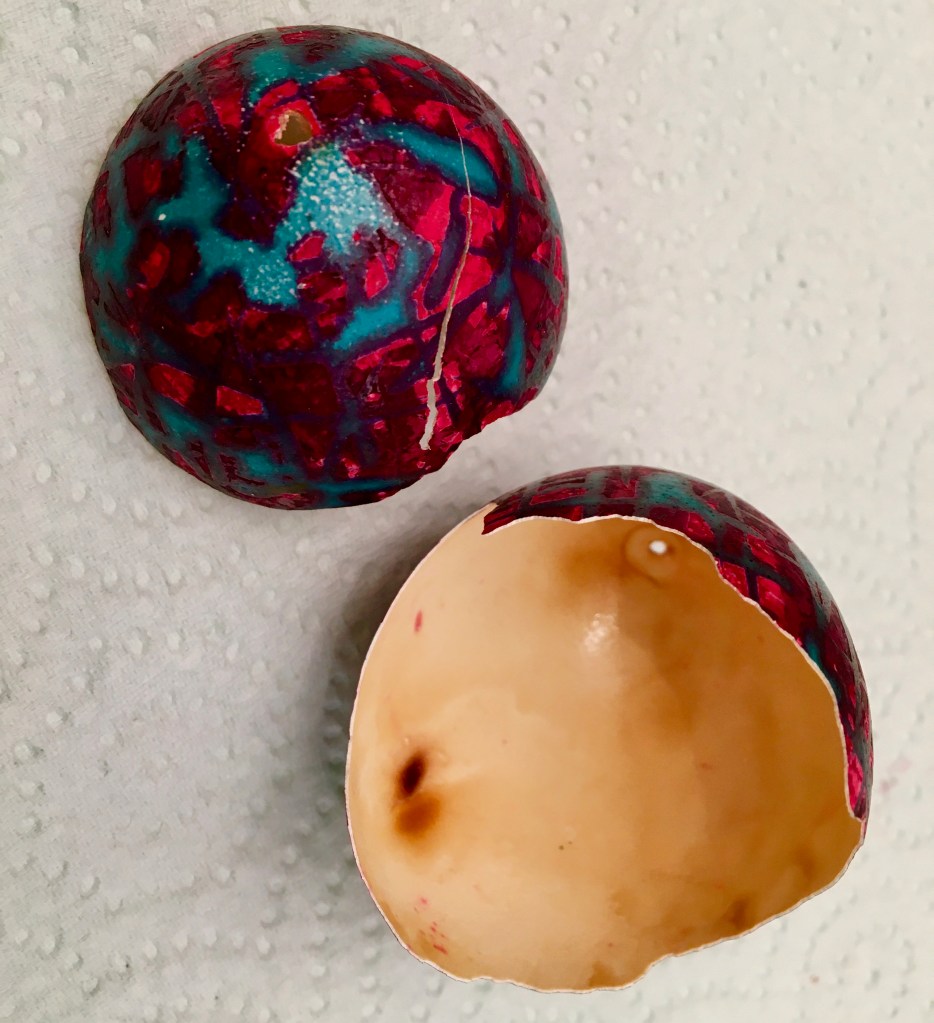
BLOWING OUT THE EGGS – Use a bellows type egg blower. Good source: BestPysanky Egg Blower. With the awl that comes in the kit, make a hole in the exact bottom of egg the size of a wooden kitchen matchstick. The bellows pumps air in and forces white and yolk out the bottom hole. Be gentle. Take your time. Too much pressure and egg can explode. Use a paper clip or thin wire to break yolk or un-jam clogs as needed. Do this in rounds, about 10 eggs in a round, letting each egg sit upright between rounds so gravity can help the insides move to the bottom. Next, do a “gravity shake”. Holding egg upright in fingers, firmly and repeatedly whack your wrist against the tabletop onto a paper towel. When drips emerge from bottom of egg, blow it out again. Repeat until nothing comes out of egg and it feels light and empty. Finally, carefully use the awl to make a hole the size of a thick paperclip in the top center of egg. This is where knotted string will be attached later.
sample of egg blowing apparatusbellows extraction of egg interiorgravity shake to aid final removal of yolkBest Pysanky egg blower, extracting yolky interior, gravity shake to move the last bits down
BAKING THE HOLLOW EGGS – This removes the final film of wax and bakes inside of eggs to prevent spoiling. In a preheated metal pan, place 6 eggs at a time on their sides. Make sure both ends of egg are open and unplugged or egg can explode in the oven. Bake at 350 F for 4 minutes. Watch carefully so they don’t burn. Remove from oven and cover pan with foil or kitchen towel to retain heat. Place next pan of eggs in to bake. Quickly rub each baked egg with paper towel to remove any wax residue before it cools.
the ever-ready stack of paper towels, a baking disaster
STRINGING THE EGGS – Use thin string such as dental floss or embroidery thread. Tie a knot and create a loop where the size of the knot barely fits inside top hole of egg. Hold the knot against the hole, and gently push it inside the egg with a paper clip. Expand hole with the awl if necessary. Line up strung eggs for gluing. One by one squirt a tiny dab of super glue into the hole. This affixes knot inside the egg. Let eggs rest on their sides [string parallel to table top] while glue dries. Avoid getting too much glue on the string above the egg as it will dry stiffly and can snap like a twig over time.
loop, knot, squirt of glue, dry in side lying pose
HANGING AND FINAL CLEANING OF EGGS – String a rope where eggs can be suspended at least 6 inches apart. Use large paper clips or loops of wire to attach eggs to rope. If inside the house, place drop cloths below to catch drips. Wear gloves and use a soft cloth to gently wipe each egg all over with paint thinner [white spirits in Europe]. Dry with another soft cloth to remove any residual wax. Let stand for 30 minutes. This step speeds up drying time of the lacquer.
LACQUERING THE EGGS – Use clear polyurethane [Varathane] or Spar Varnish to seal eggs and enhance colors with a durable finish coat. Varnish can be satin or gloss finish. [Cabby prefers gloss.] Dip fingers into the urethane and rub each egg, coating from top to bottom. Dab off accumulated drips with paper towel. Lacquer can take 1-3 days to dry. Eggs kept year to year can be re-lacquered annually. The Tennis family has one egg, “Jungle Book”, with over 15 coats and a deep hard shine.
NAMING [Optional, but great fun] – Give each egg a creative name–something it reminds you of. Examples from the 2020 collection: The Duke of Earl, Violet Sultana, Jigsaw Cyan, Fly Like an Eagle, Calypso, Sgt. Pepper, Tetherball, Clouds of Mercury, Purple Reign, Gilly Spring
kaleidoscope eggs
BEST EGG TREES – Made with dry sticks or branches with many limbs. Bougainvillea branches are excellent. Bind branches with string or zip ties and place in a large vase or container, preferably metal. Fill with rocks/pebbles to keep branches secured and centered. Hang eggs in a pleasing arrangement.
THE EGG GIFTING TRADITION – Invite families with young children to your home. Have an Easter reading about the historic symbolism of eggs, the season of spring and renewal, or related meaningful traditions. Light hand held candles one by one around the circle, and sing, “This Little Light of Mine”. Pass a bowl of folded bits of paper with numbers on them. Eggs are chosen from the tree in numerical order. [Parents sometimes trade numbers so children can pick earlier.] Number 1 leaves the room after pre-selecting an egg in their mind. The group tries to guess which egg will be chosen. #1 returns, removes their egg and the sequence continues. The key is to keep the pace going without dampening the enthusiasm of conjecture.
Egg cartons are filled with selected eggs for each family to take home.
A new egg tree tradition begins.
Cabby has additional details such as video clips of different stages of the process and a movie of the complete 2020 egg line up with names included. For more information, contact: windowtoalifeoverseas@gmail.com