Shrooming in Latvia

img_4560
photo by olga gorbacova

In June 2015, our son Adam married his bride, Anna Jerovejeva, next to a lake in the Latvian countryside. The partying went on for two days and was told in a previous story, Letting Go In Latvia.

img_4050
the wedding site, june 12, 2015

The women in our daughter-in-law’s Russian family–mother, aunt, grandmother–invited me to return to Riga, Latvia for mushroom hunting season in September. Foraging the forest for edible fungi is an anticipated annual event.

The lack of language on both sides [no Russian-me; basically no English-them] was slightly daunting. Then I realized it would be crazy to pass up an adventure like this. Think of the advantages. 1. I would forge a new Russian/American alliance. 2. I would participate in an ancient survival skill involving tools and hunting. And 3. I would learn to avoid poisonous fungi that could upset international family relations.
img_4572
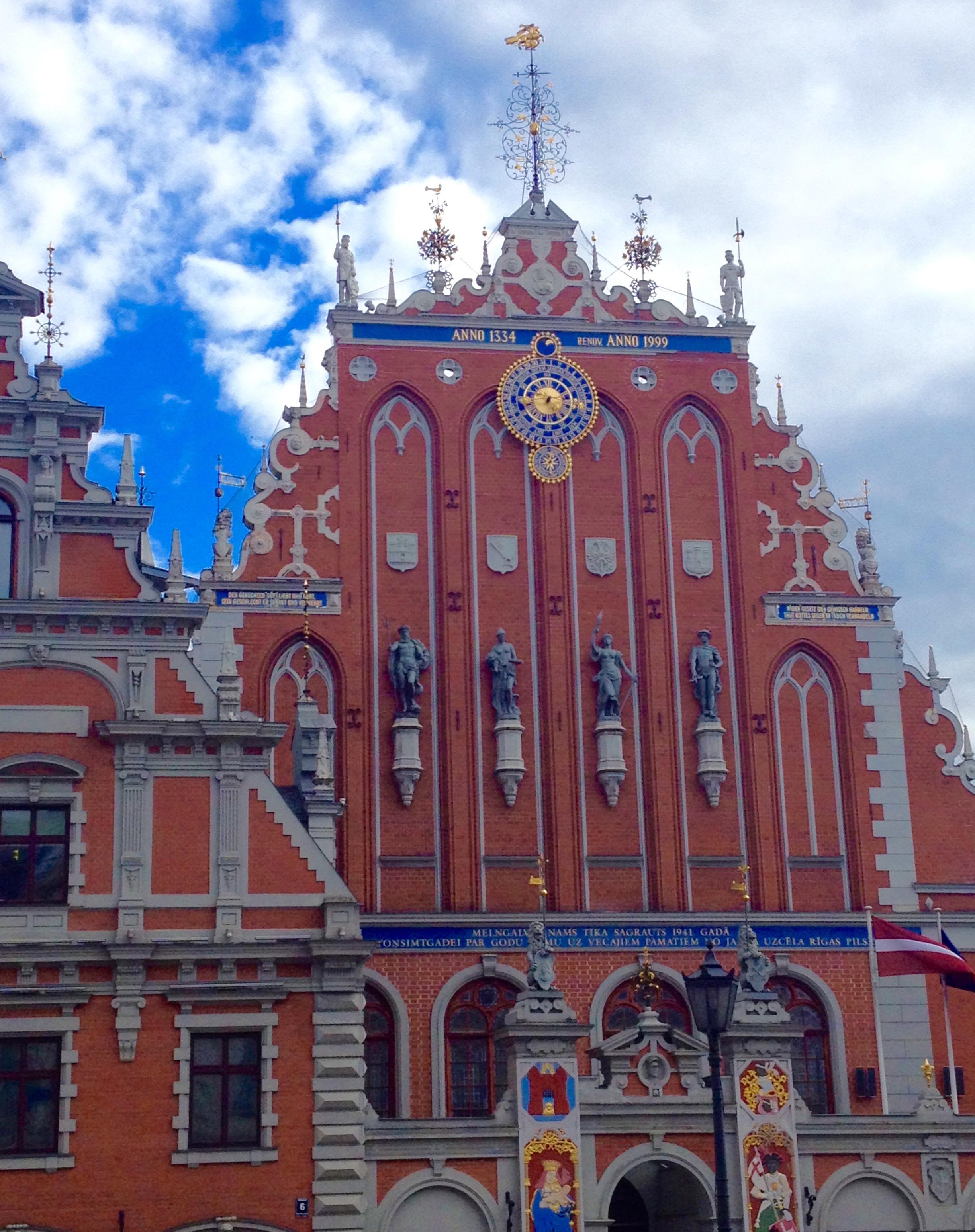
the historic part of riga

Arriving in Riga, I was hosted to a private tour of the old city and its history. My guide, a young Latvian woman, spoke fluent English. Anna’s mother, Tania, who speaks a little English but not confidently, acted as my personal photographer.

Like many Eastern European countries, Latvia has a complicated history. In the beginning it was purely Pagan. Then Germanic people arrived bringing Christianity to the old world mix. They set up shops and churches and a new form of civilization. There were influxes of settlements of Poles, Finns, and Russians.

img_4695
on the city tour with tania

After WWI, from 1918-1940, Latvia had a brief twenty-two year period of complete independence. The Russians returned in 1940. Then the Germans replaced the Russians until WWII ended. In 1945, the Russians ran the Germans out for the last time. The Soviet Period lasted until 1991. Finally, Latvia underwent its second independence with the breakup of the USSR. The post-Soviet years began.

In 1991, a new law stated that in order for citizens of Russian heritage to receive Latvian passports they must learn both the language and history of the country. Many chose not to as they were past school age, raising families or trying to get by working their everyday jobs. Anna’s maternal grandmother, Vera Gorbacova, is one example. She was born on the eastern edge of Latvia near the current border with Russia. She raised two daughters, Tania and Olga, and worked in a factory as an engineer. She never learned to speak Latvian. The family mother tongue is purely Russian.

img_4585
vera aka “babushka”

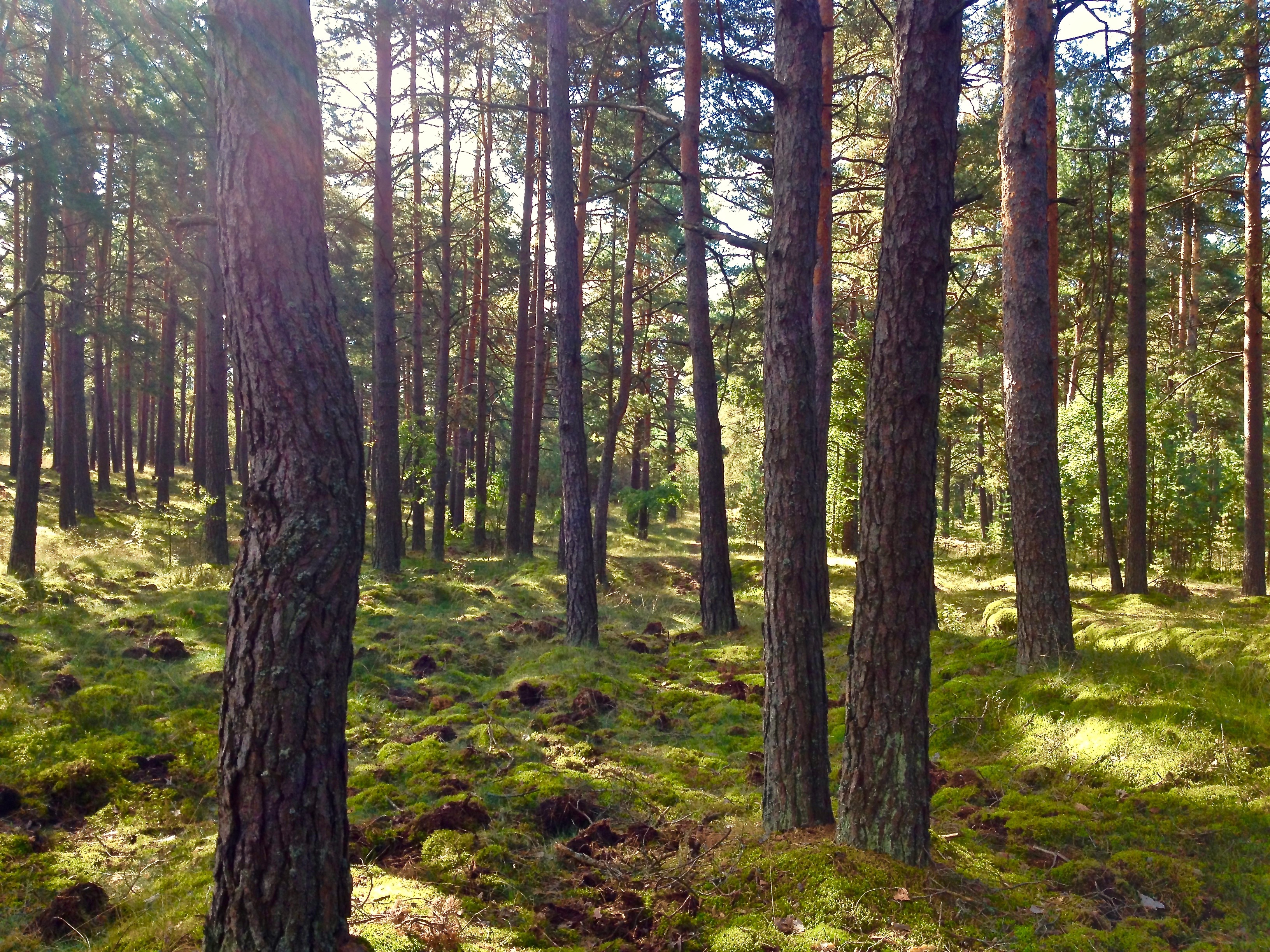
Mushroom hunters in Latvia are a devoted cult. The day of the hunt has its own rituals. As foragers, the women have favorite forest areas where they return many times each season. Mushrooms are best harvested in cool, rainy weather where fungi grow plentifully in mossy groundcover under trees, rocks, and leaves.

img_4605

Early fall of 2015 was unseasonably warm and sunny . I didn’t need to dress traditionally in rubber boots or even wear a coat. We left Riga mid-morning and drove 45 minutes outside the city to the secret woods. My guides were Tania, her sister Olga, and their friend Edita, who acted as my translator. That day they needed to do some serious sleuthing to find the coveted treasure.

I was given my own set of tools–a basket holding a knife for harvesting and a purple plum for energy. I was shown how to cut mushrooms close to the ground with the special blade. Off we went, fanning out to cover maximum territory.

The woods were not particularly dense, but if I wandered out of visual range I would hear a plaintive “Wennndeeeeey, where are you?” These women were not about to lose their American relative in the Latvian forest. I tried to stay within their range of comfort.
img_4625
serene beauty in a secret forest

Olga is particularly gifted in guiding the hunt. She would search an area alone and then call me over to do the actual picking. Or cutting. But I really liked finding some little nest of mushrooms on my own. However, when I showed them off proudly, Olga threw most of them back on the ground because they were too small. Or they were­, well…poisonous.

img_4610
olga scouting for me

One of the great parts of the day was when we returned to the car for lunch. A tailgating party! From the open trunk came a delicious little feast you could hold in one hand. No plates or napkins necessary. Silvery smoked fish covered small squares of sliced black bread. There was a whole hardboiled egg, and a big wedge of red tomato.  Lunch looked like a beautiful still life painting–in my hand.

img_4642
olga and edita my translator

Two more hours of hunting before returning to the city, changing clothes, and meeting at Tania’s to cook dinner. My translator from that point on was the vivacious Julia, married to the very patient Juris who would not take a drink of alcohol during our time together because he was responsible for safely chauffeuring “precious cargo”–Julia and me. You have to love a man like that!

img_4724
cleaning ‘shrooms with julia
img_4656
the harvest pre-cleaning

Tania was cleaning mushrooms when we arrived. Her technique was meticulous. They must be completely peeled–head to stem. [Thus, bigger means less work for the end result.] If the inside of the stem was not perfectly white, when looking at it from the bottom, it meant worms had invaded. These were immediately discarded as unacceptable. After peeling, mushrooms were rinsed and drained in a colander.

While the cleaning is tedious, the cooking is easy. Slice and chop stems and heads into random sized pieces. Sauté diced onion in olive oil. Add mushrooms and cook on medium-high heat. Keep the water that is released and stir it around to steam them.

img_4668

Then, drain the water. Add some butter. Add two big spoonfuls of solid cream [like crème fraîche]. Add salt. Serve immediately. I would add a generous grind of fresh pepper or even some red pepper flakes. But this is not the Russian way.

While Tania was preparing our meal of roast duck, fried potatoes, sautéed mushrooms, and sliced tomatoes, Julia was introducing me to the finer points of drinking vodka Russian style. It should be consumed in shots with traditional food pairings.

img_4664
fish, onion, tomato on black bread, icy cold shot vodka

First the vodka is frozen. Pour into a shot glass. Drink the shot. Immediately eat a tiny piece of black bread covered by oily fish, onion, and tomato. Or, down a shot followed by a pinch of warm fried potatoes and some pickled cabbage. Either way–deliciously satisfying. No side effects.

A cultural turning point occurred at evening’s end. For dessert we had eaten sweet watermelon chunks with our fingers. This reminded me of a story daughter-in-law Anna had told me from her childhood. So I shared it with the others.

When her parents, Tania and Sergei, would go out on summer evenings leaving her at home, Anna would slip out of the apartment and go to the market with saved coins. She would pick out a big ripe watermelon and lug it home. Managing to cut it in two pieces, she ate one whole half by herself with a spoon down to the white rind. Seeds and all!

As I finished telling the story, everyone glanced down at the dessert plates. On every plate there were two or three watermelon seeds idly dropped. But on my plate there was a mountain of black and white seeds because I had carefully picked them out before eating the sweet fruit. Every single seed.

I quietly covered my plate with a napkin. But it was too late. The women watched and erupted into uproarious, mirthful laughter. So did I.

As it turned out, Glasnost prevails. Around this cross cultural table of Anglo/Russian women we laughed long and hard. And saw each other clearly.

cf041989
my favourite tania and julia photo, june 2015

Secret Eating

Secret-2

Secret eating is seldom spoken about or easily admitted. If you ask most people what they enjoy eating alone, without sharing, they hesitate with a questioning look. Or mumble that they don’t know. It’s possible they’ve never experienced this solitary pleasure.

The desire to eat unobserved isn’t like bingeing on ice cream or sneaking candy bars to feed your chocolate craving. It’s not comfort food either. It is something you do surreptitiously, consciously, and quietly by yourself. It is a moment, by choice, of indescribable satisfaction.

A survey of extended family members about clandestine eating revealed only one answer close to my definition. It came from my daughter-in-law who is Latvian with Russian heritage. She formed a covert eating ritual as a child, from the age of ten. In the summertime, after her parents left for the evening, she went to the market by herself. She bought a huge watermelon with pennies saved or found under chair cushions. Lugging it home, she managed to cut it in two, carried half to the living room sofa, watched television, and ate it down to the rind. Spoonful by decadent spoonful. Including the seeds. She was not under the watchful eye of anyone, or told to get a plate, or to sit on the floor, or not make a mess. She did it quietly and happily, for her own pleasure.

th-1
anna’s secret eating

M.F.K. Fisher [1908-1992] wrote a wonderful story about secret eating. It took place one frigid winter when she and her husband lived in an unheated walkup apartment in Strasbourg, France. They were depressed by the unending cold, dreary grayness and couldn’t afford to move. So they rented a room in a pension for one luxurious week. It came with a big bed, billowy curtained windows and heat.

Each morning after waving Al off to the university, Mary Frances sat in the window considering the day ahead. She wasn’t ready to brave the outdoor temperatures. While the maid fluffed up duvets and pillows, murmuring in her Alsatian accent, Fisher carefully peeled several small tangerines. Meticulously separating each orange crescent and removing all the white “strings” between hi pieces, she placed the sections on top of newspaper over the radiator. And forgot about them.

There was a long lunch when Al returned and perhaps a wee nip of “digestif” from the decanter on the dresser before he went back to afternoon classes. By this time the orange sections had majestically puffed up, ready to burst with heat and fullness. Opening the window, she carefully placed them in the snow on the outside sill. Several chilling minutes passed. Then it was time.

For the rest of the afternoon, Mary Frances sat watching the world go by on the street below, savoring each orange morsel slowly and voluptuously. She reveled in the spurt of cold pulp and juice after biting through the crackling skin that was like …”a little shell, thin as one layer of enamel on a Chinese bowl”. She mused while vendors sold half-frozen flowers, children ran home from school, and prostitutes sipped hot tea in a café across the way.

Winter’s early darkness descended and the orange sections were gone. She couldn’t exactly say what was so magical about them. Yet she knew that others with “secret eatings of their own” would somehow understand.

I read this story many years before we moved to Europe. The first winter we lived in Germany, I traveled by myself to Strasbourg on a train from Frankfurt. Next to Place Gutenberg is a small hotel where I stayed in a room under the roof. The spire of the Strasbourg Cathedral was visible when I stuck my head out the dormer window. The bathroom was at the top of an open staircase right under the peak.

chambre-mansarde
my room under the roof
hotel-gutenberg-3
cathedral view from window by night

That February was bitterly cold.

I bought a bag of small clementines, peeled them into sections, and laid them on a piece of hotel stationery on top of the radiator. Then I went out to explore.

When I returned, the oranges had grown fat and hot just as Fisher described. There was no snow, but the outside temperature was below freezing. Out on the sill they went. When thoroughly chilled, I ate them one by one in the dim afternoon light. It was true–the skins were crisp and crackling. So thin that, when you bit through them, there was a “pop” followed by the rush of cool juice and pulp. It was a replay moment from the pages of a story by a writer I had long admired. It made me happy.

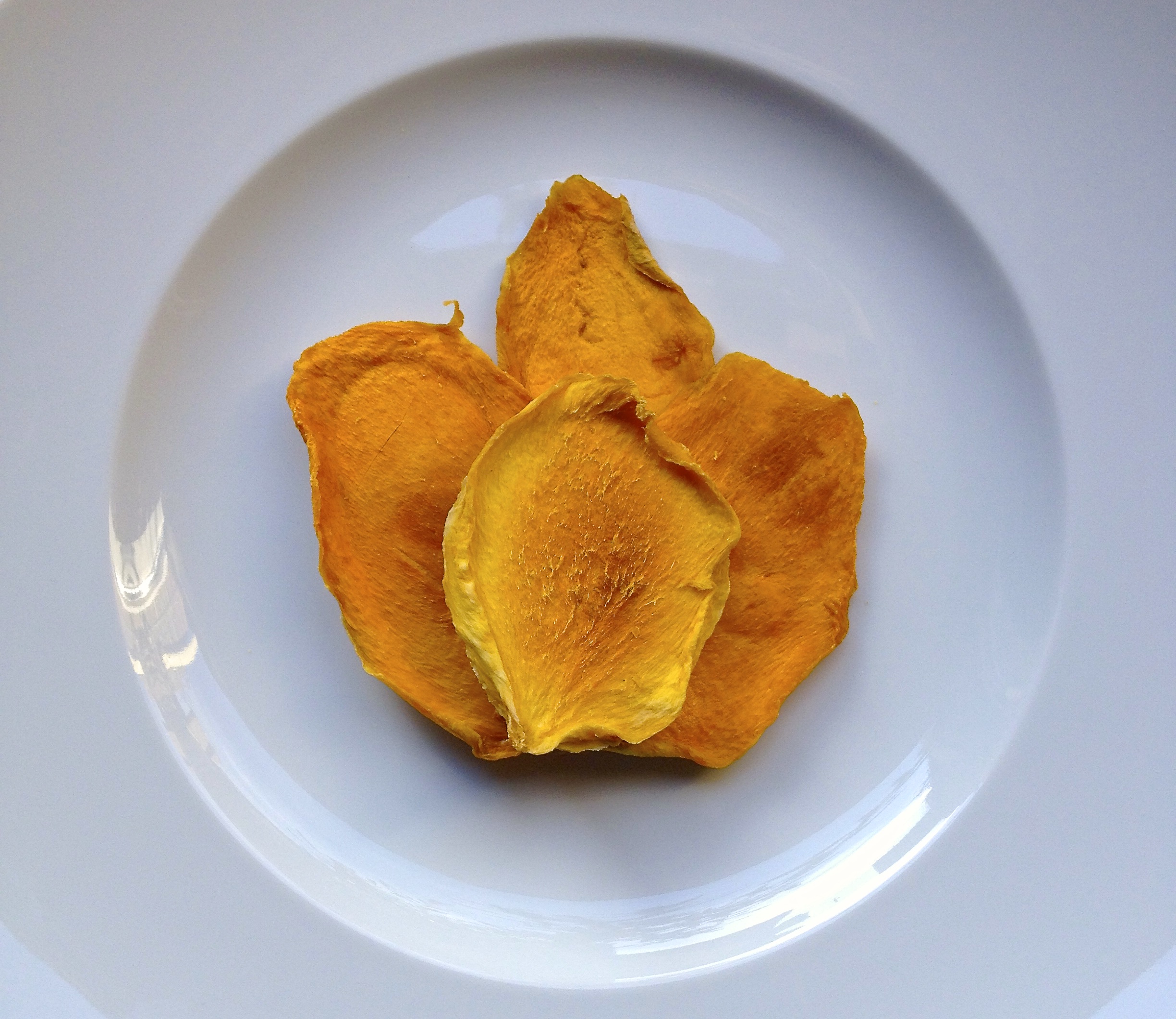
Several years later, a new secret eating ritual started during a visit with “Dietitian Daughter” in Colorado. She was buying a snack item for her husband from the bulk bins of a national food chain. I watched her fill a bag with flattened, dull-colored, brownish-orange pieces of fruit. They looked run over by a truck. They were unsweetened dried mangos. Dehydrated into stiffened leather. She handed me a piece and said, “Try it”.

The first sensation was what it looked like–rough, tough hard-edged, with the taste and texture of dust on shoes. As salivary juices kicked in, that road-kill-looking mango became softer, warmer, and pliable. Careful considerate chewing brought out interesting changes. It turned vaguely sweeter but held onto the essence of fruity leather. I had to chew slowly, without hurrying, before it was ready to swallow. I had to pay attention.

IMG_3661
unsweetened dried mangoes

The degree of subtlety from dry dusty toughness to a satisfying payoff several minutes later completely hooked me. I took my own bag back to Paris.

Now when I feel the urge, I go to the hiding place in the kitchen and randomly choose several pieces of dried mango. Then I stand or sit in a window of our apartment overlooking the vine-laden courtyard where I never tire of the view.

If I stand in the kitchen window during secret eating time, I might muse over the spring unfolding of the Virginia creeper vines or the work-in-progress renovations on the apartment across the courtyard. The neighbour’s cat might be outside on the balcony chirping wistfully at pigeons. If I choose to sit in the warm afternoon sun of the dining room windows, I have a private view of sky, rooftops, vine covered brick walls, and my own blooming geraniums.

cropped-img_16281.jpg
IMG_3885
dining room window
IMG_3891
with a view

Or, I might decide to stand in the street-side windows at the front of the apartment where I take note of pedestrians, shopkeepers, or a trumpet-playing street musician four stories below.

IMG_0729
street side windows at sunrise

My secret eating is something I try to keep to myself. It gives me great pleasure and satisfaction. But what is it really? Like Fisher, I can’t exactly say. Perhaps it’s simply a meditative time-out, or a few private minutes of simply “being” and not “doing”, or a satisfying break in the midst of a day, a week, a month.

There must be someone out there who understands what I mean…