Scottish Highland Liquid Sunshine

The last time I turned down a whisky, I didn’t understand the question. –Anonymous

 I always take whisky as a night preventative of toothache. I have never had a toothache. What is more, I never intend to have one. –Mark Twain

 Whisky is liquid sunshine. George Bernard Shaw

I love so many things about Scotland–except perhaps the food culture that takes mashed up sheep innards, encases them in stomach lining and disguises the whole mess by calling it “haggis”. Scottish comfort food for some, an acquired taste for others, or neither option for me. On the other hand, a morning bowl of hot porridge with butter and honey stirred in, topped with fruit and a wee drizzle of whisky–well, I took to that right away.*

Our New Year’s holiday was spent in the countryside of the central Scottish Highlands, south of Inverness. We stayed in a stone cottage on the grounds of a 17th century farm in Cairngorms National Park. It was nicely decorated, outfitted with a wood-burning stove that kept the living room toasty warm. Otherwise, we wore layers.

This excursion was inspired by the Outlander series of books by Diana Gabaldon. Each is a captivating tome of historical fiction set in 1700s Scotland, England, France, and the young U.S. colonies. There is also some time travel. A few characters have the ability to pass through a cleft in a ringed cairn of upright stones and fall into a different century. Somehow Gabaldon makes it all work. She weaves an engrossing tale with strong male and female protagonists who pull you right along.

The other reason we headed from Paris into the winter Highland hills is that I enjoy single malt whisky. My husband does not, but he does enjoy driving on the opposite side of the road. Match, game, win-win!

IMG_8788 (deleted 19bbe3162da57548f62d302a4bd5869a)
driving north from Edinburgh–not a black and white photo!
IMG_8791
next day, a bit more color

I don’t just like to taste or sip whisky. I need to understand it. “Distilled” into bullet points, this is what I know about the drink of my ancestors.

  • Single malt Scotch whisky is distilled and matured in Scotland from 100% malted barley and water. No other grains are added. It is the product of only one distillery.
  • It must be kept in a wood barrel for a minimum of three years in its’ country of origin. [Otherwise it is considered a “spirit”.]
  • It is at least 40% alcohol by volume.
  • The difference between Scotch whisky and Irish whiskey is in the spelling and the process of how the malt is dried. Hence, flavor differences.
  • Peat is partially carbonized plant matter [largely heather and mosses] decomposed over centuries. It is cut directly from the bogs and marshes where it forms. Its characteristics differ from geography to geography.
  • If there is a ready supply of peat for drying the barley during malting and firing the stills, the whisky will have a smoky flavor.
  • Location of a distillery is dependent only on a supply of good, clean, fresh water.
  • Water is of critical importance in the production of whisky. It is used for soaking the barley, making the mash, condensing, and diluting the spirit.
  • Water must be COLD, unpolluted, and as constantly flowing as possible.
  • Water picks up the influence of the peat over which it flows.
  • Every distillery is on the bank of a river or by a mountain stream or spring.
  • Water guarantees both the quantity and the quality of the end product.

It is crucial that a river runs through it

Water is also important when enjoying whisky as a beverage. You can drink it straight, unmixed, and un-chilled. Or, water can be added to bring out subtle nuances of flavor.

Ernest Hemingway contributed to the misconception about water when he proclaimed, “Real men drink whisky straight.” An unnamed source “straightens out” Hemingway’s assertion. “There are two things everyone should know about Hemingway. First, the whisky he drank had already been diluted by the distillers before he got it; secondly, that man was an awful fool.”

If water is added to whisky, it should be “as soft and pure as you can find”–ideally, natural spring water or filtered water. Distilled water is less desirable because you lose the minerals occurring in natural water.**

Water taken in moderation cannot hurt anybody. –Mark Twain

When in Scotland never request “a Scotch” from the bartender. Total tourist talk. Ask for “malt whisky” or request by distillery name to guarantee being served native spirit.

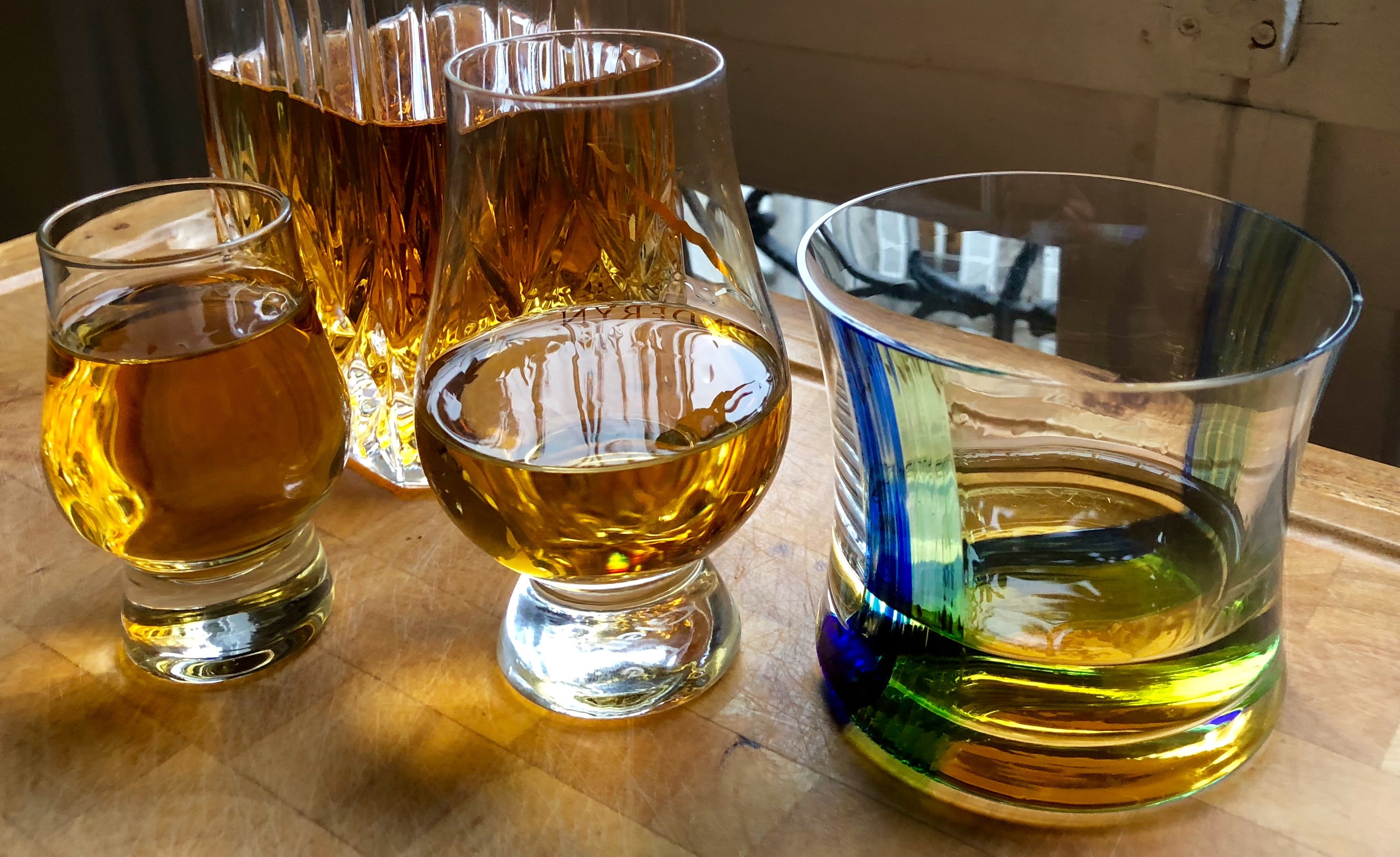
Words for whisky measures vary in Scottish jargon. Dram is now in common use, but there is also a nip, a toot, a tot, or a wee goldie. All equate roughly to a single measure or one shot, 25-35 ml. A double shot is 50-70 ml. Asking for “a glass” of whisky means a double pour.
IMG_8913
three glasses holding the same amount of whisky, a two dram pour

Measurement size is ultimately determined by the generosity of the pourer. In most Scottish bars, one dram is usual, but not always…a bartender in Edinburgh overflowed the measuring cup directly into my glass upon hearing the sorry tale of my cell phone’s demise when it smashed to smithereens on rain slicked cobblestones just moments before.

With designated driver behind the wheel, I sampled whisky from two distilleries, Tomatin [Speyside] and Dalwhinnie [Highland], because they happened to be close to our farm cottage and the winter roads were icy.

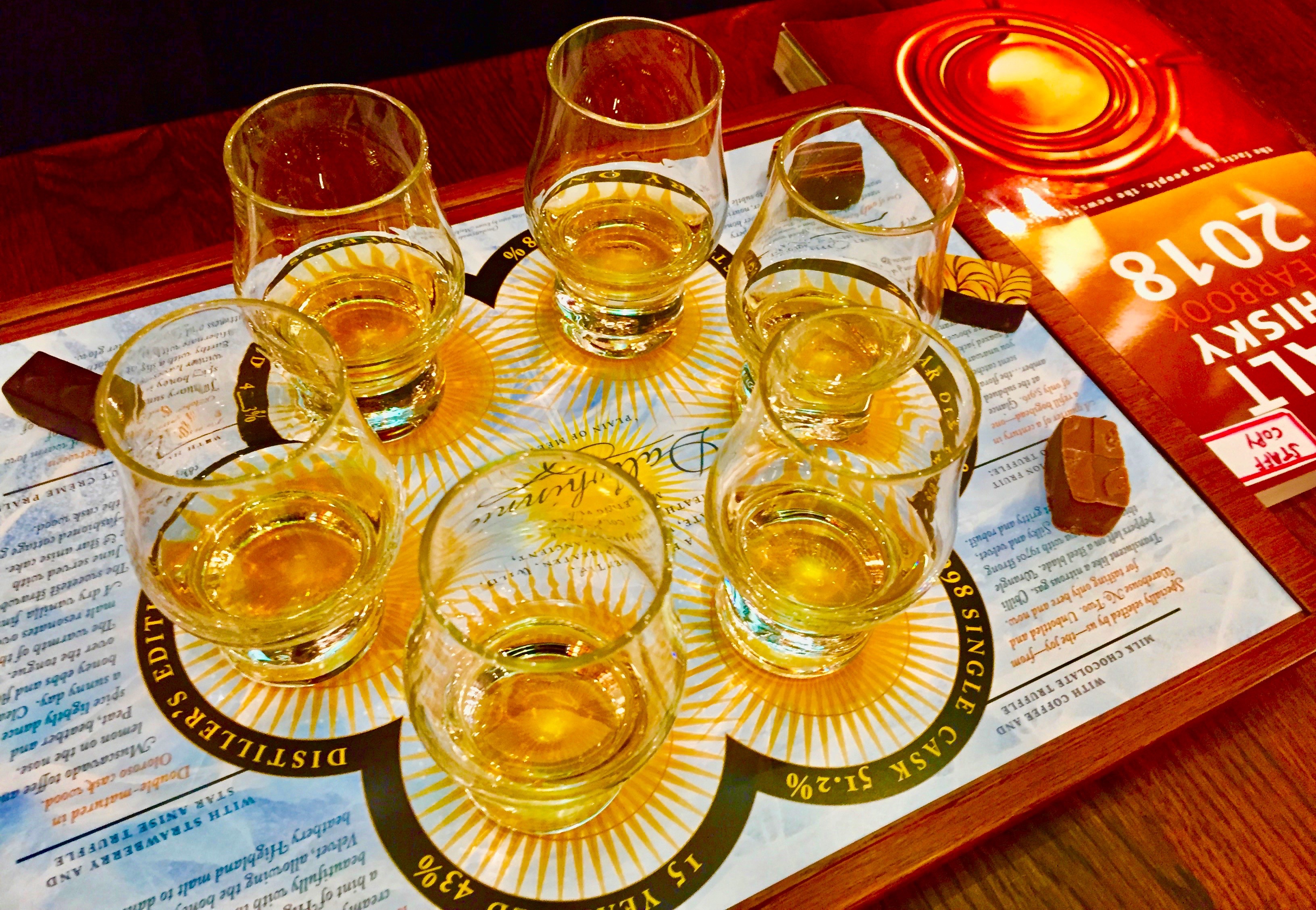
Dalwhinnie Distillery was particularly popular on New Year’s Eve as it was open all day. Their sampler of six whiskies was served with six chocolate palate cleansers on the side. I wanted to buy a bottle that was not exported or distributed in stores. Dalwhinnie Distillery Limited Edition is sold only on site–6000 bottles produced, 900 were left.
IMG_2450
Dalwhinnie Distillery–six whiskies, six chocolates, and a pitcher of water too

A serendipitous coup occurred in the town of Aviemore. I walked into a retail shop and asked the man behind the counter where to find a liquor store. He scratched his head and said, “What? You must be American. No one says that here. We call them booze stores.”

Ben Harris is the proprietor of Cairngorms Creations, a shop of colorful knickknacks. I told him I was interested in whisky found only in Scotland to take home with me. He said, “Do you know the black whisky, Beinn Dubh? It’s made just a few miles down the road.” I had never heard of black whisky. Speyside Distillery which produces it is not open to the public.

December 31, late afternoon. We followed Ben’s hand drawn, not very accurate map, got lost, backtracked, and finally found a store with the right address but selling home furnishings. The glass doors were locked–early closure for the New Year’s Eve holiday. Seeing people still inside I knocked loudly, pressed my map to the glass and shouted, “We were sent here to buy black whisky!”

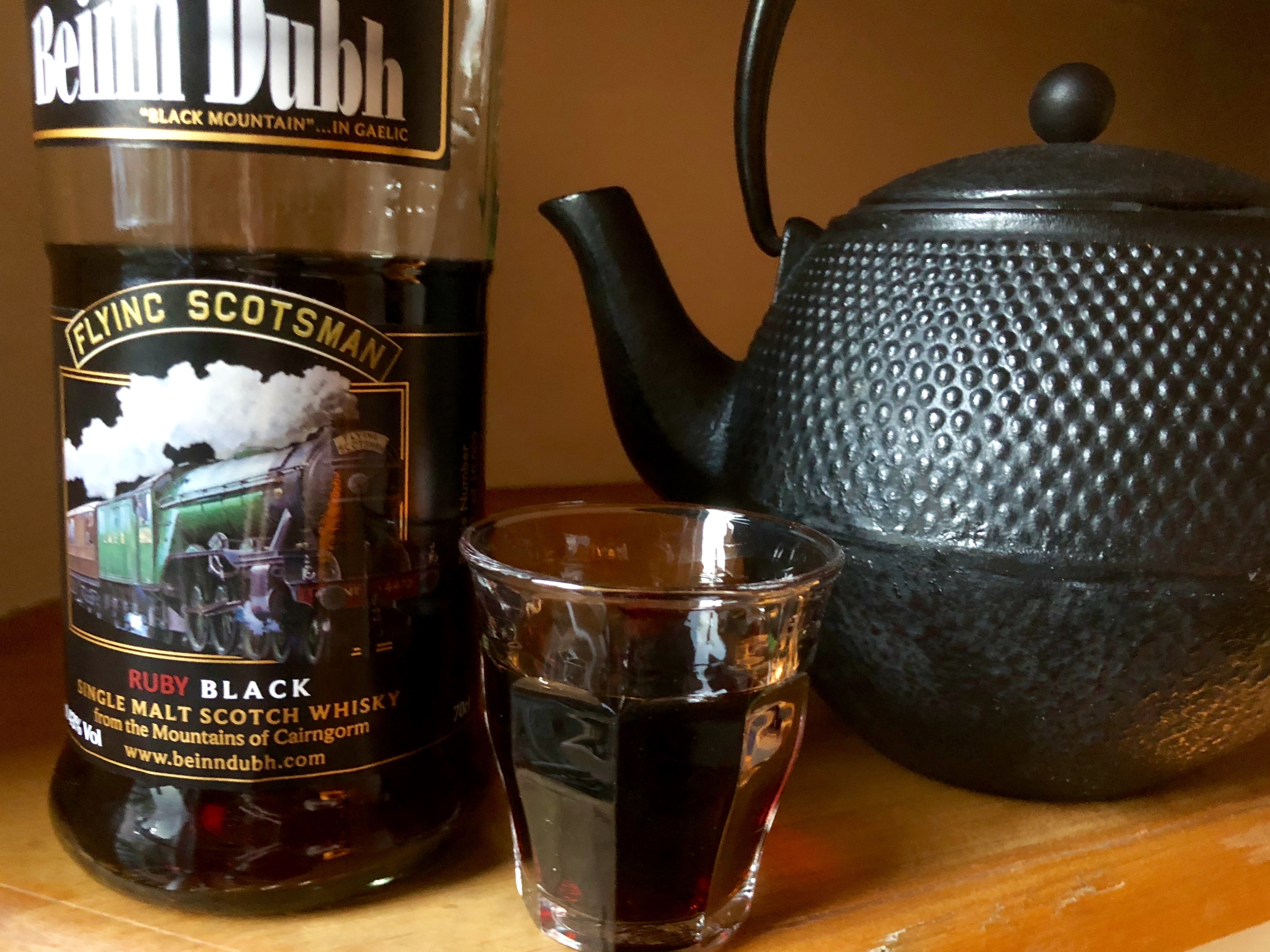
They let us in. The man behind that counter was drinking a glass of Beinn Dubh before he went home. He offered me a taste. The dark-as-night color is specific to its maturation in Portuguese ruby port casks. [I later learned that added coloring helps too.] I bought a bottle for my son and one for myself.
IMG_8940
calling the kettle and the whisky black

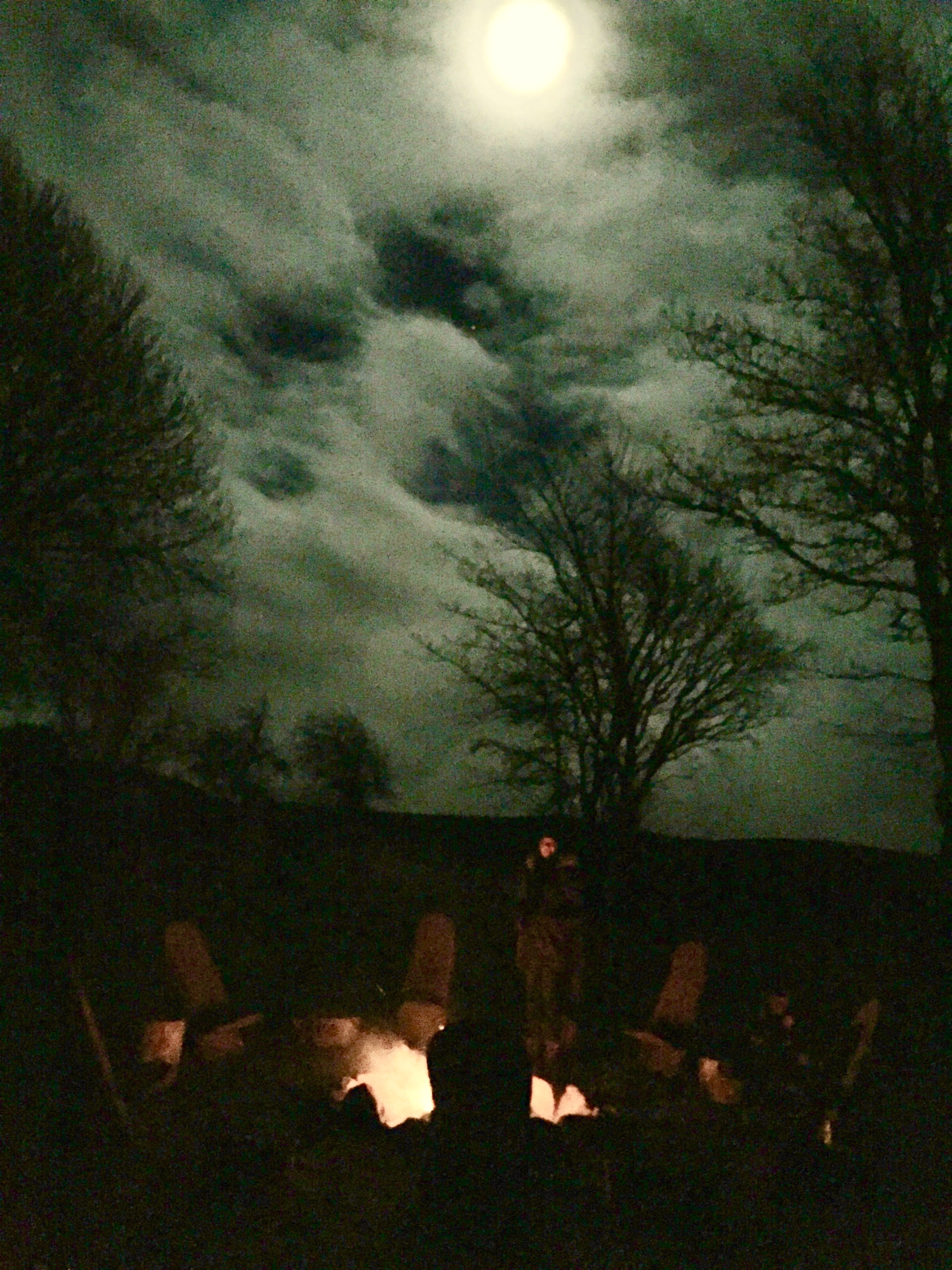
New Year’s Eve night–after three days of sleety rain, icy snow, and bone chilling cold the clouds parted to reveal a full moon.

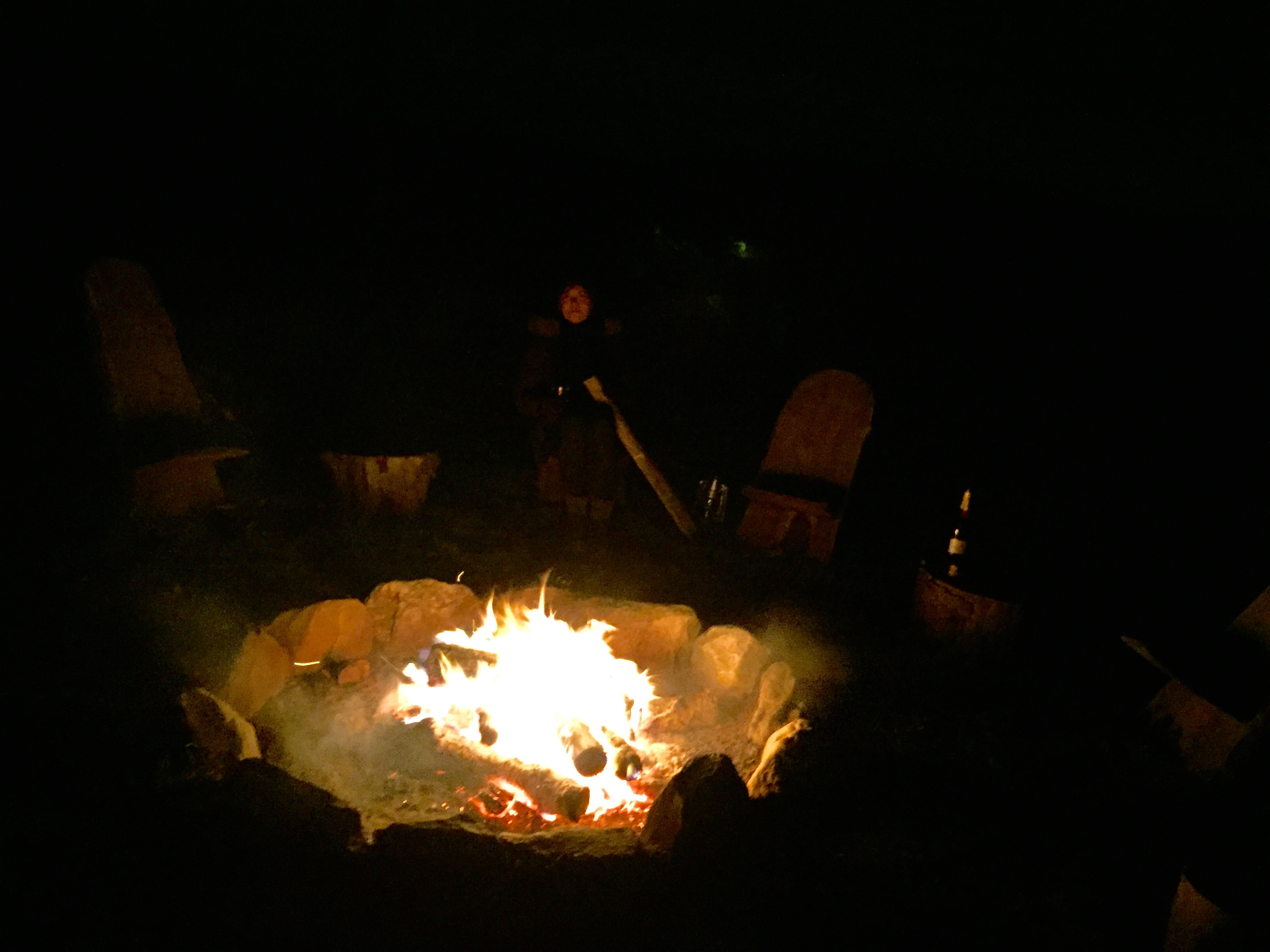
Killiehuntly Farmhouse and Cottage now has a Danish owner. He and his extended family were using the main farmhouse, up the hill from our cottage, for the holiday. While they ate dinner inside, we sat by a bonfire outside, drinking champagne under fog-rimmed moonlight and tossing large logs into the pit to keep warm. It was exactly where we wanted to be.
IMG_8815
New Years’ eve–bonfire, champagne, full moon
IMG_8823
and a fence post for a poking stick

The owner came outside wearing a tuxedo and, after chatting for several minutes [ascertaining our American politics–yes indeed!], invited us in to see the restored 400 year-old farmhouse, meet his family, and share a dram of…black whisky. The very same we had chanced upon that afternoon.

In the living room a fire burned brightly. The Christmas tree was adorned in Scandinavian straw ornaments. Conversation flowed easily between Danish and American cultures and across three generations from children to grandparents.

The whisky was very smooth, very black, and served neat. My husband politely, tentatively, sipped his first-dram-ever. He looked up from his glass to me across the room…and smiled.

It was a “verra” good holiday.


* Whisky in the morning oatmeal was not on the menu during our Scotland trip. The idea came from Gabaldon’s books. She describes steaming bowls of porridge served with butter and honey melting in. If whisky was available to the Scottish character, Jamie Fraser, he would drizzle it onto his porridge. Now, in the wintertime, I make it that way at home. Sublime! [Note to self: hack this recipe for future story.]

IMG_8908

** I’m neither a water purist nor a Hemingway abstainer. I have my own method for the perfect water to whisky ratio. When drinking a dram or two at home, I run a very thin stream of cold water from the tap and pass my glass under it three times very quickly. Just right.

IMG_8916
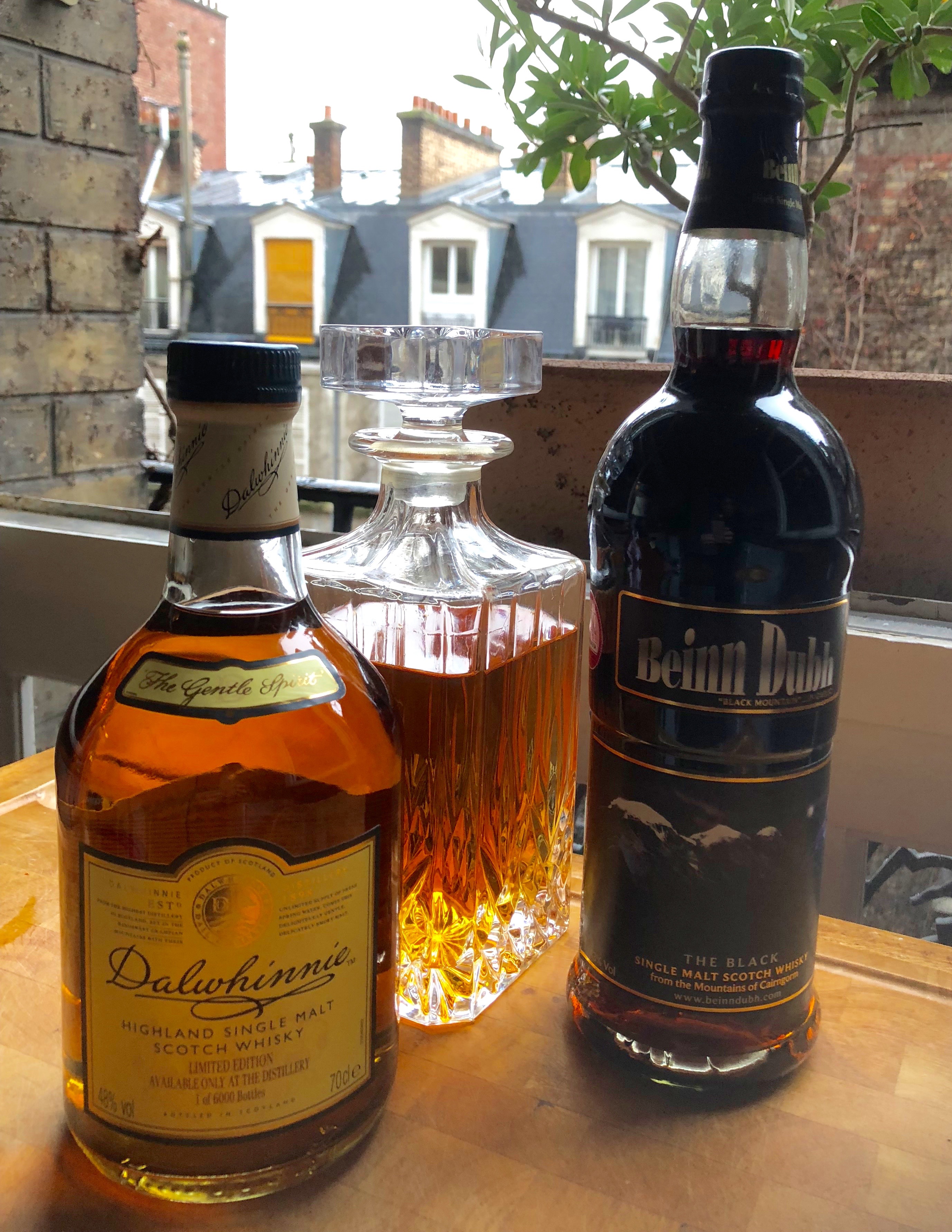
Dalwhinnie Limited Edition Highland Single Malt purchased on site and Beinn Dubh Black Mountain Single Malt, Speyside Distillery
IMG_8929
Showing color variations. No added colouring on the left, caramel colouring on the right and a lot of something in the middle
IMG_8849
We drove by these ruins daily in the Highlands. It is Ruthven Barracks built in 1720 by King George II to keep the Scottish Jacobites in order. The barracks played in history until after the Battle of Culloden in 1745 when the Jacobites were finally defeated and Bonnie Prince Charles fled in exile to Italy.
IMG_8842
closer view

Transcendent Picnics

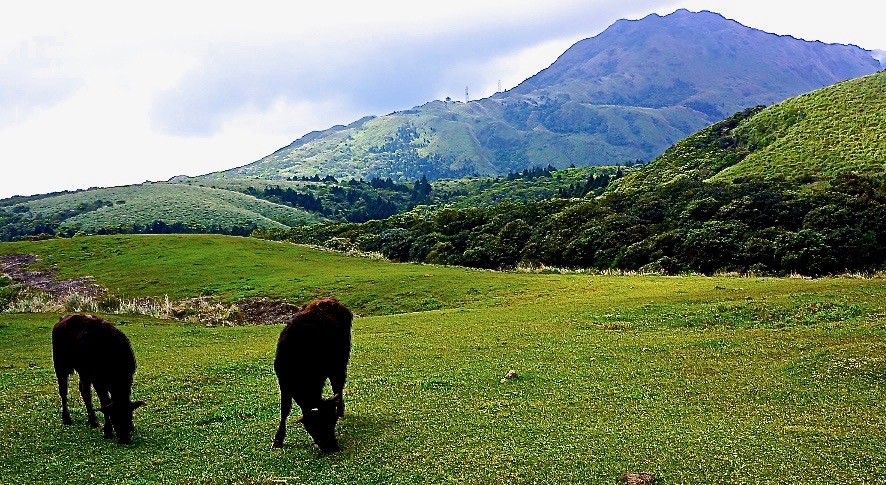
qiagtiangangcloudy
trail to buffalo meadows, taipei, taiwan

There is more than the communion of bodies when bread is broken and wine drunk. –m.f.k. fisher

M.F.K. Fisher [1908-1992] wrote that the best outdoor eating is on the side of a hill in the early evening. Her story of an unforgettable picnic took place in Switzerland in the 1930s. Sixty years later, in the 1990s, on a grassy meadow in Taiwan, we had a similar family experience. Continents and decades apart, the stories are interwoven because both Fisher’s memory and mine are reflections about more than the menu.

Fisher’s story went like this. She and her husband were building a small house above Lake Geneva, Switzerland, on a steep hillside surrounded by vineyards. Her parents came from California to visit. Late afternoon sun in June promised just enough warmth for an outside meal. The four of them carried baskets to the construction site, after workers had left for the day.

A table under the apple tree was covered with a checkered cloth and set with silver, ceramic plates and cloth napkins. Bottles of wine were placed in an ancient spring-fed fountain to chill. A fire was built, ringed with stones and roofing tiles, fueled with wood shavings.

The first spring peas were ready to harvest. As the men picked from the terraced garden uphill, Mary Frances ran baskets downhill to her mother who quickly shelled them into a pot. An iron casserole was set over the open fire where the peas “cooked for perhaps four or five minutes, swirling them in butter and their own steam”. Salt and pepper at the end, then table side.

On each plate lay a small roasted pullet. There was salad of delicate mountain lettuces, a basket of good bread, and fountain-chilled white wine generously poured. And those tender young peas–freshly steamed and seasoned! They shared the harvested feast and each other’s company as the surrounding hills turned rosy and the sun began to sink. Suddenly, in a neighboring field, “…a cow moved her head among the meadow flowers and shook her bell in a slow, melodious rhythm, a kind of hymn.” Fisher never forgot it.

In the spring of our first year in Taiwan, we went on a picnic where the alignment of people, place, and food replicated Fisher’s kind of perfection. More importantly, our young daughter began to understand the communal spirit created when food is shared in good company.

Yangmingshan is the national park north of Taipei. It was typically crowded on weekends with cooped up city people seeking fresh air, hiking trails, flowers and greenery. Friends Maddy and Cabby knew of an area in the park where water buffalo grazed freely and people were few. They organized a picnic in Buffalo Meadows on a late afternoon. We were four adults and three young children.

From the parking area we hiked uphill in a cloud so dense it moistened our hair and skin with droplets of water. At the top of the trail the landscape turned sunny and green with views all around. The soft grass was picnic perfect. Out of a backpack came a Frisbee and the men organized play on the hillside. Lara and Liza tired of running after a frisbee they couldn’t catch. They tried to follow a slow moving water buffalo. He wandered on.

lara, liza and water buffalo
girls thinking about things

Our nine-year-old daughter came over and sat down to watch the food preparation. There was a small camp stove along with a battered and blackened Japanese wok in which to put together the meal. Ingredients had been sliced, steamed, grated and pre-cooked at home. Once the stove was leveled, primed, and producing enough heat, assembly began. 

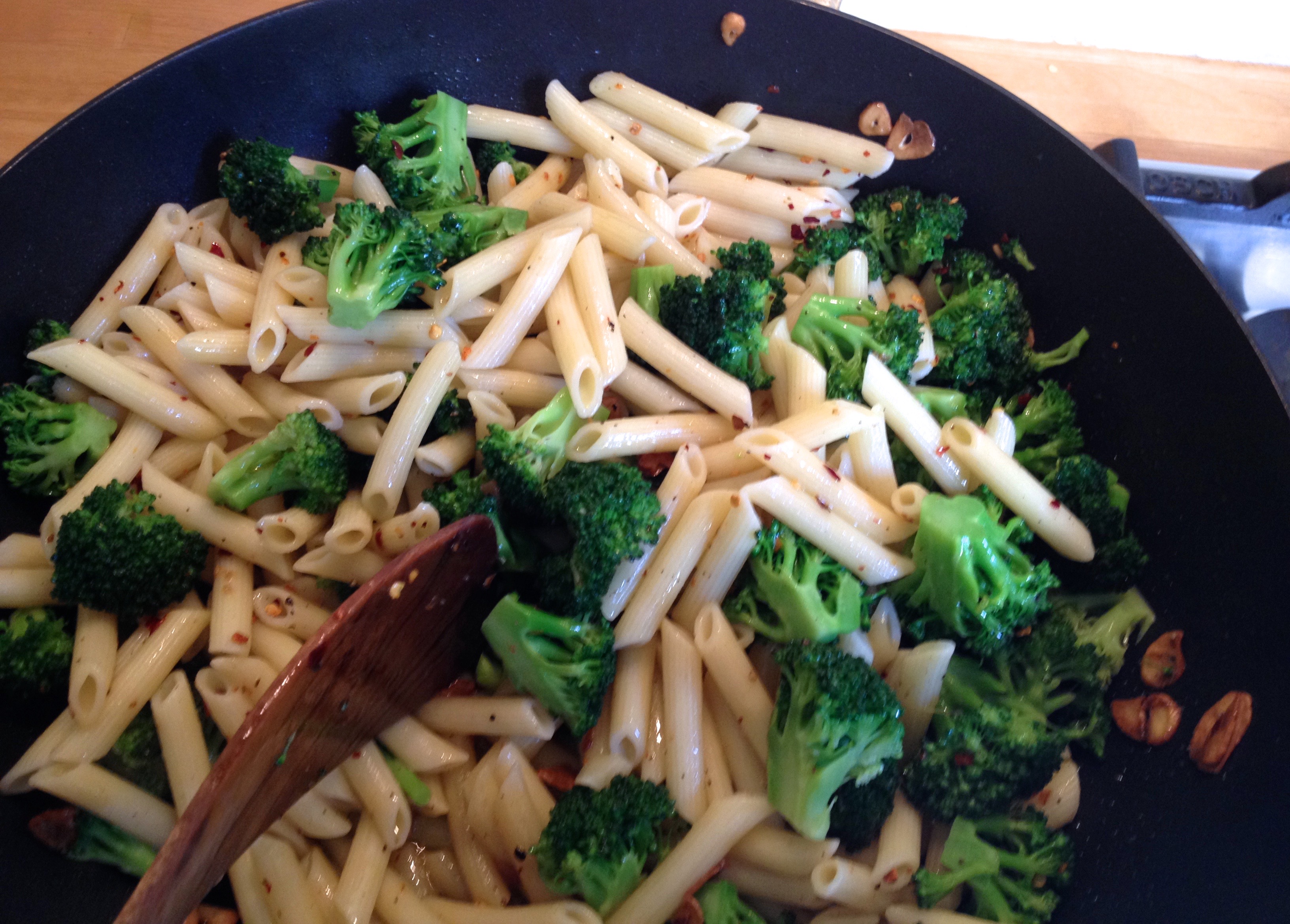
Olive oil was generously poured into the wok and heated. Thinly sliced cloves of fresh garlic were added to the hot oil. Shaking the pan continuously, the slices began to brown around the edges. Bite sized broccoli flowerets were stirred in with freshly ground pepper. Pre-cooked penne pasta was added along with butter. Everything was tumbled together with a large wooden spoon until thoroughly heated. Finally, freshly grated Parmesan cheese was layered on top and melted into everything. Lightly browned garlic slices gave toasted sweetness to the broccoli and pasta. A one-dish meal. Perfect.

Plates were passed. We sat side by side on blankets eating, laughing and talking. As the sun lowered over the far hills, the temperature cooled and we reached for jackets. Thimble sized portions of single malt whisky were passed among the adults. A breeze stirred and we leaned in closer, wrapping arms around children. Four-year-old Liza was zipped into the front of her father’s grey sweatshirt where she fell asleep curled into his chest, only the top of her blonde head showing. We talked quietly as darkness descended. The mist returned. It was time to go home.

Days later, our daughter asked if I could make that broccoli pasta. She had a faraway look in her eyes while she spoke of the picnic in Buffalo Meadows and how wonderful it had been. Looking at her face and listening to her speak I knew she had made a connection about more than the food. She was asking to go back to a feeling created on a tranquil hillside with close-knit family and friends. I never forgot her request. She had connected the dots that Fisher writes about so well–the communion of spirits when food and love are shared, around a table or on a hillside, with people who are important to us.

Perhaps this explains why a picnic, so many years ago, is vivid in my memory. Although I love reflecting on Fisher’s story of peas, a Swiss hillside, and a cowbell, my own recollection is this–a beat-up Japanese wok filled with steaming broccoli pasta, a grassy meadow, adults and children with arms around one another, and a water buffalo.


BROCCOLI GARLIC PENNE [from Silver Palate Cookbook]

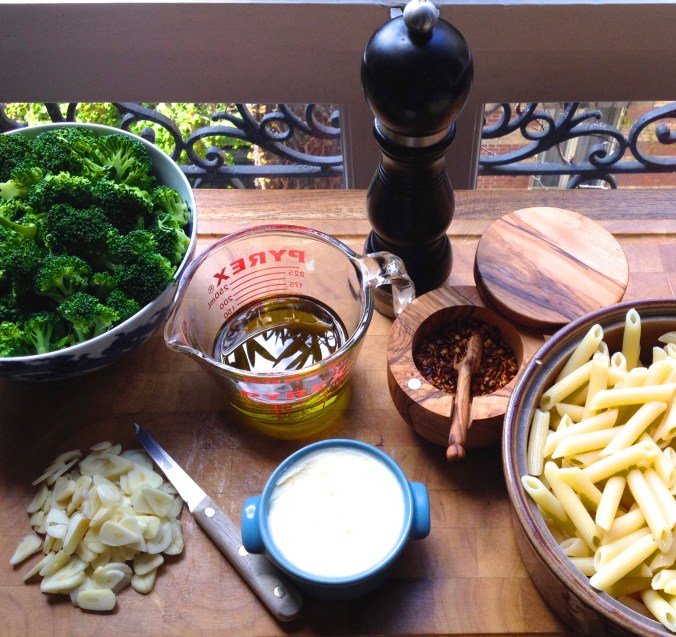
basic ingredients except for parmesan

Ingredients:

  • 1 lb. [500 gm] penne pasta, cooked al dente
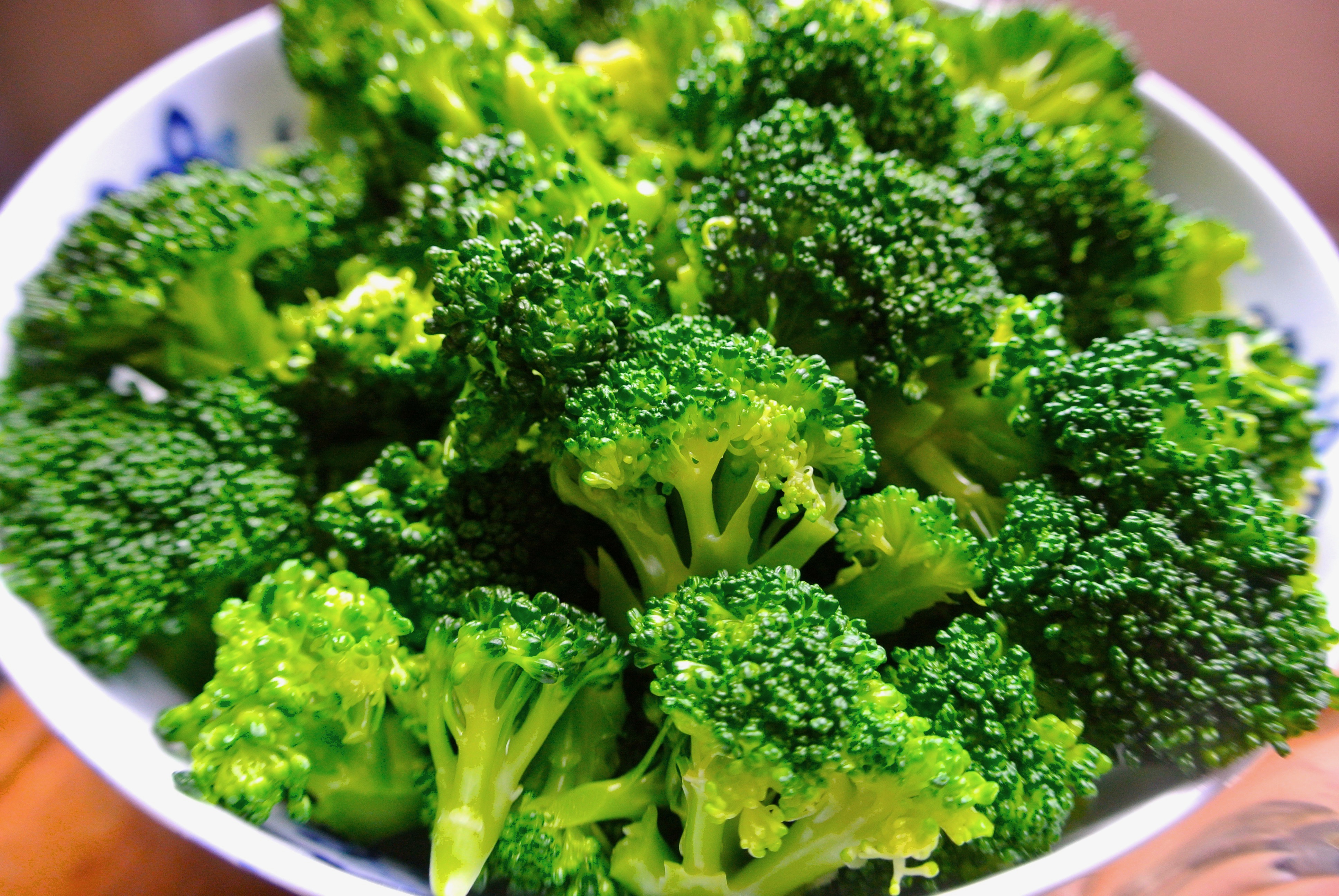
  • 2 heads broccoli, cleaned and cut into small flowerets
  • ½ C. extra virgin olive oil
  • 10 [or more] cloves garlic, thinly sliced crosswise
  • Freshly ground pepper
  • 4 T. [1/2 stick] good butter
  • Freshly grated fresh Parmesan cheese

Assembly:

  • Boil penne, drain, rinse under cold water.
  • Simmer broccoli in boiling water 1-2 minutes, drain, rinse in cold water.
  • Heat oil ~ 1 min. Add garlic slices and cook, shaking pan until it begins to brown ~1 min.
  • Add broccoli, stir, grind pepper on top.
  • Add butter and penne, stirring continuously until well mixed and heated through.
  • Sprinkle with freshly grated Parmesan cheese.
  • Serve immediately.
  • Pass the pepper mill.
  • Add garnish and extra Parmesan.

For variety, add shredded or cubed cooked chicken, sliced black olives, or leftover veggies. Red or yellow bell peppers make a colorful addition. [Steam or stir fry before adding.] Red pepper flakes for added spice. Cherry tomatoes, cut in half, as garnish before serving.