
Visiting an overseas friend who lives in Luxembourg, I found a book of poetry by Mary Oliver on a living room table. Awake early the first morning with jet lag, I settled into a comfy chair with a cup of coffee and thumbed through poems in the dim light. One entitled “Poppies” provided pause.
Oliver is known for connecting life lessons to her observations of love for the natural world. In “Poppies” her poetic sentiment contrasts the transient beauty of wild poppy fields with the inevitability of life and death.
“There isn’t a place in this world that doesn’t sooner or later drown in the indigos of darkness.”
To lighten the mood, she weaves in a moment of pure joy while visualizing poppies in the field.
“…But also I say this: that light is an invitation to happiness, and that happiness, when it’s done right, is a kind of holiness, palpable and redemptive. Inside the bright fields, touched by their rough and spongy gold, I am washed and washed in the river of earthy delight…”
While immersed in her river of delight, she circles back to darkness and loss, ending with a question.
“…and what are you going to do–what can you do about it–deep, blue night?”
Of course, there is nothing to do other than letting it go. Thus, exemplifying one of Buddha’s teachings that there is nothing anyone can successfully cling to in between the moment of conception and the moment of death.
Poppies became my favorite flower when we lived on the island of Cyprus for three years. Every spring, deep red fields of poppy flowers bloomed in profusion all over grassy orchards, fields, and pastures. Shaped like a fine teacup, the crepe-paper-thin petals flutter freely in the breeze. En masse on a roadside or in a field or even in a small clump, they are spectacular. But poppy season is brief. Flowers wilt, fade, and fall to the earth as graying-red dust in a short time. Breathtaking in the moment and then gone. Another year passes.


Our children were young in those years. On weekends we drove out of Nicosia searching for a carpet of red and green to spread out our blanket and picnic. Spending an afternoon in a wild field of flowers and tall grasses is still a magical memory. It was stunningly beautiful, a family outing in the season of rejuvenation, and it made me happy to be there with loved ones.

During World War 1, [1914-1918], most of the fighting in Europe took place in open fields where poppies proliferated despite the death and mayhem all around. In 1915, Lt. Colonel John McCrae wrote his famous, historic poem, “In Flanders Fields”* after witnessing the returning spring bloom across red battlefields.
*Full poem at the end of story.

Since then, poppies have been a symbol connecting the blood and sacrifice of soldiers with remembrance, hope, and peace. They are also associated with the Greek God Morpheus–the god of sleep and dreams. Morphine and opium narcotics are derived from poppies, hence the reference to death and sleep.
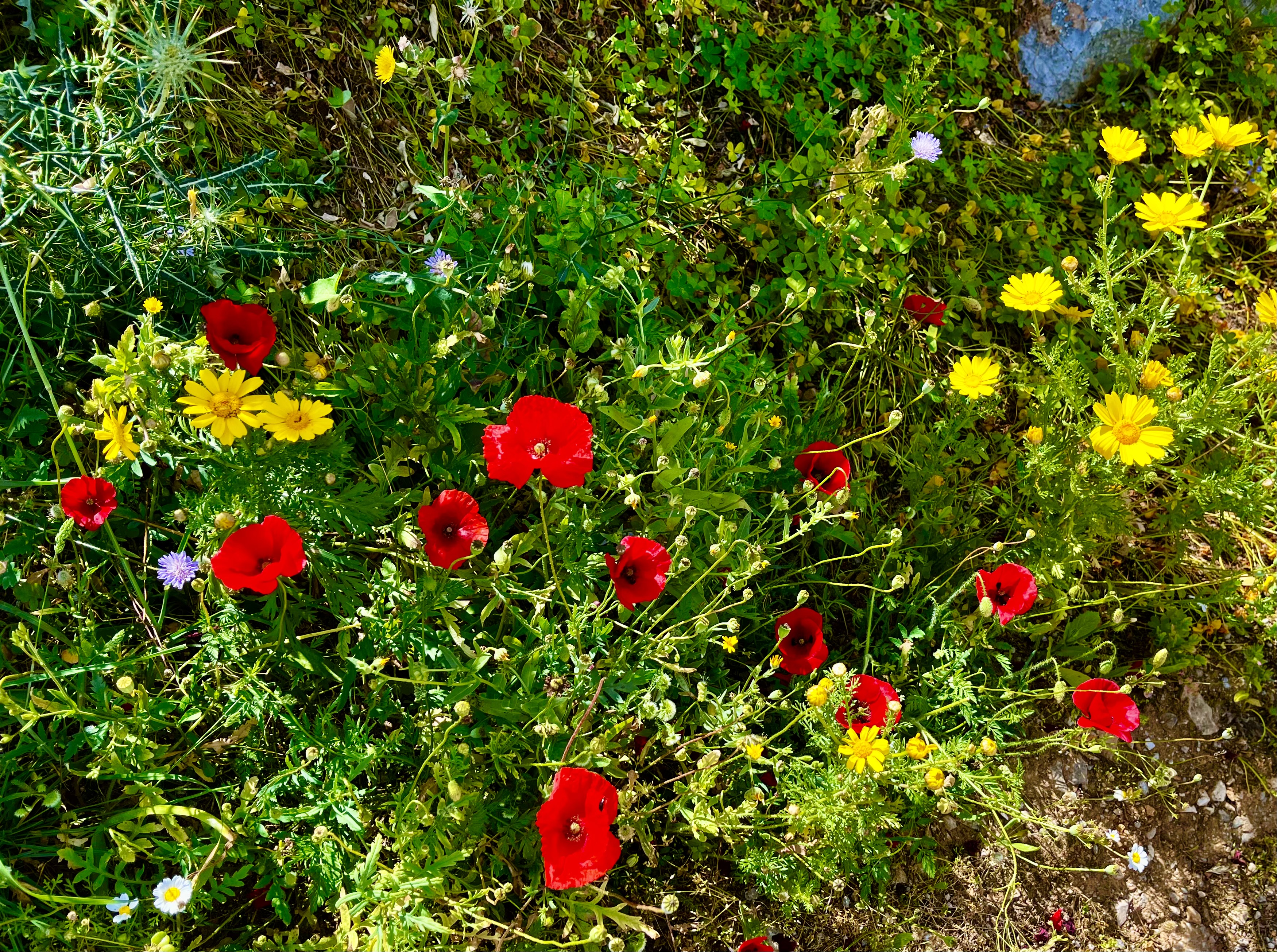
What draws me to experience a profusion of blooming poppy fields whenever possible? Because, like Mary Oliver, I connect them to a personal lesson. They remind me of the nature of our own family’s life cycle. Beauty in learning and growth, and the eventual letting go as necessitated by time. There was uncertainty and risk taken by our young family of four when we made a decision to live and work overseas in the late 1980s. In geographies and life styles, that were not a reflection of our home culture, we adapted and grew in individual ways. Incorporating the very best of each country’s experience added significantly to our lives.
Now we are all back living full time in America. Our children are young adults with children of their own. They each have a personal perspective about growing up in other countries for thirteen and sixteen of their formative years. My hope is that it enhanced and deepened their awareness as global citizens, as more thoughtful inhabitants to contributing to the health of the world and our planet for their own children’s future.
I think about these things along with the light and dark life cycle of the seasonal poppy. The lightness, the brightness, the earthly delight when seeing them massed in peak glory. The dark side of “here and now” beauty is knowing that it is fleeting. It will leave. Which must occur in order to be ready for the next opportunity to grow.
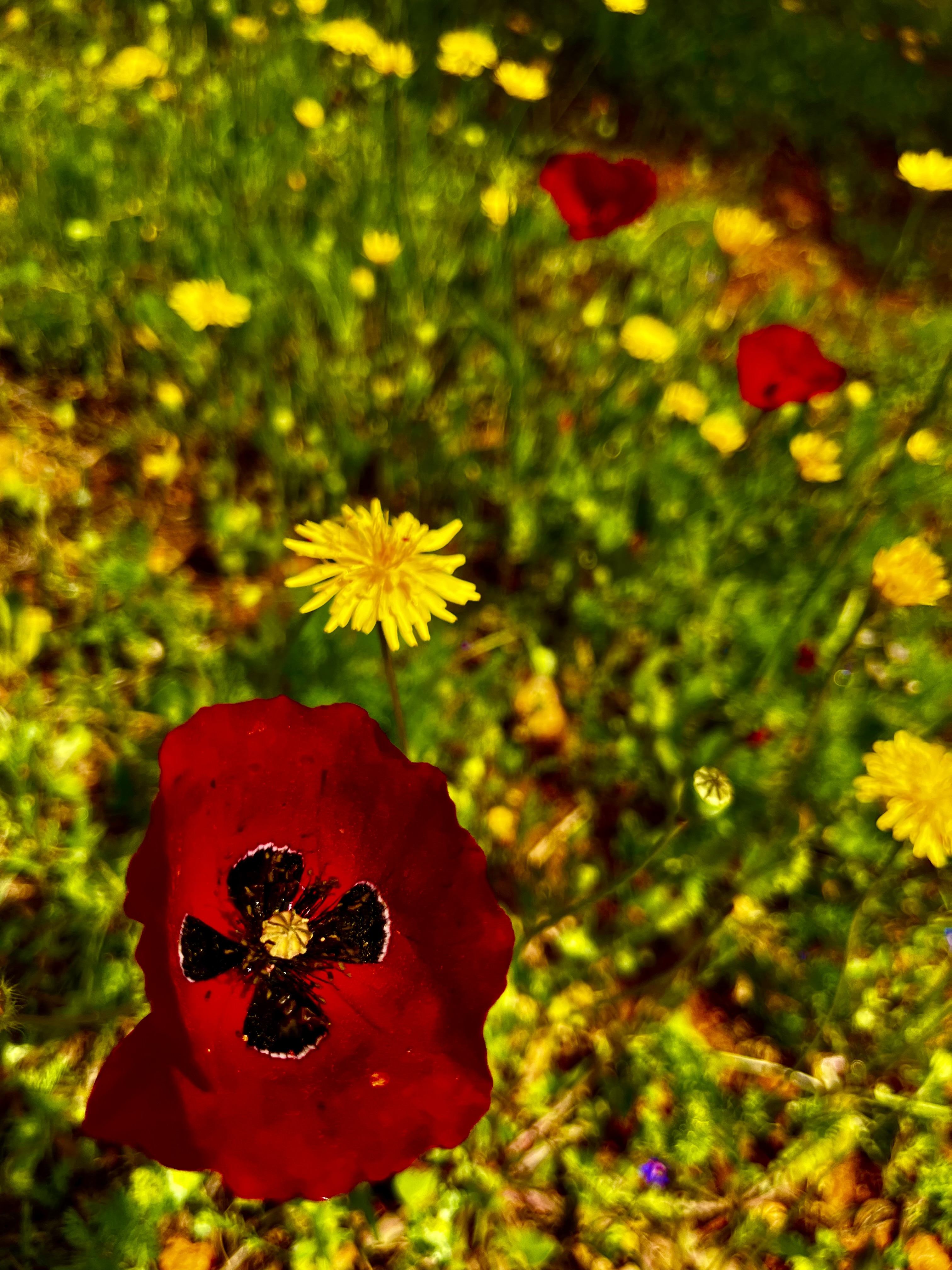

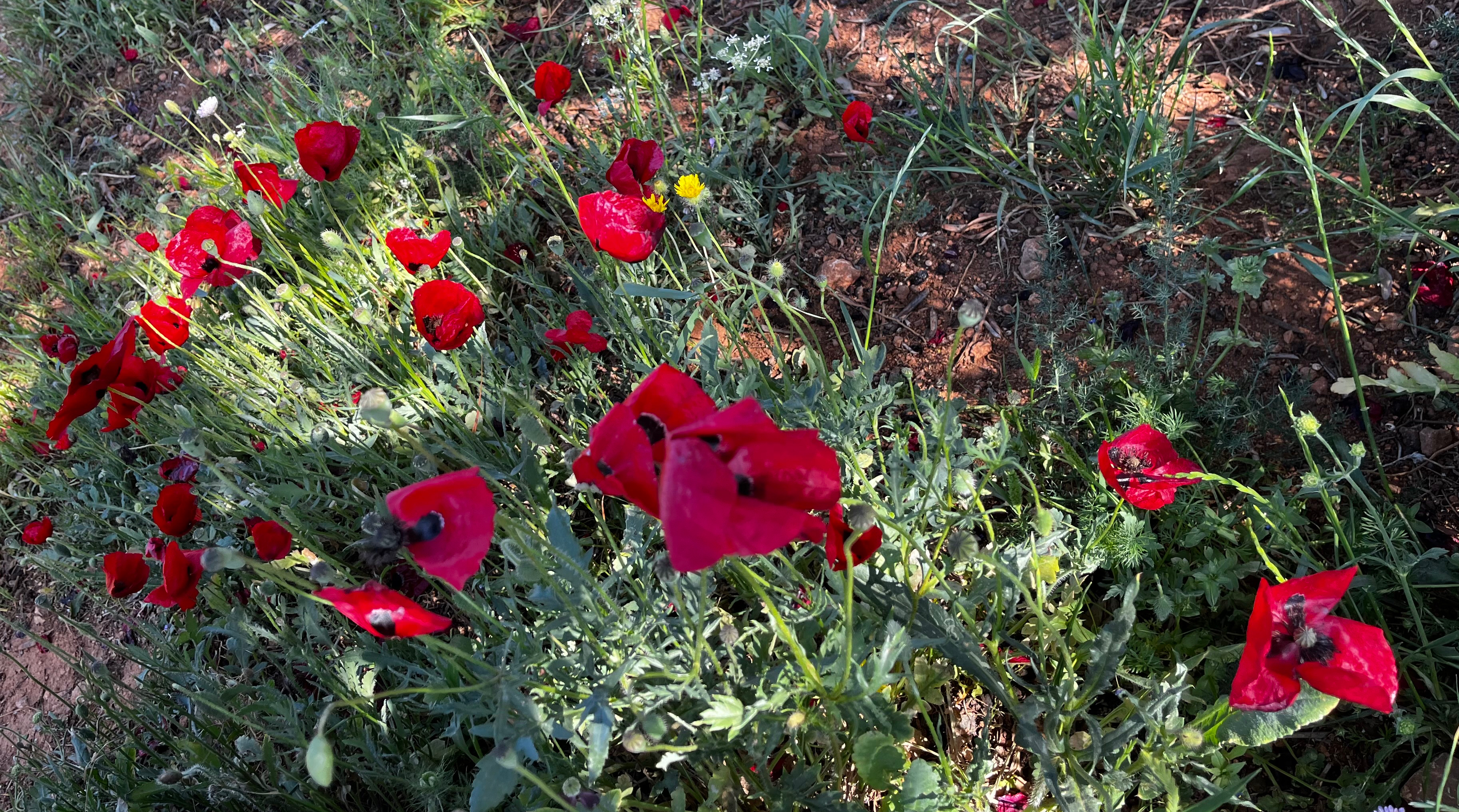
This past spring, the seasonal return of poppies in the wild offered an opportunity to re-experience an assault of red on the senses. We were in Greece in April. Poppy season was on, but had passed its peak in Athens. Then we traveled to the island of Hydra. Asking others to be on the lookout, someone said they saw “a whole field of poppies in bloom” on a hike.
It wasn’t exactly like that. What we found was a roadside of brilliant red flowers crowning a cliff high above the Mediterranean Sea, still lacy and vibrant and swaying in the breeze. It was a sought-after reminiscence, perfect for the moment, the contrasting beauty of vibrant red petals and deep blue sea.
…and it was enough, before moving on down the path.

We live in a world where people think happiness is a condition, but it’s not; it’s a sensation. It’s momentary. –Fran Lebowitz
This existence of ours is as transient as clouds. A lifetime is like a flash of lightning in the sky, rushing by, like a torrent down a steep mountain. –Buddha
You can’t say I’m not happy ‘cause happy’s not an action, you just feel that way.
–Ambersunshower, from the song, ‘Walter T’, 1996 [Only available on YouTube.com]
POPPIES    by Mary Oliver

The poppies send up their
orange flares; swaying
in the wind, their congregations
are a levitation

of bright dust, of thin
and lacy leaves.
There isn’t a place
In this world that doesn’t

Sooner or later drown
In the indigos of darkness,
but now, for a while,
the roughage

shines like a miracle
as it floats above everything
with its yellow hair.
Of course, nothing stops the cold

black, curved blade
from hooking forward–-
of course
loss is the great lesson.

But I also say this: that light
Is an invitation
to happiness,
and that happiness,

when it is done right,
is a kind of holiness,
palpable and redemptive.
Inside the bright fields,

touched by their rough and spongy gold,
I am washed and washed
In the river of delight––

and what are you going to do––
what can you do
about it––
deep, blue night?
IN FLANDERS FIELDS by John McCrae
In Flanders fields the poppies blow
Between the crosses, row on row,
That mark our place; and in the sky
The larks, still bravely singing, fly
Scarce heard amid the guns below.
We are the Dead. Short days ago
We lived, felt dawn, saw sunset glow,
Loved and were loved, and now we lie,
In Flanders fields.
Take up our quarrel with the foe:
To you from failing hands we throw
The torch; be yours to hold it high.
If ye break faith with us who die
We shall not sleep, though poppies grow
In Flanders fields.


Discover more from A Taste of Mind
Subscribe to get the latest posts sent to your email.


What knocks me out is to read your work, knowing I can call you up or sit on the porch to discuss your writing. To be your friend and confidante is to know that we can talk of your writing and the goodness of the message you share. Can’t decide if I like more the figure of the poppy flower or the cute dog by the same name. Keep writing.
LikeLiked by 2 people
It is always a sweet surprise when ” a taste of mind ” appears in my email. Thank you for the bouquet of poppies.
LikeLike
Oh, Wendy, how beautifully written this is! The pictures really took away my breath. You have worked your magic, yet again. I marvel at your gift with words. I love you.
LikeLiked by 1 person
So lovely to read your piece featuring Mary Oliver and her take on Poppies!
Was a lovely visit.
Sending love!
LikeLiked by 1 person
I love having you and DJ as muses when I visit your home! Always inspiring and nourishing. Must schedule CO or WI next.
LikeLike
Lovely, Wendy! This is one of your best!
LikeLiked by 1 person
:-)Klimt & Monet . . .
LikeLiked by 1 person