The essential moral skill is being considerate to others in the complexity of everyday life. Morality is about how we interact with each other minute by minute. The wise person’s essential gift is tender receptivity. –Iris Murdoch, British writer and philosopher
Is there no virtue among us? If there be not, we are in a wretched situation. –James Madison, American stateman, Founding Father, fourth President of the United States
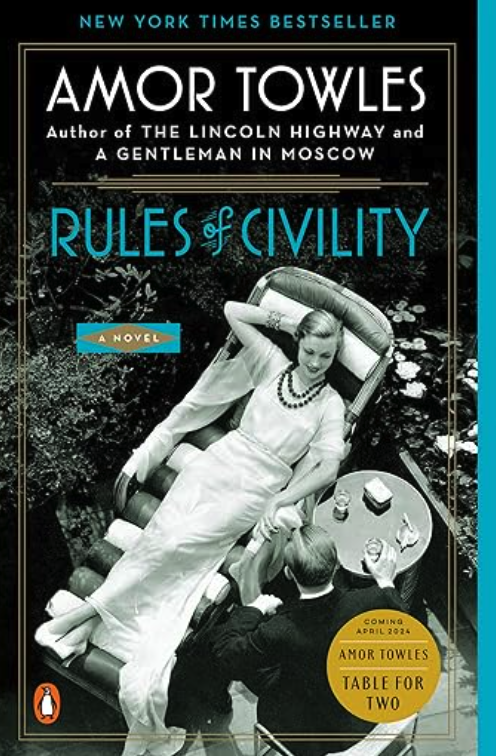
In the current state of incivility between nations, religions, politics, and sometimes within family lines, when the argument of “us vs. them” feels overwhelming, I think about Count Alexander Rostov, the protagonist in Amor Towles’ best-selling novel, A Gentleman in Moscow. The story begins during the years after the first Russian Revolution, the assassination of the last Czar and his family, and World War 1. The Bolsheviks are firmly in power.
Count Rostov, born an aristocrat, was tried in a Bolshevik tribunal court in 1922 when he was 32-years-old. He was found guilty of being a gentleman of leisure and privilege and of allegedly writing a poem nine years earlier now deemed anti-revolutionary. He was sentenced to turn over his wealth, his personal property, and the luxurious suite where he resided in the Metropol Hotel, near the Kremlin, in Moscow’s Theater Square. Forcibly relocated to one tiny room, a former servant’s quarters in the hotel attic, the final provision was that he would be shot on site if caught outside the hotel premises. House arrest for life.
Metropol Hotel, Moscow, 2023 version
Rostov settled into meager quarters with few of his inherited possessions. He found the space depressingly confining, hitting his head on the sloping eaves, squeezing his tall body between his father’s large Louis XVI desk and the bed on creaking springs. To ease the cramped conditions, he secretly knocked out the back wall of the built-in wardrobe which connected to another tiny room. He made this into a study, furnished with a bookcase, lamp, two chairs, and his grandmother’s coffee table retrieved from storage, thus doubling his livable space. He remained there for the next 32 years.
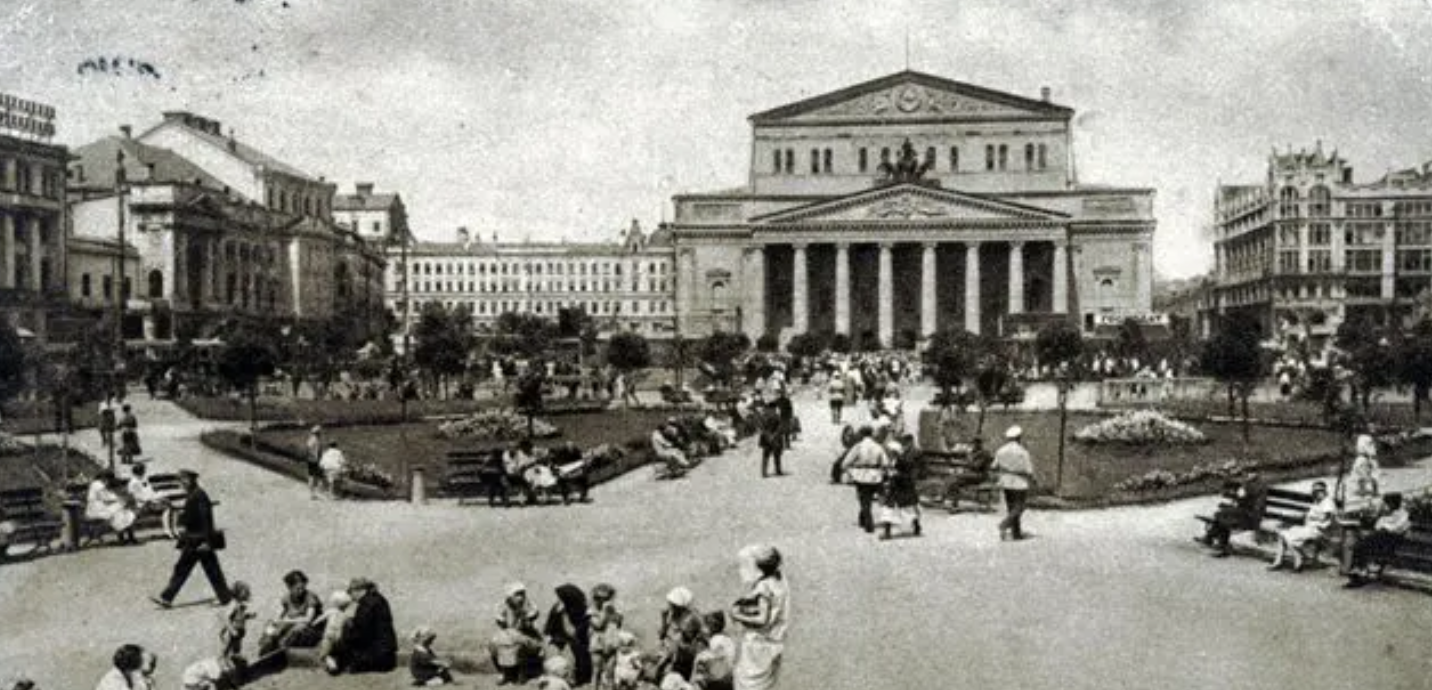
Theatre Square, Moscow, circa 1920s
Early adjustments were difficult. Rostov’s daily routines were confined to the hotel lobby, barber shop, tailor shop, two restaurants–the formal Boyarsky on the second floor and the less formal Piazza on the ground floor, a bar, and his own 6th floor digs. In the fourth year of confinement, he contemplated suicide by climbing to the hotel roof at midnight one night in order to throw himself off, but was stopped by an unexpected conversation with a hotel caretaker he had previously befriended.
the ground floor restaurant which the Count referred to as the Piazza
Everything can be taken from a man but one thing: the last of the human freedoms—to choose one’s attitude in any given set of circumstances, to choose one’s own way.–Viktor Frankl, Auschwitz survivor
But freedom of will has been a well-established tenet of moral philosophy since the time of the Greeks. –Amor Towles, A Gentleman in Moscow
Rostov made a decisive shift in order to survive the next three decades of house exile. Instead of succumbing to bitterness with the loss of money, social position and possessions, he chose free will, his own intelligence, and the resilience of the human spirit to move forward, and live.
He took a job as the head waiter in the formal Boyarsky restaurant because, as a gentleman, he knew good food and wine and how to serve both properly. He forged deep, sustainable relationships with the hotel staff–first as a live-in guest, then as a colleague, confidante, and finally as a friend. He conversed at length with international guests, had a longterm romantic relationship with a Russian actress in frequent residence, befriended a child who lived in the Metropol and showed him hidden spaces with her master key. Later, she returned as a young woman and abandoned her five-year-old daughter, Sophia, to Rostov’s care. He shared his limited space, raised the girl to young adulthood, and learned paternal love. He tutored a Party Member, formerly an officer of the Red Army, who was partially responsible for his fate. For many years they met monthly for dinner and conversation about being a gentleman, learning to speak French and English, understanding the ways of western culture by watching American movies.
Rostov accomplished all of this by treating everyone with equal parts civility, respect, and kindness. He observed human nature by foregoing judgement. Interacting with individuals from every station and age in life with the same courteous manner, the Count matured in self-awareness, humility, and understanding.
Alexander Rostov’s story, before and after exile, is rich in complexity and detail during a turbulent political time in Russian history. A well-crafted, but nail-biting escape awaits in the end. Yet the heart of Rostov’s life under house arrest is that civility, or courtesy, has nothing to do with one’s social class, clothing, or bank balance. Rather, civility is a moral choice, and along with graciousness is the kind of practice that never goes out of style. Count Rostov is one of the most endearing literary examples.
The Count took pride in wearing a well-tailored jacket, but he took greater pride in knowing that a gentleman’s presence was best announced by his bearing, his remarks and his manner. Not by the cut of his coat. –Amor Towles, A Gentleman in Moscow
Rostov’s gentlemanly qualities, the humanity, love, and respect he gained in return, illustrates that there are high rewards when civility prevails. As individuals, we can’t fix the world’s overwhelming problems of wars between nations, historic hatred between factions, partisan divides. Still, bridging the gap from Rostov’s choices to the philosophy of Joseph Campbell which says there is something we can control.
When we talk about settling the world’s problems, we’re barking up the wrong tree. The world is perfect. It’s a mess. It has always been a mess. We are not going to change it.Our job is to straighten out our own lives. –Joseph Campbell, mythologist, writer, lecturer [1904-1987]
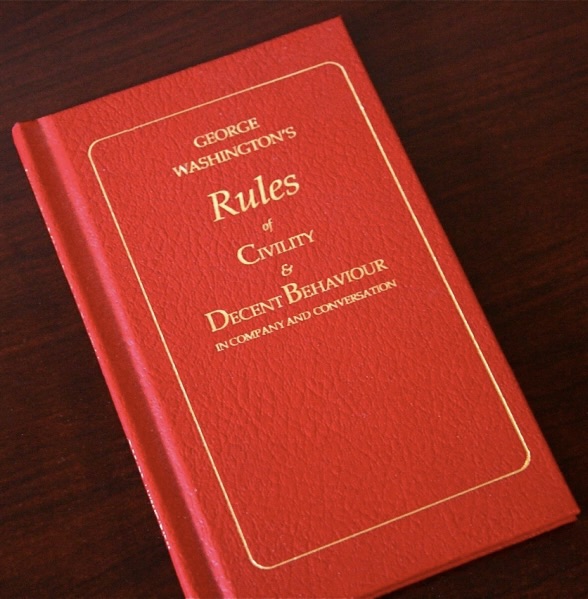
In 1595, French Jesuits composed 110 Rules of Civility. George Washington is known to have copied them into his school notebook by the time he was 16 years old, more than two centuries later. He titled them, “The Young George Washington’s Rules of Civility and Decent Behavior in Company and Conversation”, and they were formative in the development of his character. A system of courtesy and respectful behavior appropriate in the company of individuals was later expanded to a nation when he became President. A man of that time wrote this about Washington, “…no wonder every body honored him who honored everybody.”
The first and last of 110 Rules of Civility:
Every action done in company ought to be with some sign of respect to those that are present.
110.Labor to keep alive in your breast that little spark of celestial fire called conscience.
One final story. When our son, Adam, was four-years-old, we were at Lake of the Ozarks in Missouri with 16 extended family members together in a big house for a reunion weekend. Two of his cousins, brothers, then four and six years old, were rolling around on the floor aggressively punching, kicking, and yelling as young boys or puppy dogs are apt to do. Adam, after watching the ruckus on the sidelines, finally approached, and standing directly over them asked, “Can’t we all try to get along now?”
To put the world in order, we must first put the nation in order. To put the nation in order, we must first put the family in order. To put the family in order, we must cultivate our personal life; and to cultivate our personal life, we must first set our hearts right.
–Confucius [551-479 BC]
Paul to the Corinthians:
For our boast is this; the testimony of our conscience, that we have behaved in the world to be decent.
Joseph Campbell said that sacred places are where you go to wake up something important about yourself. Specifically, “A place where you can simply experience and bring forth what you are or what you might be.”
…go where your body and soul want to go. When you have that feeling, then stay with it and don’t let anyone throw you off. –J. Campbell
When I wrote about how creating and inhabiting personal space nourishes us from the inside out The Poetry of Space, I remembered a place rooted in my childhood. It was an 1840’s, pre-Civil War, stately brick home fronting more than 600 acres of Missouri woods and farmland.
Why did a 100+ year-old house in Villa Ridge, Missouri, deeded to my grandmother on the sudden death of her second husband, John Coleman, take me metaphorically “where body and soul wanted to go”? I stayed with the feeling, as Campbell suggested, dug into archival history, then realized it was a story of its own.
This place, in rural Missouri, is why houses and spaces resonate with me. Time spent here, in a house with more than a century of history, was where I learned that certain spaces are more than a container with walls and floors.
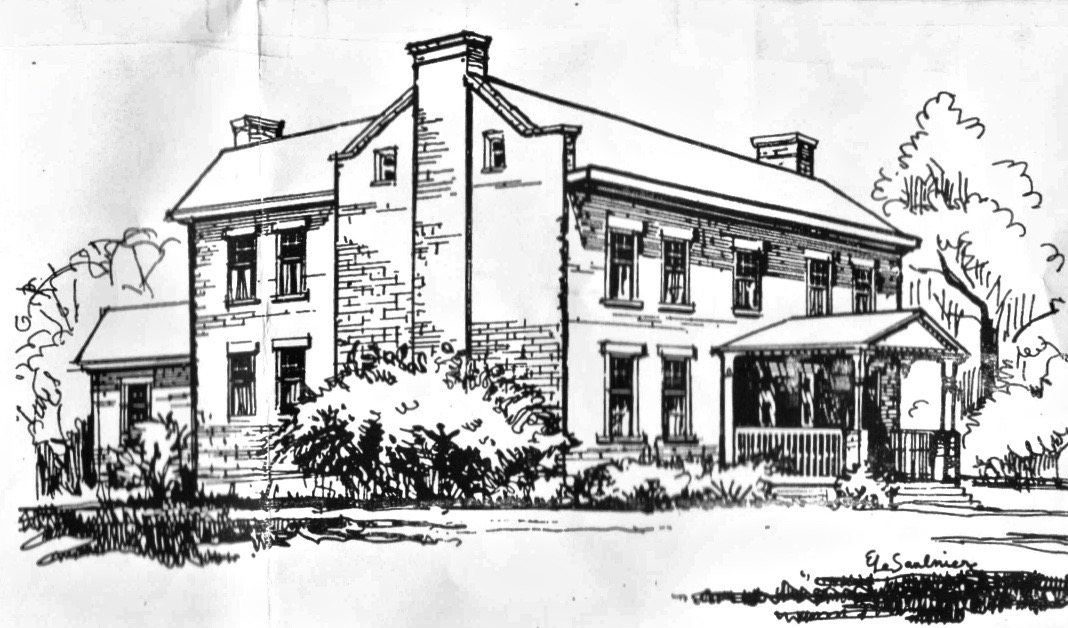
illustration of Coleman House by Eloise LeSaulnier, 1975
I don’t remember John Coleman, who wed my grandmother late in life, but I do remember the house that his grandfather, Spencer J. Coleman, bought exactly one hundred years before John, his last living heir and my step-grandfather, dropped dead outside the home where he was born.
That unexpected death occurred two years into the second marriage of John Coleman and my paternal grandmother, Effie (“Fifi”) Harbour Coulter. They wed in 1954. John died two years later at age 77. Fifi, widowed for the second time at age 68, was deeded the house and 665 acres of prime Missouri farmland.
wedding photo john and effie coleman (center), I’m on my mother’s lap next to john and fife
The Coleman House, as it is called today, became the place for our extended family to spend time together. Thirty miles from St. Louis off old Highway 100, Fifi’s six children and many grandchildren annually spent Memorial Day, July 4th and Labor Day holidays at the farm. Potluck picnics were set up on tables in the side yard. The adult crowd socialized on lawn chairs set out under towering trees while grandchildren from toddlers to teens were largely left to their own devices.
In my age group, cousins ran freely around the house and outbuildings or across the road to the school playground. We banged out every duet version of “Chopsticks” on the old upright piano. We walked the grassy road to the first big gate. If the black bull with a reputation for charging wasn’t in sight, we went on through and down the hill to the pond. Or we walked farther into the woods looking for the headstones of a family cemetery.
It was a jubilant time with a different brand of freedom; protected independence, discovery and exploration, wide-open country spaces, and the backdrop of a slightly downtrodden, but still imposing house, with tall-ceilinged rooms so different from the way we lived in town.
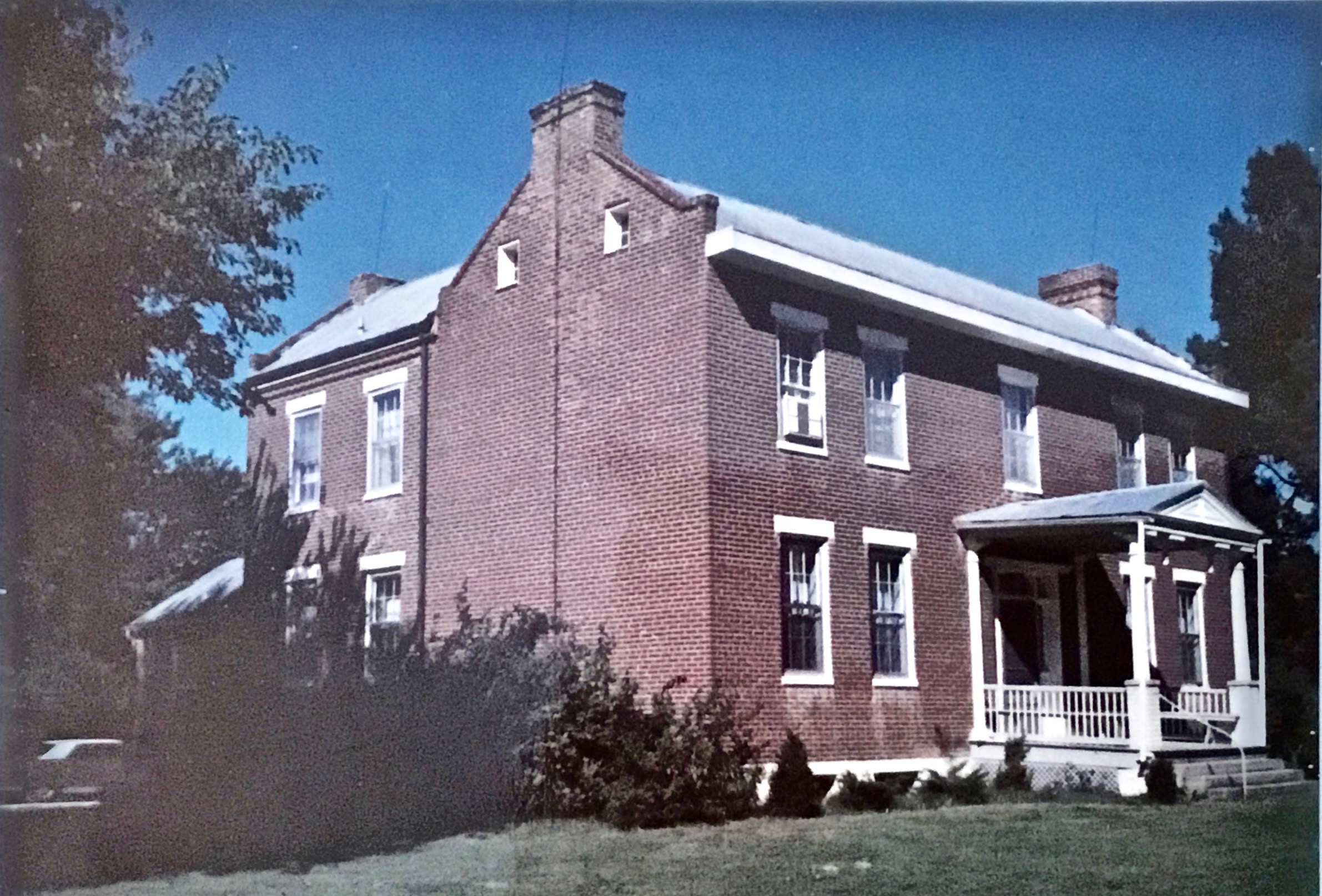
Coleman House, 1960s version
The condition and decor of the house might be described as mid-20th century shabby. There had been multiple renovations since its pre-Civil War prime. At this time, it featured large-patterned wallpaper, beige carpeting over wood floors, rickety enclosed porches with creaky, tilting floorboards, and fireplaces sealed or completely walled off. The eat-in kitchen had no built-in counter space. The plumbing upstairs and down was cast iron bathtubs, no showers.
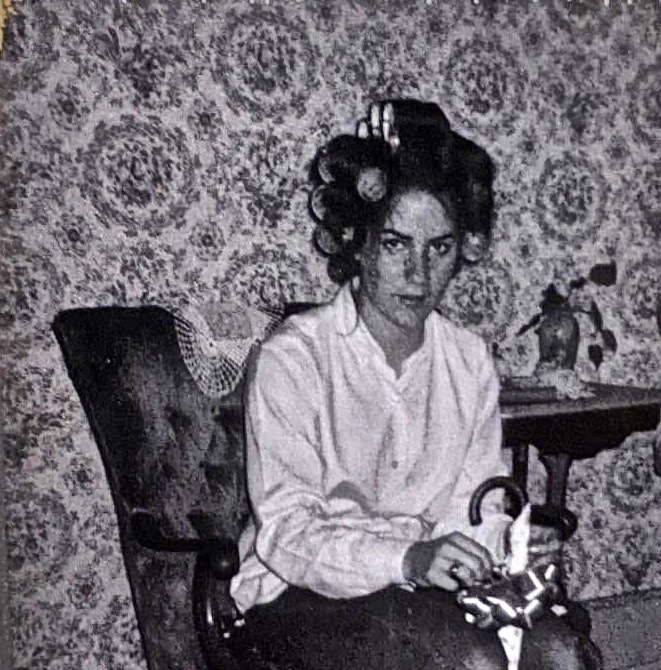
cousin judy when she lived at the farm, with curlers and large format wallpaper
What it looked like didn’t matter. What I remember is feeling happiness and liberating independence when I was there. Coleman House was where I “woke up” to making a decision about the future. I would only live in places and spaces that offered a brand of comfort and being at home in myself.
The summer I turned 11, we moved to a different state. Two years later we returned to visit the St. Louis family. At that time, an aunt and uncle and two of my closest cousins were living with Fifi to help manage the big house, the livestock, and the fields.
When it was time to drive back to Texas, I begged to be left for a longer stay. The rest of that summer is etched in long-term memory. Finally I was living in a place I loved, where learning and experiencing and confidence building occurred by waking up in rural country spaces every day.
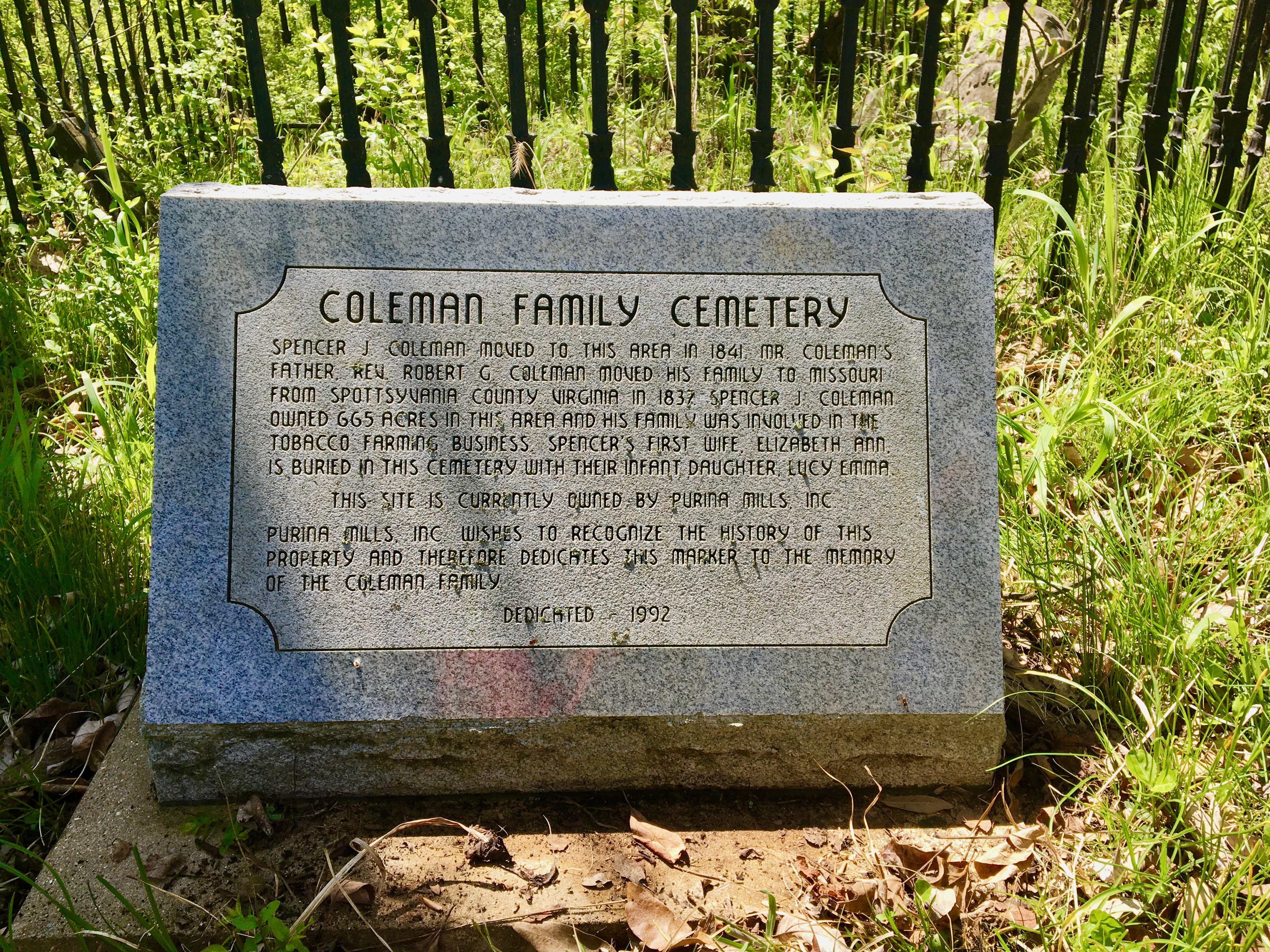
My cousin Karen taught me to drive a stick shift VW Beetle on farm roads. I gathered eggs, hung wet laundry to dry outside, picked garden strawberries, rode tractors, hand milked the cow, and stuck my finger into the thick layer of cream at the top of the milk canister. In the pick up truck, we checked on the cows down in the fields, sometimes with hay or a block of salt. I hiked to where the tiny Coleman cemetery was hidden in the woods.
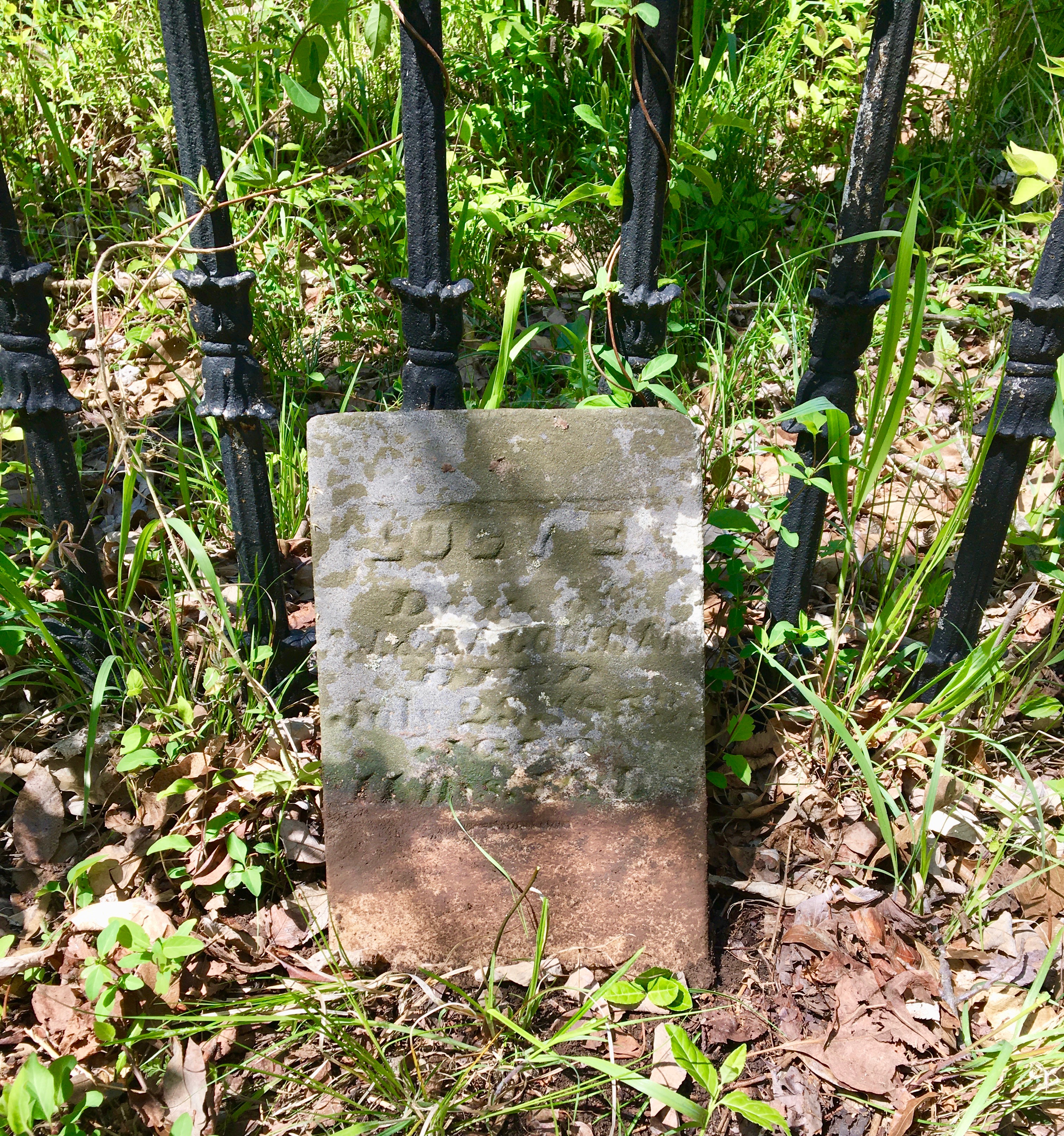
1231) Dedication plaque, 2) 1st wife of Spencer Coleman, Elizabeth Ann, d.1867, 3) infant daughter Lucy Emma d. 1853
My cousin Judy and I had a job selling July Fourth fireworks at a temporary stand on the highway. We sweated through our clothes, walked home covered in dust, and with a little money in our pockets. Before falling asleep, I climbed onto Judy’s bed under the window hoping to catch a whiff of breeze. Every night, with hands propped under her chin, she rattled off the make, model, and year of each passing car as it rounded the curve in the highway. Squinting at red taillights from a second floor window and listening to her monologue was completely sleep inducing.
In the old house, Judy felt the presence of “others.” No one believed her. According to her daughter Elise’s retelling, radio and television dials were in the habit of flipping on and off. Once, to make it stop, Judy unplugged the big radio in the kitchen, but the music continued. Sometimes the vacuum cleaner mysteriously went into action with no human nearby. On her only visit to the house, Elise herself experienced an eerie vision of “a coffin with a body” right where she was standing. She ran out of the house to escape the image. In an earlier century, the room she was in would have been used as the viewing parlor when family members died. Current owners of Coleman House mention “a light” or “a shadow” going up the staircase from time to time.
When Fifi died, her estate was sold in its entirety, house and acreage, to a real estate firm in St. Louis and later to Ralston Purina Company. Purina owned much of the surrounding land since the 1920s and still operates a research farm in the area.
I knew the Coleman House before I understood Joseph Campbell’s sentiment about “sacred places and spaces”. It awakened something inside me at a tender age for two reasons. It was a unique and memorable place. And I was with people who granted me the freedom to experiment and experience during formative years.
Everything that happened at Coleman house helped nurture my better self then. And everything that happened brought forth the person I became.
ADDENDUM 1
A Consolidated History of the Coleman Family and Coleman House
In 1837, Spencer Joseph Coleman [1816-1888] moved west, with his father and brothers, from the depleted soils of Virginia to land south of the Missouri River near St. Louis. They planned to start a new family plantation. By 1841, Spencer married Elizabeth Ann Wright and decided he liked the land further west, near Gray Summit, in Franklin County. So he split off from the family and began buying up different sized parcels over many years. Eventually he acquired 665 acres of rolling hills and fertile fields for growing tobacco and hemp.
Along the way he saw an elegant red brick mansion built by James Ming in the 1840’s. He offered to buy it with an attached 200 acres. Ming was a skilled craftsman and had built the home for himself using walnut, white pine, and oak cut from the land. He oversaw the making of each brick–cut from clay soil, shaped, molded and fired on site. But he sold the house and land to Spencer for $6000.00 in 1856.
It was initially called Bellaire, a solidly built mansion of masonry walls two bricks thick with a foundation of limestone blocks. The front porch entry was relatively small, but featured hand carved decorations and four columns on the front and two on either side of the door. There was leaded glass above and around the door.
front of coleman house, date unknown, in 1800s
Inside were two large rooms flanking a central walnut staircase. The back entrance opened to a double open porch gallery of two stories with its own smaller stairway. Beams used to support the upper gallery were hand hewn from trees cut on property and cemented with wooden pins. The kitchen was also in the back with an attached summer kitchen for hot weather cooking. Upstairs were three bedrooms, two large ones at the front of the house and a smaller nursery behind. There were six fireplaces for heating, three on each floor.
Spencer Coleman, with wife Elizabeth Ann [1823-1867] and four children, moved into Ming’s mansion in 1856. For the next 100 years it was passed down through succeeding Coleman generations. Eldest son William Joseph Coleman [1848-1925] was the first to inherit the house and farm when Spencer died in 1888.
William Coleman married 15-year-old Emma Lou Sullivan [1860-1883] in 1875. She bore three children before dying tragically when her skirts caught on fire while burning trash and leaves in the orchard. She was only 23. William was left with two young living children–Emma Josephine [1876-1952] and my grandfather by marriage, John Marshall Coleman [1879-1956]. William asked his unmarried sister, Elmira, to move in and help care for the family. He never married again.
That generation of Colemans, Emma and John, children of William and Emma Lou, and grandchildren of Spencer and Elizabeth Ann, produced no heirs.
John Coleman’s first wife died in 1925. He waited 29 years to remarry. The second time was to my paternal grandmother Effie Lavina Harbour Coulter (Fifi). He was 75. She was 66. Fifi had raised five daughters and one son, my father Joseph Clayton. My grandfather, Andrew Joseph Coulter, left her widowed in 1946.
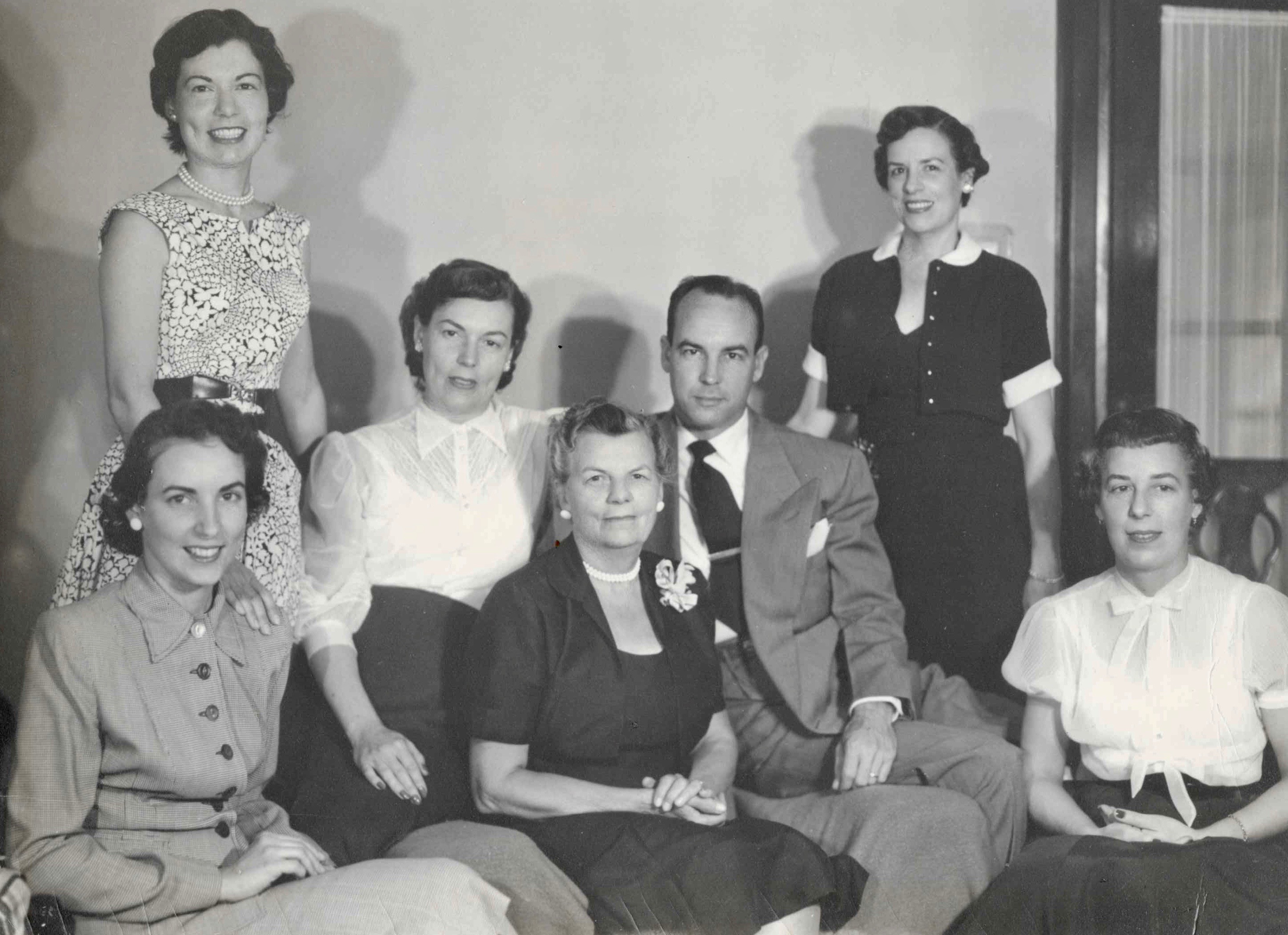
Fifi’s wedding to John Coleman, with her children, from left: Jackie, Lee, Nicky, Effie, Joe, Bess, Dot, 1954
Effie and John had already known each other for many years. John was a lawyer by degree but worked as the bookkeeper for my grandfather’s “Coulter Hay Feed and Grain” store in downtown Kirkwood, Missouri. It is rumored that he was sweet on Fifi for a long time before asking her to marry. She moved into Coleman House in May 1954.
Fifi and John at the farm
Two years later, John was in the yard talking to a neighbor about building another pond in the fields when he keeled over from a heart thrombosis and died instantly. My cousin, Linda, remembers it vividly because she was spending the night at the farm as she often did with Fifi.
From the purchase of the property by Spencer in 1856 to John’s death in 1956, one hundred years of Coleman legacy ended that summer evening. My grandmother inherited the estate. For the next seventeen years Coleman House and farm was part of our extended family.
In 1973 Fifi died and everything was eventually purchased by Ralston Purina Company. It added a large parcel to their adjacent land. Transient workers, who were researching animals or Purina product development, moved in and out. Soon everything–the house, grounds, and outbuildings fell into crumbling disrepair.
Finally, in 1985, Purina sold the house “as is” with a few acres of land to a couple working for the company. That’s when transformation began. I didn’t meet these owners, but I learned that their labor-of-love restorations saved the historic property from complete ruin. Over many years, with a contractor’s help, the house was gutted and literally rebuilt from the inside out.
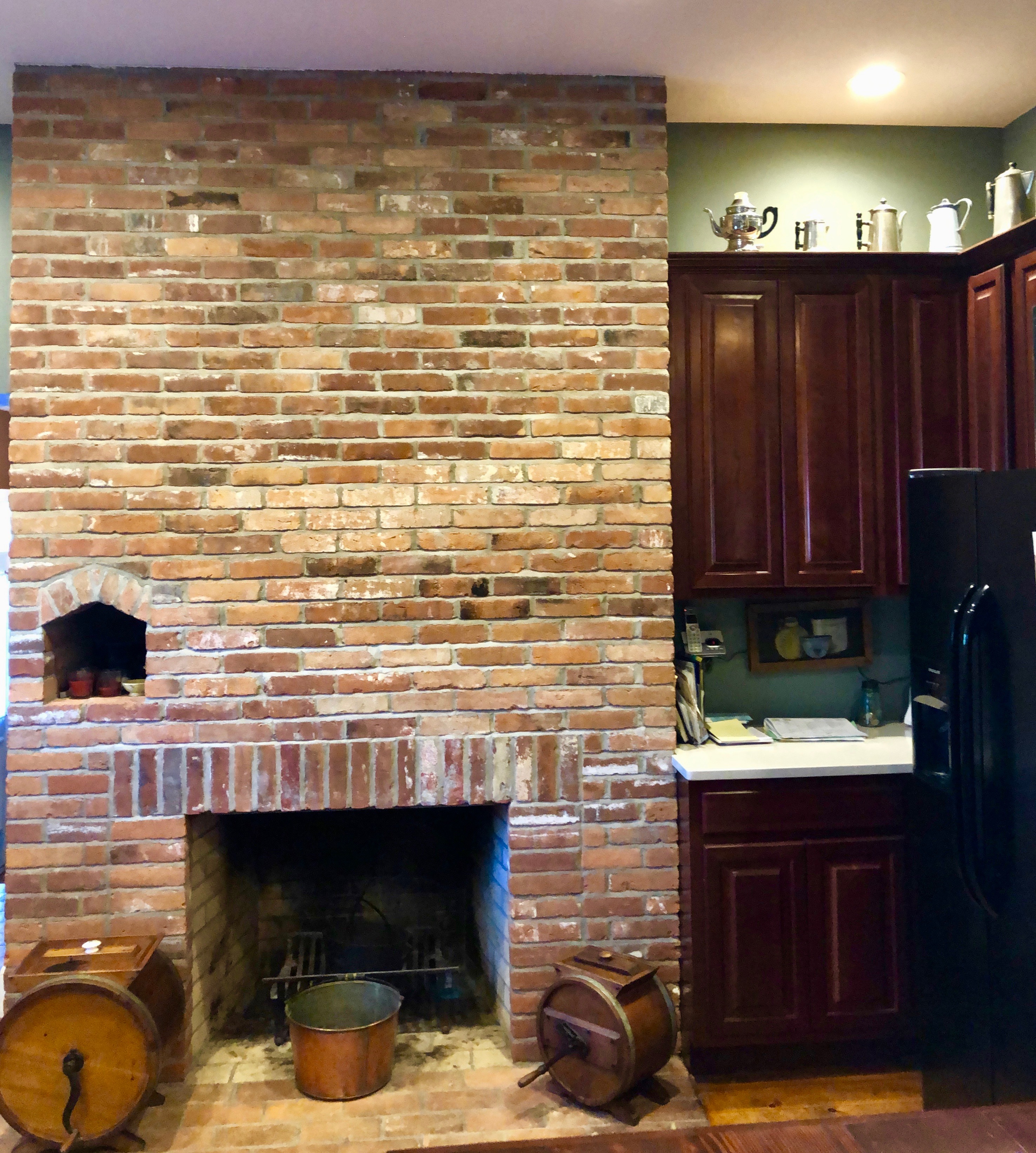
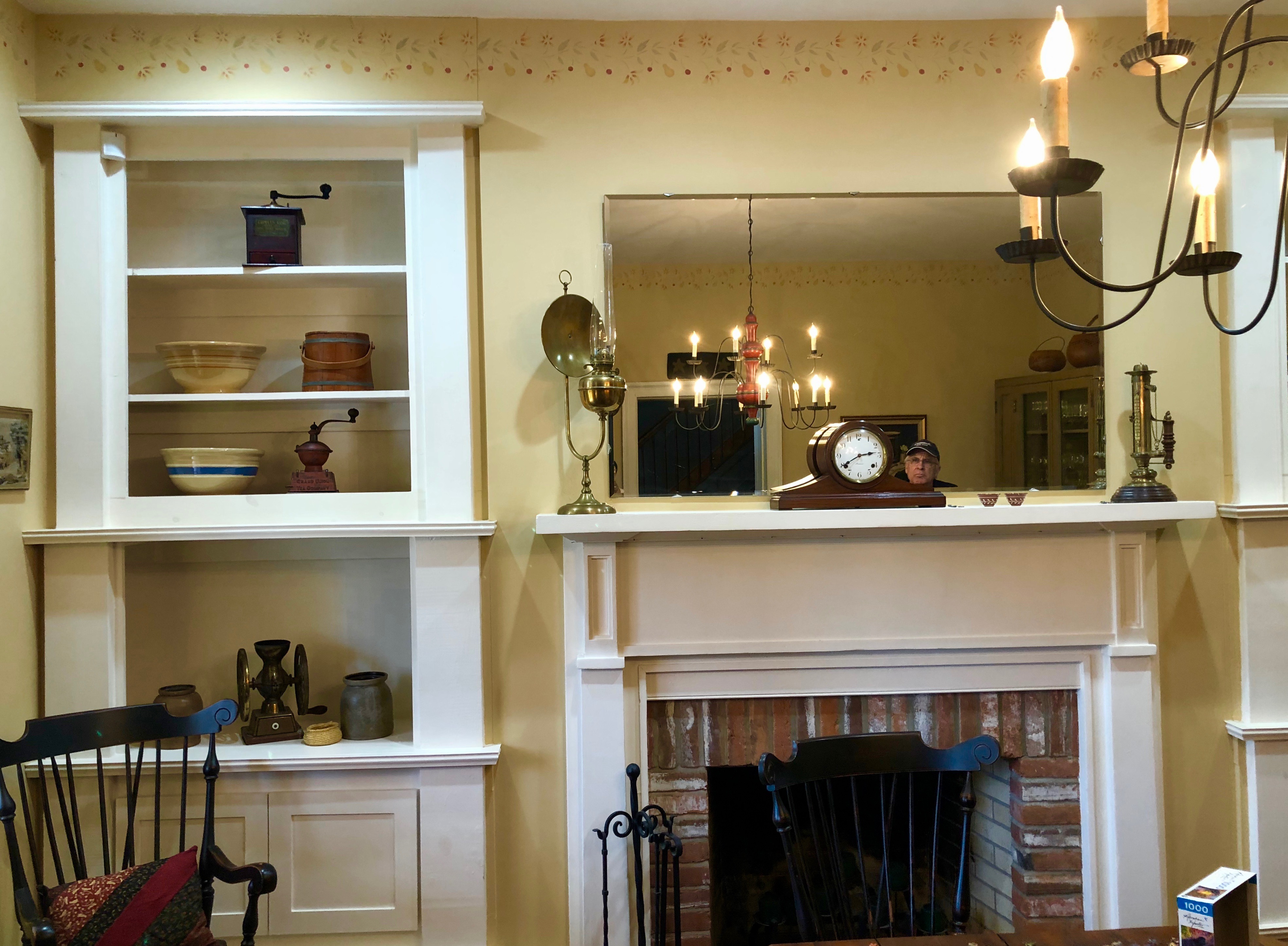
Because it was solid brick construction, they began pulling down interior plaster walls to build new walls with studs, insulation, and dry wall. All six fireplaces were opened and restored to the top of the chimneys. In the kitchen, one fireplace was hidden behind a wall. It turned into a beautiful and usable part of the room.
kitchen fireplace uncovered and restored
dining and living room fireplaces rebuilt
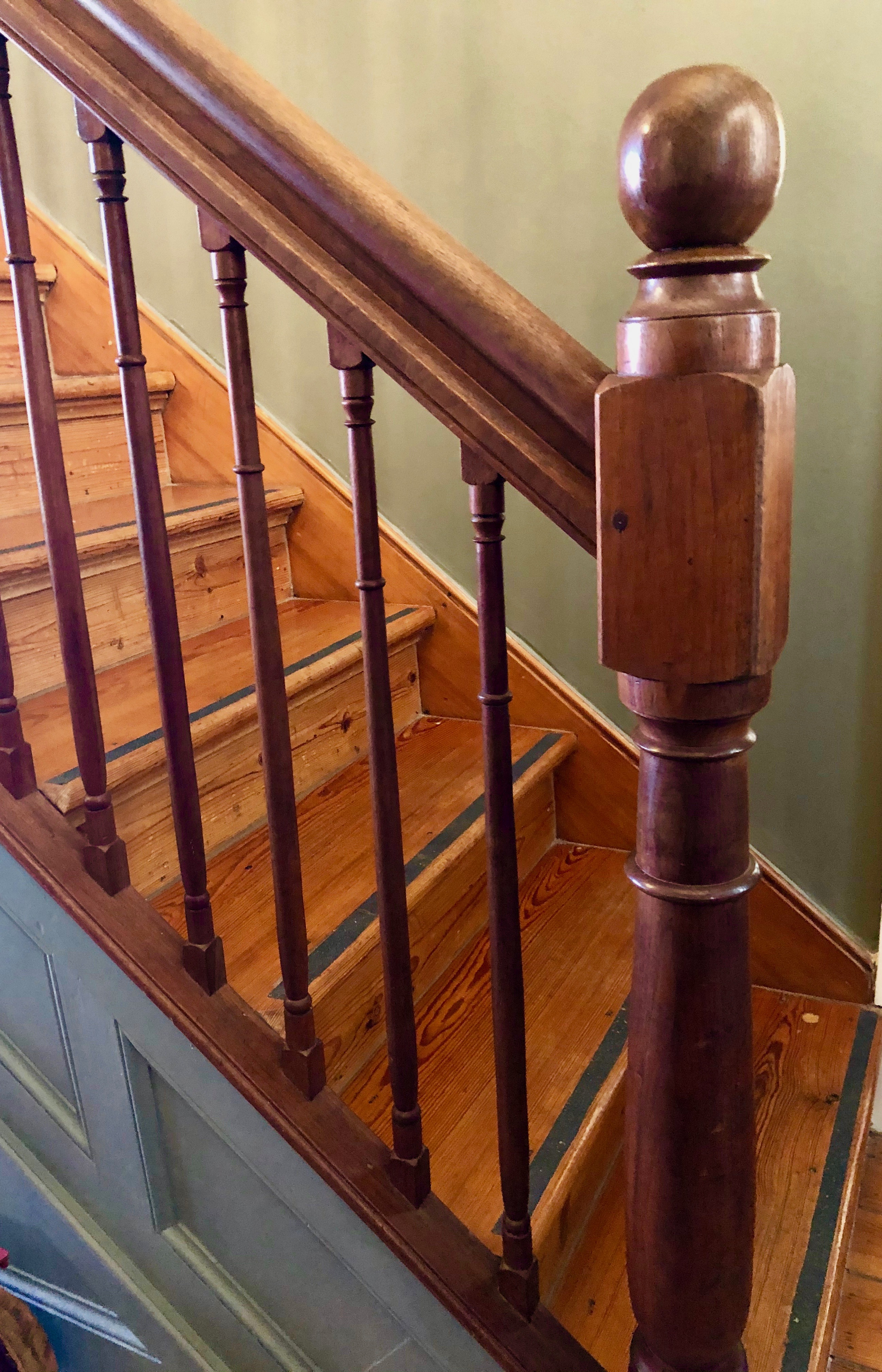
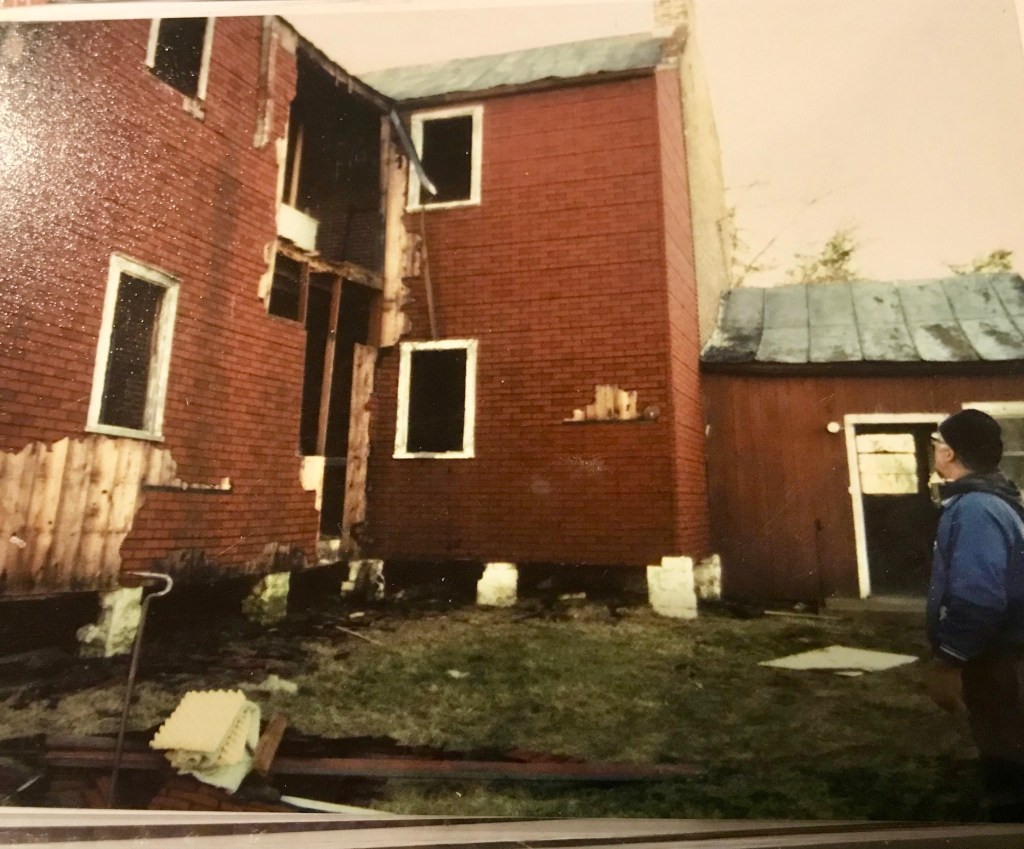
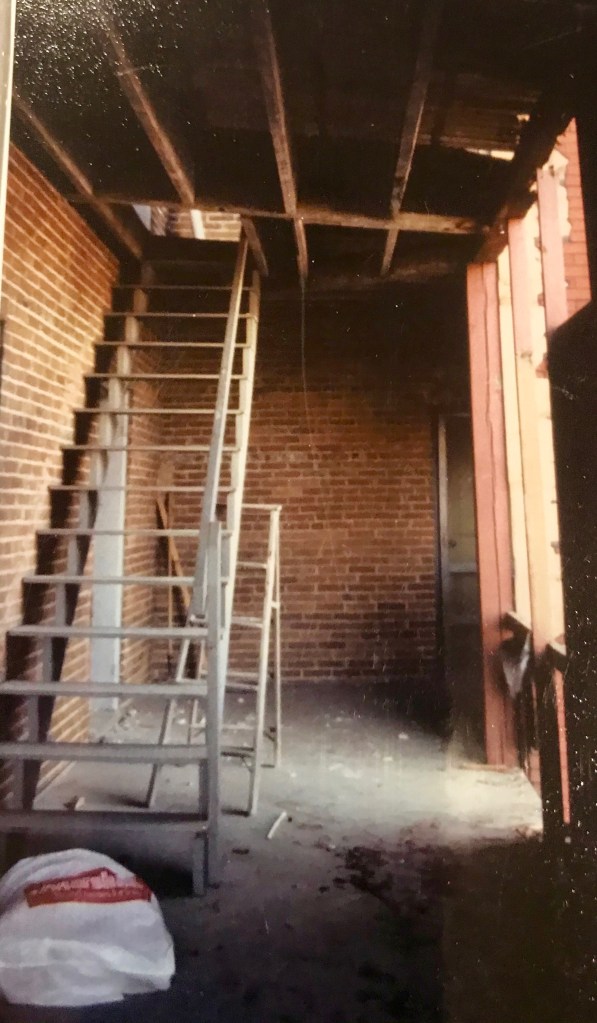
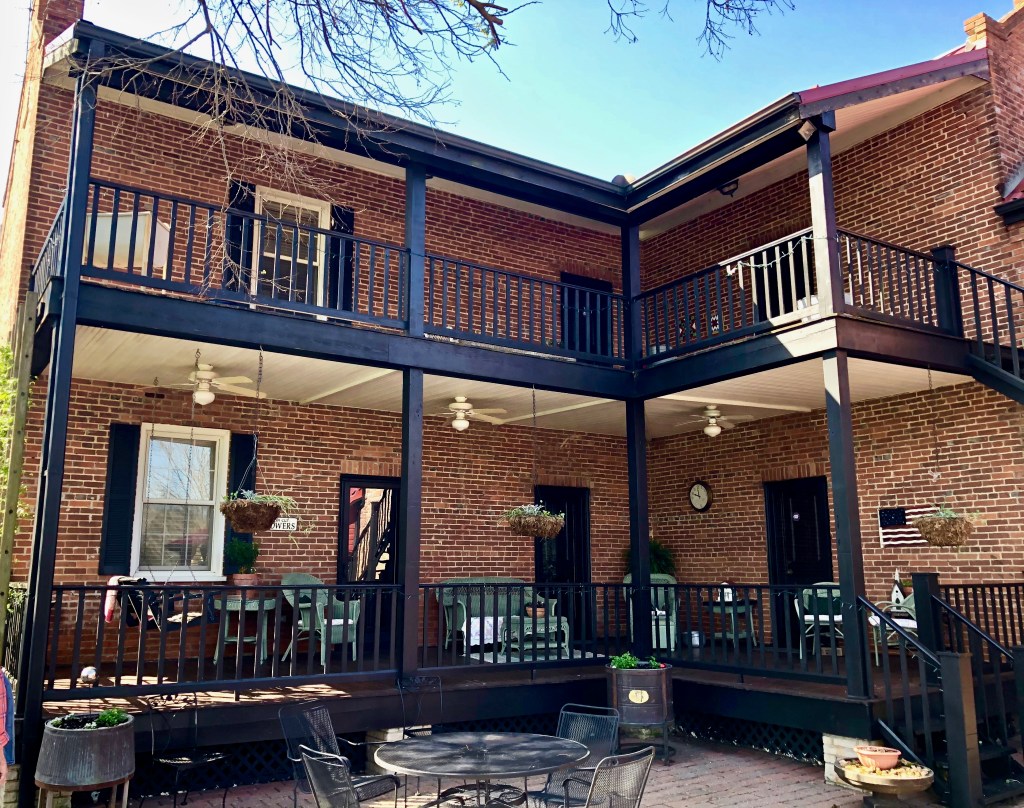
White pine floors were uncovered and refinished. The walnut staircase was refurbished. The attic was insulated. Original single pane windows were replaced by custom built ones. Two rickety enclosed porches on the back were torn off and rebuilt to their original open architecture.
12 a2 b2 c31) original pine floors, 2 a,b,c) walnut staircase, 3) attic door up the narrow stairs123 a3 b1) torn off porches on back of house, 2) view of sagging floor of upper porch, 3 a,b) open galleries today
The smallest of the upstairs bedrooms was opened and incorporated into the master bathroom with a fireplace and sitting area, which is now used as a sewing room. The summer kitchen was torn off and rebuilt brick by brick to become the back entrance. The old wooden front porch must have been unsalvageable because it was replaced with bricks spanning the front of the house and a second floor balcony was added. Shutters were hung on the outside windows.
1231) old front entry with wooden porch, 2) new front entry with brick porch, 3) view from front door to yard12341) side view showing old and new bricks where summer kitchen rebuilt, 2) counting masonry construction–every 8th row the bricks are turned on end to stabilize, 3) new shutters, windows, and black trim, 4) front of house today
After years of living in a construction zone, a job change occurred, and the property sold in 2003 to the couple who now live there. They have added their own touches–an attached garage and an outbuilding for storing antiques for their business. The summer kitchen entry was raised by one story to house an office upstairs and an improved bathroom/laundry area below. The cedar shake roof was replaced with metal after severe hail damage several years ago. They built a patio and walkway around the house with 10,000 cobblestones and added to the landscaping by replacing dead trees, planting many shrubs, and adding a large flower/vegetable garden.
1 a21 b341 a,b) fireplace mantel decorations in current sewing room/master bath, 2) garden in early April, 3) cobblestone patio with covered cistern in center, 4) view of side yard and garden
The current owners graciously allowed me to visit Coleman House in early spring this year. I went with my cousin, Karen, who had lived there with her mother, father, sister, and our grandmother.
karen, who taught me to drive a standard stick shift VW beetle
It was wonderful to see the changes from “then to now”. Coleman House was truly saved after 1985. It was revitalized to modern living standards and new generations continue adding to its legacy. Restorations that took decades of vision and a tremendous outlay of work enhance the original beauty of James Ming’s craftsmanship from almost two centuries ago.
121) Effie Lavina Harbour (right) with sister Ethel as teenagers, 1902 2) Effie’s engagement announcement to my grandfather who quit the presidency of the Kirkwood Bachelor’s Club to marry in 1909. He was 43, she was 21.
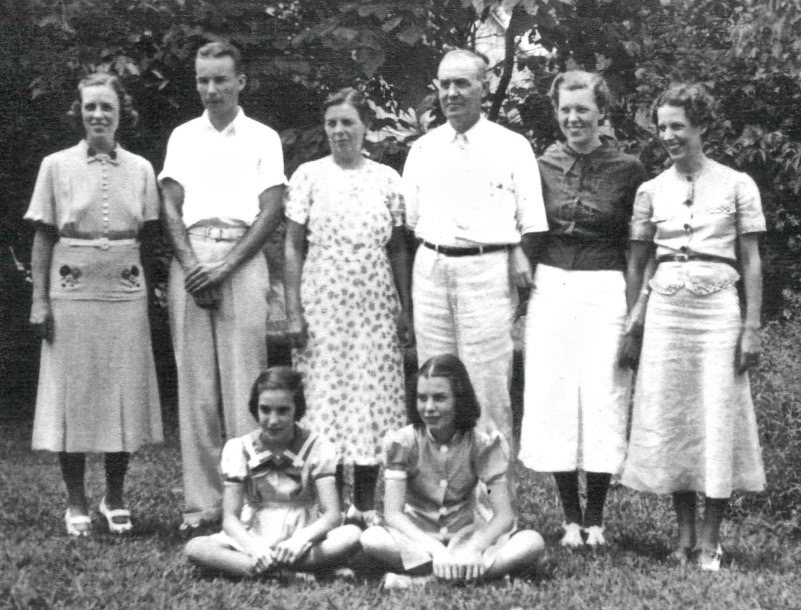
Coulter family, circa 1937
Standing left to right: Bessie Mae (Bess or Betty), Joseph Clayton (Joe), Effie Lavina (Fifi), Andrew Joseph (Joe), Ethel Ann (Nicky), Dorothy Jane (Dot) Seated left to right: Jacqueline Elise (Jack or Jackie), Frances Lee (Lee)
Fifi Coulter Coleman dressed up, in summer
*Final musings about my grandmother.
When I began this research, I wasn’t thinking about the work-a-day life for women in my grandmother’s era. But it was overwhelming by anyone’s standards. Over the span of 17 years, Effie bore 5 girls and 1 boy at home in a bedroom and raised them almost singlehandedly. Her husband, a middle-aged man who provided for the family, was uninvolved in household life. Grampa Joe was known to sit in his chair reading the newspaper with a spittoon at his feet, seemingly oblivious to the chaos of six children running circles around him. Added to that workload was the daily care and feeding of a mother-in-law who couldn’t, or wouldn’t, get out of bed for the last 20 years of her life. And then, after early marriages, several daughters lived at home with their husbands until finding other living arrangements.
The overall picture of Fifi’s life looked like this: The full management of a large household with six children underfoot, a disconnected, but working, husband, a mother-in-law who decided to stay in bed for 20 years, taking in boarders for extra money, and adult daughters moving in and out with spouses.
Perhaps John Coleman saved Fifi by wooing her out to the farm where she only had one man to worry about.
Joseph Campbell, mythologist and philosopher, wrote,
A ritual is an enactment of a myth. And, by participating in the ritual, you are participating in the myth…But you don’t know what you are doing unless you think about it. That’s what ritual does. It gives you an occasion to realize what you are doing so that you’re participating in the energy of life. That’s what rituals are for; you do things with intention…you learn about yourself as part of the being of the world…
Campbell also said,
Mythology is poetry, it is metaphorical…it is beyond images. Mythology pitches the mind beyond that rim, to what can be known, but not told.
Herein lies the challenge–to tell a story that for the past two months has been beyond the reach of my words. It is rooted in a ritual with pagan origins. It was part of the wedding of our son and his Latvian/Russian bride.
ceremony site
In a countryside setting outside of Riga, Latvia, June 12 was as perfect as a summer day can be anywhere in the world. There was warm sun and a light breeze. Cloudless sky. Lapis-blue lake and a field of soft grass. A ceremonial framework of boughs entwined with flowers. Shared vows in Russian and English. Radiant smiles. Applause, joy, and love.
The after party began with a scavenger hunt and Champagne for guests as the newlyweds were whisked away for photos. Upon their return, the celebration continued with good food and drink, fantastic music, poignant toasts and funny speeches.
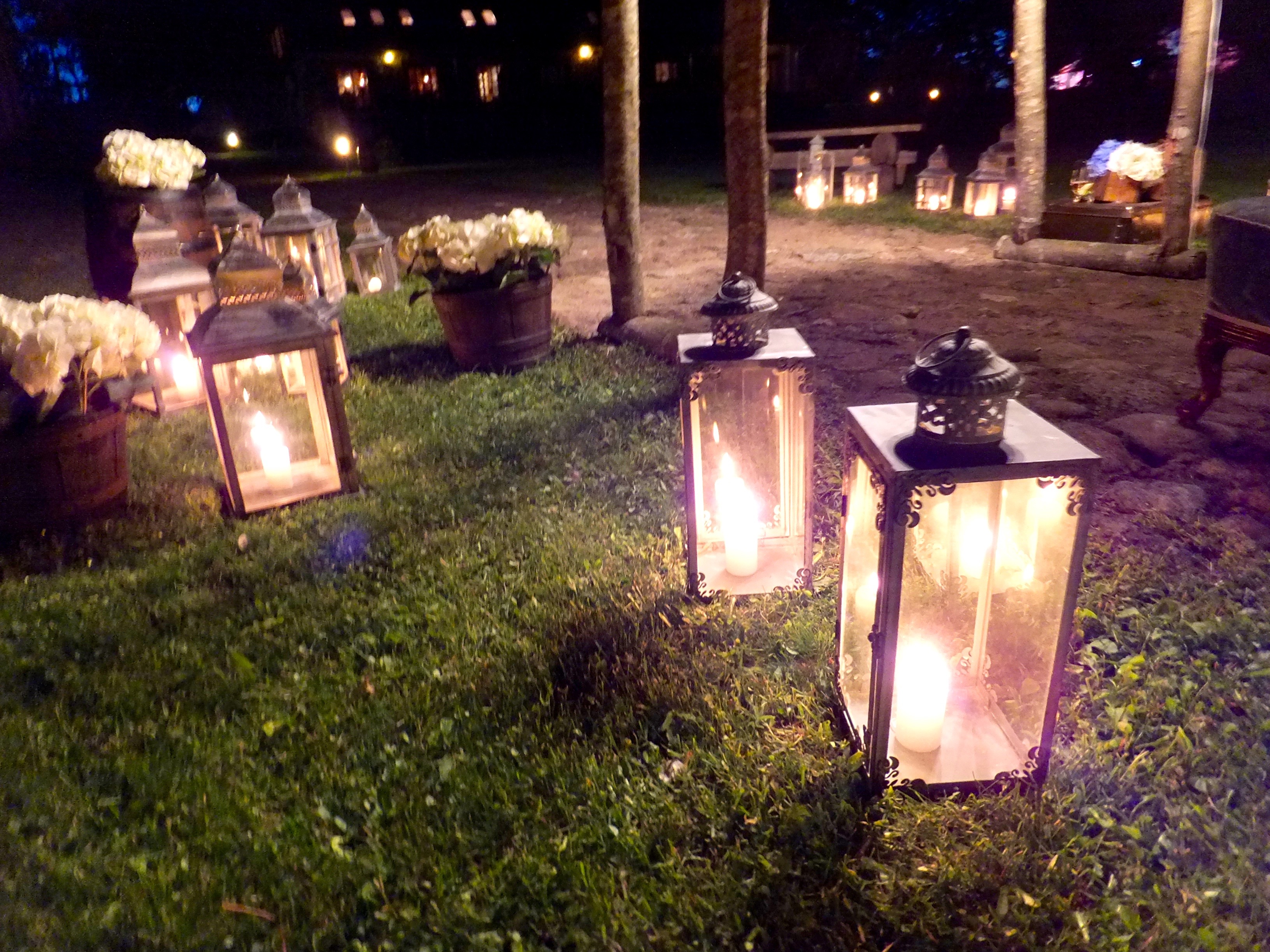
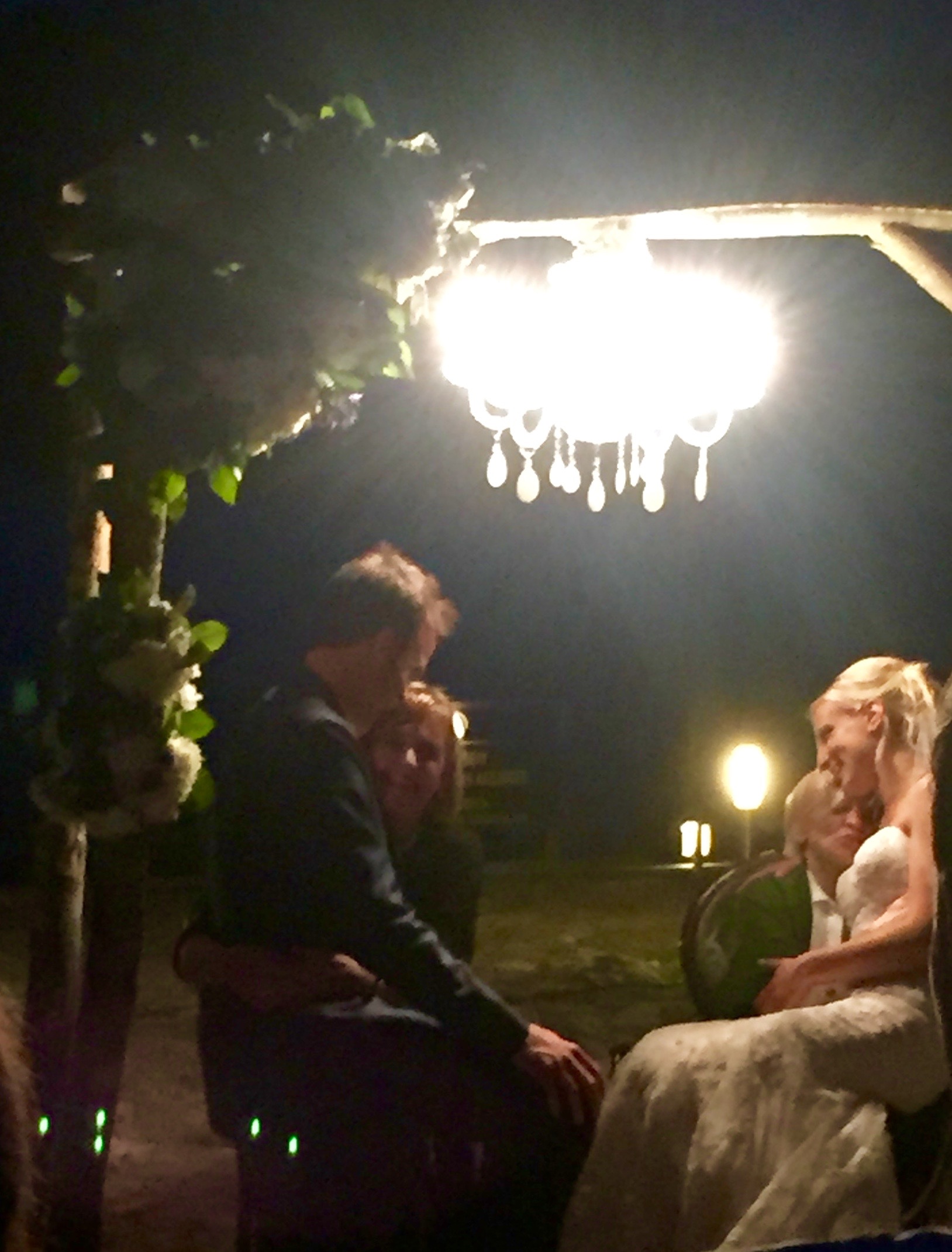
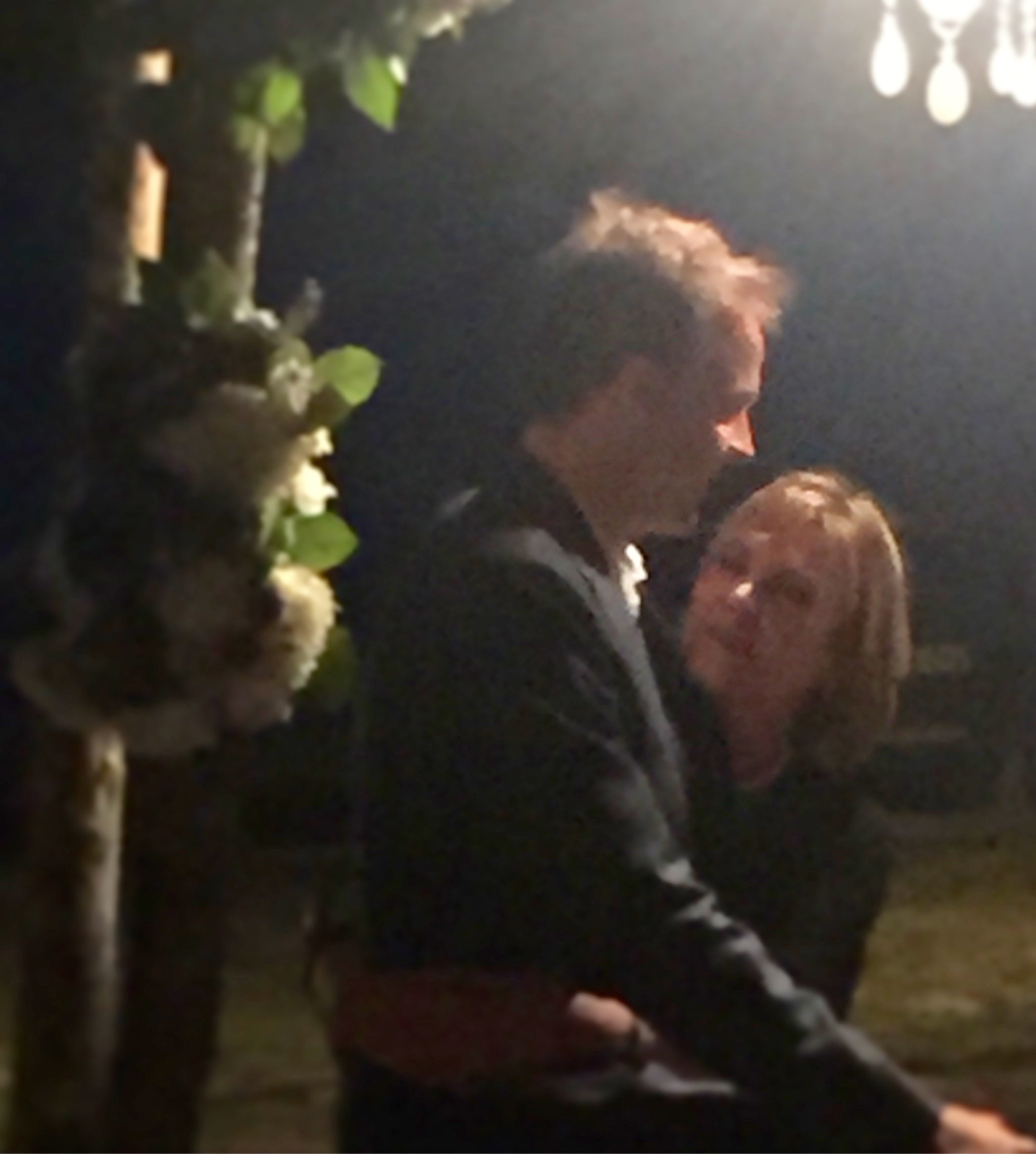
Just before midnight, the band music stopped. All of the guests were ushered from the party tent, down the hill, to the wedding site near the lake. Glowing candle lanterns lit the darkness. Blankets were offered for the cool evening air. There was a young man playing soft guitar music. Two chairs had been placed beneath the framework of boughs and flowers. The mothers of the bride and groom were instructed to sit on the chairs. Then our children sat on our laps. No one understood what was happening, but we were entering an ancient Latvian myth.
Mičošana [pronounced “Michuashana”] is a Latvian wedding tradition that dates back to [pre-religious] pagan times. It symbolizes the moment when the bride becomes a wife and the groom a husband. It is a way of saying “goodbye” to childhood and home. In this enactment, there was an unspoken tribute to both mothers as we held our children one final time before they passed into adulthood and the creation of a new family. It is a sweet, sad, and somehow romantic experience.
Historically, Latvia was a country of peasants living and working on large farming estates under a feudal system. Girls typically married boys from settlements far away. Mičošana became a ritual of farewell. After marriage, the bride would live on her husband’s settlement, rarely seeing her own family again. The ceremony symbolized “giving the bride away” because it severed ties between the girl and her family.
Here is how it went 21st century style. Midnight–the end of the day and the beginning of a new day. With soft background music and married children on our laps, the bride’s mother took off her daughter’s veil and placed it into a box. She tied a ruffled apron around her daughter’s waist.
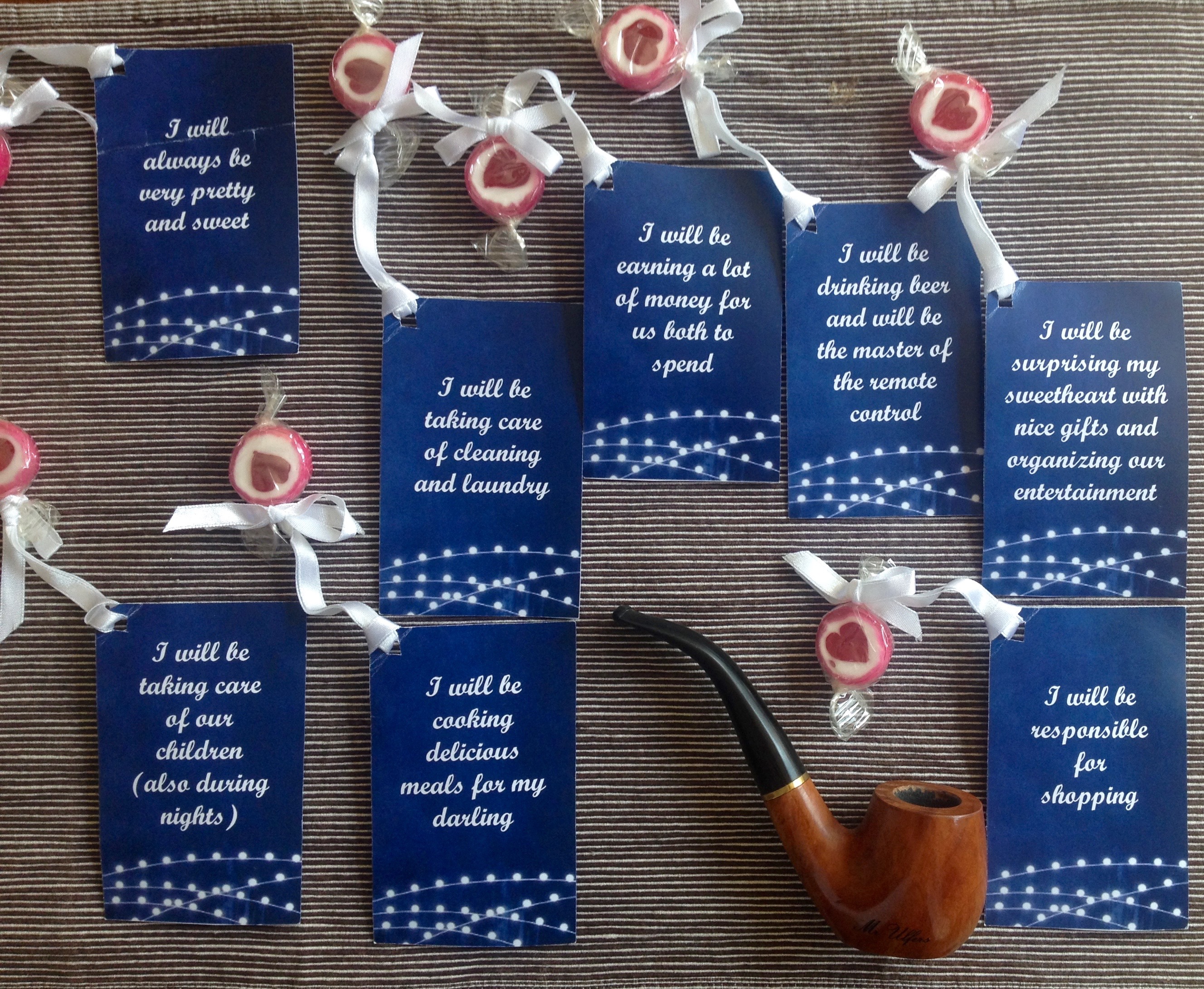
I placed an engraved wooden pipe in my son’s hand. The bride and groom stood together with their symbolic accessories and read aloud the roles they would now assume. This was the lighthearted version of contemporary Mičošana, with laughter too. Choosing from a basket of printed cards the bride read, “I will drink beer and be the master of the remote control.” The groom, “I will always be very pretty and sweet.”
The readings went on for several minutes. The bouquet was tossed by the bride as the guitar music faded. People began to drift uphill to the tent where the party continued until the sun rose. But something very special had happened. I didn’t know what it meant. I didn’t have words to describe it. I only knew how it made me feel. And I couldn’t stop thinking about it.
Walking across the grassy field, the bride’s mother and I linked arms. She turned to me and said softly in her rudimentary English, “Wendy, when babies come, 50/50, okay?” I wrapped my arm around her shoulders and said, “Of course, Tanya. 50/50. Always.” It was another unexpected moment. Her overture touched me. The meaning behind the words was heartfelt and real. First women, then mothers, and now a multi-cultural family bound by our children.
As I learned more about Mičošana, the symbolism became clearer. Our son and his wife have assumed roles in an international marriage. It will take our daughter-in-law far from her Latvian family home. She will undoubtedly see her parents and family less and less often. The bittersweet midnight ceremony was the same parting experienced by generations of brides over thousands of years.
I believe Campbell. Myths are important. Rituals are important. Poetry is important. Symbolism runs through ceremonies from ancient times to the present. Because of our thinking nature, we strive to understand the meanings underneath. This helps awaken us to our place in the circle of life.
Campbell’s words, again: “…by participating in the ritual [with intention]…you are being put into accord with the wisdom of the psyche, which is the wisdom inherent with you anyhow. Your consciousness is being reminded of the wisdom of your own life.”
This is what we hope for all of our children. We wish for them to grow into the wisdom of their own lives.
ajutimestwo, 6-12-15
SOLYANKA [pronounced Sahlahnka] aka HANGOVER SOUP
Partying continues well into the day after a Russian/Latvian wedding. A thick hearty soup of salty, cured meats and sausages is usually on the menu after a night of drinking. It hits the spot with its rich meaty stock, briny pickles and vegetables, garnished with sour cream. Although there is a vegetarian form, meat solyanka is more common. I fell hard for this delicious taste at Jumurda Manor. Anna and I made a version in her London kitchen. The key is a lot of sour and salt in a rich broth. Ingredient proportions are flexible. Rice can be substituted for potatoes. This is an “everything but the kitchen sink” kind of soup. It tastes so much better than you think it will!
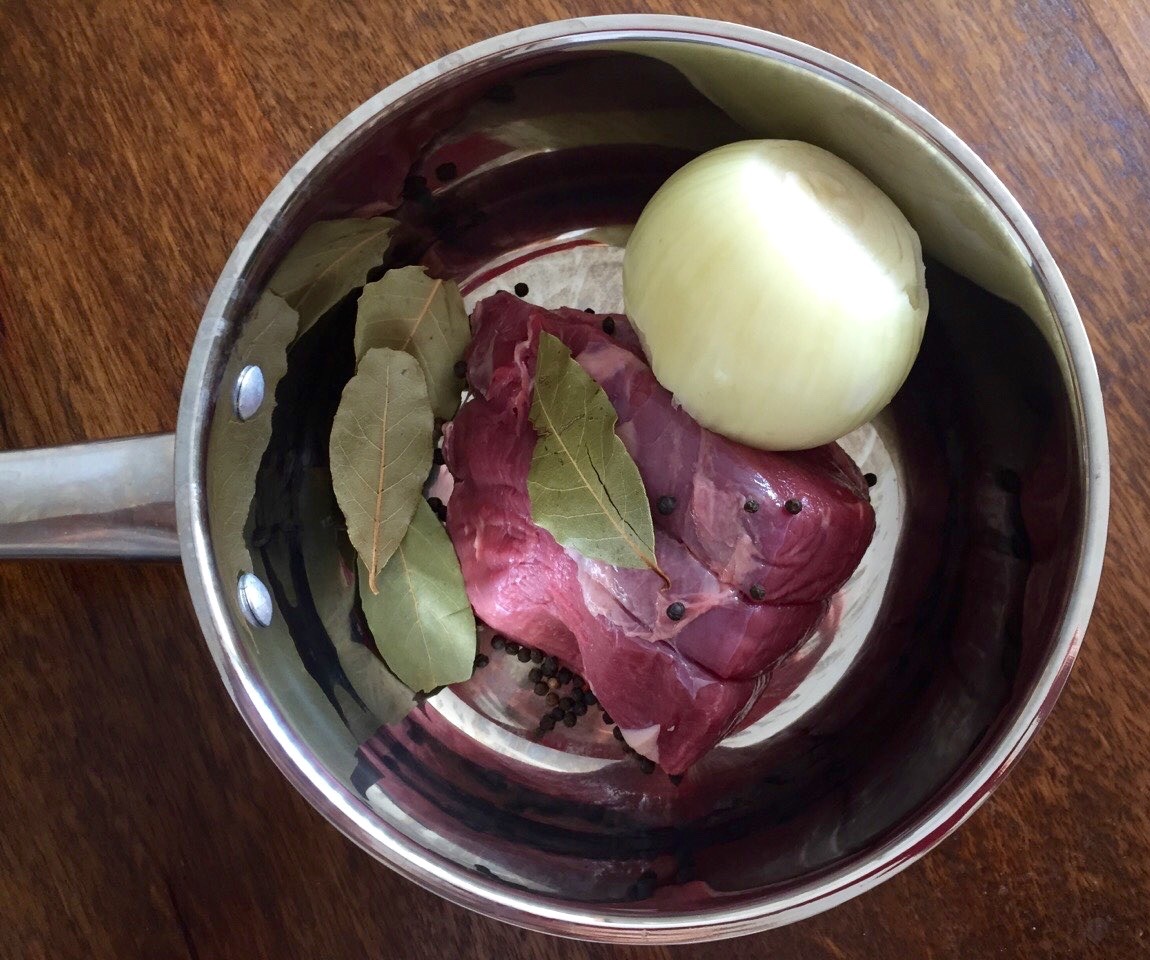
lean beef and seasoning for broth
other raw ingredients
MAKING THE BROTH
300 gm lean beef rump
1 whole onion, peeled
4 bay leaves
1 T. whole peppercorns
In a saucepan, cover broth ingredients with water. Boil uncovered over medium heat for 30 minutes. Take out onion and discard. Continue boiling until the meat is cooked through, about 1.5-2 hours. Add additional water to keep meat covered and to build up broth. When meat is tender, take out to cool slightly. Skim fat off top of broth.
NEXT STEPS
200 gm Polish sausage
100 gm good German ham
Cut cooled beef, sausage and ham into julienne strips. Cube some potato. Place in broth to simmer.
ready to use ingredients
Chop ½ onion and sauté in olive oil. Add julienned carrots and ¼ cup [or more] tomato paste. Continue sautéing for a few minutes then add all of this to stock.
Place sliced meat in skillet to warm slightly. Then add to stock.
brine soaked cukes and olives
IMPORTANT FINAL INGREDIENTS
Jar of cucumbers in BRINE. Different from regular pickles. Saltier. Brinier. See photo.
Black olives packed in BRINE
Stir in julienned cucumbers, whole black olives and ¼ to ½ cup [or more] of the brine.
When potatoes are cooked, turn off heat. Salt and pepper to taste.
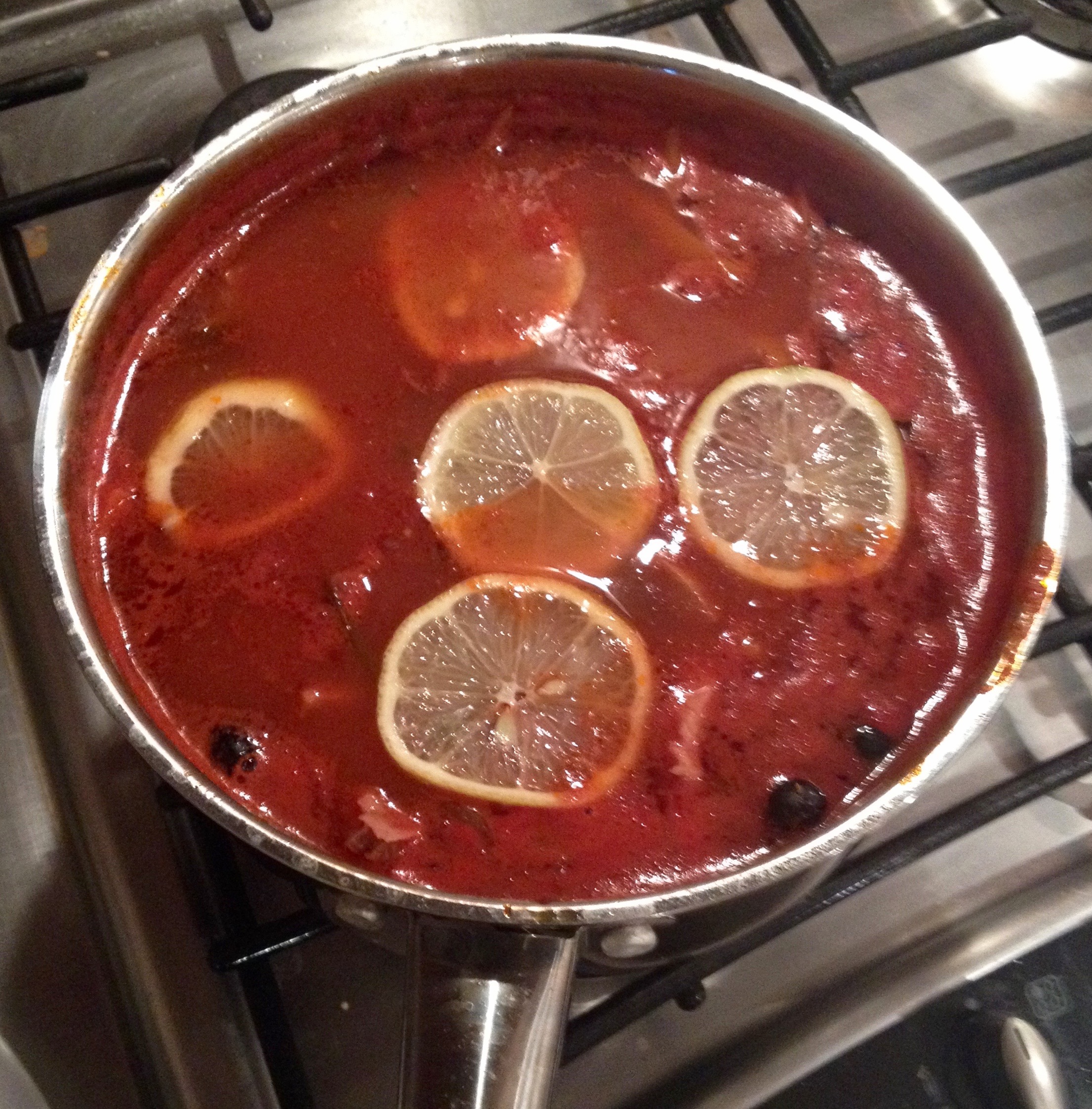
Slice fresh lemons into circles and place over top of soup. Cover pot and let sit about 30 minutes. Remove lemons. Serve garnished with a large dollop of fresh sour cream.
Delicious and nutritious even without the hangover.