Considering the Oyster

Often the place and time help make a certain food what it becomes, even more than the food itself. –M.F.K. Fisher (writer extraordinaire 1908-1992)

This is my experience with oysters. The memory of where I was when I learned to relish raw oysters served in their shell with minimal garnish is stronger than my remembrance of the taste of them. It might be because the best oyster experience in my life occurred during the chilly winter months when we lived in Paris, France. And, typically, on Sunday mornings on our market street.

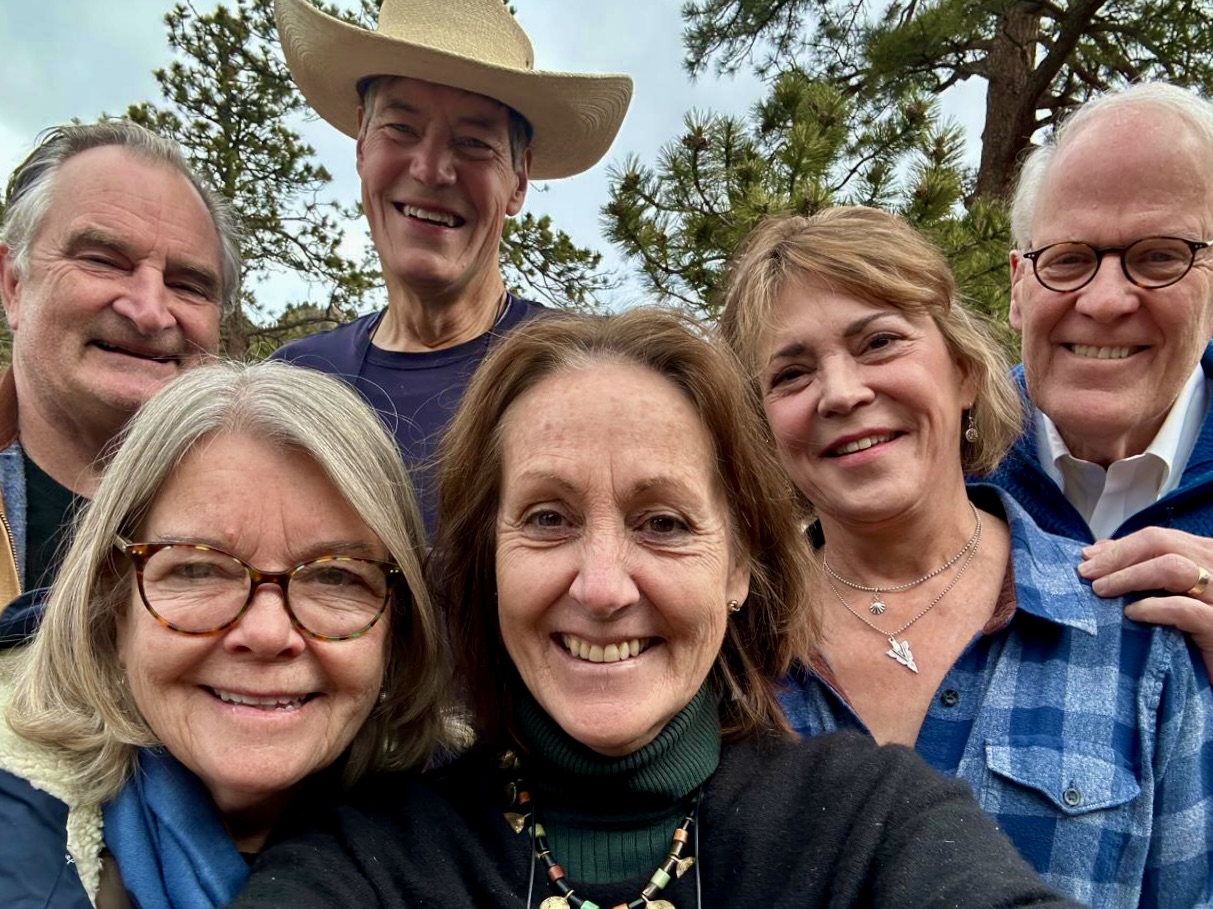
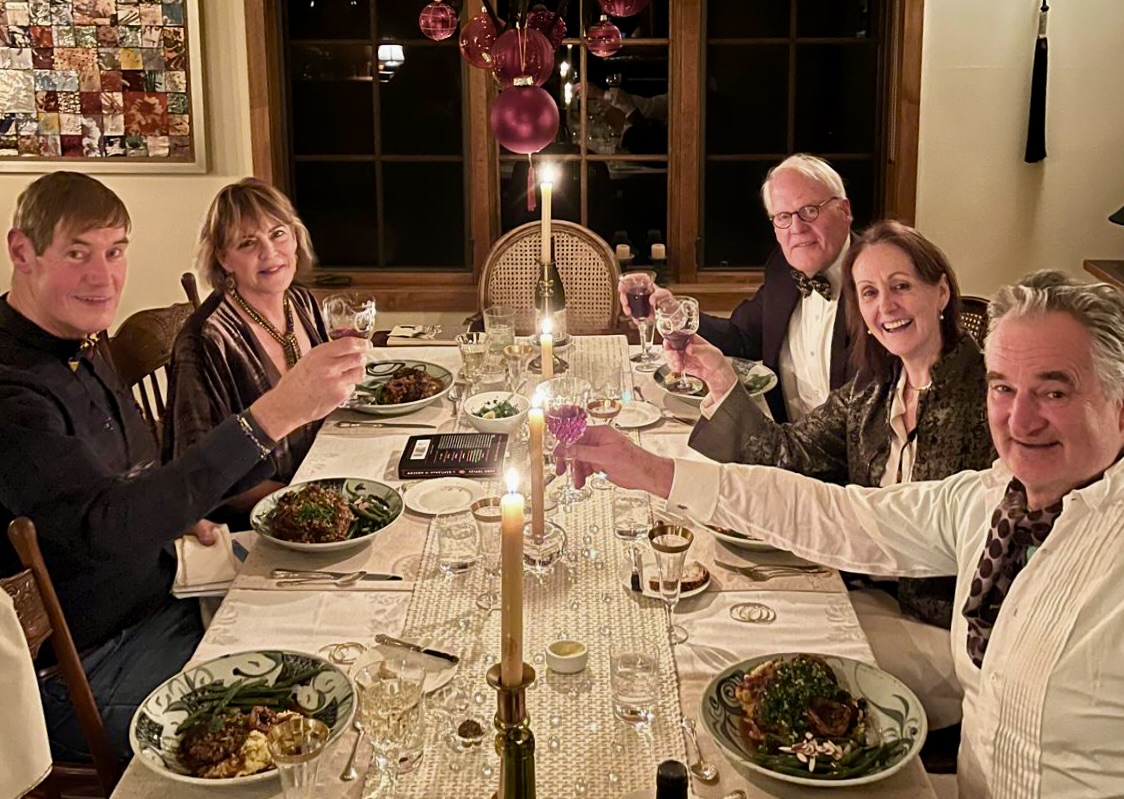
The discussion of memorable mollusk eating moments surfaced over brunch at the Stanley Hotel in Estes Park with four overseas friends, all of whom we met while living in Taipei, Taiwan in the 1990s. These two favorite couples visited us during the first weekend in January. The subject came up of the best calamari, the best mussels, the best shellfish any of us could remember eating. An oyster story came to mind, but the conversation moved on.

As a child, growing up in the middle of the United States, I knew nothing about oysters, raw or cooked. It was “foreign” to the food culture in mid-America and never served at home in any season or for any special occasion. Experimenting with new foods and an expanding palate changed in adulthood after living and traveling around Asia, the Mediterranean, and Europe for three decades from the late 1980’s to the 20-teens. But it was moving to France in 2010 that jump-started my true consideration of the oyster.

As a species, oysters are odd and unattractive creatures. In the wild, after spawning, they drift and roam freely about in the tides for several weeks before attaching themselves to the first hard object randomly bumped into. Once attached, they grow by drinking gallons and gallons of water while straining out the delicious little bits that are food. They live motionless and soundless, trying to escape the notice and menace of predators, not the least of which is man who has a particular hunger for them. Fisher mused, “Its life has been thoughtless but no less full of danger, and once it is over then we (humankind) are perhaps the better for it.”
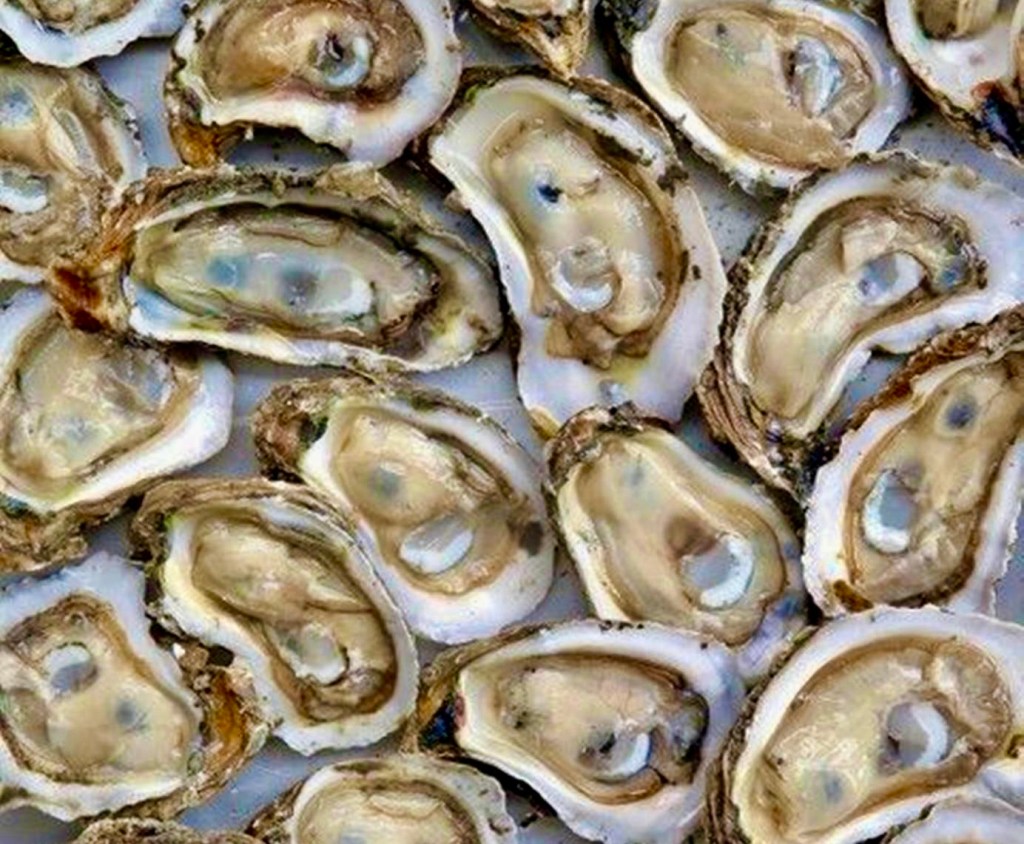
strange and rather unattractive

A commonly held wives’ tale is that oysters are edible only in months with an “R” in them. Not true. May, June, July and August are the months when coastline waters are warmest, and reproduction occurs in wild-harvested oysters. Fisher notes that eating them at this time will not kill you or make you sick, but “…all oysters, like all men, are somewhat weaker after they have done their best at reproducing.”

Oysters are simply good any time of year…if they are fresh, and taster like the taste of oyster. They are nutritionally healthy, full of chemical elements our own bodies house and need–oxygen, hydrogen, nitrogen. Vitamins in oysters provide fuel for energy, build healthy bones and teeth, and nourish the skin. And they contain more phosphorus, the most important food for the brain, than any other food source! 
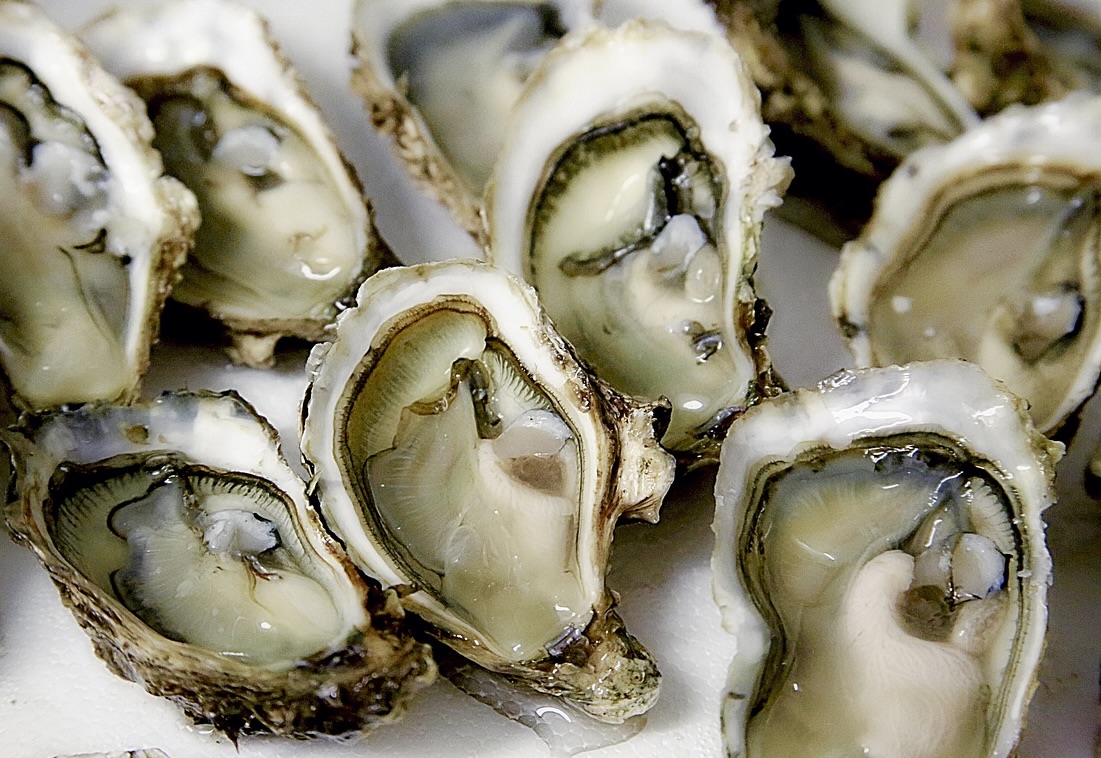
but good for brain and body

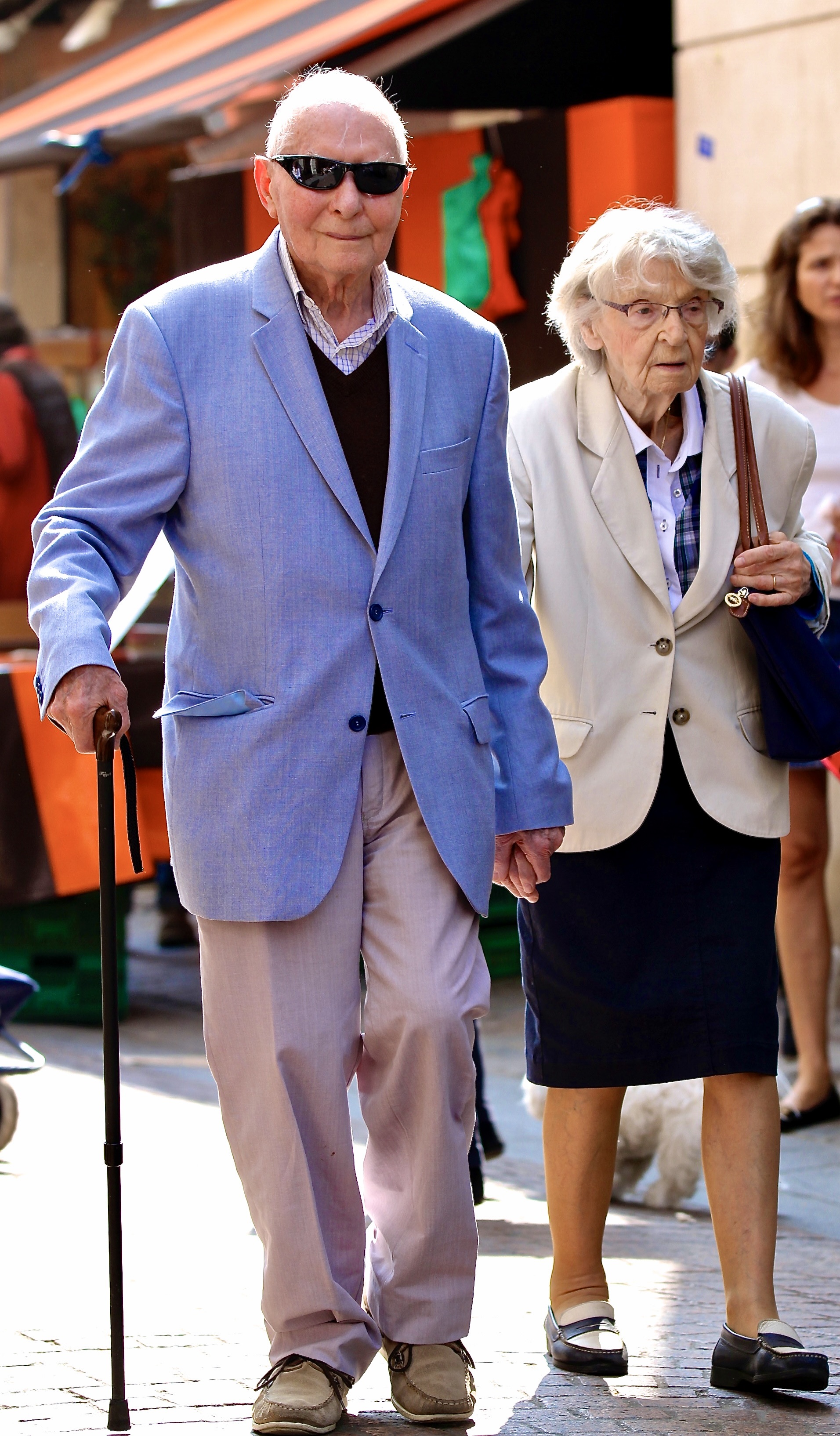
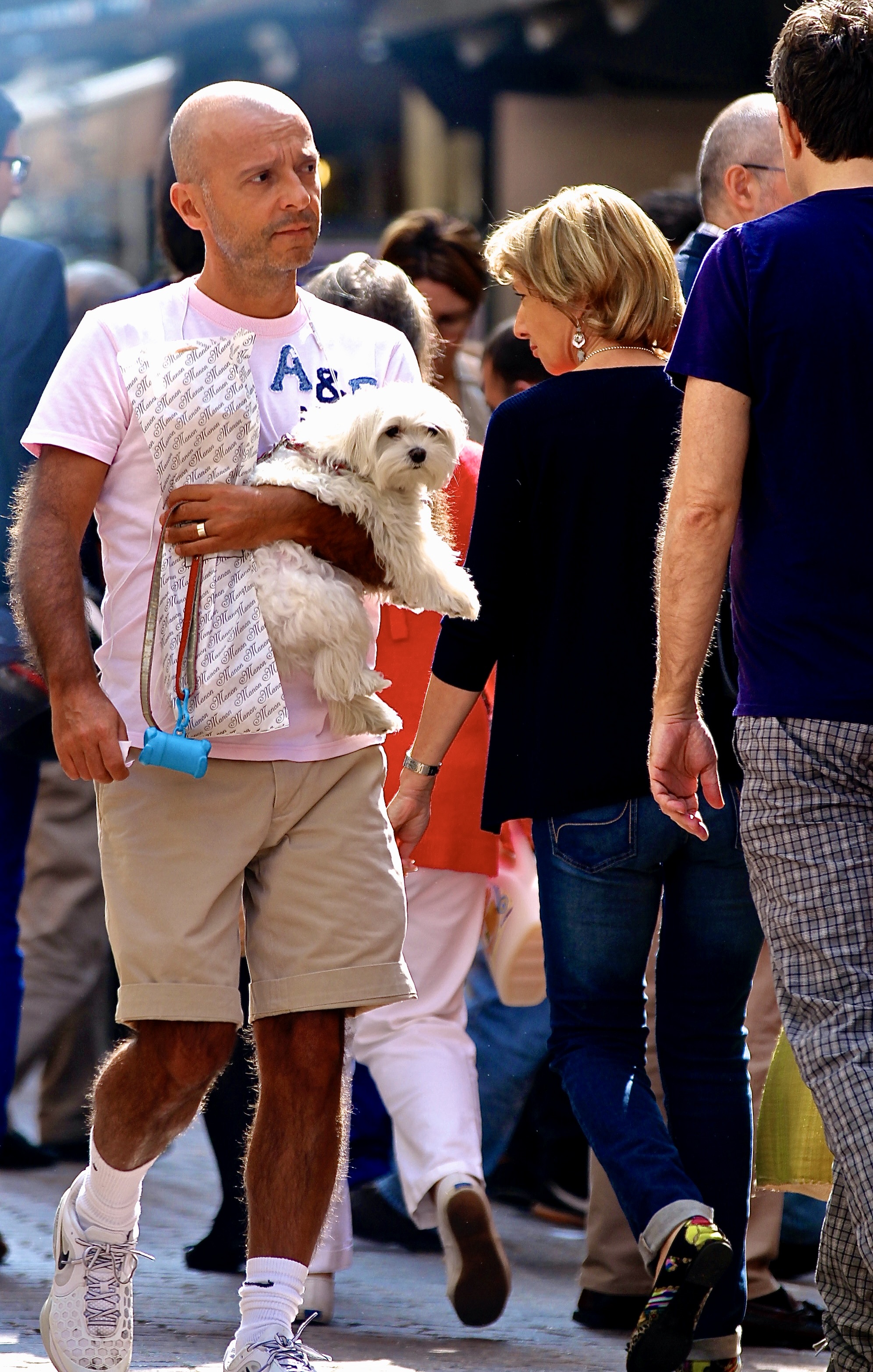
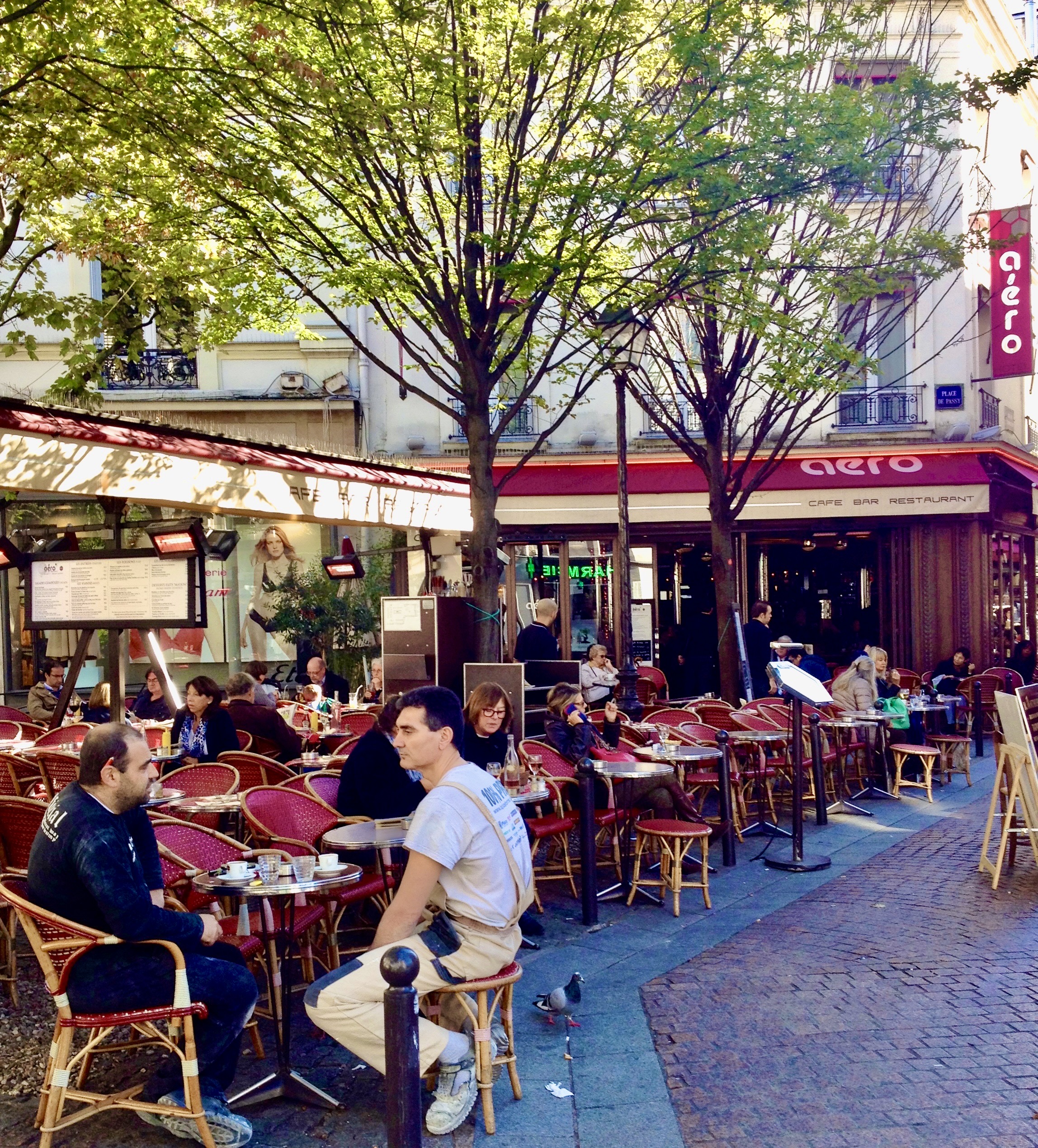
Back to Paris. Our market street in the Passy area of the 16th Arrondissement was noisy, vibrant and colorful on weekend mornings. Parisians chatted with neighbors and friends while sipping “un café” or shopping for ingredients in preparation for “le déjeuner en famille”. Children and dogs were ever present. Live music was often part of the hubbub.

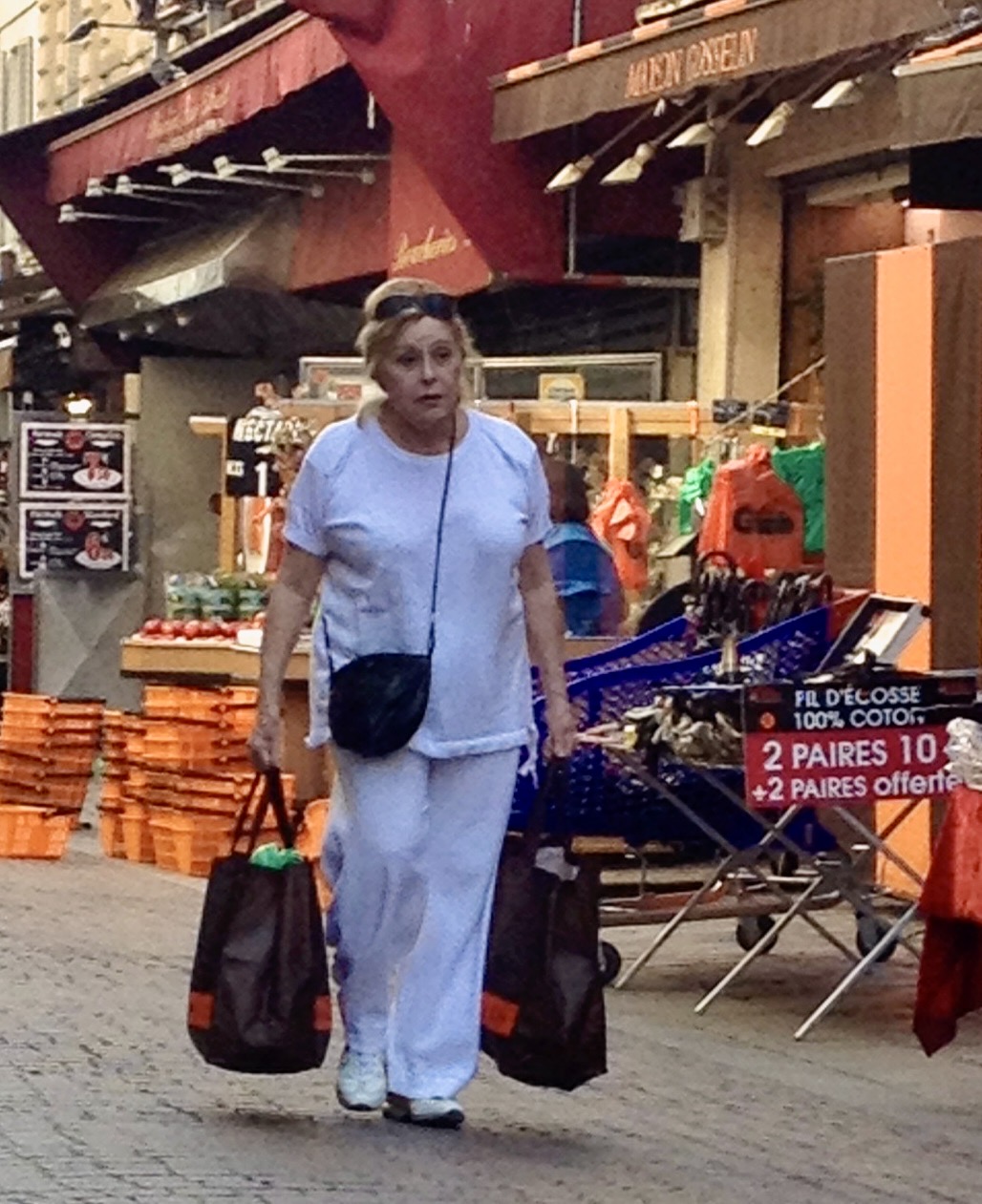
our “poste d’observation” Aéro Café

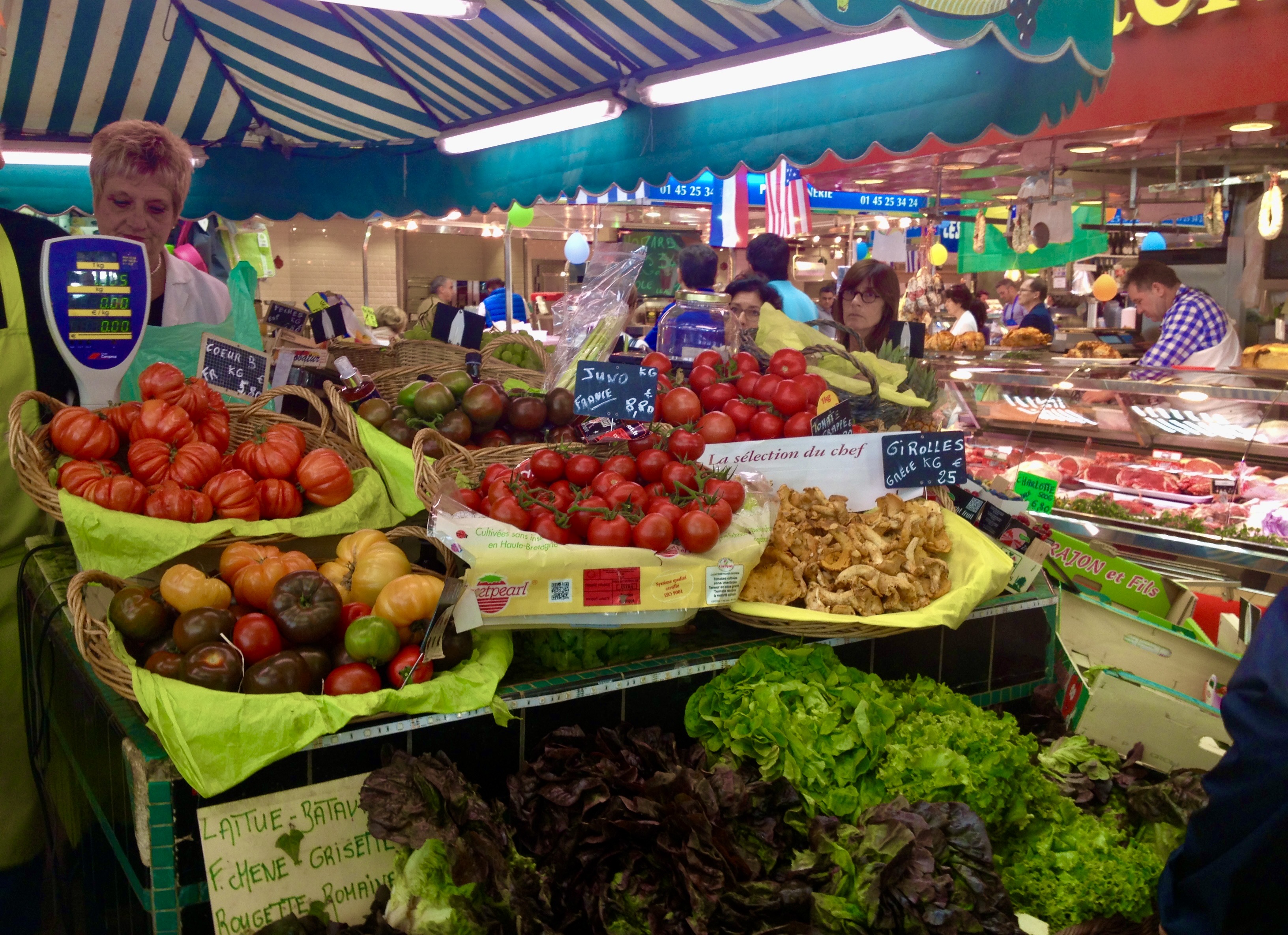
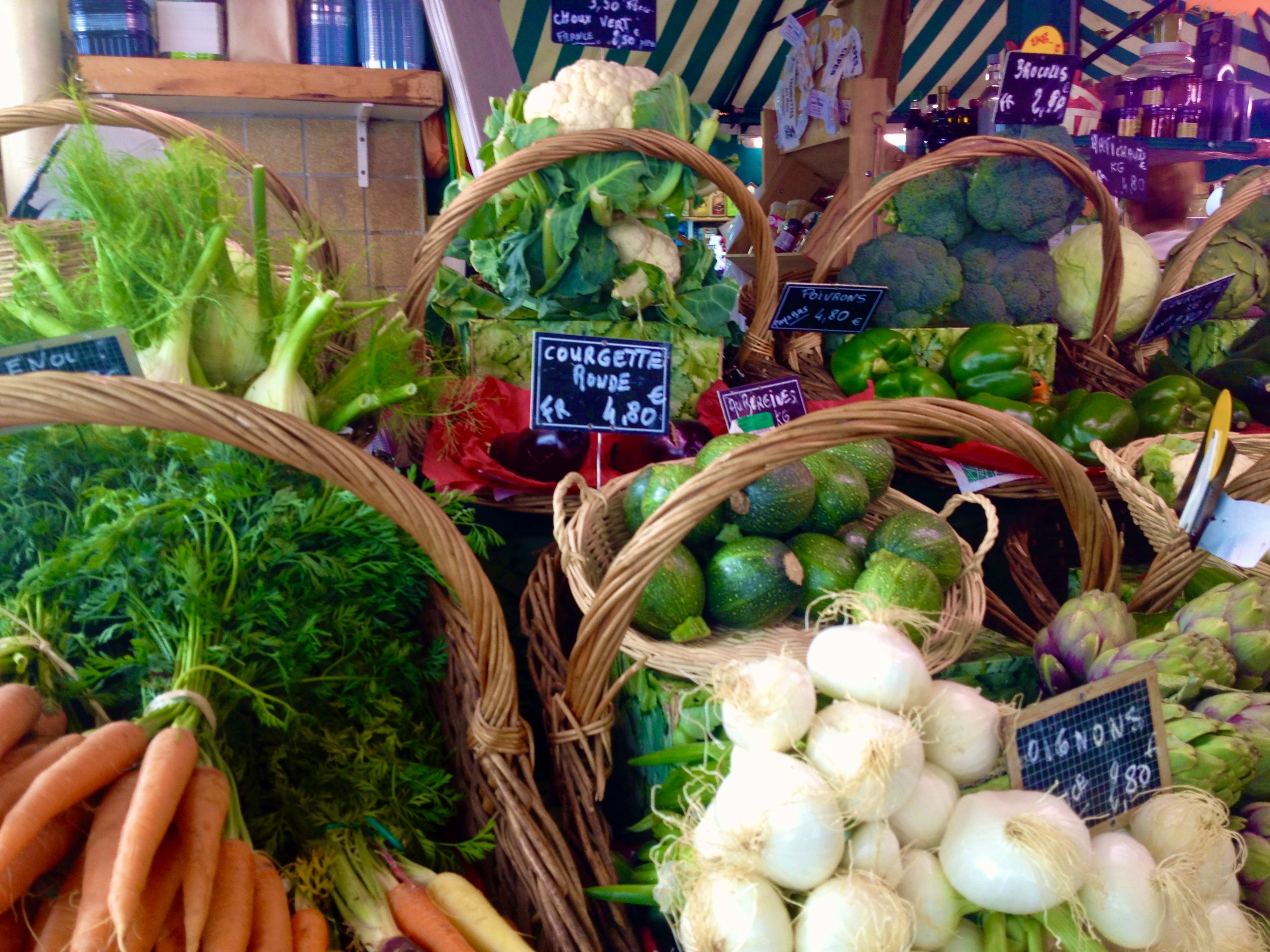
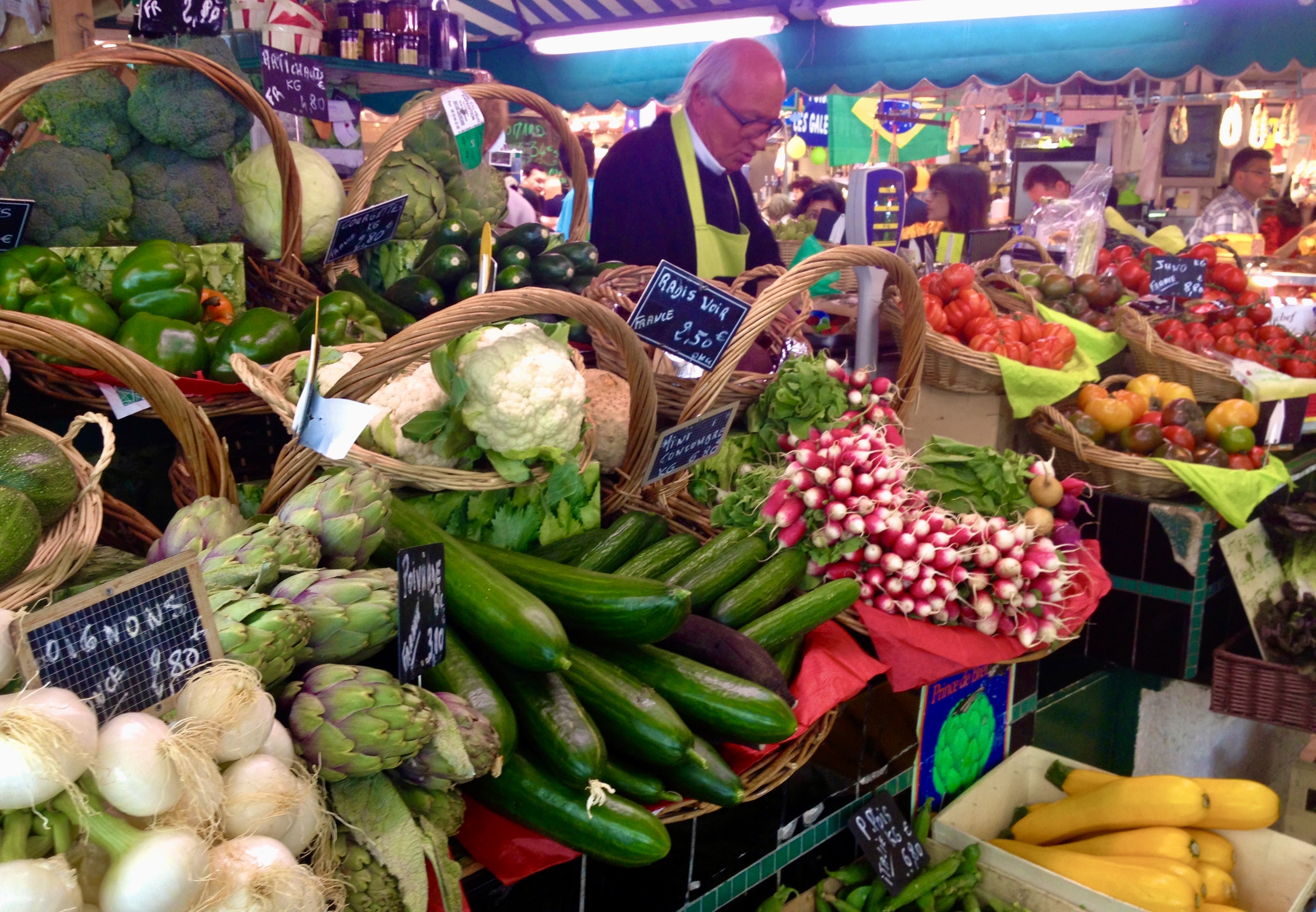
At the beginning of Market Street, on the corner across from our frequented Café Aéro was an all-in-one covered market. The front wall opened to the outside during operating hours, while the green and white tented roof offered overhead protection year-round. Inside, vendors sold everything from fruits and vegetables to fresh flowers, to breads and pastries, cheeses, fish and meats, and even household goods. 
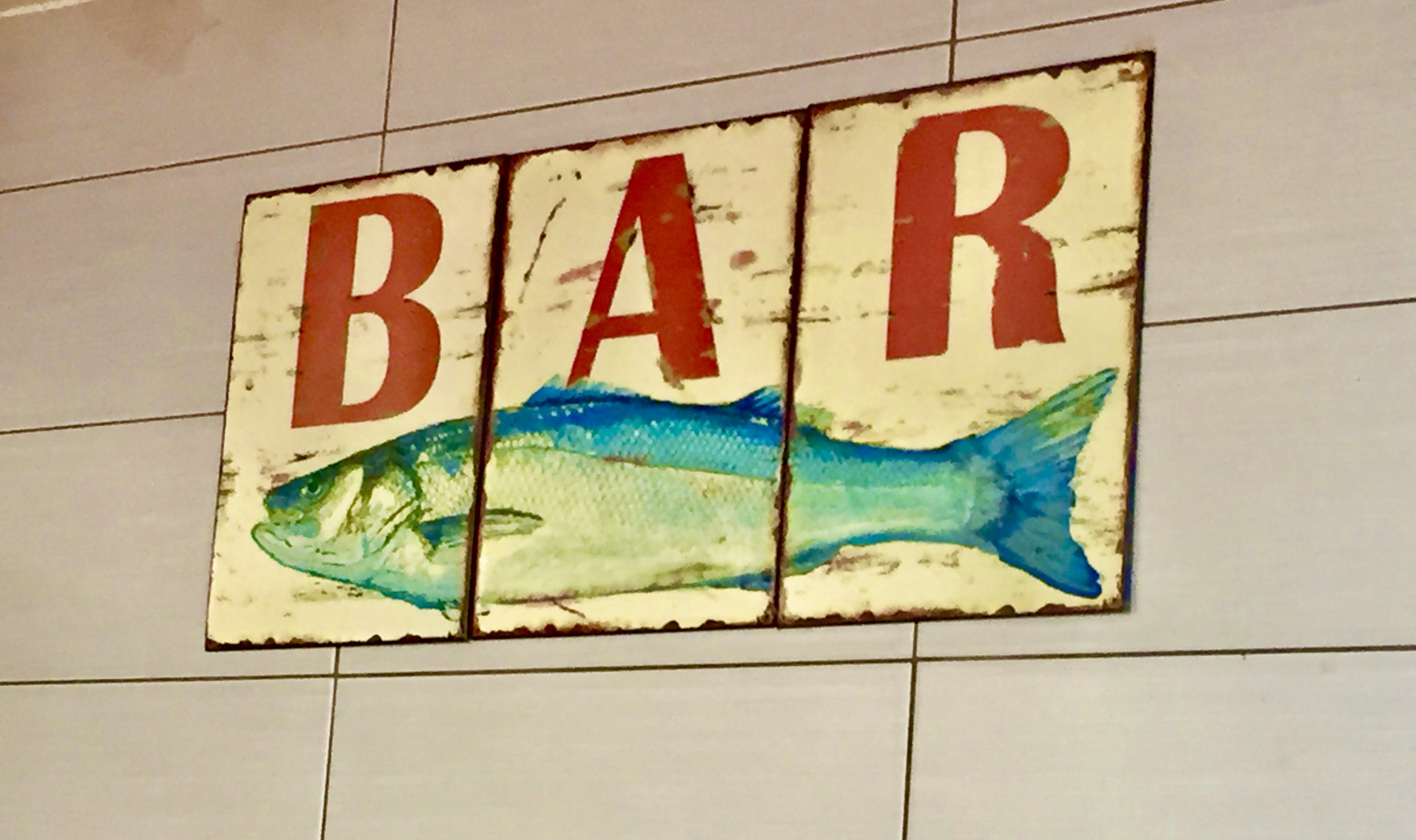
In the back, with perhaps four tiny high-top tables and stools, was a seasonal oyster bar. A wall of nondescript beige tiles posted a rusting sign saying, “BAR” in red letters, and a colorful fish underneath. Below the sign behind the bar a man rapidly opened oyster shells with skills that most do not possess. They were piled high on a pan in front of him.
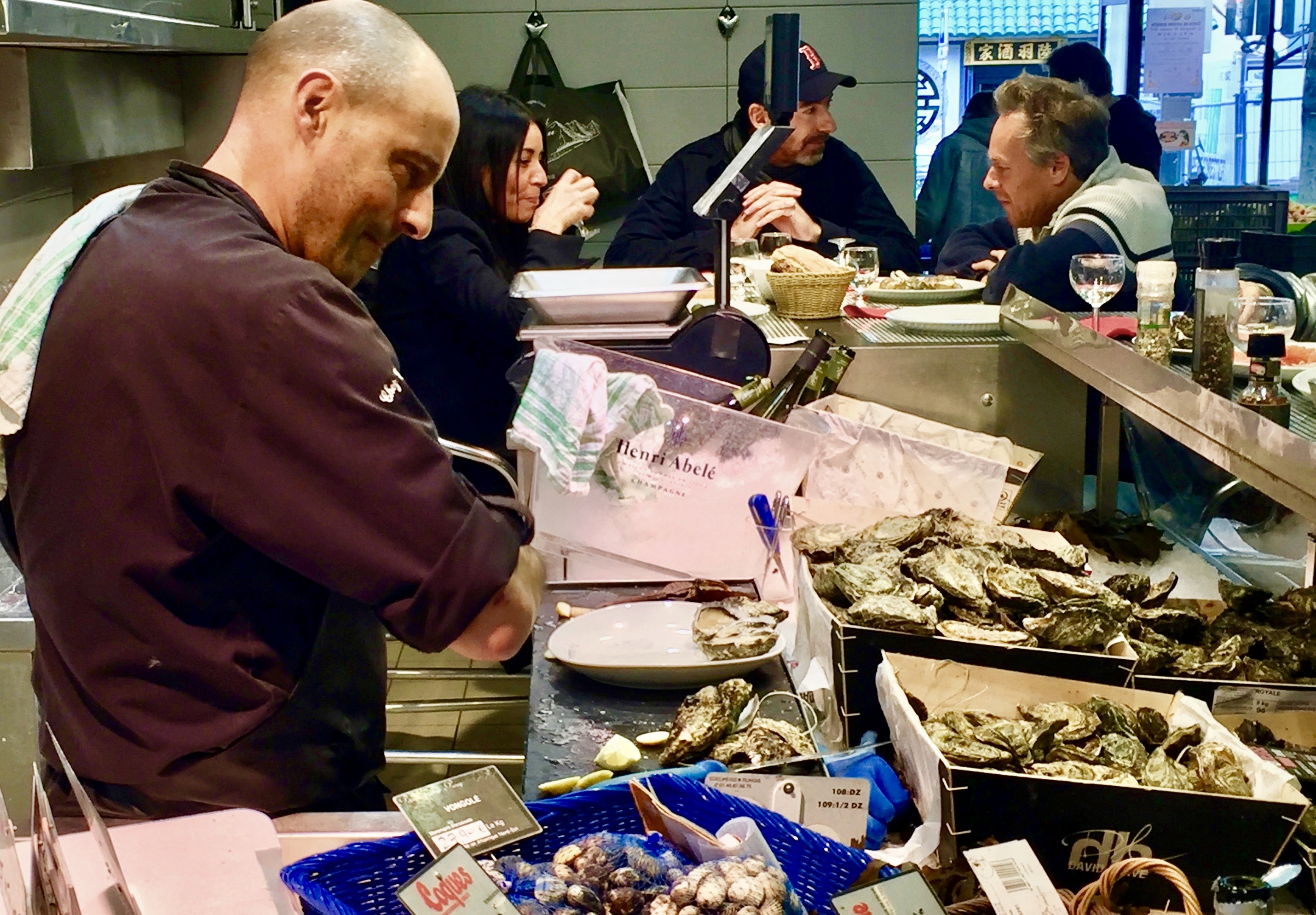
During the busy shopping morning in an unheated market, this minuscule seating area was constantly full of oyster loving customers. With luck and perfect timing, my husband and I slipped onto empty stools at a table for two right next to the bar. And here began the ritual we learned to love. 

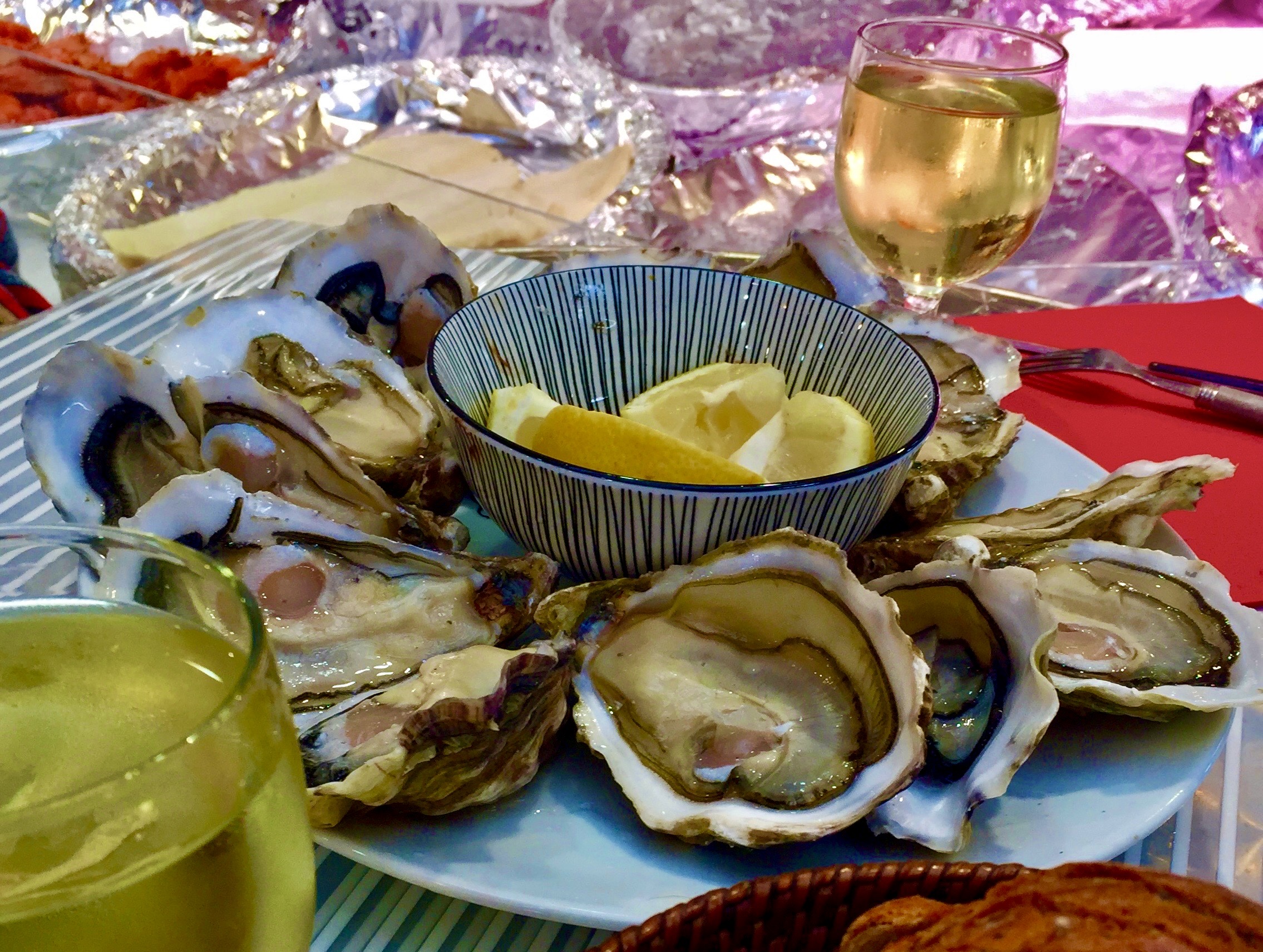
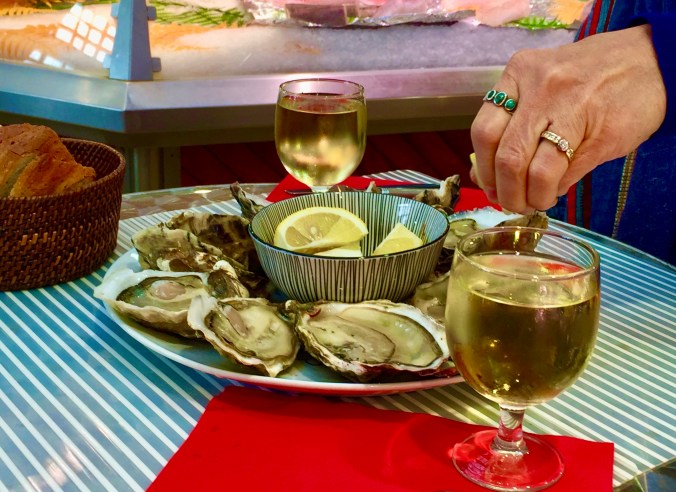
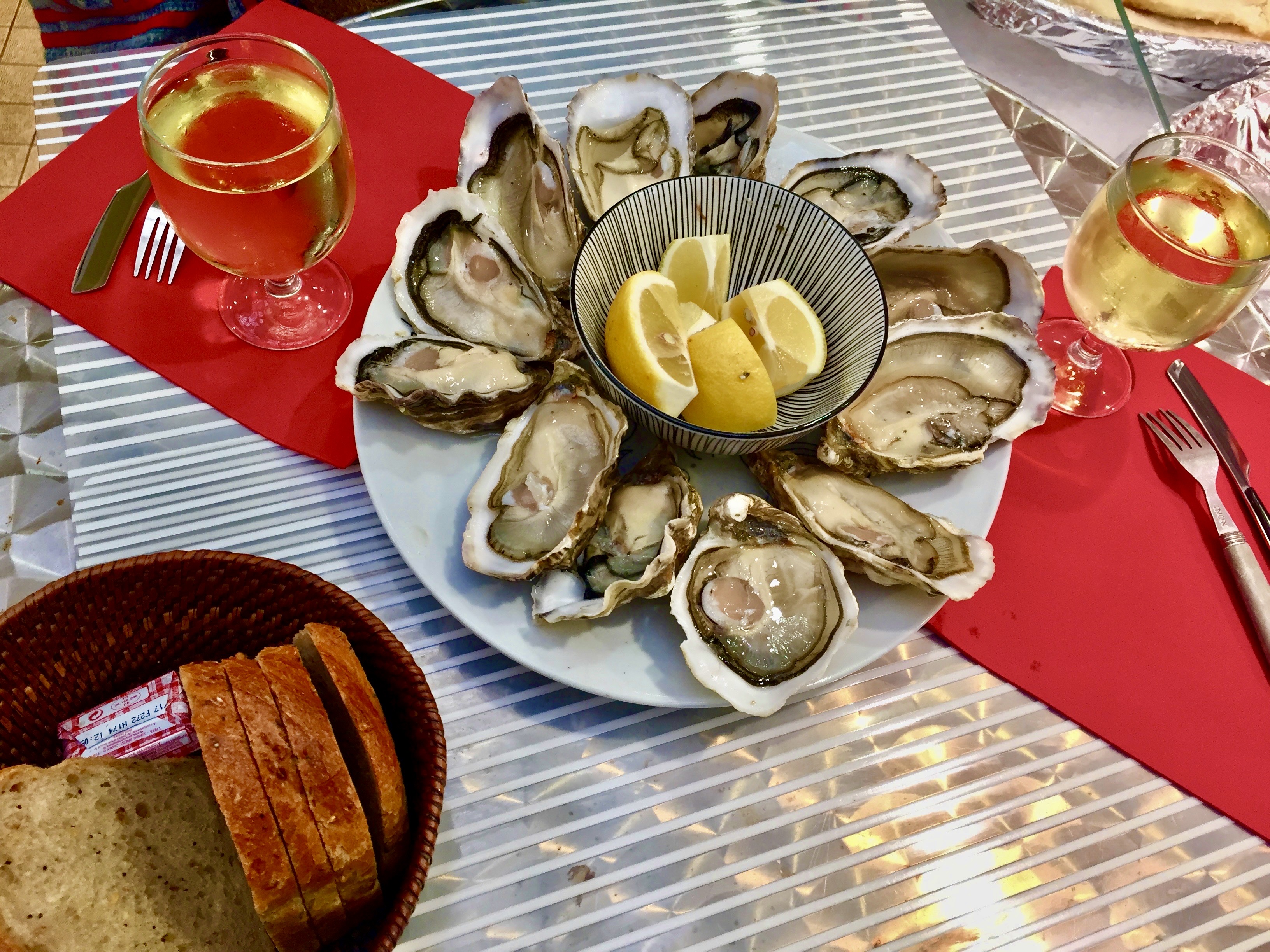
The petite table was square with white stripes, set with large red paper napkins, a knife and fork. I can’t tell you the name of one oyster we ate all those years, but every variety was delicious and shipped directly from the west coast of France. We pointed, and a dozen were placed immediately in front of us on a round plate with a bowl of fat lemon wedges in the middle. Then, a basket of dark brown bread and sweet butter was delivered, and finally, two glasses of crisp white wine, normally a Chablis from Burgundy. We began by toasting a moment of lusty shellfish eating bliss.
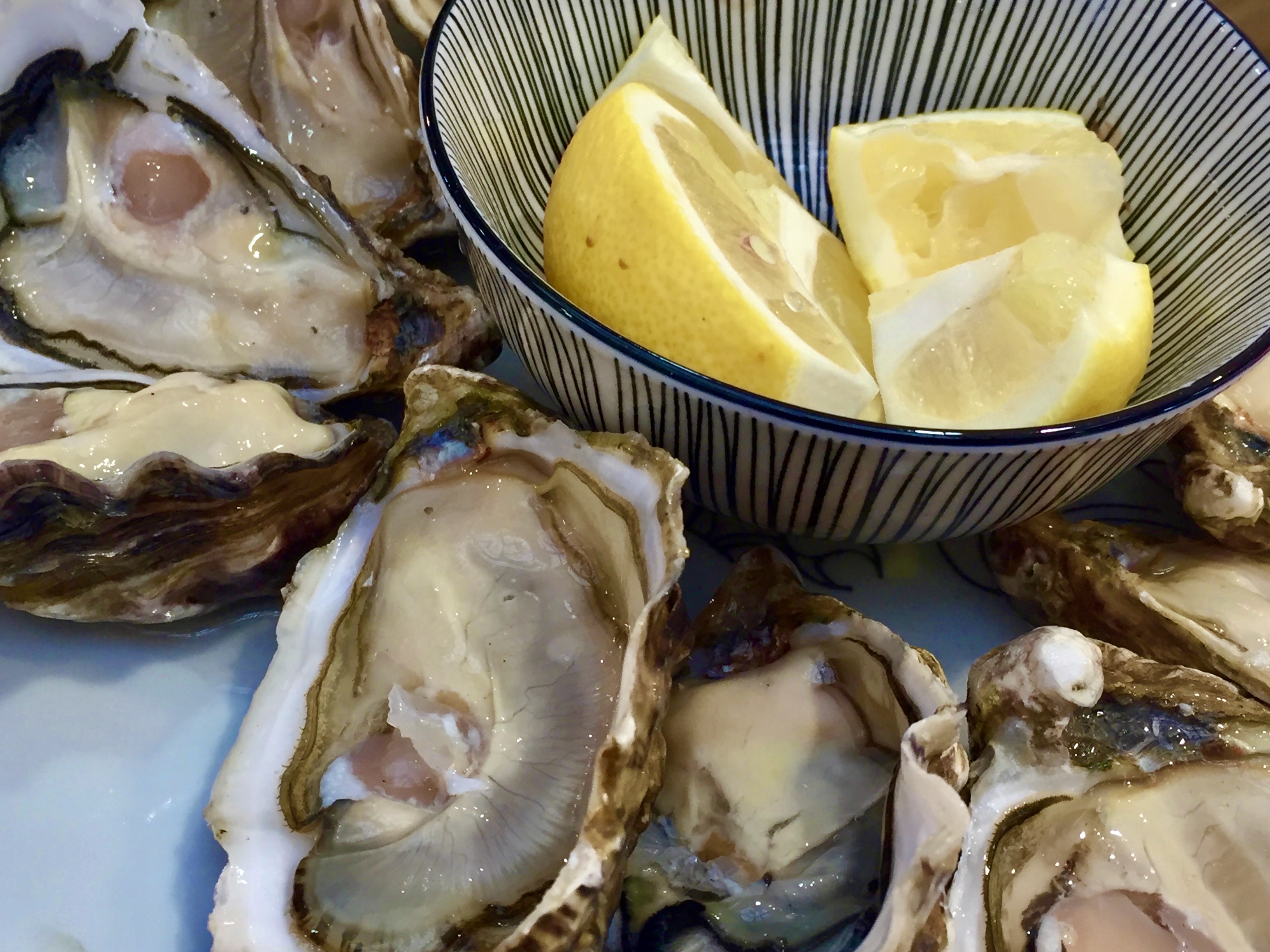
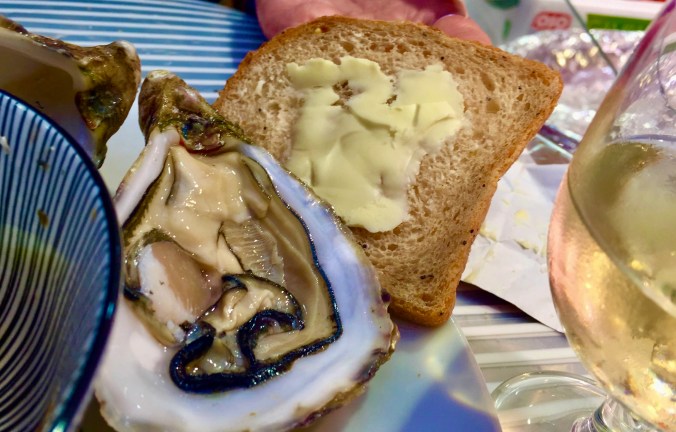
M.F.K. Fisher discovered that a few drops of lemon juice on the buttered bread tasted even better than on the oysters themselves. I tried it both ways–on the oysters and the bread. Her serving opinion proposed this rule “…that all oyster-bars and every self-respecting restaurant…which presumes to serve raw oysters in their shells…should at once make it compulsory to serve also a little plate of thin-sliced buttered good dark bread, preferably the heavy fine-grained kind…and a few quarters of lemon.

Entirely agree. And that is why eating oysters at the back of a market in Paris wintertime was about more than the taste of fresh seafood. It was about the air temperature, the crowded ambience, the skilled shucking of the oysterman, clinking glasses over our good fortune, squeezing lemon juice over briny oysters, tasting the salt and sea and citrus combined, and then biting into buttered brown bread followed by a swallow of fine wine. 
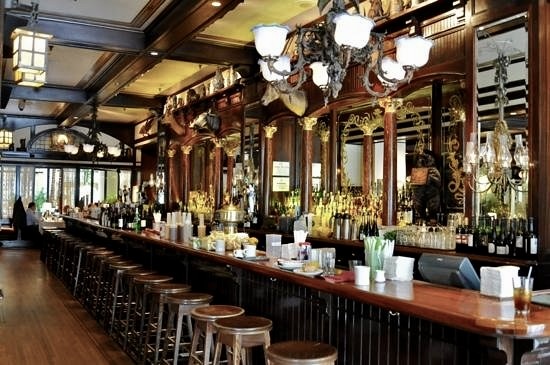
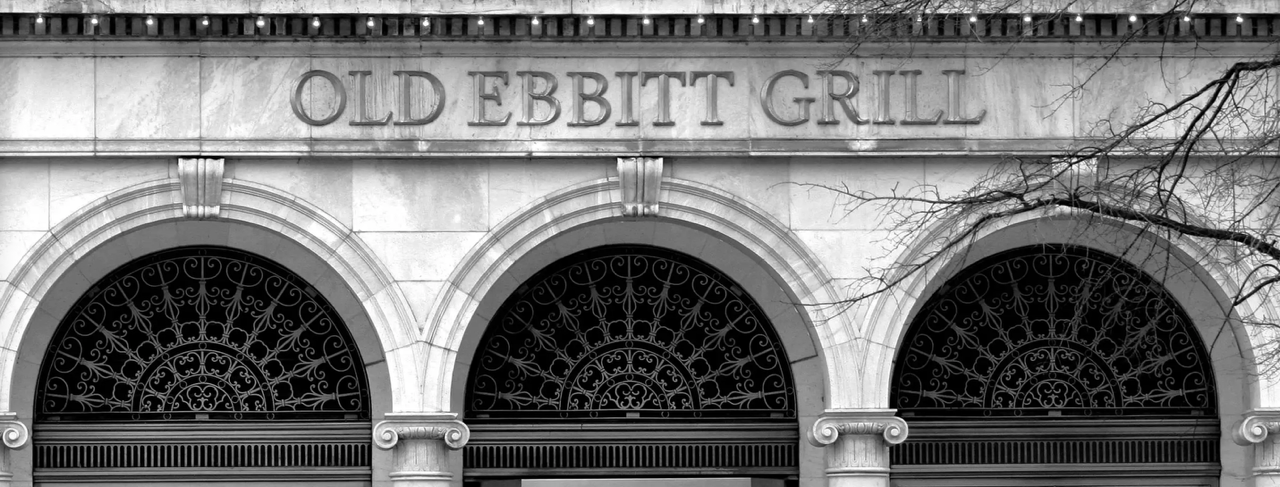
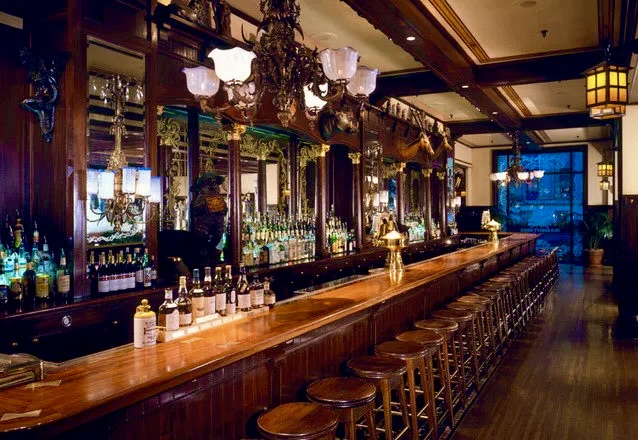
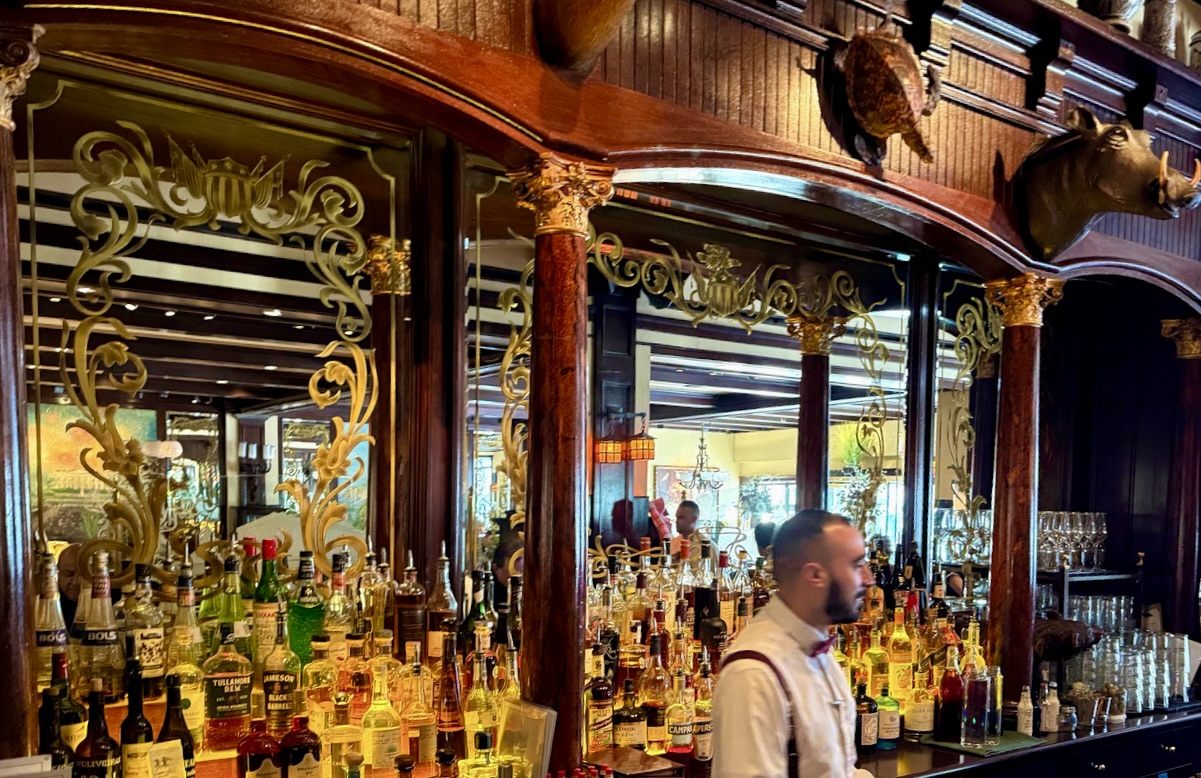
The oyster bar ritual dwindled and lost some consideration when we repatriated home to Colorado. Then, several years later, I fell into another captivating mollusk moment–this time in Washington, DC. As Fisher implied, place and time can outrank food, and this proved true again alongside an icy platter of oysters. Now the place is venerable Old Ebbitt Grill, mostly in the wintertime. Inside, at the antique bar, the precise area where I sit and who I am sitting with creates the magic that follows. 
preferred seating at far end

Two well worn wooden stools at the far end, away from the entrance, should be open so that we can slide onto them side-by-side. The chosen ones with me are either my husband or a best friend. Sometimes both. We peer in dim lighting across the burnished surface in front of us to the gilt-edged mirrored wall lined with bottles, greet the bartender, and begin by sipping a good cocktail or a pour of dry white wine or draft beer. We speculate quietly over far-ranging conversation for as long as we want. All the while nourishing ourselves on one or two dozen oysters, with lemon of course.
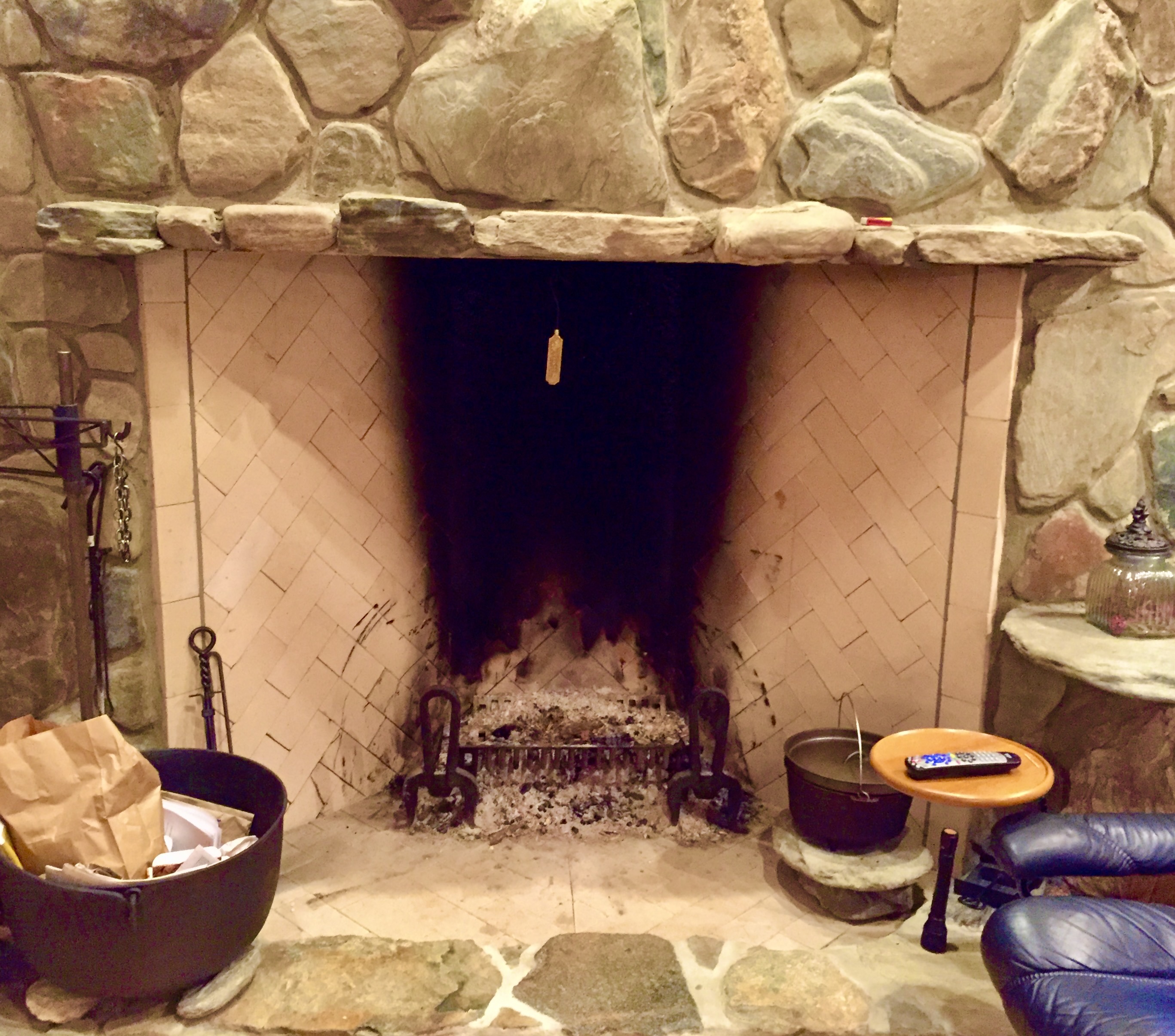
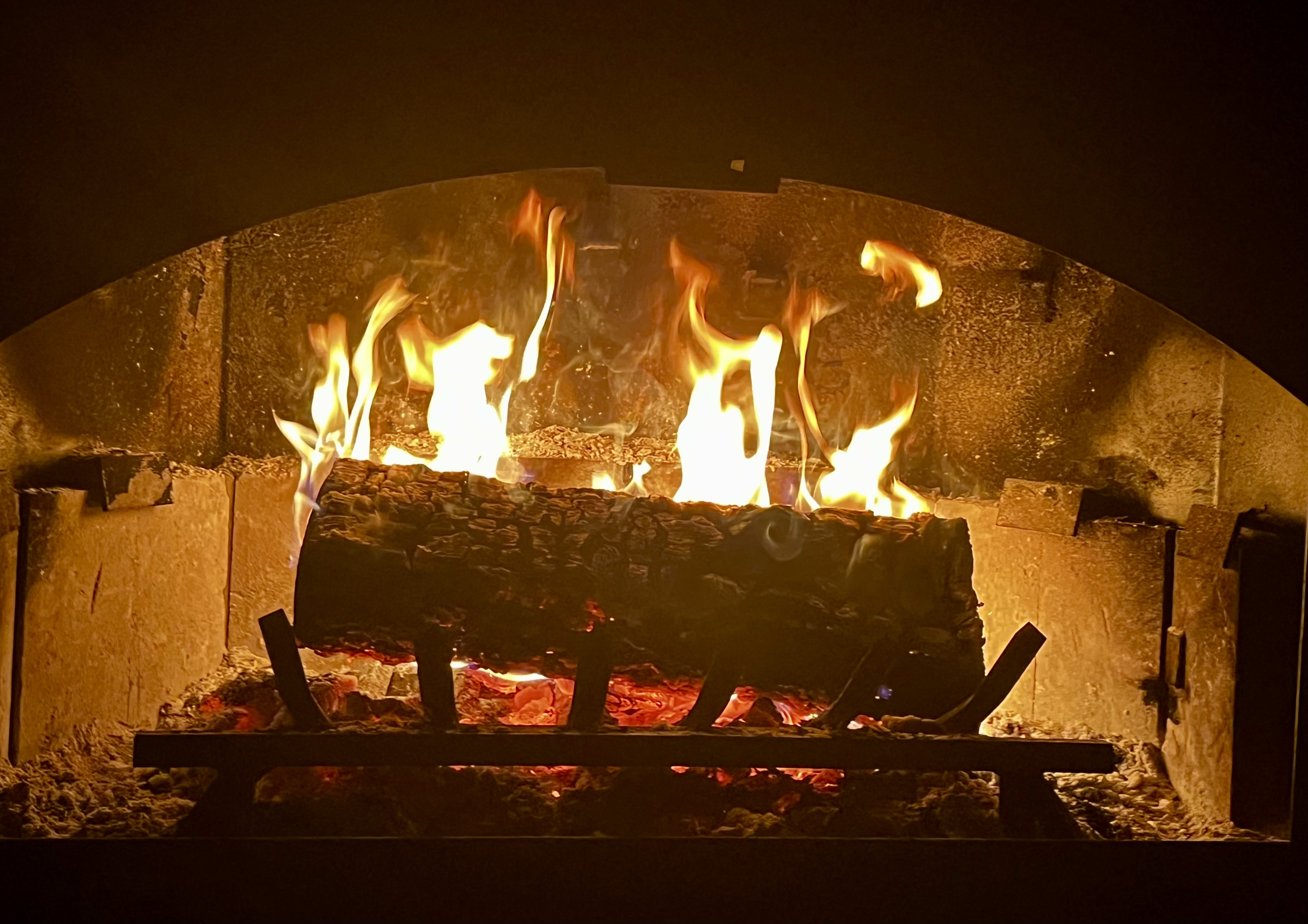
On a dark wintery Colorado evening, these vignettes keep me company in thoughtful “place and time” reminiscence of food moments shared with people I love everywhere in the world. As the wind outside blows at gale force, I pick up the wrought iron poker on the hearth, add a piece of firewood, and prod logs from red coals into warm yellow and orange flames.
Paris al Fresco

Sitting every night at the dining table with my wife, sharing our meal and a bottle of wine, discussing the events of the day…This daily ritual has been ingrained so profoundly within us that we could not live without it and that is how food memories are made–Jacques Pepin

If you watch people eat, you can find out so much about them. Eating is learned behavior; one of the ways cultures define themselves is by teaching children what to eat…But as we get older, we begin to make our own food choices and they are equally telling. If I tell you I like very spicy food, I’m not just talking about food…I’m telling you I like adventure. –Ruth Reichl

Yesterday was the first rain/sleet/snowstorm in our part of the Colorado mountains. I spent the afternoon on the sofa with a fire blazing, a book in my lap, and candles on the coffee table as the light faded. The season for sitting outside with a cup of coffee, a glass of wine, or a meal is behind us now.

Europeans have well-established dining rituals built into their cultures for centuries. Having lived in Germany and France, memories filter in on this quiet day. When we lived in France dining outside, “al fresco”, occured throughout the year, weather permitting, whether sipping “un café” or “un verre de vin” or enjoying a meal. It is as acceptable to do this alone as it is with friends or family.

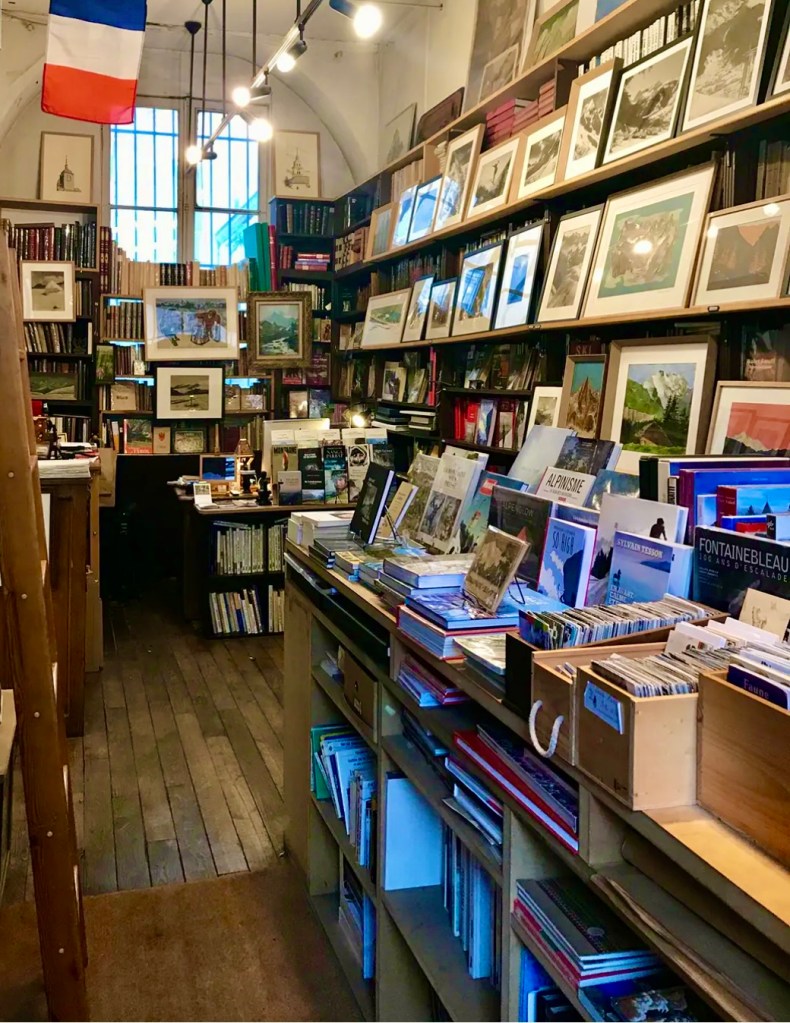
My friend, Michelle, is American/French, married to a Frenchman, Jean Louis. They both own their own businesses. Michelle and her partner are in relocation services with their company, A Good Start in France. Jean Louis took over his mother’s bookstore which started out specializing in rare books on mountain climbing in the 1930’s. Since then, Librairie des Alpes has expanded into books on mountain imagery, guidebooks, rare, vintage, and new books of photos, art, lithographs, and even postcards. It continues to reflect the spirit of the mountains on rue de Seine in Paris’ 6th Arrondissement.

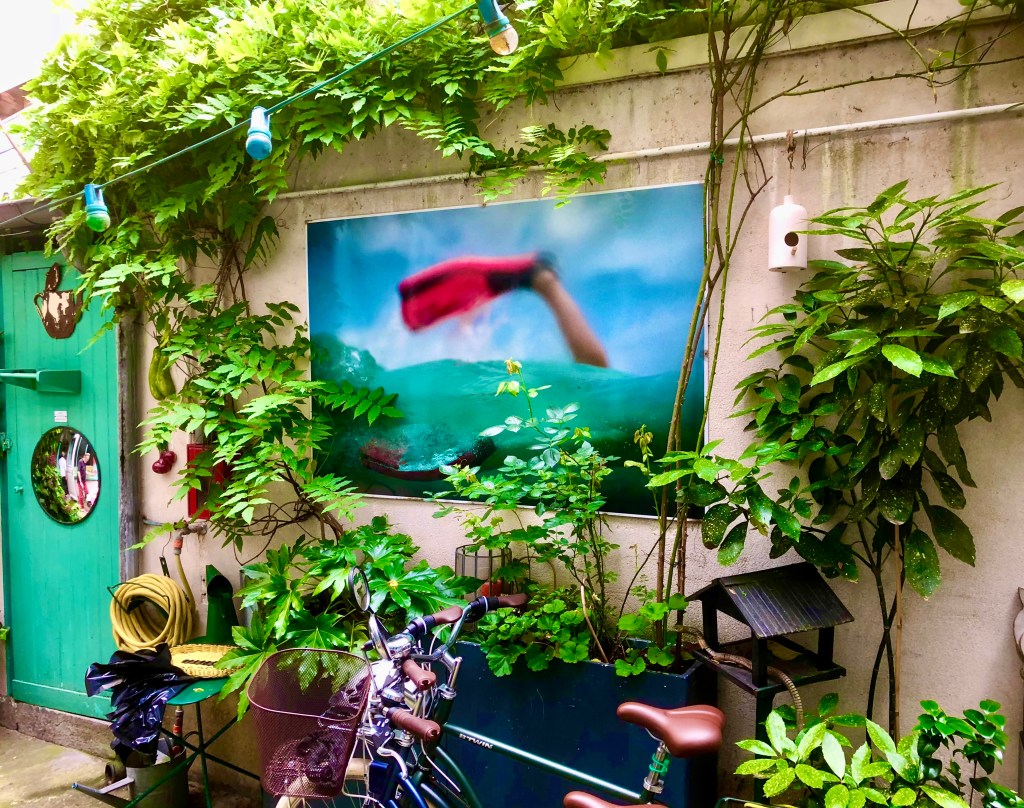
Michelle and Jean Louis live in a charming glass fronted two story house that looks like an atelier [artist’s studio] with so much natural light flooding in. It has a private courtyard outside the kitchen and living room.  

welcome home

Almost every Sunday morning Michelle and Jean Louis walk to the Porte de Vanves Flea Market which is in their neighborhood in the 14th Arrondissement. 

After browsing and schmoozing with vendors they have long known, they head home stopping at a local market for lunch ingredients. Theirs is a mixed ethnic section of Paris which offers a rich variety of flavors in food choices in their market. Seasonal fruits and vegetables come straight from the farm, their favorite fish vendor is from Martinique and specializes in spicy, white fish dumplings called “acras de morue”, from the butcher they buy Lyon sausage, the boulanger provides fresh baguette and pastries.

What do I miss about living in Paris? It’s right here–in every local market in every neighborhood throughout the city. Choosing what to eat from the best and freshest ingredients all year long. I miss daily shopping on my market street.

Sometimes I ran into Michelle and Jean Louis on Flea Market weekends. One Sunday, shortly before we left France, I was invited to meet them at 10 AM for a walkabout/browse/pick up a trinket followed by lunch in their home courtyard. In the warm months, lunch takes on the informality of tapas, an assortment of small dishes. Always wine and a basket of sliced baguette.

The generosity of the French table is akin to honoring the spirit of the guests invited for a sit-down meal. Any meal, simple or formal, pays tribute equally to the guest and to the hosts who prepare it. It is a time to gather, enjoy good food, exchange information, share conversation (often politics), and memorable time with others. The art of the debate is encouraged and freely employed. No subject is off limits. This is a centuries-honored ritual of dining à la français. 

For our lunch fare, the table was laid with spicy “acras” or codfish dumplings, slices of farm tomatoes with basil snipped from the courtyard garden, shrimp and avocado, cucumber salad with dill and a dash of piment d’espelette, a cheese assortment of buffalo mozzarella, goat, and camembert, smoked salmon, asparagus, roasted red peppers and tuna salad which Michelle spices with lots of chopped shallots and Dijon mustard. [She says French people think tuna salad is exotic because of its inherent American-ness]. A glass of wine, bien sûr.

Sunday tapas

What I remember is conversation that was lively and fluid, a Willy Ronin black and white photo [which I admired and was given as a gift], delicious food to dip bread into, and a host and hostess most charming. This “meal as a ritual of exchange and sharing”, in Michelle’s words, is a perfect reverie on a snowy indoor day. In France, every single sit-down meal is like this, whether sitting with one other person or a tableful of guests. Ah, France.

I believe we replicate this in America, perhaps not daily, but better on our national holidays of Thanksgiving, Christmas, and Easter where traditions and patterns around food are more universal in many families. Religious traditions also claim meal rituals and memories particularly around their holidays.

There are other stories of living in France, many written while we lived there. But today, this one of friends and food and time spent around a table in a cozy Parisian courtyard comes just at the right moment. It is vivid and warms me to the core while I gaze at blowing snow and autumn slides into winter.

Michelle and Jean Louis, chez eux

Michelle often makes a seasonal soup for Sunday lunch. Fresh spinach soup is one of her staples. Spinach is out of season here now, but this is her recipe in simple format to try on your own.

Michelle’s Homemade Spinach Soup

  • Thoroughly wash and stem 2 pounds of fresh spinach leaves. 
  • Heat olive oil in a large stockpot, add lots of chopped shallots and sauté until wilted.
  • Peel and chop 1-2 large potatoes.
  • Add spinach, potatoes, and water or chicken or vegetable stock to the pot. [You can use a pressure cooker if you have one.]
  • Simmer until spinach cooks down and potatoes are soft.
  • Using an immersion blender, blend ingredients together in the pot.
  • Season to taste with salt and pepper and some piment d’espelette. [Espelette pepper]
  • Serve in a bowl with a little design made with cream or half and half on top.

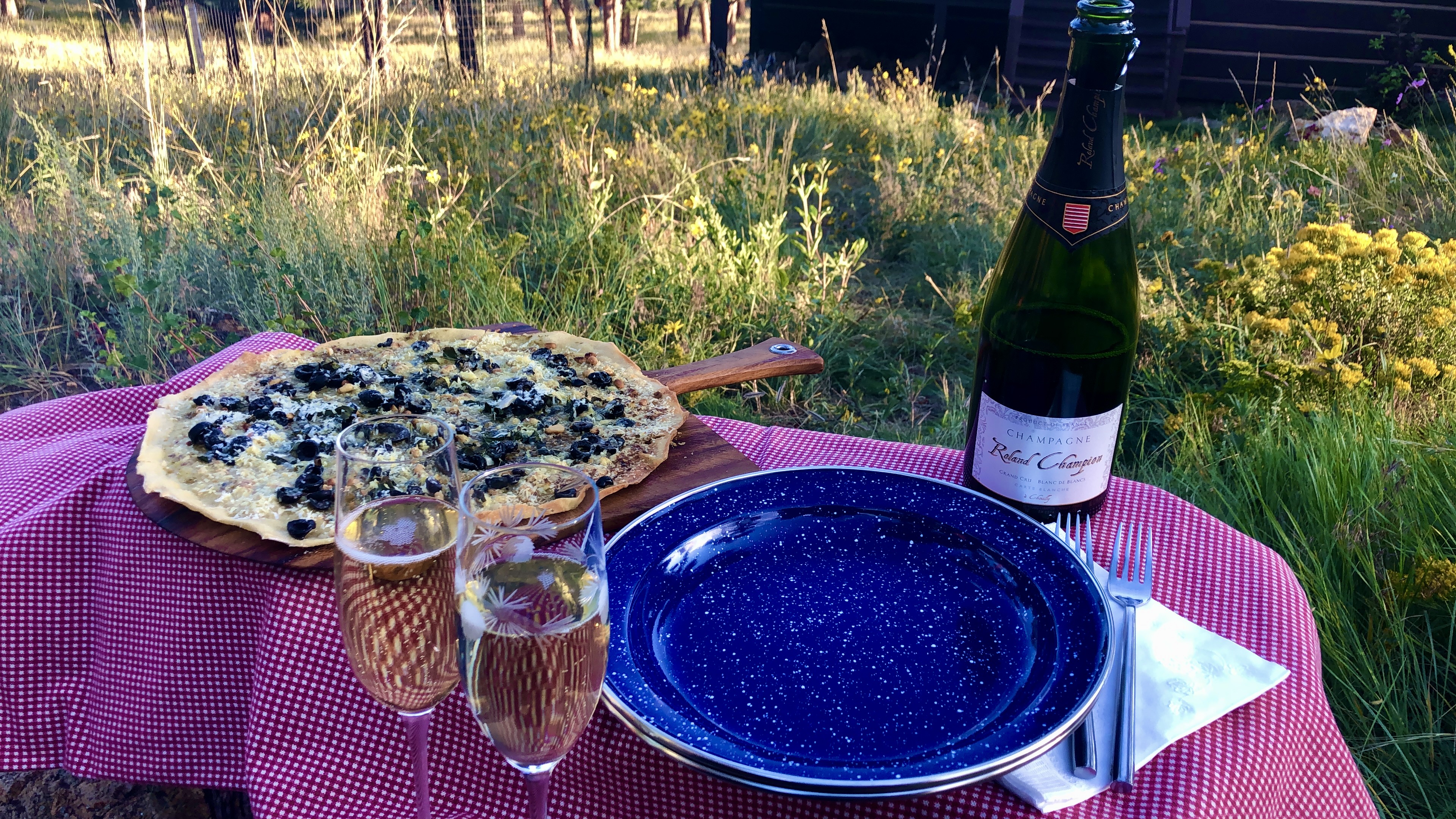
al fresco dining Colorado style

Carolina On My Mind

There is something evanescent, temporary and fragile about food. You make it. It goes, and what remains are memories. But these memories of food are very powerful. –Jacques Pépin

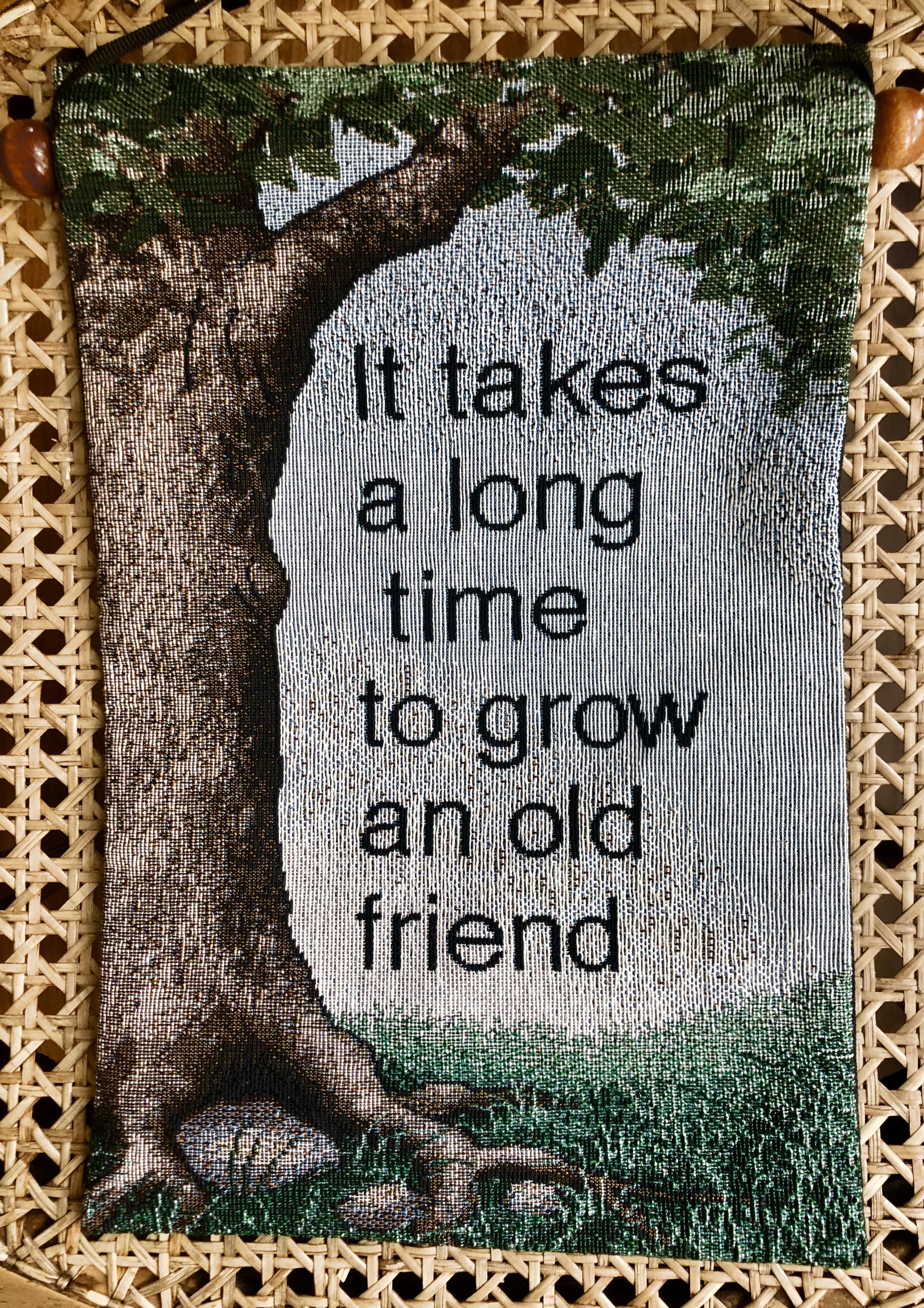
It takes a long time to grow an old friend. –John Leonard

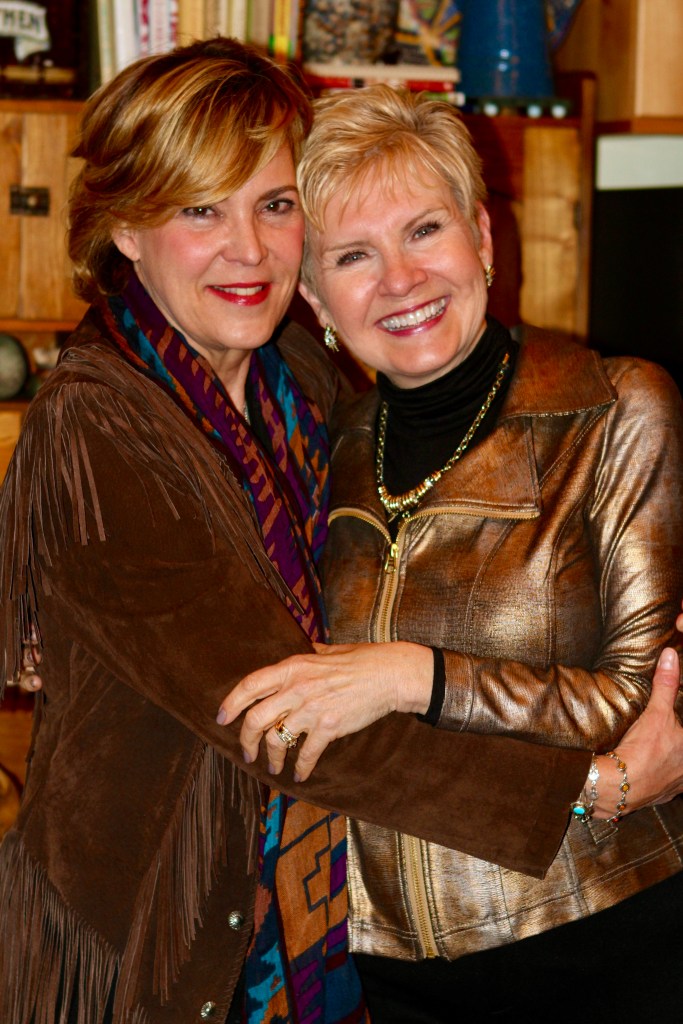
These quotes remind me of the last time I visited my friend Gail in the mountains of North Carolina. Gail is my longest “go to” friend. We met at age 16 when my family moved to a small town in Iowa along the Mississippi River. She balances my analytic nature with kindness and consideration toward everyone. She is intuitive and listens like a compassionate counselor. She knows my eccentricities and loves me anyway. When I was undergoing medical treatments and the rest of my family was overseas, she jumped in to help by coming to Colorado and being with me. We laugh easily and know each other’s stories. Even when too much time has passed, there is immediate ease when re-engaging in each other’s lives. Although we don’t share the same blood, she is my sister too.

sister girlfriends

We didn’t know it at the time we became friends as teenagers but that is when we began living the concept of “growing an old friend”. We were unwavering through the high school years, the university years, summer jobs in the Wisconsin north woods, a western road trip at 21, marriages one week apart, children, and now grandchildren. We haven’t lived near each other for a long time, but we talk on the phone or visit back and forth in our respective states of Colorado and North Carolina as often as we can.

When we were 20, Gail and I worked one summer at a camp for girls on a lake in northern Wisconsin. It was the same year that she introduced me to the man I would marry three years later. She loyally returned from her honeymoon to stand next to me in our wedding one week after I had been a bridesmaid in hers. With husbands, our friendship grew as couples.

The last time I was in North Carolina we spent the entire visit in the Blue Ridge Mountain community of Leatherwood rather than in the city. It was early August and humidly warm in the mountains. Low bluish clouds formed a canopy over and around the green mountains across the valley. It’s a mystical and captivating way to greet each morning. And such contrast to Colorado’s high rocky peaks, golden aspens, and dry mountain air. 

The food recollections from that visit are so clear. Gail made a pre-dinner apéro by muddling very ripe peaches in the bottom of a glass then poured Vino Verde [a light Portuguese sparkling white wine] over the top. Along with the wine were appetizers of pickled okra [very southern] and small slices of Manchego cheese. Manchego is a firm sheep’s milk cheese with buttery texture and mild taste. It was a perfect combination. The company, the light food, the ambience.

There was one quirky but memorable cocktail hour involving neighbors who invited us to their home. Burdette, a retired architect, 90 years-old, wanted to prepare his own version of “The World’s Best Martini”. Gail’s husband is a bourbon man and politely declined. But the three women–Gail, her sister, and I agreed to try. There was much ceremony involved in the preparation of glasses, the assembly of ingredients, the shaking of equal parts of vodka, gin, AND vermouth. Only one olive allowed per glass. We sipped. It was okay, but what I appreciated most was their living room Rumford fireplace–a tall, shallow, masonry fireplace of European design. They had added a swinging black pot apparatus to cook soup or stew over the open fire. It seemed romantically retro, but I could see myself sitting by a fire that way.  

When in Carolina do as the locals do. Or drink as the locals drink. In many southern states, this means bourbon. Craig, Gail’s husband, is a quintessential bourbon guy. He has his own version of an Old Fashioned. The only time I drink bourbon whiskey is when he makes this for me. A slice of orange, some Bada Bing cherries, two shots of good bourbon, fill with club soda and ice. His daily bourbon is Maker’s Mark. For splurging, he reaches for Jefferson’s Ocean or Woodford’s Reserve to sip over ice.

pickled okra, Gail’s glass of white, Craig’s bourbon old fashioned special

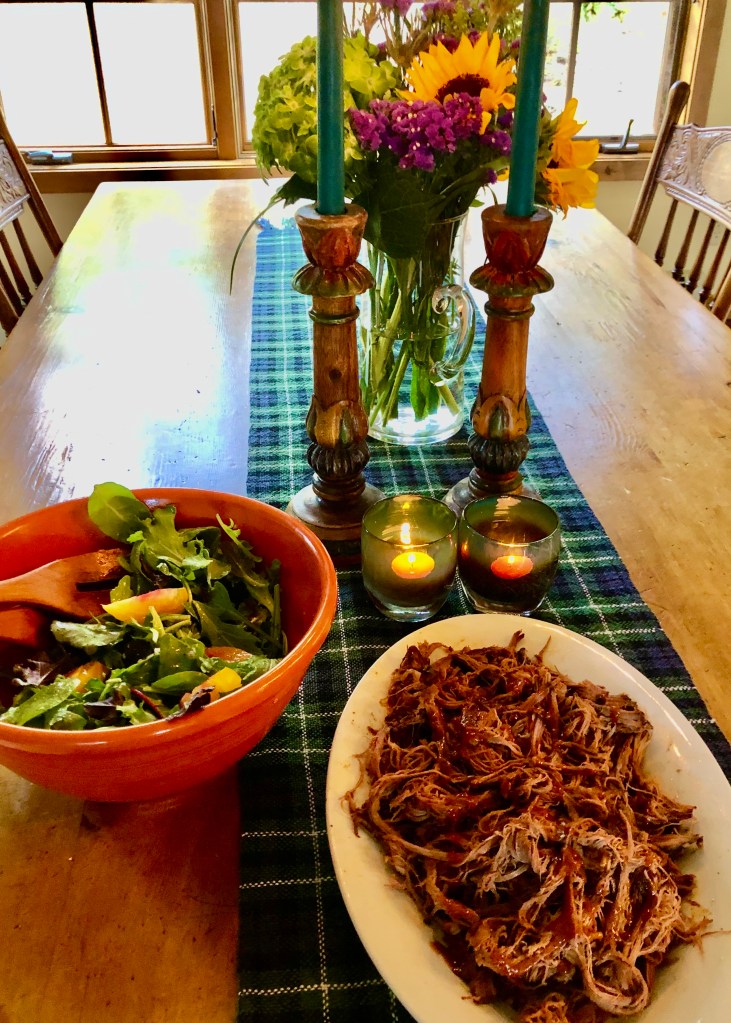
The best meal was something new to me. Shredded beef brisket with a smoky homemade sauce. Cooked long and slow in the oven and served as a main course with side dishes of cornbread, beans, and salad–the epitome of southern cuisine. Perfect for guests and great leftovers. 

Each day was full–with morning walks before the heat rose to a crescendo, a side trip to Blowing Rock’s boutique shops, outdoor showers with wide-angle valley views, picnic lunch in a park, and noisy Jenga games ending with blocks crashing to the floor amid cries of “Oh no!” and laughter.

showering with that incredible view!

The Carolina mountains have been on my mind recently for a particular reason. Several seasons have passed and now it feels like time to return. To a different climate and different scenery. To those lower, greener hills, and humid misty clouds. To friends who make a difference in my life when we are together and even when we are not.

Jacques Pepin is right about the fleeting nature of food. You make it. It goes. What remains, what is truly powerful, is when we nourish our lives with memories of food in a spectacular setting, in a meal around a table, and taking time to grow the very best of friends. 


GAIL’S BEEF BRISKET

Brisket is a tough cut of beef that must be tenderized by long, slow cooking. I adjusted the recipe for high altitude as most food takes longer to cook at 8300 feet where we live. My edits are in parentheses. The secret to this recipe is the sauce. Shredding the cooked brisket rather than slicing it eliminates the fat layer, leaving only the lean.

INGREDIENTS:

  • 5-6 lb brisket  [I have used smaller] 
  • Salt and Pepper
  • Liquid Smoke

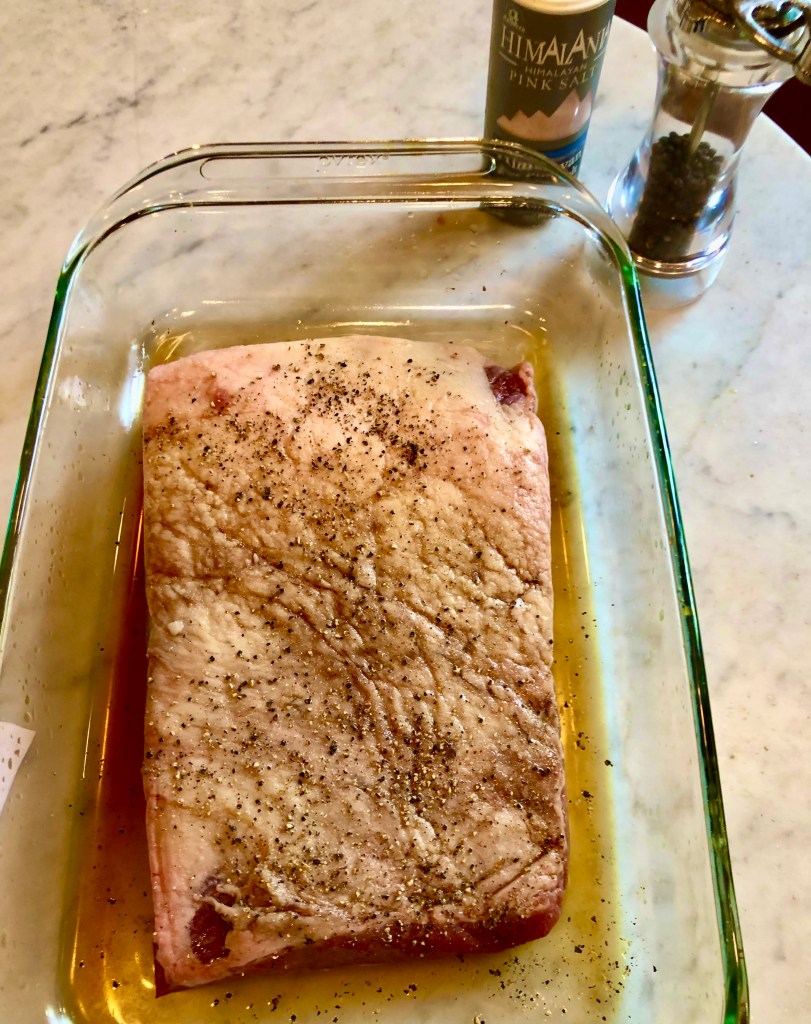
Place brisket in baking dish with fat side up. Rub salt and pepper and liquid smoke onto both sides of meat. Cover with foil and seal edges of pan. Marinate 12 hours or overnight in the refrigerator.

NEXT DAY:

  • Preheat oven to 275 degrees F. 
  • Place sealed baking dish in oven for 5 hours. 
  • [Better than timing is to test with a meat thermometer as it will take 2 or more hours longer at higher altitudes. Internal temperature should reach 200 degrees F.]
  • When meat is tender and done, take two forks and shred onto a serving platter. 
  • Discard the fat layer.
  • Pour sauce over or serve in a pitcher, on the side.
  • Serve brisket on buns or as a main course with side dishes.
  • Leftovers are easily reheated and just as delish.

FOR THE SAUCE:

  • 2 C. catsup
  • ½ C. water
  • 3 T. Liquid Smoke
  • 4 T. Worcestershire sauce
  • 8 T. butter
  • 3 T. brown sugar
  • 3 t. dry mustard
  • 2 t. celery seed
  • ¼ to ½ t. cayenne pepper

In a saucepan, slowly heat all ingredients together while stirring.


Mussel Memory in Brussels

IMG_1072
Hotel de Ville on the Grand Place, Brussels, Belgium

Brussels is an important city for several reasons. Politically, it is the capital of Belgium and the European Union. Historically, it’s importance as a fortress town began in the 10th century. Architecturally, the Grand Place central square is designated a World Heritage Site of striking 17th century design and construction.

For me, the importance of Brussels is tied to memories of food I ate there while visiting a friend years ago. Now that we lived next door to Belgium, in France, it was time to revisit. We took a road trip from Paris.

In 2002, when I was living in Taiwan, my friend Nancy invited me to Brussels. She had moved there from Taipei several years before. The guest room was on the top floor of their multi-level row house. The ceiling angled sharply from the peaked roof. An over-sized skylight opened to fresh air and rooftop views. Wooden floorboards were painted white. On the bed was a puffy duvet of green and white gingham. The adjoining bathroom housed a big, white bathtub and thick towels warmed on a radiator.

I called it the Heidi-hayloft-room because it reminded me of the children’s book about the little Swiss girl who slept in a hayloft. I had flown from Asia into a fairytale.

A four-year-old boy who believed he was Batman lived in the household. It was impossible to separate costume and character from the child. So his parents lived with a masked, black-caped superhero. At pre-school, Brady acquired a perfect French accent. And, like everyone else in Brussels, he loved pommes frites.

Frites are a national snack food in Belgium. Locals and tourists eat them like popcorn at the movies. Storefronts sell paper cones filled with them. A range of sauces is offered to go on top. Each order is freshly made and just right–crispy on the outside, feathery on the inside. I believe Belgians perfected frites because they know that eating them outside on a freezing day warms you on the inside. We shared a cornet on bitingly cold February days. And stayed warm to our bones.

IMG_1036
side by side friteries
IMG_1041
sauce choices
IMG_1049
cornet with a dollop of spicy samourai sauce

While Nancy and I walked around the Grand Place during my visit, she said, “You must eat this. Right now.” I was handed a waffle wrapped in crisp paper from a street vendor’s cart. On the outside it looked like any waffle, except it was thicker through the middle and more irregular around the edge.

Then I bit into a surprise. Partially melted, caramelized sugar crystals crunched and then dissolved into syrup. My mouth filled with warm sweetness. Time, place, and taste blended into one moment. A winter morning on a cobblestoned square with gothic spires and a hot waffle. I never forgot it.

My food-writing mentor, M.F.K. Fisher, had a similar experience. As a young woman living in France, in the 1920s, she hiked with an Alpine club. Most of the members were much older. She was the only foreigner. On a very cold day, while catching her breath at the top of a steep hill, an old general said, “Here! Try some of this young lady!” He gave her a pale brown piece of chocolate.

In my mouth the chocolate broke at first like gravel into many separate, disagreeable bits. I began to wonder if I could swallow them. Then they grew soft and melted voluptuously into a warm stream down my throat.” m.f.k. fisher

Another hiker said, “Wait, wait! Never eat chocolate without bread, young lady!”

And in two minutes my mouth was full of fresh bread and melting chocolate, and as we sat gingerly, the three of us, on the frozen hill, looking down into the valley…we peered shyly and silently at each other and smiled and chewed at one of the most satisfying things I have ever eaten…m.f.k. fisher

MFK’s hillside bread and chocolate. My perfect waffle. Fisher calls them “peaks of gastronomic emotion”. Still, moments like these are personal and hard to describe.

In 2015, waffle vendors were no longer allowed in the Grand Place. Off the square, many shops sold waffles loaded with extras. It wasn’t what I wanted.

IMG_3511
waffles plus
IMG_1062
waffles loaded

On a side street, I spotted a parked truck painted with “Gaufres Chaudes”. A man was making waffles in his van. What he handed me was smaller and not as dense as I remembered. On the inside there was a thin layer of molten sweetness but no crunch of sugar crystals turning into syrup. The taste was fine. I was hungry. It was cold. But it wasn’t the same.

IMG_1034
food truck waffles

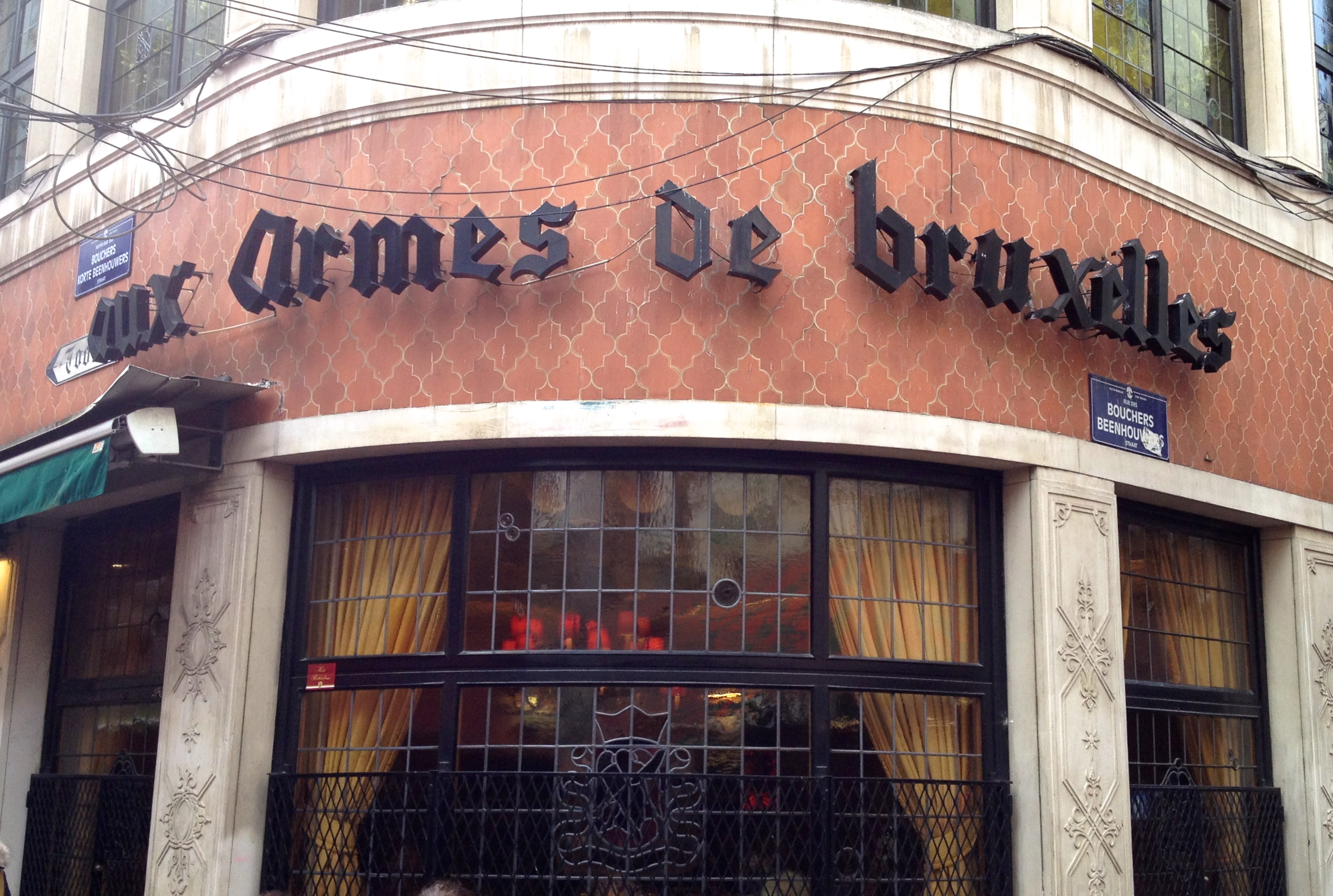
The best food revisit turned out to be mussels. “Moules-frites” because they always come with fries. Nancy had introduced me to Aux Armes de Bruxelles. My husband and I found the restaurant and ate there three times over three days. There was no reason to go elsewhere. It’s that special. Belgians get their mussel fix there too.

IMG_3526
best moules-frites in brussels

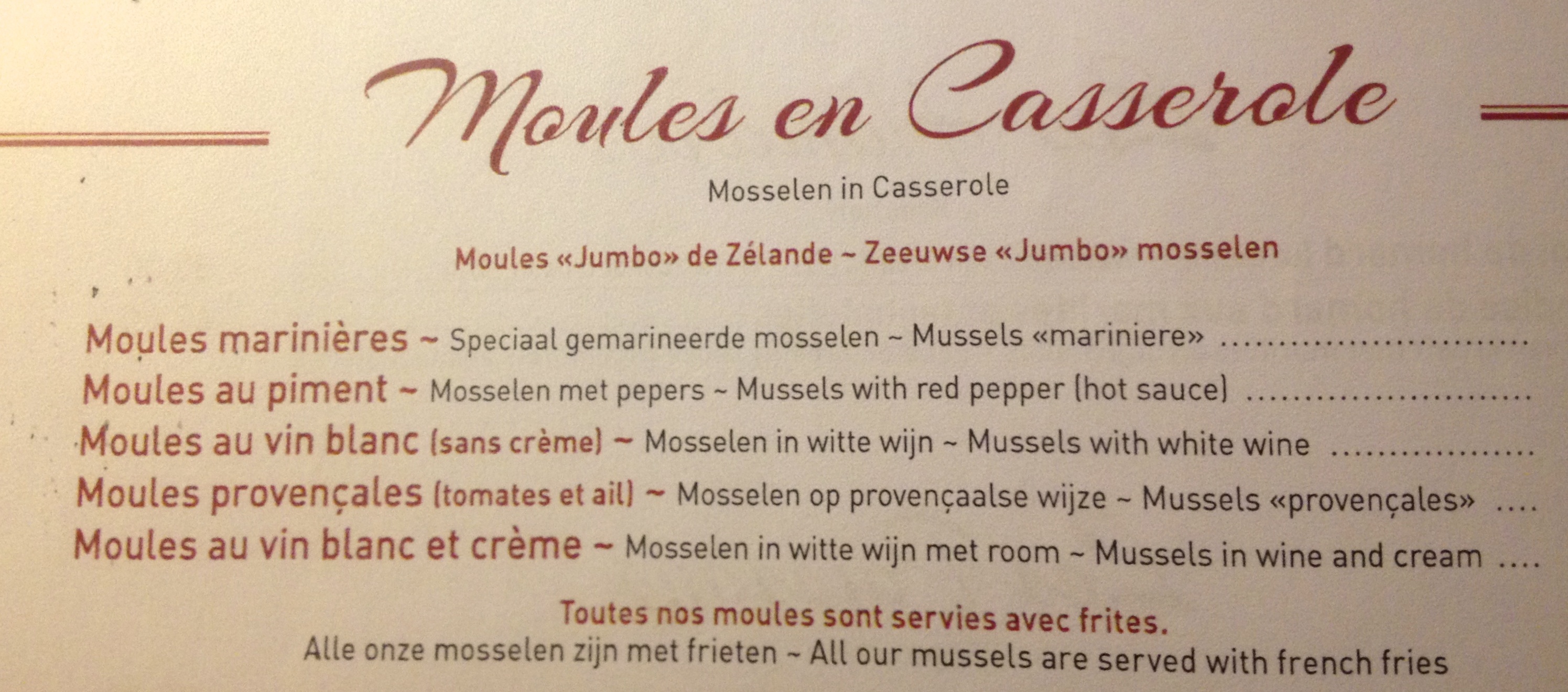
September to April is the season for jumbo mussels from Zeeland, a southwestern province in the Netherlands. It is the only region from where to obtain this particular type of mussel. So our server said. Other mussels, and those eaten throughout the year, are not the same. Smaller. Different. Not as tasty.

IMG_3535

They were served in a big bowl, frites on the side, and always bread to sop up the sauce and veggies at the bottom. It was trial and error to choose a favorite sauce. My husband found his on the first try–white wine and cream sauce [au vin blanc et crème]. I asked for a made-up combination that became my favorite–white wine, lots of garlic and red pepper [au vin blanc, beaucoup d’ail, et piment]. It’s not on the menu but the kitchen obliged.

IMG_3541

The broth is full of chopped onion, celery, fresh parsley, and once, tiny asparagus tips. It is an intoxicating combination–a bowl of jumbo Zeeland mussels, steamed heat and aroma from the sauce wafting up, crisp fries on the side. We smiled and sipped wine between morsels of mussel and bites of frites.

IMG_1028
two ways to eat: using shell as utensil
IMG_1031
or fork

The best accompanying beverage required more trial and error. Belgian beer was good for the beer drinker. A glass of Bordeaux was good for the red wine lover. But the unanimous favorite was sharing a bottle of Chablis from Burgundy. Begin sipping while you wait for the moules-frites to arrive.

IMG_3560

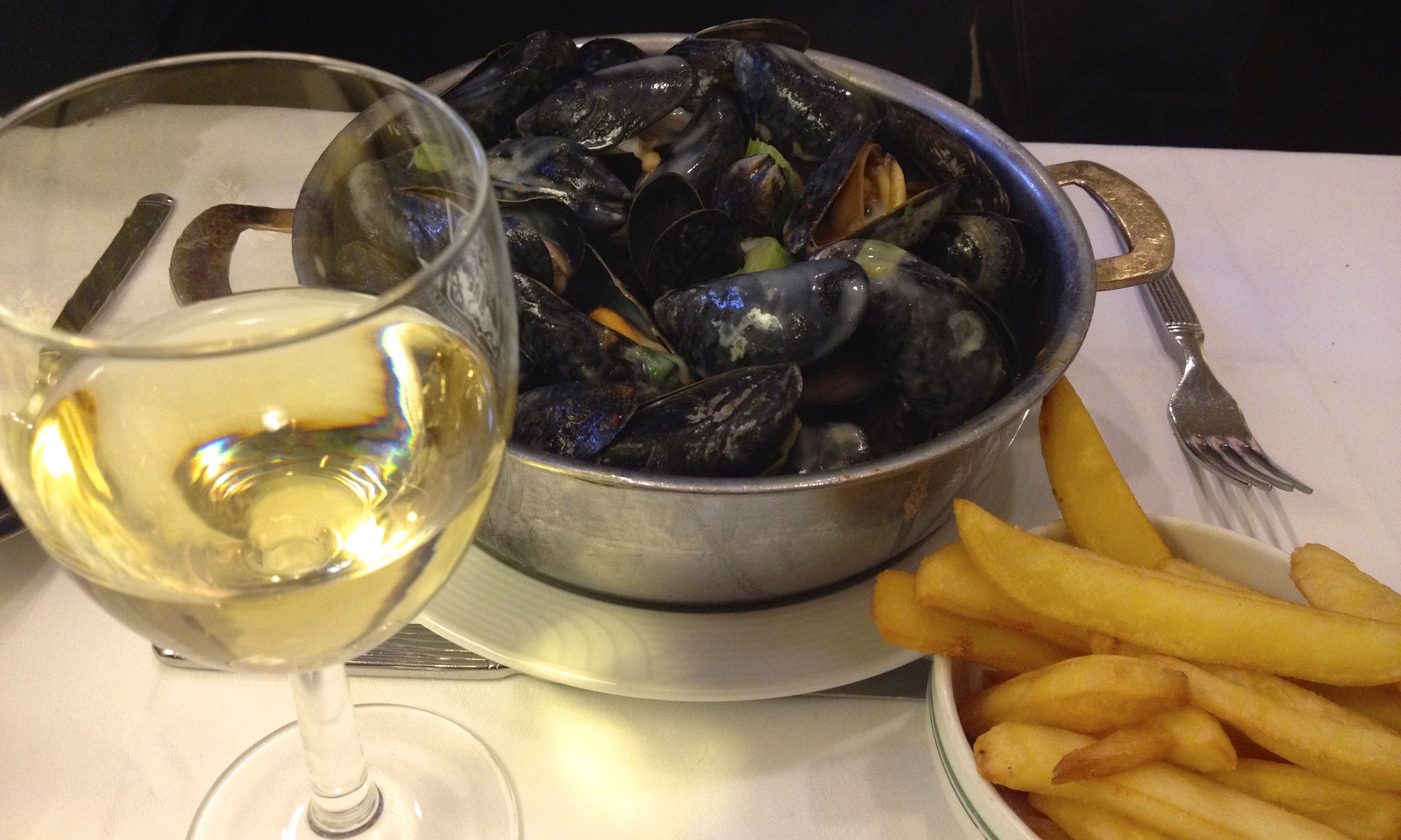
Mussel memory in Brussels will always be one of my food highlights. Sharing the adventure with a loved one means we both understand what a “Fisher moment” of gastronomic perfection smells, tastes, and feels like.

“...Everything is right. Nothing jars. There is a kind of harmony, with every sensation and emotion melted into one chord of well-being.” –mfk fisher

Fisher describes it better than anyone. Mussels in Brussels. C’est tellement très bon.