The essential moral skill is being considerate to others in the complexity of everyday life. Morality is about how we interact with each other minute by minute. The wise person’s essential gift is tender receptivity. –Iris Murdoch, British writer and philosopher
Is there no virtue among us? If there be not, we are in a wretched situation. –James Madison, American stateman, Founding Father, fourth President of the United States
In the current state of incivility between nations, religions, politics, and sometimes within family lines, when the argument of “us vs. them” feels overwhelming, I think about Count Alexander Rostov, the protagonist in Amor Towles’ best-selling novel, A Gentleman in Moscow. The story begins during the years after the first Russian Revolution, the assassination of the last Czar and his family, and World War 1. The Bolsheviks are firmly in power.
Count Rostov, born an aristocrat, was tried in a Bolshevik tribunal court in 1922 when he was 32-years-old. He was found guilty of being a gentleman of leisure and privilege and of allegedly writing a poem nine years earlier now deemed anti-revolutionary. He was sentenced to turn over his wealth, his personal property, and the luxurious suite where he resided in the Metropol Hotel, near the Kremlin, in Moscow’s Theater Square. Forcibly relocated to one tiny room, a former servant’s quarters in the hotel attic, the final provision was that he would be shot on site if caught outside the hotel premises. House arrest for life.

Rostov settled into meager quarters with few of his inherited possessions. He found the space depressingly confining, hitting his head on the sloping eaves, squeezing his tall body between his father’s large Louis XVI desk and the bed on creaking springs. To ease the cramped conditions, he secretly knocked out the back wall of the built-in wardrobe which connected to another tiny room. He made this into a study, furnished with a bookcase, lamp, two chairs, and his grandmother’s coffee table retrieved from storage, thus doubling his livable space. He remained there for the next 32 years.
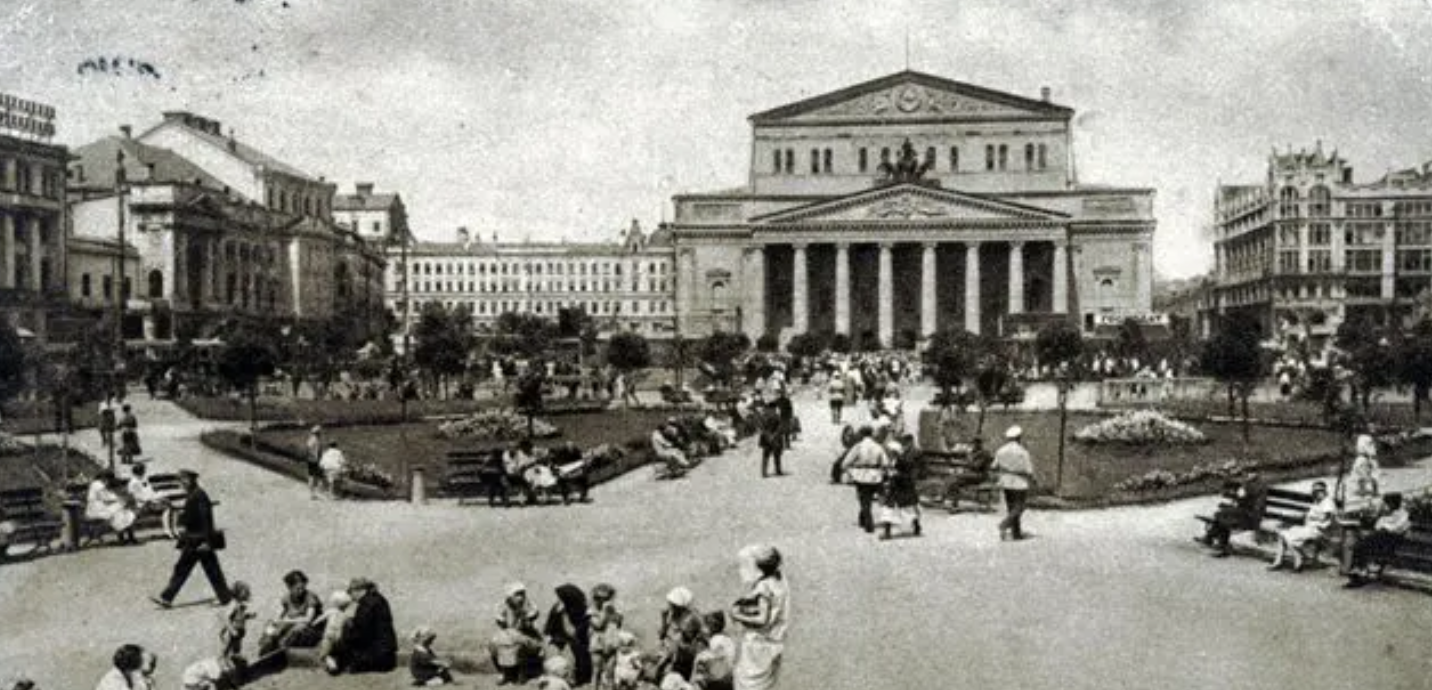
Early adjustments were difficult. Rostov’s daily routines were confined to the hotel lobby, barber shop, tailor shop, two restaurants–the formal Boyarsky on the second floor and the less formal Piazza on the ground floor, a bar, and his own 6th floor digs. In the fourth year of confinement, he contemplated suicide by climbing to the hotel roof at midnight one night in order to throw himself off, but was stopped by an unexpected conversation with a hotel caretaker he had previously befriended.

Everything can be taken from a man but one thing: the last of the human freedoms—to choose one’s attitude in any given set of circumstances, to choose one’s own way. –Viktor Frankl, Auschwitz survivor
But freedom of will has been a well-established tenet of moral philosophy since the time of the Greeks. –Amor Towles, A Gentleman in Moscow
Rostov made a decisive shift in order to survive the next three decades of house exile. Instead of succumbing to bitterness with the loss of money, social position and possessions, he chose free will, his own intelligence, and the resilience of the human spirit to move forward, and live.
He took a job as the head waiter in the formal Boyarsky restaurant because, as a gentleman, he knew good food and wine and how to serve both properly. He forged deep, sustainable relationships with the hotel staff–first as a live-in guest, then as a colleague, confidante, and finally as a friend. He conversed at length with international guests, had a longterm romantic relationship with a Russian actress in frequent residence, befriended a child who lived in the Metropol and showed him hidden spaces with her master key. Later, she returned as a young woman and abandoned her five-year-old daughter, Sophia, to Rostov’s care. He shared his limited space, raised the girl to young adulthood, and learned paternal love. He tutored a Party Member, formerly an officer of the Red Army, who was partially responsible for his fate. For many years they met monthly for dinner and conversation about being a gentleman, learning to speak French and English, understanding the ways of western culture by watching American movies.
Rostov accomplished all of this by treating everyone with equal parts civility, respect, and kindness. He observed human nature by foregoing judgement. Interacting with individuals from every station and age in life with the same courteous manner, the Count matured in self-awareness, humility, and understanding.

Alexander Rostov’s story, before and after exile, is rich in complexity and detail during a turbulent political time in Russian history. A well-crafted, but nail-biting escape awaits in the end. Yet the heart of Rostov’s life under house arrest is that civility, or courtesy, has nothing to do with one’s social class, clothing, or bank balance. Rather, civility is a moral choice, and along with graciousness is the kind of practice that never goes out of style. Count Rostov is one of the most endearing literary examples.
The Count took pride in wearing a well-tailored jacket, but he took greater pride in knowing that a gentleman’s presence was best announced by his bearing, his remarks and his manner. Not by the cut of his coat. –Amor Towles, A Gentleman in Moscow
Rostov’s gentlemanly qualities, the humanity, love, and respect he gained in return, illustrates that there are high rewards when civility prevails. As individuals, we can’t fix the world’s overwhelming problems of wars between nations, historic hatred between factions, partisan divides. Still, bridging the gap from Rostov’s choices to the philosophy of Joseph Campbell which says there is something we can control.
When we talk about settling the world’s problems, we’re barking up the wrong tree. The world is perfect. It’s a mess. It has always been a mess. We are not going to change it. Our job is to straighten out our own lives. –Joseph Campbell, mythologist, writer, lecturer [1904-1987]

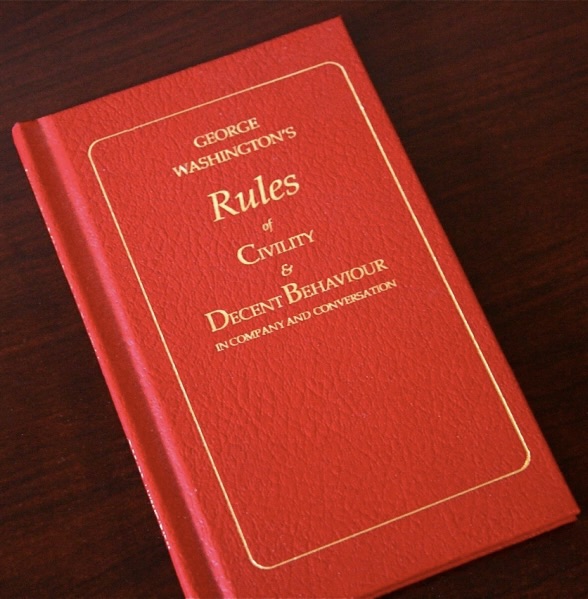
In 1595, French Jesuits composed 110 Rules of Civility. George Washington is known to have copied them into his school notebook by the time he was 16 years old, more than two centuries later. He titled them, “The Young George Washington’s Rules of Civility and Decent Behavior in Company and Conversation”, and they were formative in the development of his character. A system of courtesy and respectful behavior appropriate in the company of individuals was later expanded to a nation when he became President. A man of that time wrote this about Washington, “…no wonder every body honored him who honored everybody.”
The first and last of 110 Rules of Civility:
- Every action done in company ought to be with some sign of respect to those that are present.

110. Labor to keep alive in your breast that little spark of celestial fire called conscience.
One final story. When our son, Adam, was four-years-old, we were at Lake of the Ozarks in Missouri with 16 extended family members together in a big house for a reunion weekend. Two of his cousins, brothers, then four and six years old, were rolling around on the floor aggressively punching, kicking, and yelling as young boys or puppy dogs are apt to do. Adam, after watching the ruckus on the sidelines, finally approached, and standing directly over them asked, “Can’t we all try to get along now?”
To put the world in order, we must first put the nation in order. To put the nation in order, we must first put the family in order. To put the family in order, we must cultivate our personal life; and to cultivate our personal life, we must first set our hearts right.
–Confucius [551-479 BC]
Paul to the Corinthians:
For our boast is this; the testimony of our conscience, that we have behaved in the world to be decent.
Books by Amor Towles:
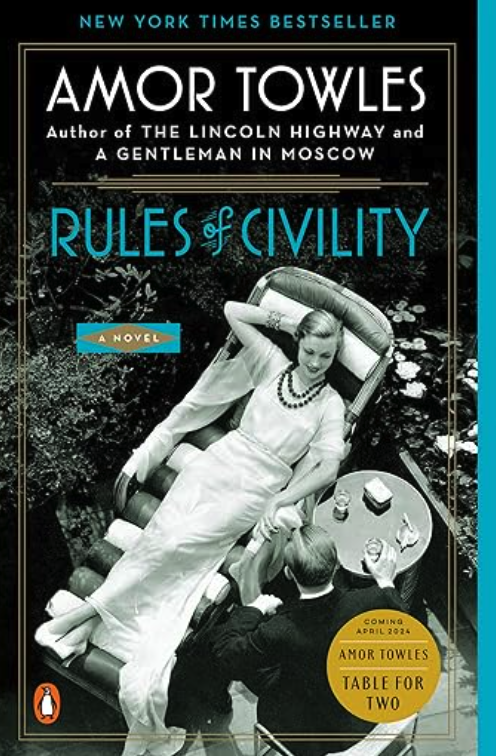
- Rules of Civility 2011
- A Gentleman in Moscow 2016
- The Lincoln Highway 2021