Red Hot Coals in a Bean Hole

Several months ago, I submitted an essay to a Creative Writing Contest sponsored by the M.F.K. Fisher Foundation. Anyone who knows me, or who has glanced at my stories, knows that Mary Frances Kennedy Fisher (1908-1992) is my writing mentor who lived in the last century. She wrote 27 books over her lifetime on the topics of France, food, travel and memoir. Second to Fisher, I am also inspired by the works of authors Norman Maclean (A River Runs Through It and Other Stories, Young Men and Fire) and Amor Towles (A Gentleman in Moscow, Rules of Civility, and The Lincoln Highway). Both craft stories with wordsmanship I love.


This year’s contest writing theme was “Fire”. The requirements were that it had to be an original work and unpublished anywhere else. A maximum number of 250 words was allowed. There were 200 entries from 22 countries.

I don’t know where my story landed in the “no win” pile, but it freed me to re-write and self-publish this story about fire and Girl Scout campouts during adolescent years. It was my Texas girlfriend, Kathy, who suggested several years ago during a Colorado visit that I write something about campfires. The small group of women sitting in a semi-circle around our family-built-stone-ringed-firepit had all been in the same Girl Scout troop during middle school and early high school years. Kathy’s mother, Joyce, was one of our leaders and a woman I admired very much while growing up.
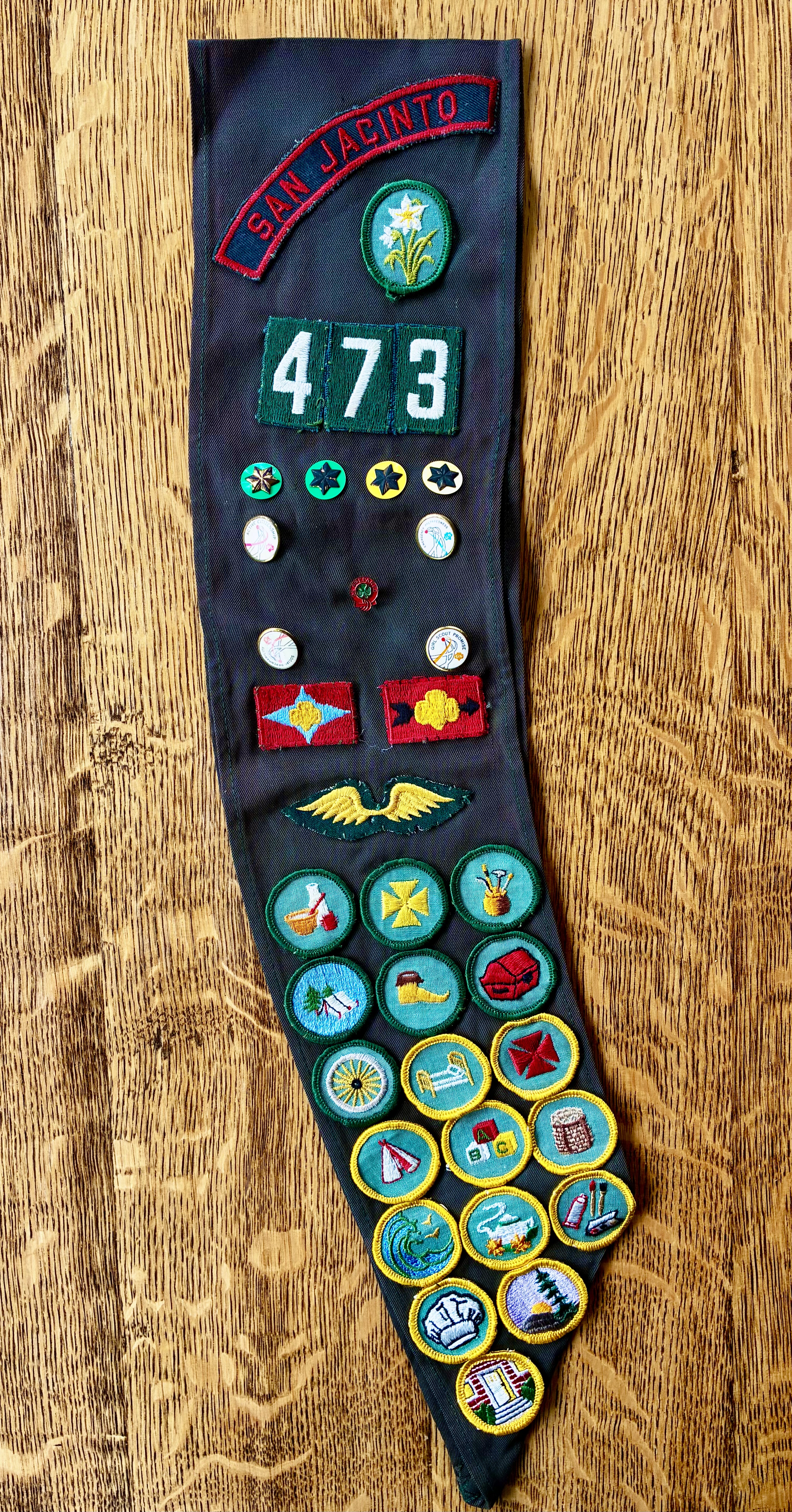
my San Jacinto Troop 473 sash with badges, achievements and awards

Kathy reminded us that on Girl Scout camping trips we cooked our meals in a bean hole. 

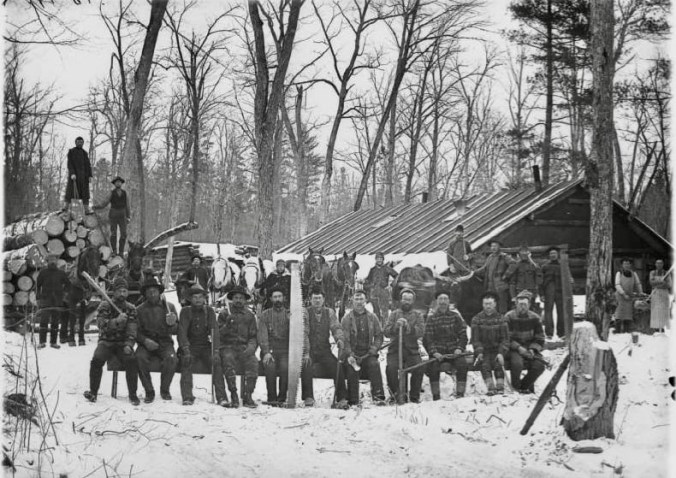
The custom of “cooking in a bean hole” originated more than 100 years ago, in Maine, as a method of feeding hungry lumberjacks. In a hole dug in the ground, a fire was laid and a pot of beans was slow cooked in a cast iron Dutch oven all day–the beginning of modern-day crock pot cooking. 
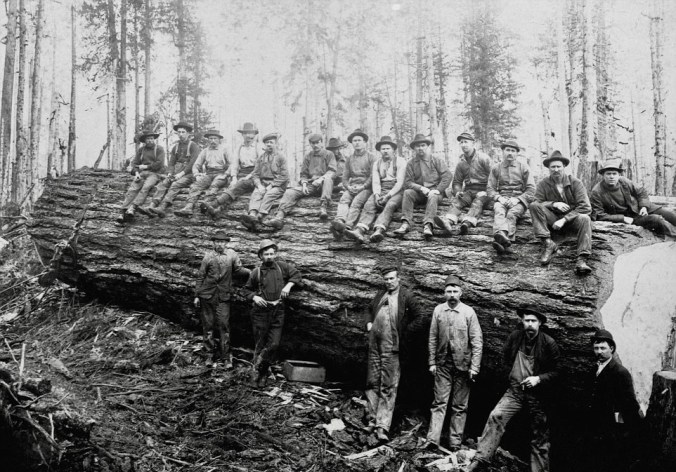
lumberjack crew in early 1900s

bean hole cooking invented to feed hungry men

As Scouts in Houston, Texas, we almost always camped out in hot weather. Sleeping bags were lumpy cotton, and we usually slept on top of them. The biggest wildlife terror was scorpions–inside the tent. At bedtime we lay in a row three or four girls wide. Flashlights scanned the tent walls, corners, and ceiling for any threatening presence before lights out. If a critter with a curled poisonous stinger was spied in our combined beams, shrieks of “Scorpio! Scorpio!” echoed throughout the campsite. Bodies hurdled over each other to get out fast. 

scorpion with grasping pincers and curved segmented tail ending in a stinger

For five years, camping trips were one of my primary reasons for being a Girl Scout. First, we were away from home, with best friends, sleeping in tents, and sharing adventures. Secondly, we learned everything there was to know about campfires–laying, starting, tending and putting them out. But the best part of every campfire was sitting in a circle after dark telling ghost stories or singing songs in rounds or loud harmony. Favorites like “Barges”, “Spider’s Web”, “Kookaburra”, or “This Land is Your Land”.

Fire was central to the whole weekend camping experience, from morning to nightfall. Gathering kindling, stacking foraged sticks and dead wood from the surrounding area was an assigned chore, but seemed like a scavenger hunt. 

Campfires were laid in a particular style, with the designated name descriptive of its shape. The Teepee was a three-dimensional triangle like an Indian teepee with kindling inside the base. The Log Cabin featured firewood stacked in a square pattern, crossing in opposite directions on every level until it was several layers tall, like a cabin wall. 

Planning, preparing, and staging our “bean hole” supper began in the morning. First, a hole deeper and wider than a cast iron Dutch oven was dug near the breakfast campfire. The base of the hole was layered with red-hot burning coals and more firewood. The “cooking” team dumped canned beans, cut up carrots and onions, vegetable soup, hamburger and water into the black pot. The lid was fitted with a layer of aluminum foil to keep it secure, then placed in the hole, covered with more hot coals and buried under a layer of dirt to seal it in securely. There we left it, all day, while we headed off hiking, swimming, canoeing or some other nature adventure.  
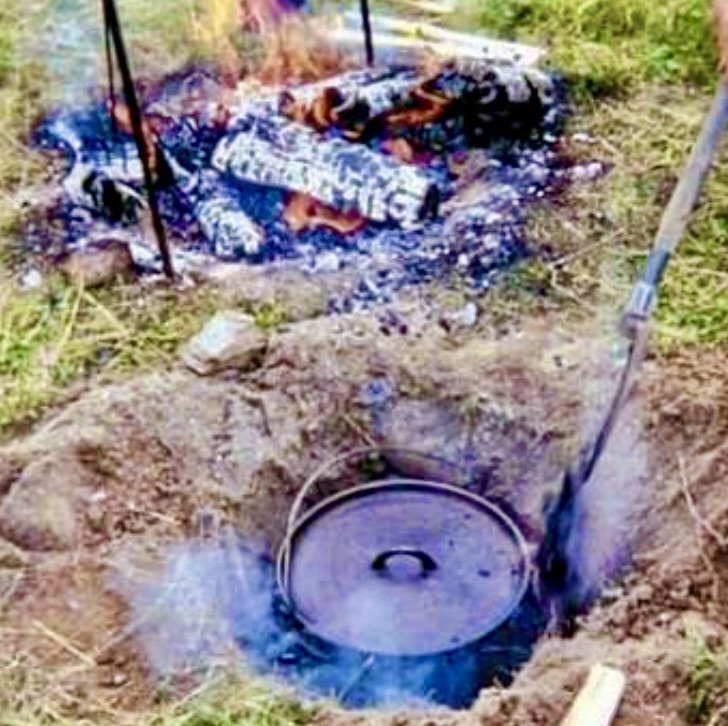
dutch oven buried close to campfire pit

Somehow, packed lunches of peanut butter and jelly sandwiches sustained us until evening. By late afternoon, we returned to the campsite to uncover our buried, and hopefully cooked, supper.  We dug off dirt and blackened coals and carefully lifted the still warm pot out of the ground by its handle. 

Remarkably, or perhaps due to extreme hunger, the fragrant stew smelled and looked ready to eat. The raw carrots and onions thrown into the pot with everything else might have been a little crunchy. Yet the stew was warm and nourishing to young, famished stomachs. We spooned it gratefully into our mouths from metal Sierra Club cups. 

A dessert of fruit cobbler could be made in the same manner. Cans of cherry or apple pie filling were scraped into a cast iron pot. Then covered with a layer of uncooked refrigerated dough, cracked open from a cardboard tube. This, too, was left buried all day. 

We didn’t mind the bits of gritty dirt or charcoal that fell into the pot as we removed the heavy lid over stew or cobbler. It didn’t bother us when dessert was eaten with the biscuit dough topping either raw and gooey or blackened and crispy. It tasted delicious and fed our youthful hunger. We had successfully cooked dinner and dessert in a bean hole! 

After cleanup, we sat cross-legged on the ground in a circle around the campfire roasting marshmallows for “S’mores”, laughing, and storytelling. The night ended by singing our hearts out as the fire dwindled to a bed of red-hot coals. 

Can’t We All Just Get Along

The essential moral skill is being considerate to others in the complexity of everyday life. Morality is about how we interact with each other minute by minute. The wise person’s essential gift is tender receptivity.  –Iris Murdoch, British writer and philosopher

Is there no virtue among us? If there be not, we are in a wretched situation. –James Madison, American stateman, Founding Father, fourth President of the United States

In the current state of incivility between nations, religions, politics, and sometimes within family lines, when the argument of “us vs. them” feels overwhelming, I think about Count Alexander Rostov, the protagonist in Amor Towles’ best-selling novel, A Gentleman in Moscow. The story begins during the years after the first Russian Revolution, the assassination of the last Czar and his family, and World War 1. The Bolsheviks are firmly in power.

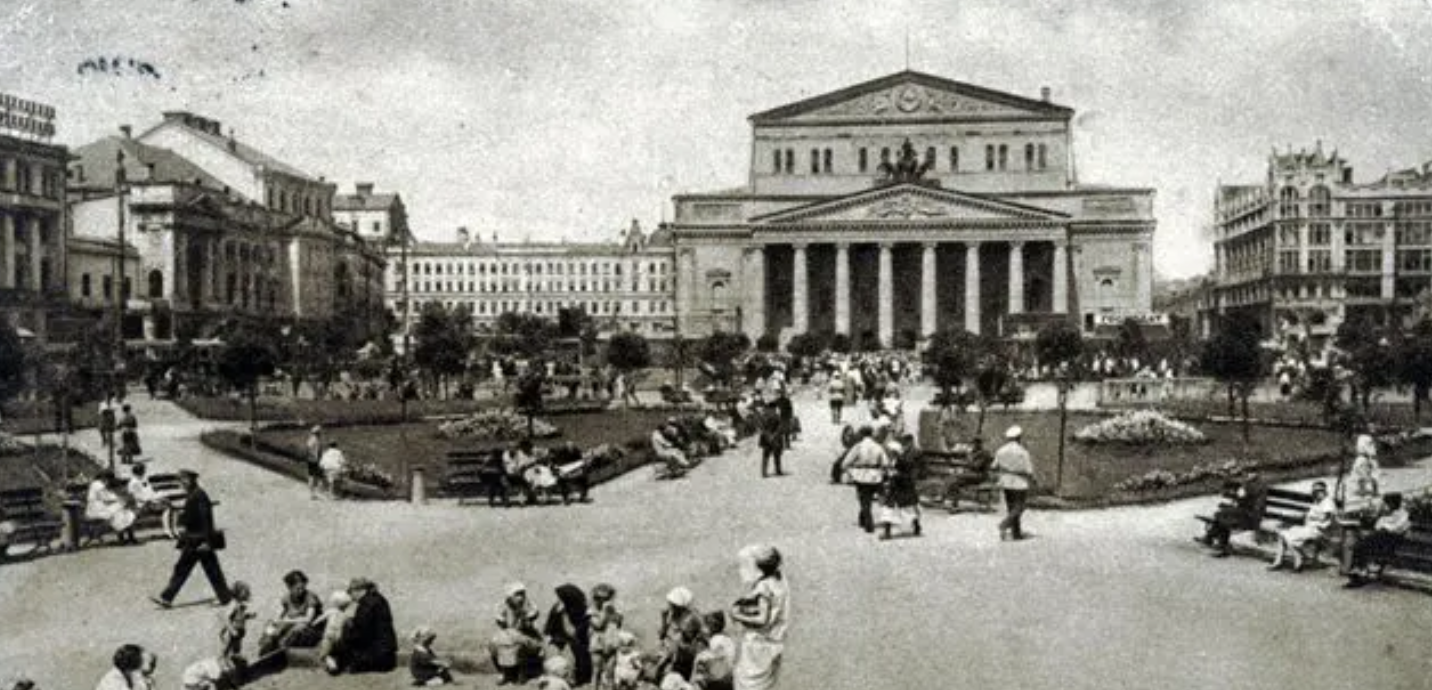
Count Rostov, born an aristocrat, was tried in a Bolshevik tribunal court in 1922 when he was 32-years-old. He was found guilty of being a gentleman of leisure and privilege and of allegedly writing a poem nine years earlier now deemed anti-revolutionary. He was sentenced to turn over his wealth, his personal property, and the luxurious suite where he resided in the Metropol Hotel, near the Kremlin, in Moscow’s Theater Square. Forcibly relocated to one tiny room, a former servant’s quarters in the hotel attic, the final provision was that he would be shot on site if caught outside the hotel premises. House arrest for life.

Metropol Hotel, Moscow, 2023 version

Rostov settled into meager quarters with few of his inherited possessions. He found the space depressingly confining, hitting his head on the sloping eaves, squeezing his tall body between his father’s large Louis XVI desk and the bed on creaking springs. To ease the cramped conditions, he secretly knocked out the back wall of the built-in wardrobe which connected to another tiny room. He made this into a study, furnished with a bookcase, lamp, two chairs, and his grandmother’s coffee table retrieved from storage, thus doubling his livable space. He remained there for the next 32 years.

Theatre Square, Moscow, circa 1920s

Early adjustments were difficult. Rostov’s daily routines were confined to the hotel lobby, barber shop, tailor shop, two restaurants–the formal Boyarsky on the second floor and the less formal Piazza on the ground floor, a bar, and his own 6th floor digs. In the fourth year of confinement, he contemplated suicide by climbing to the hotel roof at midnight one night in order to throw himself off, but was stopped by an unexpected conversation with a hotel caretaker he had previously befriended.

the ground floor restaurant which the Count referred to as the Piazza

Everything can be taken from a man but one thing: the last of the human freedoms—to choose one’s attitude in any given set of circumstances, to choose one’s own way. Viktor Frankl, Auschwitz survivor

But freedom of will has been a well-established tenet of moral philosophy since the time of the Greeks. –Amor Towles, A Gentleman in Moscow

Rostov made a decisive shift in order to survive the next three decades of house exile. Instead of succumbing to bitterness with the loss of money, social position and possessions, he chose free will, his own intelligence, and the resilience of the human spirit to move forward, and live.

He took a job as the head waiter in the formal Boyarsky restaurant because, as a gentleman, he knew good food and wine and how to serve both properly. He forged deep, sustainable relationships with the hotel staff–first as a live-in guest, then as a colleague, confidante, and finally as a friend. He conversed at length with international guests, had a longterm romantic relationship with a Russian actress in frequent residence, befriended a child who lived in the Metropol and showed him hidden spaces with her master key. Later, she returned as a young woman and abandoned her five-year-old daughter, Sophia, to Rostov’s care. He shared his limited space, raised the girl to young adulthood, and learned paternal love. He tutored a Party Member, formerly an officer of the Red Army, who was partially responsible for his fate. For many years they met monthly for dinner and conversation about being a gentleman, learning to speak French and English, understanding the ways of western culture by watching American movies.

Rostov accomplished all of this by treating everyone with equal parts civility, respect, and kindness. He observed human nature by foregoing judgement. Interacting with individuals from every station and age in life with the same courteous manner, the Count matured in self-awareness, humility, and understanding. 

Alexander Rostov’s story, before and after exile, is rich in complexity and detail during a turbulent political time in Russian history. A well-crafted, but nail-biting escape awaits in the end. Yet the heart of Rostov’s life under house arrest is that civility, or courtesy, has nothing to do with one’s social class, clothing, or bank balance. Rather, civility is a moral choice, and along with graciousness is the kind of practice that never goes out of style. Count Rostov is one of the most endearing literary examples. 

The Count took pride in wearing a well-tailored jacket, but he took greater pride in knowing that a gentleman’s presence was best announced by his bearing, his remarks and his manner. Not by the cut of his coat. –Amor Towles, A Gentleman in Moscow

Rostov’s gentlemanly qualities, the humanity, love, and respect he gained in return, illustrates that there are high rewards when civility prevails. As individuals, we can’t fix the world’s overwhelming problems of wars between nations, historic hatred between factions, partisan divides. Still, bridging the gap from Rostov’s choices to the philosophy of Joseph Campbell which says there is something we can control.

When we talk about settling the world’s problems, we’re barking up the wrong tree. The world is perfect. It’s a mess. It has always been a mess. We are not going to change it. Our job is to straighten out our own lives. –Joseph Campbell, mythologist, writer, lecturer [1904-1987]

In 1595, French Jesuits composed 110 Rules of Civility. George Washington is known to have copied them into his school notebook by the time he was 16 years old, more than two centuries later. He titled them, “The Young George Washington’s Rules of Civility and Decent Behavior in Company and Conversation”, and they were formative in the development of his character. A system of courtesy and respectful behavior appropriate in the company of individuals was later expanded to a nation when he became President. A man of that time wrote this about Washington, “…no wonder every body honored him who honored everybody.”

The first and last of 110 Rules of Civility:

  1. Every action done in company ought to be with some sign of respect to those that are present.


110.   Labor to keep alive in your breast that little spark of celestial fire called conscience.

One final story. When our son, Adam, was four-years-old, we were at Lake of the Ozarks in Missouri with 16 extended family members together in a big house for a reunion weekend. Two of his cousins, brothers, then four and six years old, were rolling around on the floor aggressively punching, kicking, and yelling as young boys or puppy dogs are apt to do. Adam, after watching the ruckus on the sidelines, finally approached, and standing directly over them asked, “Can’t we all try to get along now?”


To put the world in order, we must first put the nation in order. To put the nation in order, we must first put the family in order. To put the family in order, we must cultivate our personal life; and to cultivate our personal life, we must first set our hearts right.

–Confucius [551-479 BC]

Paul to the Corinthians:

For our boast is this; the testimony of our conscience, that we have behaved in the world to be decent.


Books by Amor Towles:

  • Rules of Civility   2011
  • A Gentleman in Moscow   2016
  • The Lincoln Highway   2021