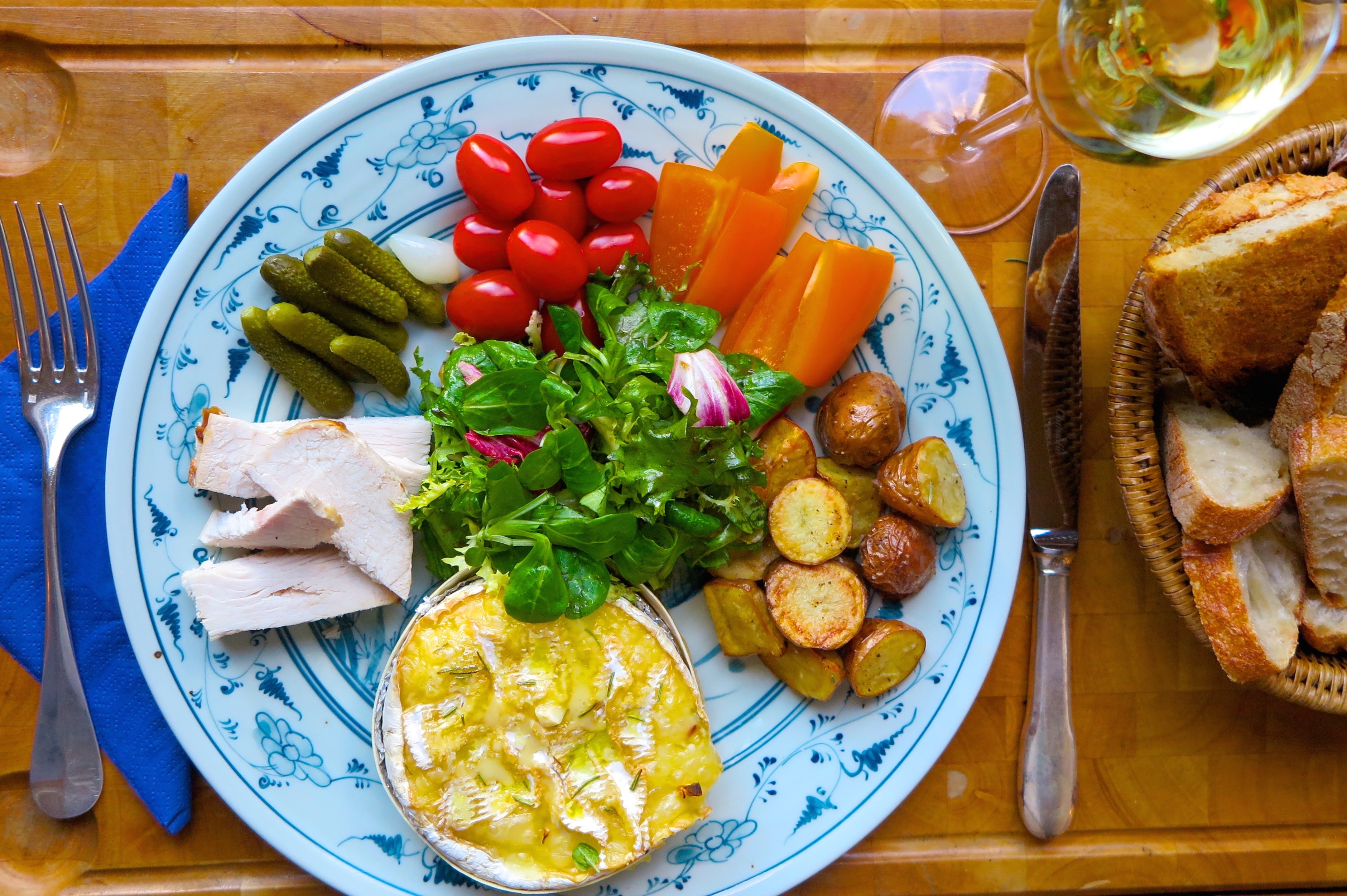
Before I was reading news digitally, I cut out an article by a humor columnist from a prominent international newspaper. The subject was why Americans eat turkey for Thanksgiving.
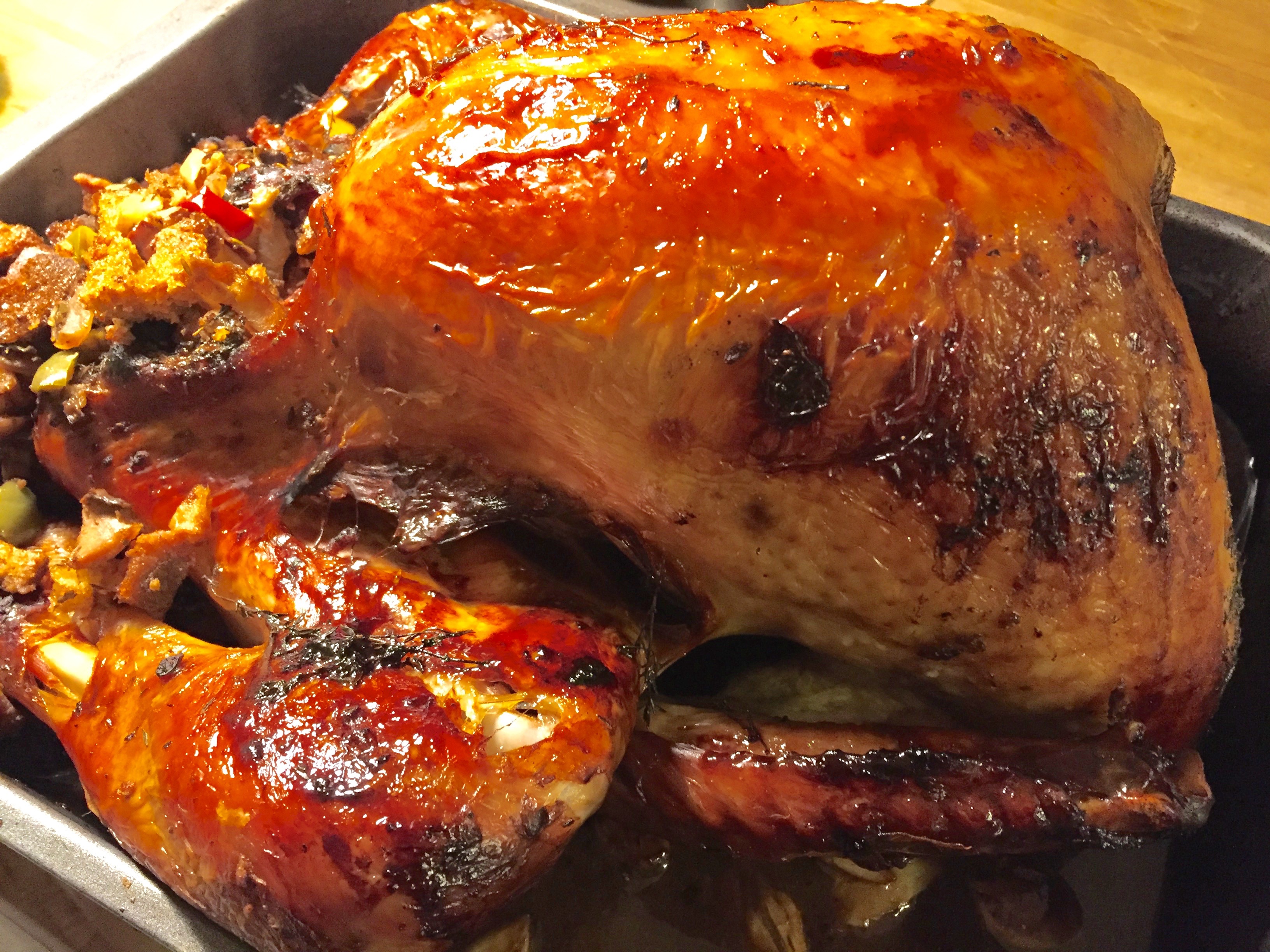
In 1952, an earlier version of this article was published under the title “Explaining Thanksgiving to the French”. The back-story, which prompted the reprint I read, was that a woman in Maryland bought an old, yellowed newspaper clipping at a garage sale. She paid $10 for it. Someone-in-the-know, at the Library of Congress, told her it was worth $80,000 as a collector’s item. She framed it as art on the wall of her home.
We were living in Germany when I read the printed article. I didn’t speak French then, but found the story quirky enough to save. I understand French better now, so the literal translation reads even sillier.
For history buffs wishing to be enlightened without forking over $80,000, here is one version of why Americans eat turkey on Thanksgiving:
One of our most important holidays is Thanksgiving Day, known in France as le Jour de Merci Donnant.
Le Jour de Merci Donnant was first started by a group of Pilgrims [Pèlerins] who fled from l’Angleterre to found a colony in the New World [le Nouveau Monde] where they could shoot Indians [les Peaux-Rouges] and eat turkey [dinde] to their heart’s content.
They landed at a place called Plymouth [a famous voiture Américaine] in a wooden sailing ship called the Mayflower [or Fleur de Mai] in 1620. But while the Pèlerins were killing the dindes, the Peaux-Rouges were killing the Pélerins and there were several hard winters ahead for both of them. The only way the Peaux-Rouges helped the Pèlerins was when they taught them to grow corn [maïs]. The reason they did this was because they liked corn with their Pèlerins.
In 1623, after another harsh year, the Pèlerins’ crops were so good that they decided to have a celebration and give thanks because more maïs was raised by the Pèlerins than Pèlerins were killed by Peaux-Rouges…
…And so, on the fourth Thursday in November, American families sit down at a large table brimming with tasty dishes, and for the only time during the year eat better than the French do…1
Living overseas for 30 years, without extended family around, our Thanksgiving holidays have been celebrated sometimes untraditionally. During Taiwan years, there was an annual pig roast in Maddy and Cabby’s backyard, linen covered tables lit in candlelight, adults drinking wine and trading stories while children ran rampant until late at night.
Another year, we shared Thanksgiving with Chinese friends who delighted in the array of traditional-American-food-in-excess more than we did.


The year we became empty nesters, I said to my husband, “No more beige, brown and white food for Thanksgiving. Let’s check into a hotel and eat what we want.” So we did. Spicy Thai is what I remember because we still lived in Asia.
After moving to Europe, with both children permanently in the U.S., we continued to lay low during this holiday-that-was-never-a-holiday in the country where we were living.
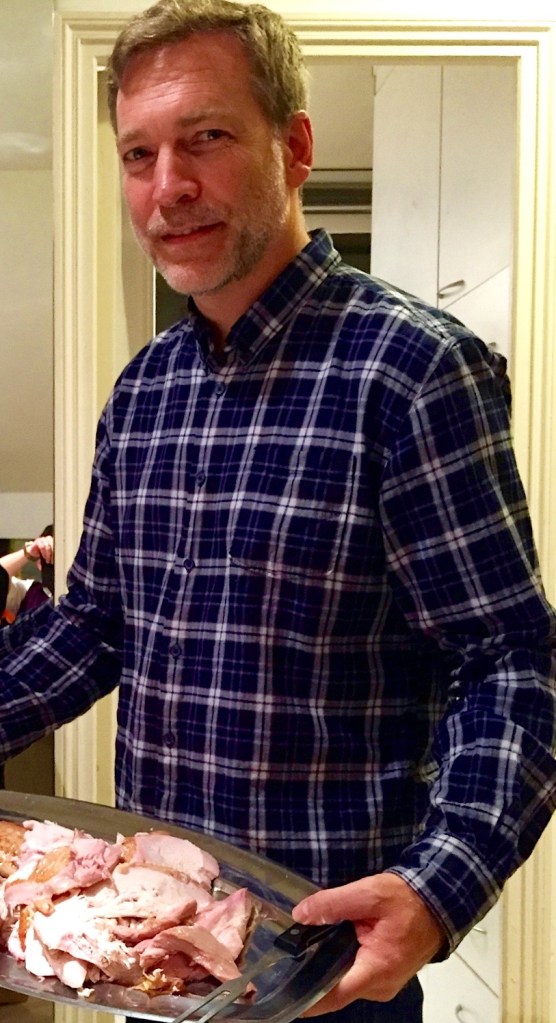
A couple of Novembers ago, we were invited to our friends’ Sally and John’s Paris apartment for Thanksgiving. It was an intimate group of eight, but international with one Spanish husband and one Italian boyfriend mixed among the Americans. We brought champagne, red wine, and something green to offset the neutrals of what would undoubtedly be served. Thanksgiving food, in brown and white, is traditional.


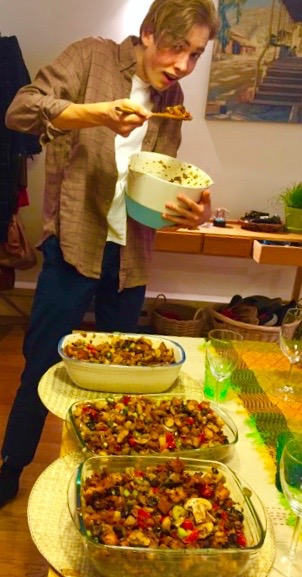
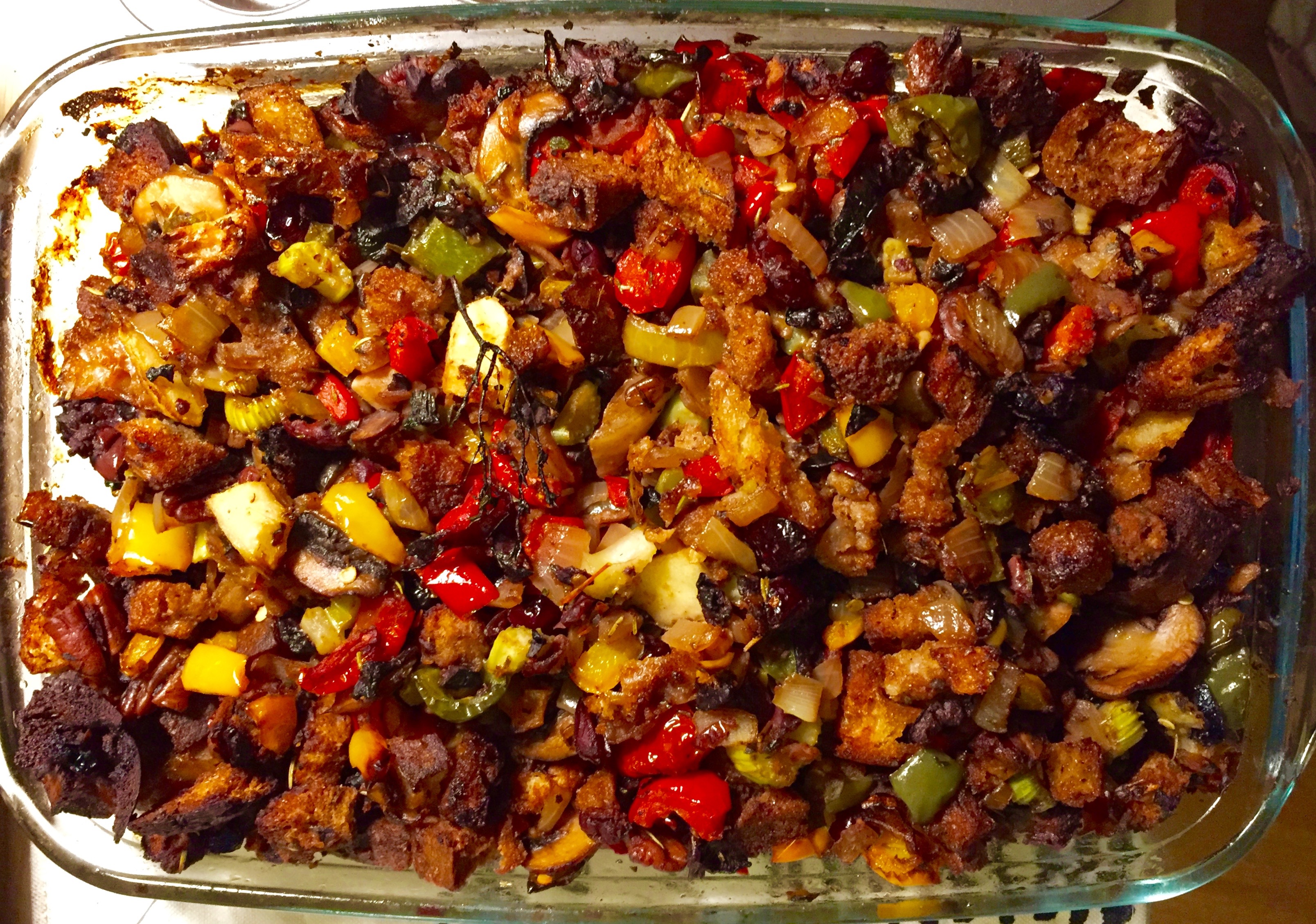
![something green [and red] to offset neutrals](https://i0.wp.com/atasteofmind.com/wp-content/uploads/2017/11/img_6782.jpg?w=328&h=438&ssl=1 "IMG_6782")
But then–I was completely turned upside down by the holiday dinner we had been avoiding for years. At John and Sally’s table there was color, there was taste, there was texture, and there was deliciousness in the one dish I detest the most–dressing.
Everyone in this family is creative. They are artists, film producers, film animators, screenwriters, painters, musicians, and, as it turns out, they are kitchen creative, too.
The dish I now call “John’s Original Holiday Dressing” is superior to the sage-y, soggy, overly bread-y brown mess I have skipped since childhood.
John’s dressing, rich with veggies, full of crunch, a hint of sweetness and tang, was the centerpiece to a remarkable meal in my favorite city [Paris] where Thanksgiving is not celebrated.
Last year, when we were invited again, I asked to learn the secret to the best dressing ever invented to be eaten with roast turkey on Thanksgiving. Like most naturally creative cooks, John uses no recipe. It varies from year to year, ingredients added or subtracted.
For the Benson/Bentley family legacy, as well as our own holiday celebrations, here, thankfully presented, is the most delicious stuffing/dressing recipe you will ever enjoy eating. Second and third helpings-yes! Next day leftovers if there happen to be any-yes!
There is room for your own creativity too. Play with the spice amounts and optional ingredients.
À chacun son goût. To each his own taste. The essence of French-splanation.
_______________________________________________________________________________________
1. Story excerpt from International Herald Tribune, November 5, 2005
JOHN’S ORIGINAL HOLIDAY DRESSING [serves 12]
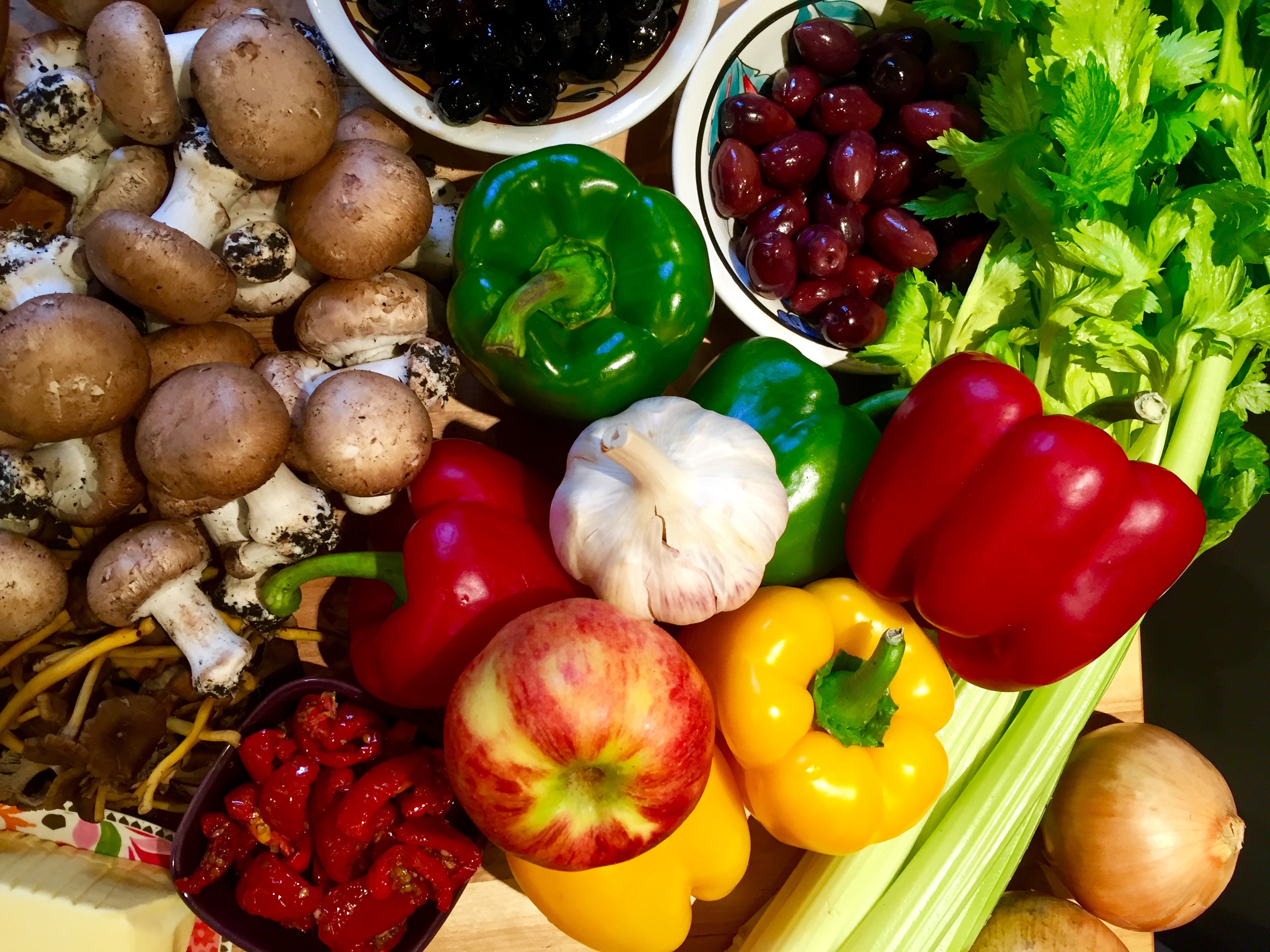
Ingredients:
- 1 head celery, chopped
- 4 onions, chopped
- 6 large cloves garlic [or more], chopped
- 2 red bell peppers, chopped
- 2 yellow bell peppers, chopped
- 2 green bell peppers, chopped
- Button mushrooms, sliced
- Fresh bread croutons–explained below
- 2 apples, chopped
- Greek Kalamata or Moroccan olives, pitted and chopped-optional
- Tomato confit [or sun dried tomatoes, softened with just enough hot water], chopped–optional
- 1/2 to 1 lb. good butter, melted–as much as you want
- 1 bay leaf
- 2 tsp. thyme
- 4 tsp. sage, rosemary, oregano and tarragon [approximate]
- Turkey, chicken or vegetable broth, 2/3-1 Cup*
- Olive oil
- Several Tbs to 1/4 cup Maple syrup**
*For turkey broth: boil/simmer neck and chopped gizzard in 2-3 cups water, lightly covered, for an hour. You want 2/3 to 1 cup of liquid to add per casserole dish. Okay to use chicken [or veggie broth] as substitute.
**John’s turkey preparation involves brining it beforehand. He likes using the salty drippings and basting liquid to add to the dressing. He uses maple syrup during basting to caramelize the skin and add sweetness. If you don’t use the drippings with syrup in them, then add syrup, as directed, at the end of preparation.
Preparation:
1. In a large pan, sauté red, yellow and green peppers in olive oil on medium to high heat, until they are slightly browned and softened. Add in onions and finally garlic. Add spices–2 tsp. thyme, 4 tsp. each sage, rosemary and oregano during sauté. [Quantities are suggestions because he doesn’t precisely measure.]
“It needs to smell herby-and good-as it is cooking!”–John Benson
2. In another pan [flat-bottomed] melt a couple tablespoons of butter. Place sliced mushrooms flat in pan without overlapping. Sprinkle tarragon over it all for a light coating. Brown both sides on medium to high heat. Keep adding butter to the pan as mushrooms soak it up. Don’t skimp on butter. Mushrooms should still be firm on the inside.
3. Make croutons by cutting day old baguette into cubes. Sprinkle olive oil and rosemary over them and toss together. Place in oven on low temperature until browned or crispy.
“They should get oiled all around a bit, not soggy of course. Rosemary should be a light sprinkle.”–John Benson
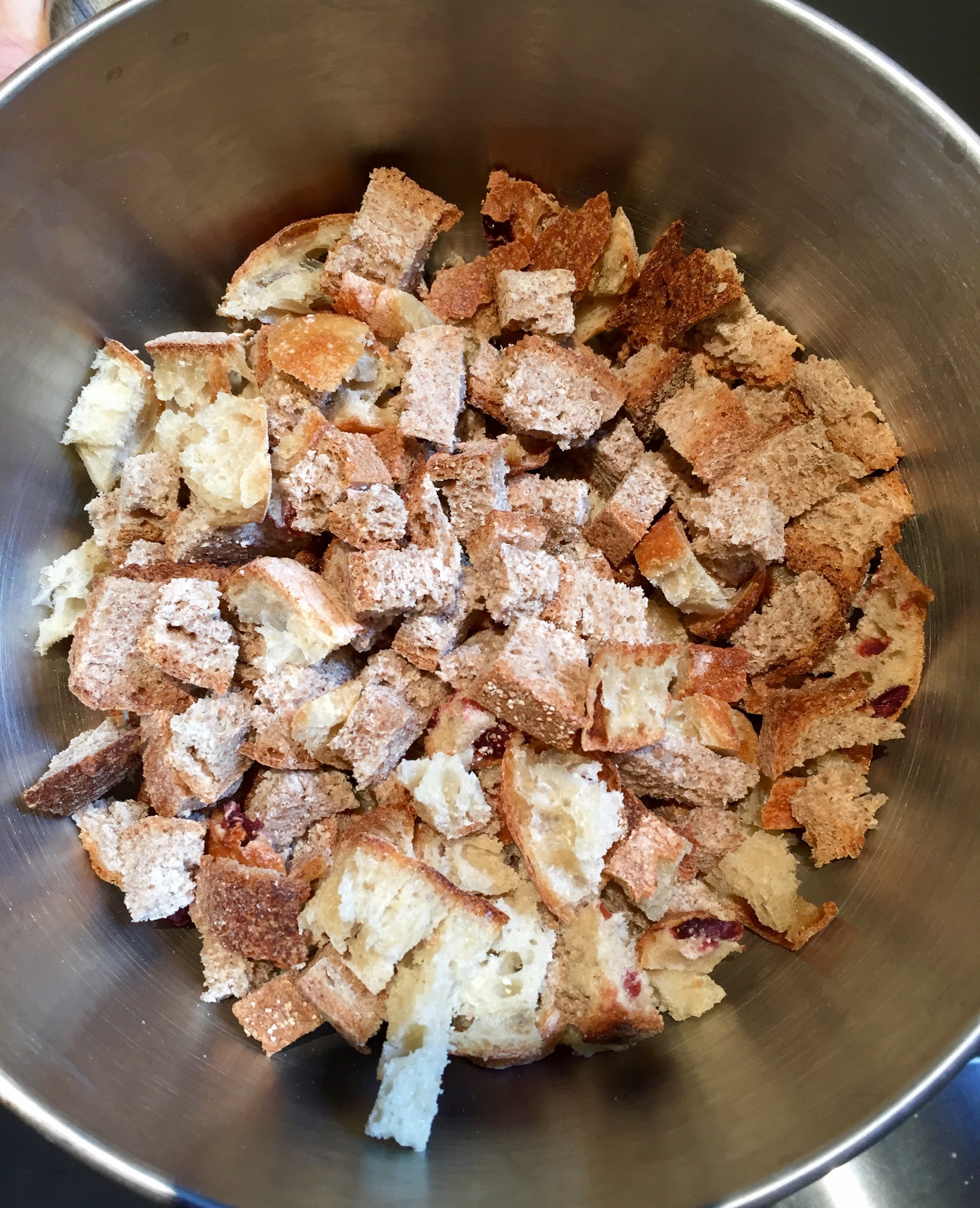
4. Mix together all sautéed ingredients in a large bowl while still warm. Add prepared croutons.
5. Add remaining melted butter, at least 1/4 cup or 250 ml [melt more if you need it!]. Divide amounts evenly per casserole dish. Just pour it over and mix in. Use 1/2 bay leaf for each casserole.
6. Stir in broth, a little at a time until everything is mushy and moist, but not soggy.
“Croutons should not crumble into crumbs if smashed. You will probably use 1-2 C. of broth, based on crouton softness.“–John Benson
7. Now add chopped celery, apple, seeded olives, and sundried tomatoes [or tomato confit]. These will add crunch, flavor, and a bit of tang.
8. Smell and taste. Perhaps add more butter or broth and drippings. Can also add sprig of fresh thyme or extra sage.
9. Stir in some maple syrup, a few tablespoons up to 1/4 cup per casserole.
10. Spread all ingredients into ovenproof dishes. Can place some inside turkey as stuffing. Grind black pepper over the top, if you think about it.
11. Bake uncovered 180 C. [350 F.] for about 1 hour. Halfway through, give it a stir to check for softness. If it’s too wet, stir again in 15 minutes to help with evaporation of broth. If still too moist after an hour, turn on broiler for a couple of minutes to brown and crisp the top. Watch carefully so it doesn’t burn!
“Ingredients are already cooked so baking is to evaporate the broth and crisp everything. A good dried out, browned, crispy top is unbeatable. I think it’s the butter.”–John Benson
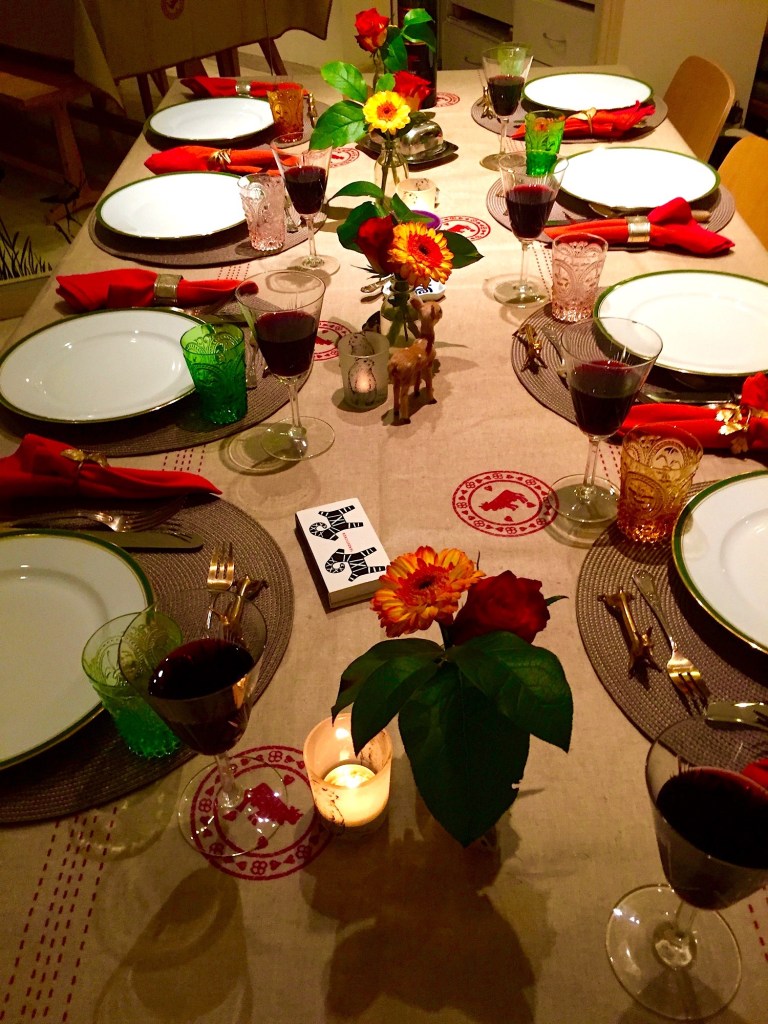

Set a festive holiday dinner table. When seated among family and friends give thanks to everyone and everything for which you are grateful.

Remember to raise a glass to those Peaux-Rouges and Pèlerins who started it all…
Joyeux Jour de Merci Donnant!
Happy Thanksgiving!