…and my life is still, trying to get up that great big hill, of hope, for a destination. I realized quickly when I knew I should, that the world was made up of this brotherhood, of man…And so I wake in the morning and I step outside, and I take a deep breath and I get real high, and I scream at the top of my lungs, “What’s going on?” –Linda Perry, 4 Non Blondes, song “What’s Up?”, 1993
Recently, I made an overnight trip to Chapel Hill, North Carolina, to visit my “artist buddy” Jane Filer. Several years ago, I wrote a biographical story about her life and her paintings after we met in Santa Fe, New Mexico. Read: Being Jane Filer Two of her pieces are in our living room, “Eclipse” and “Elephant Journey”, both of them highlighted in the article.

The premise of traveling to her home was a painting I noticed and kept returning to on her website janefiler.com under “Available Work”. It was entitled “Above the Bridge”. I finally called Jane and said I was really drawn to this one but needed to see the painting in person to know how it made me feel. She agreed, and we set a date.
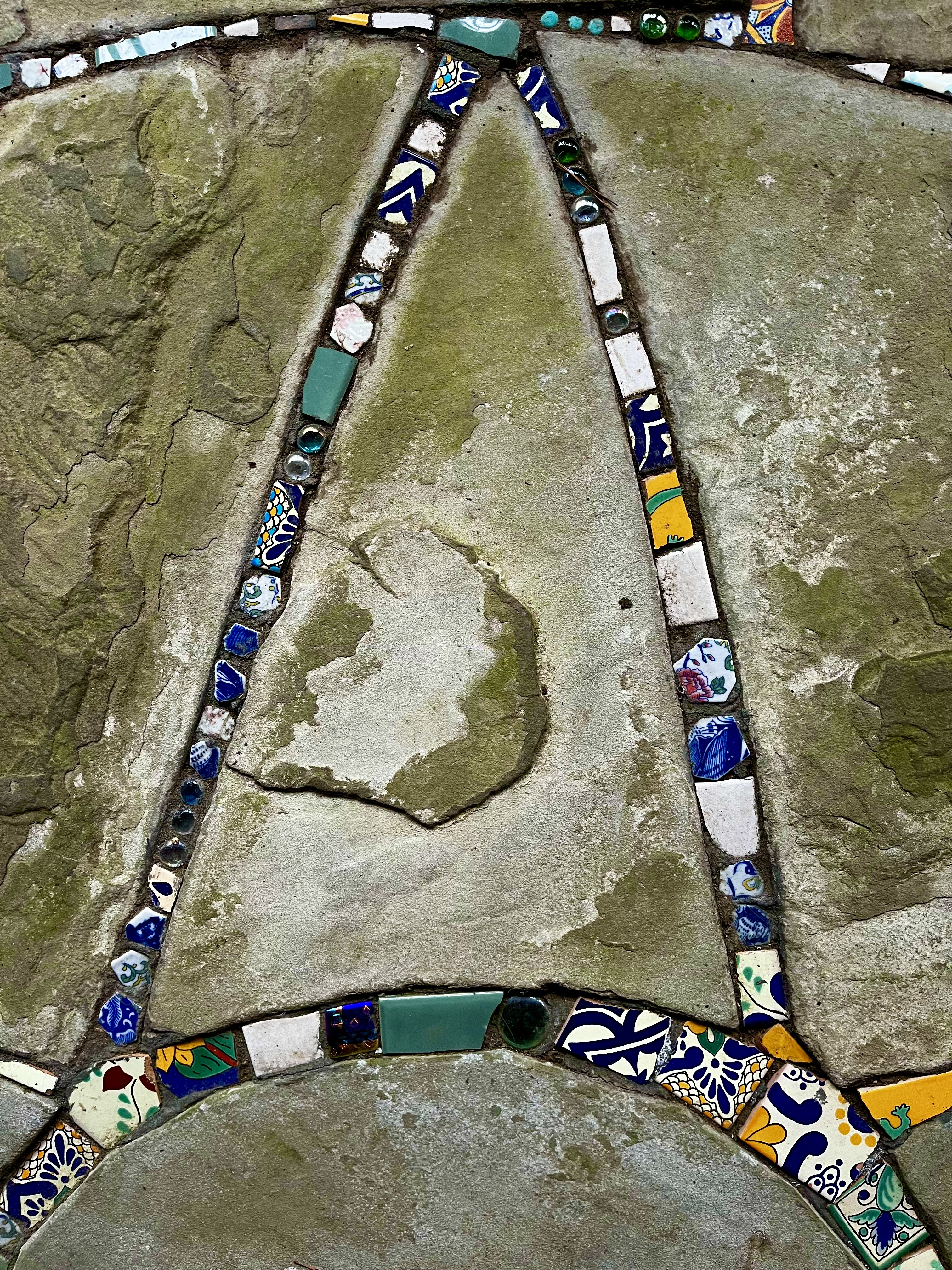
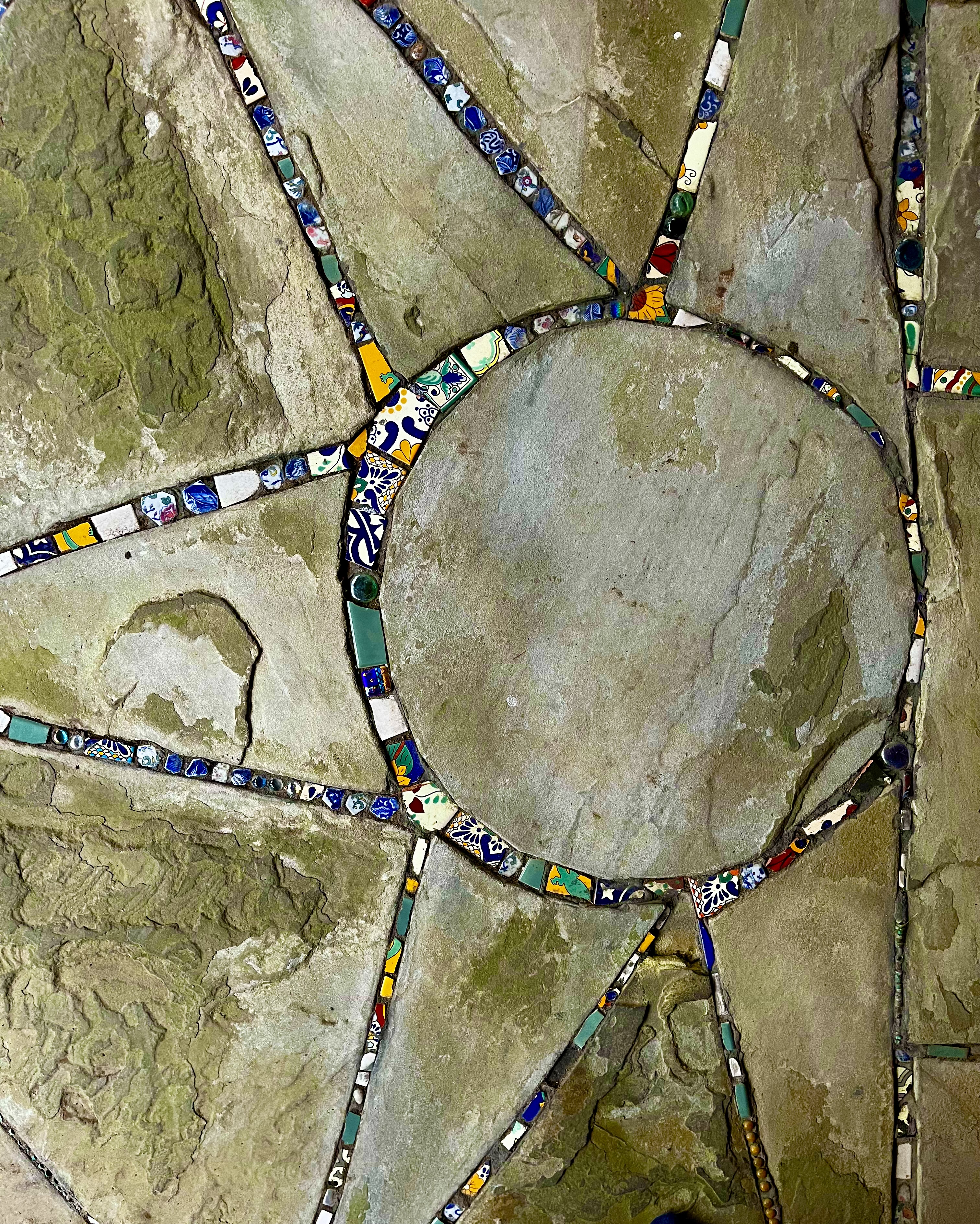
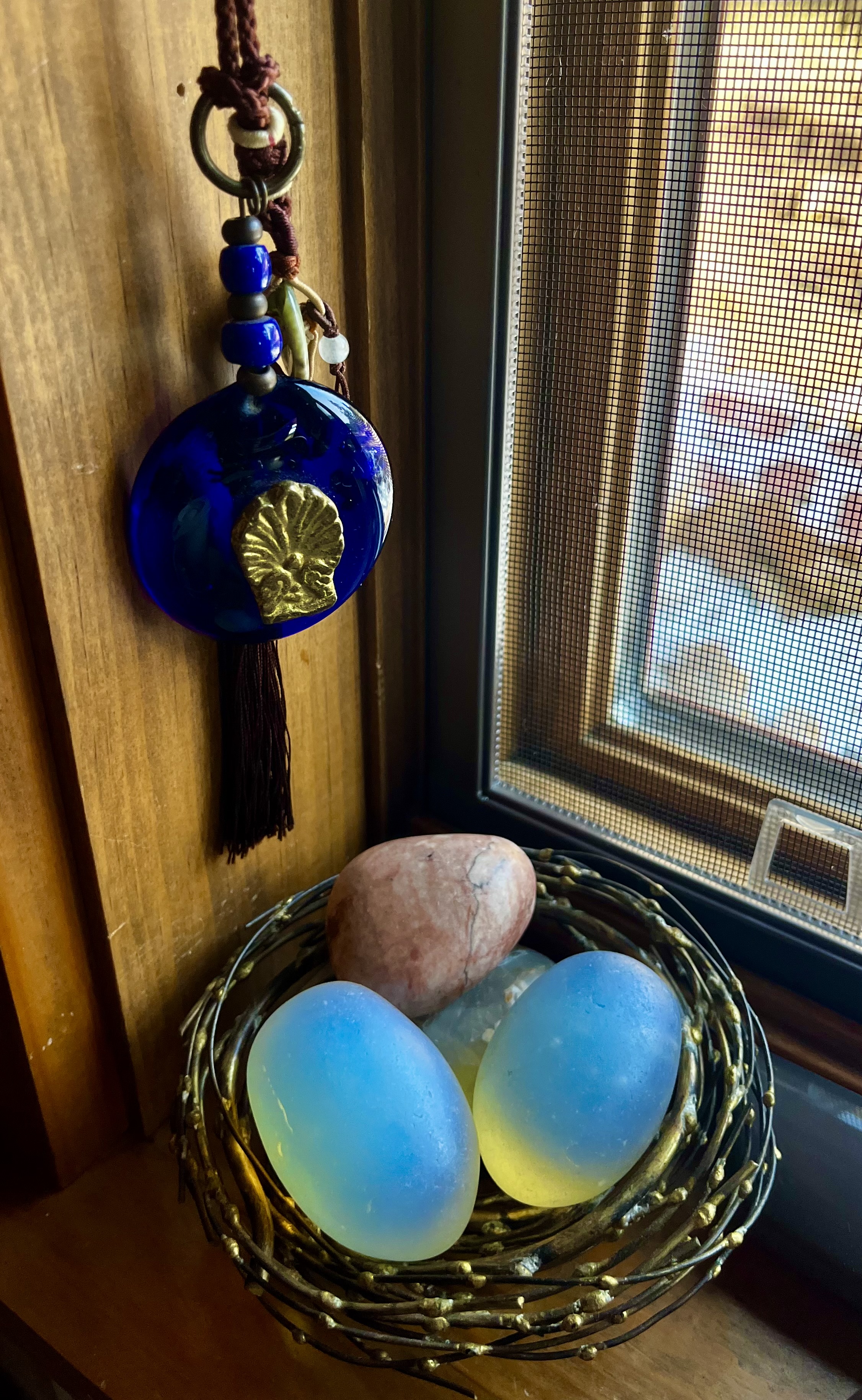
It was two years since we had last seen each other, but we fell into conversation easily, as friends generally do. I noticed the changes in her home and property since the last time I was there. A large shed had been renovated and turned into a gallery for on-site weekend art shows, there were now two cats in residence, and she started an outdoor project of reconfiguring stone pavers by outlining them with colorful pottery and pieces of glass. I picked up an alabaster egg on a windowsill to admire its smooth shape and beautiful translucency in my hand. She insisted that I take it home.

When we went into the studio to view the painting, Jane showed me a recently finished piece entitled “Congregation”. It was colorful and typical of her “primal modern” style which emanates from her dreaming-while-awake imagination. Then she moved “Above the Bridge” to the easel for my viewing. And I just knew. This was going to be my painting.

The question is why? What resonated? Like so much of Jane’s art, there are layers upon layers to see and feel and think about. Then you bring your own meaning to it. The details I first noticed were two small black figures “under the bridge”. One is swimming strongly onward; the other is rising to the surface with one arm extended straight upward.


Musing about these small figures under the bridge with the larger world painted above the bridge struck me as symbolic and meaningful. Right now. These are actions to aim for; onward and upward. For anyone, for everyone.

In the current American climate, where everything is moving in the direction of political dismantling and destruction, many people want, and need, to find what can be done now, while also moving toward the future. Then I thought; these are the same movements–the actions we take in the present are what we will continue to do in the future.
Poets, artists, and writers are often sources of inspiration about what is needed in trying times. Art cuts deep to the marrow of reminding us how to refocus and get moving in stressful times, whether personal, cultural, political, or global.
Almost every generation of Americans for the past 250 years has encountered and eventually survived some kind of catastrophic period; revolution followed by war, destructive civil war, two world wars, years of severe economic depression, McCarthyism, a decade of political assassinations and riots, the unpopular 10-year Vietnamese war, murderous terrorist attacks, devastating viral pandemics. Just as it seems that so much changes within generations; history teaches that great things can, and do, persist after turmoil.
We all have a part in shifting the story. –Joy Harjo, 23rd U.S. Poet Laureate
Inside the head spinning turn of extreme change our democracy is currently undergoing, what part, as Harjo suggests, can we play in shifting the story?
It’s really the same part we play throughout life. First, we learn, we adapt, and we move forward with what we can control. Adaptive change often means taking on complex challenges that seem impossible in the beginning. Staying immobilized doesn’t help the situation. You have to try. Like the feeling a piece of art instills, we bring the meaning and sense to what can change and what we can change.
I read a story about a woman, Maureen Morris, who opened a coffee shop called Back Street Brews in a small, politically polarized Virginia town several years ago. During a time of stridently vocal opposing sides, she pushed the notion of a gentler America inside her café. Everyone was welcome to openly discuss their views, but there would be no attacking or judging. “If it comes up, as long as it’s respectful, you can talk about whatever your beliefs are…If you are a staunch this or staunch that, I always say, keep that out of here.”
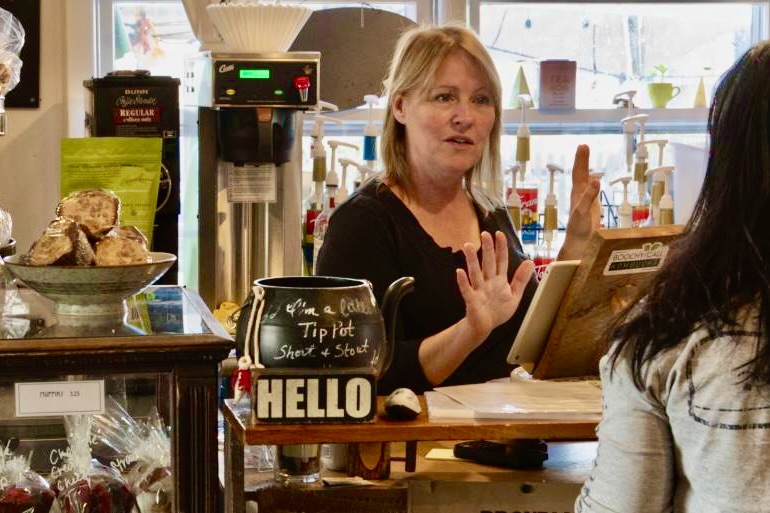

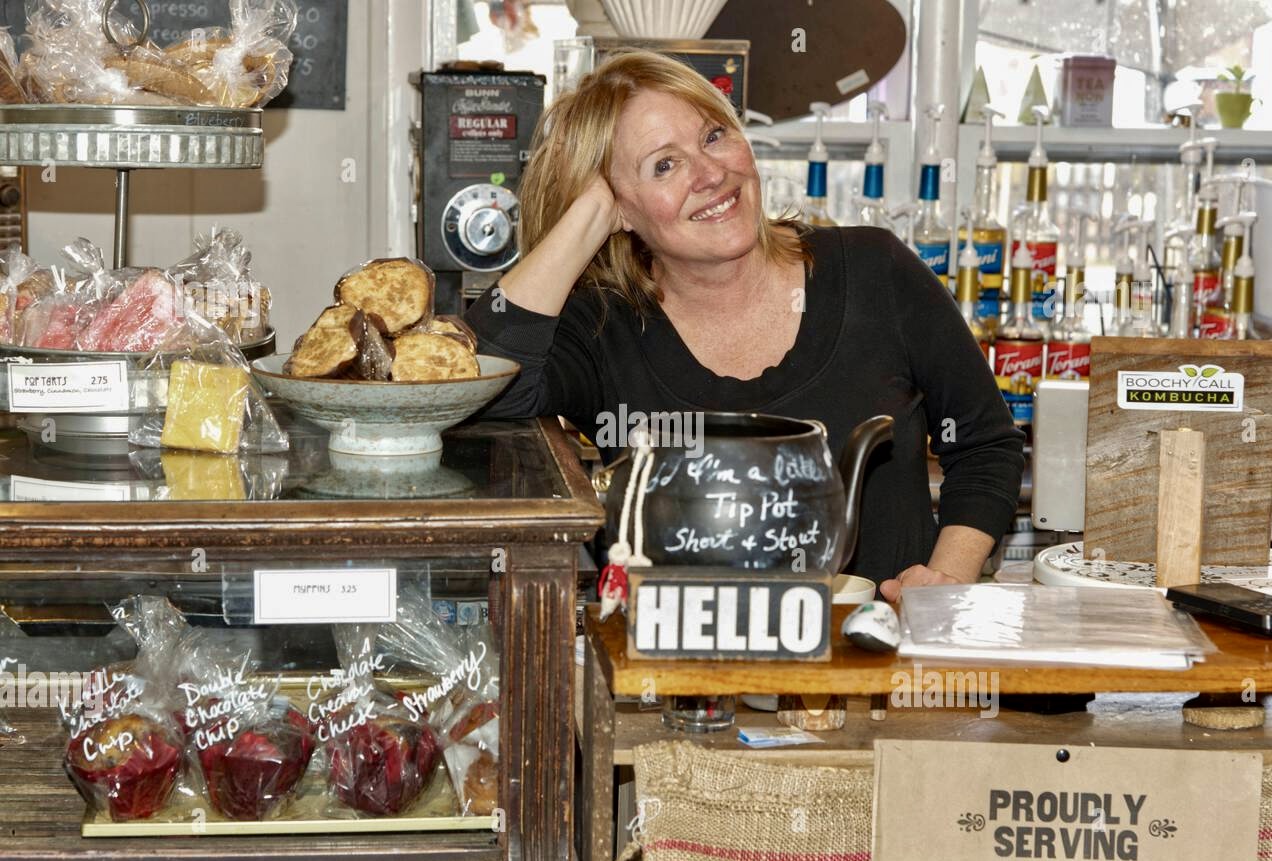
Customers began asking about each other’s family or simply shooting the breeze over coffee. Discussion groups of varying topics began showing up. Maureen’s café became known as a quiet force of civility while crossing the political divide inside a public space. Neighborly ways, respect, and social ties persist.
Ordinary people created a community where they listen and speak to each other without shouting. All due to one woman’s insistence that, amid the divisiveness of an era, she would lead from the strength of her beliefs. “It’s affecting people. Not me. Not in my bubble. We’re going to be fine, everyone! We’re going to land on our feet in my coffee bubble.”
This is how an individual shifts the story. By accomplishing small things that perhaps no one notices in the big picture but has real impact on people’s lives. Everyday lives. We nurture and nourish everyone in our circle of family, acquaintances, friends. We take care of ourselves. We stay true to our values.
Because there is a remnant of change that begins with one act of kindness, one spoken truth, one considerate conversation, one shared laugh, one poem, painting, or story. These are ways to move the narrative.
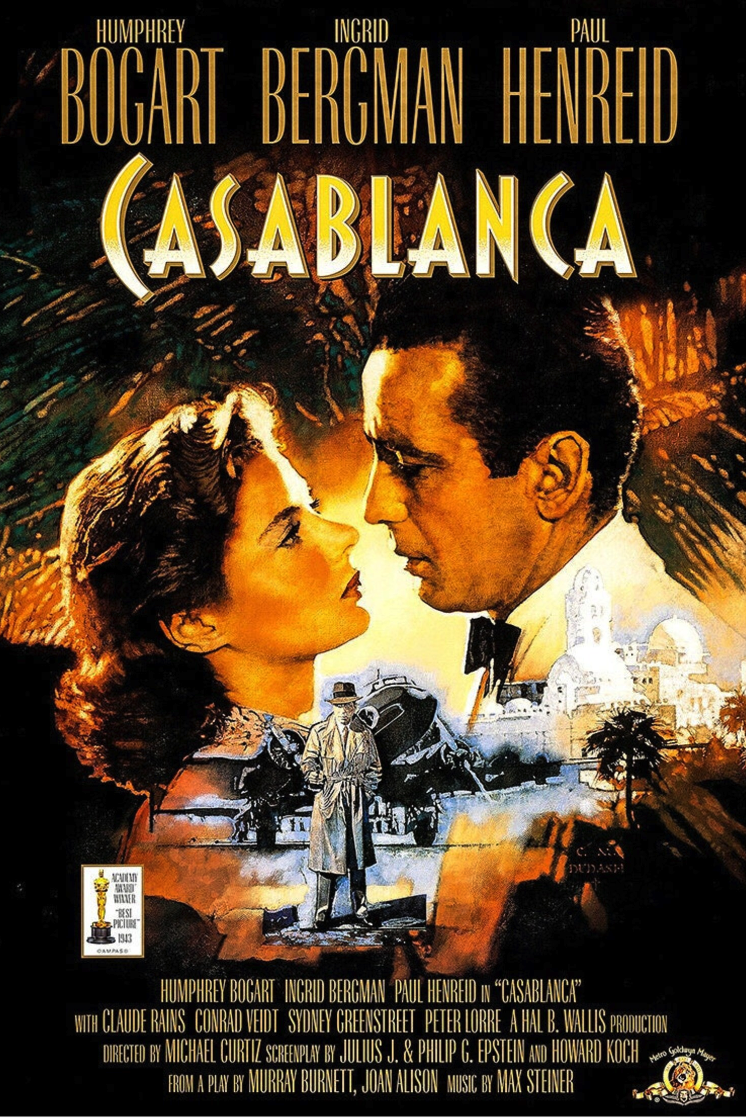
A brief scene in the old Hollywood movie, Casablanca, with Humphrey Bogart and Ingrid Bergman offers another example of one person’s action to restore balance.
During a busy evening in Rick’s American Café, a casino and piano bar in Casablanca, there is a scuffle when the thief Ugarte is discovered by authorities. After Rick refuses to hide him, Ugarte is hustled out in a loud commotion surrounded by police. The music stops and customers sit mutely, in stunned silence.
Afterward, Rick (Bogart) apologizes for the uproar, reassures everyone that the trouble is over, everything is all right, and they should continue having a good time. He speaks calmly to the crowd, tells Sam to resume playing, and without breaking stride re-rights an overturned wine glass on a table.
…the saloonkeeper’s cool response to Ugarte’s arrest and his instruction for the band to play on could suggest a certain indifference to the fates of men. But in setting upright that cocktail glass in the aftermath of the commotion, didn’t he also exhibit an essential faith that by the smallest of one’s actions, one can restore some sense of order to the world? –Amor Towles, A Gentleman in Moscow
As we find our part in “restoring some sense of order”, we also climb “that great big hill of hope”. And make it a destination.
Poems and songs are written to get our minds thinking…in an unexpected way.
TROUGH

There is a trough in waves,
a low spot
where horizon disappears
and only sky
and water are our company.

And there we lose our way
unless
we rest, knowing the wave will bring us
to its crest again.

There we may drown
if we let fear
hold us with in its grip and shake us
side to side,
and leave us flailing, torn, disoriented.

But if we rest there
in the trough,
in silence,
being with
the low part of the wave,
keeping our energy and
noticing the shape of things,
the flow,
then time alone
will bring us to another
place
where we can see
horizon, see the land again,
regain our sense
of where
we are,
and where we need to swim.

–Judy Brown
...Come dance with the west wind and touch on the mountaintops
Sail o'er the canyons and up to the stars
And reach for the heavens and hope for the future
And all that we can be and not what we are...

–John Denver, song The Eagle and the Hawk, 1971
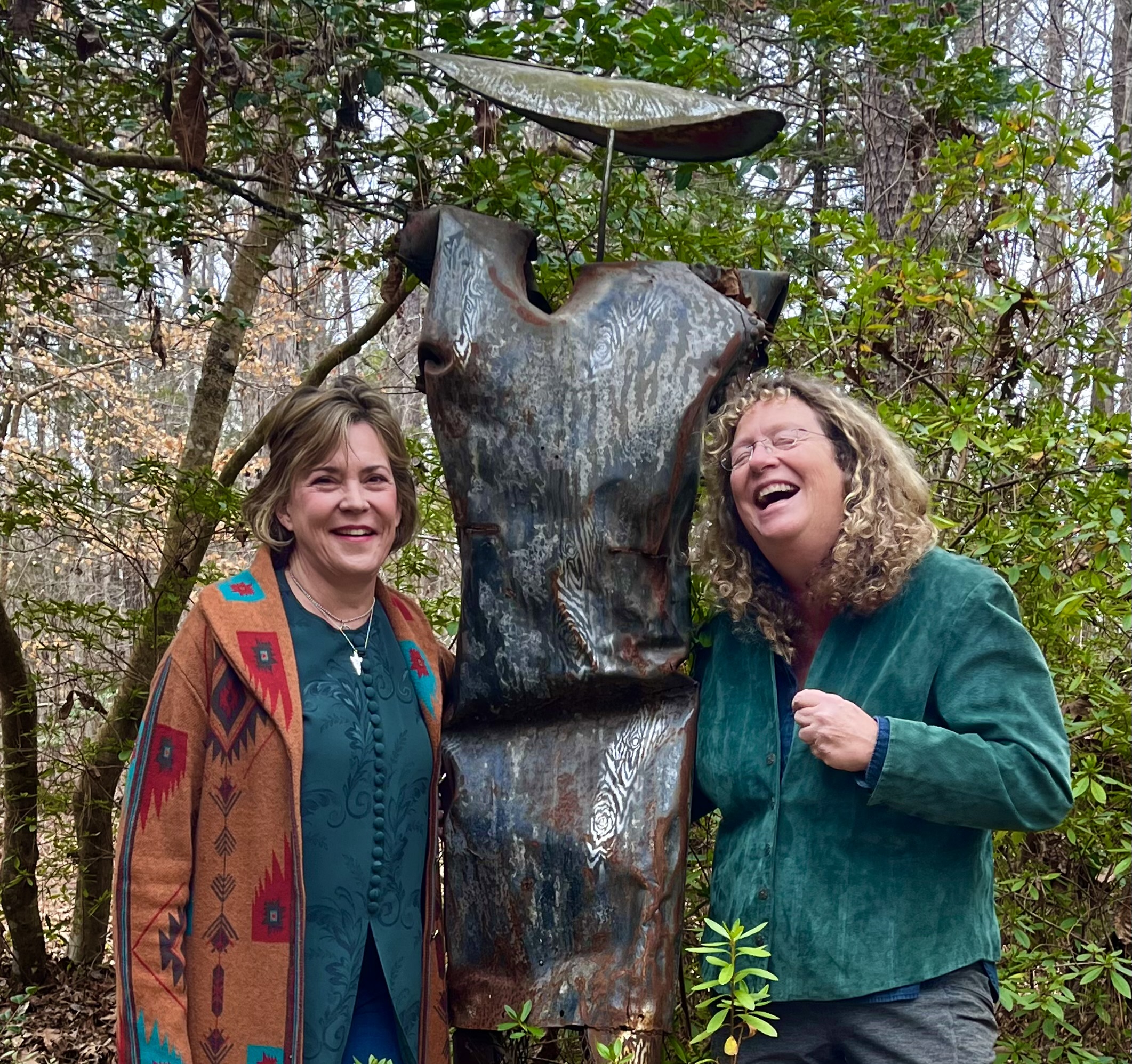
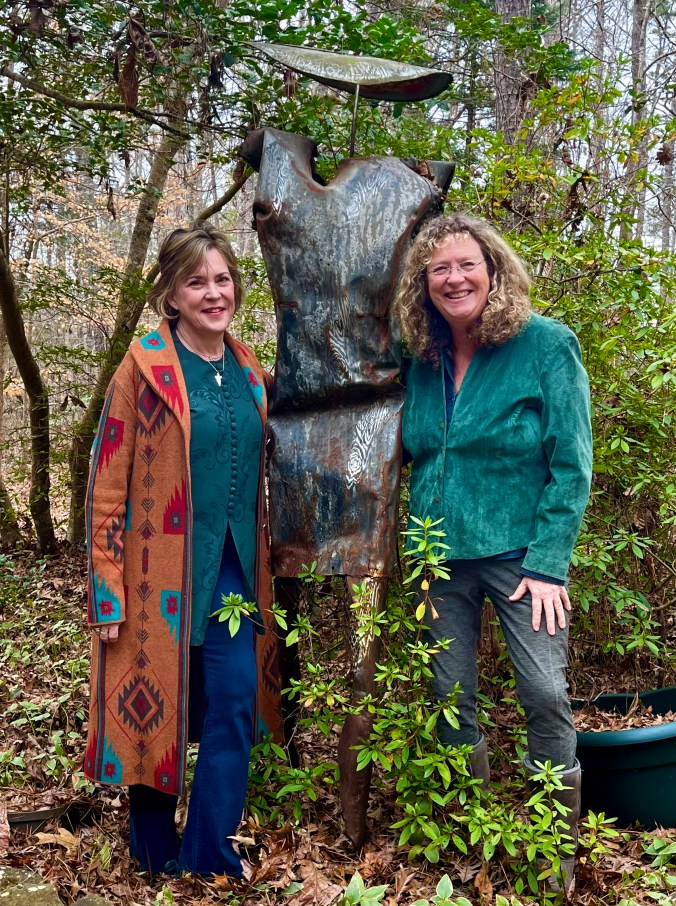
Fun Final Photo Shoot:

Discover more from A Taste of Mind
Subscribe to get the latest posts sent to your email.


Another wonderful article. So interesting that I hated when it was over. And those gorgeous pictures!! Thanks Wendy, it’s always delightful to get your emails.
LikeLiked by 1 person
Good to see your name in the comments, Carol!
LikeLike
So many things I love in this article! So many of my favorite things. Art, of course and the painting is beautiful!! Casablanca, a classic! A book that will be on my library shelf with a note for all my people to read it now and after I am gone, A Gentleman in Moscow. I think you hit all the highlights, along with the caveat of, can’t we all just get along!
well done!!
LikeLiked by 1 person
Catherine, Yes to everything you wrote! All true for you, and me. Books, art, movies round us out in all the right ways. And since you and I get along so magnificently, why can’t the rest of the world follow our lead? Carry on by example I say!
LikeLike
Thanks, good Wendy! We have a common interest in meaningful art. I hope you and M are well!
LikeLike
Love your mind Wendy. I needed this today while I contemplate the possibility of murder and mayhem in the small town we where grew up in India. A Hindu is threatening to murder all the Christians in the village – people Patricia and I grew up with – on March 1. I am holding on to hope that some brave souls will intervene. I am heart sick. There is no poetry that comes to me for comfort. I am battling bureaucracy, indifference, unbelief, and apparent acceptance of genocide. Prayer and hope.
LikeLiked by 1 person
Cate, What devastating news. I am heartsick for you and Patricia, your brothers, and all those you know in the village. I will search my poetry file. There may be something I can offer from there. I emailed you the one I was looking for and added it to the story ending. Stay strong in your hope and beliefs.
LikeLike
A beautiful piece of art and a beautiful piece of writing.
Thank you! :)
LikeLiked by 1 person
Art (and coffee!) — along with respect and kindness — will sustain us in these trying times. Thanks for highlighting this truth.
LikeLiked by 1 person
Great blog post, Wendy! I hope to see the painting soon, too. Very thoughtful comments which I can entirely agree with. Would love to chat about this sometime at your convenience.
LikeLiked by 1 person
All things discussable between us!
LikeLike
Thank you so much Wendy, much needed message and gorgeous art! Kxxx
LikeLiked by 1 person
Karen, Thanks for adding your comment. Nice to see your name. And I still like my Paris AngloInfo newsletters from your office!
LikeLike
Small Kindness
— Danusha Laméris
I’ve been thinking about the way, when you walk
down a crowded aisle, people pull in their legs
to let you by. Or how strangers still say “bless you”
when someone sneezes, a leftover
from the Bubonic plague. “Don’t die,” we are saying.
And sometimes, when you spill lemons
from your grocery bag, someone else will help you
pick them up. Mostly, we don’t want to harm each other.
We want to be handed our cup of coffee hot,
and to say thank you to the person handing it. To smile
at them and for them to smile back. For the waitress
to call us honey when she sets down the bowl of clam chowder,
and for the driver in the red pick-up truck to let us pass.
We have so little of each other, now. So far
from tribe and fire. Only these brief moments of exchange.
What if they are the true dwelling of the holy, these
fleeting temples we make together when we say, “Here,
have my seat,” “Go ahead—you first,” “I like your hat.”
LikeLiked by 1 person
This is an amazingly sensitive and beautiful comment. Thank you for finding my story and contributing your sentiments.
LikeLike
Thanks Wendy. We can all use some Hope for sure.
xx Heather
LikeLiked by 1 person