
Joseph Campbell, mythologist and philosopher, wrote,
A ritual is an enactment of a myth. And, by participating in the ritual, you are participating in the myth…But you don’t know what you are doing unless you think about it. That’s what ritual does. It gives you an occasion to realize what you are doing so that you’re participating in the energy of life. That’s what rituals are for; you do things with intention…you learn about yourself as part of the being of the world…
Campbell also said,
Mythology is poetry, it is metaphorical…it is beyond images. Mythology pitches the mind beyond that rim, to what can be known, but not told.
Herein lies the challenge–to tell a story that for the past two months has been beyond the reach of my words. It is rooted in a ritual with pagan origins. It was part of the wedding of our son and his Latvian/Russian bride.

In a countryside setting outside of Riga, Latvia, June 12 was as perfect as a summer day can be anywhere in the world. There was warm sun and a light breeze. Cloudless sky. Lapis-blue lake and a field of soft grass. A ceremonial framework of boughs entwined with flowers. Shared vows in Russian and English. Radiant smiles. Applause, joy, and love.


The after party began with a scavenger hunt and Champagne for guests as the newlyweds were whisked away for photos. Upon their return, the celebration continued with good food and drink, fantastic music, poignant toasts and funny speeches.
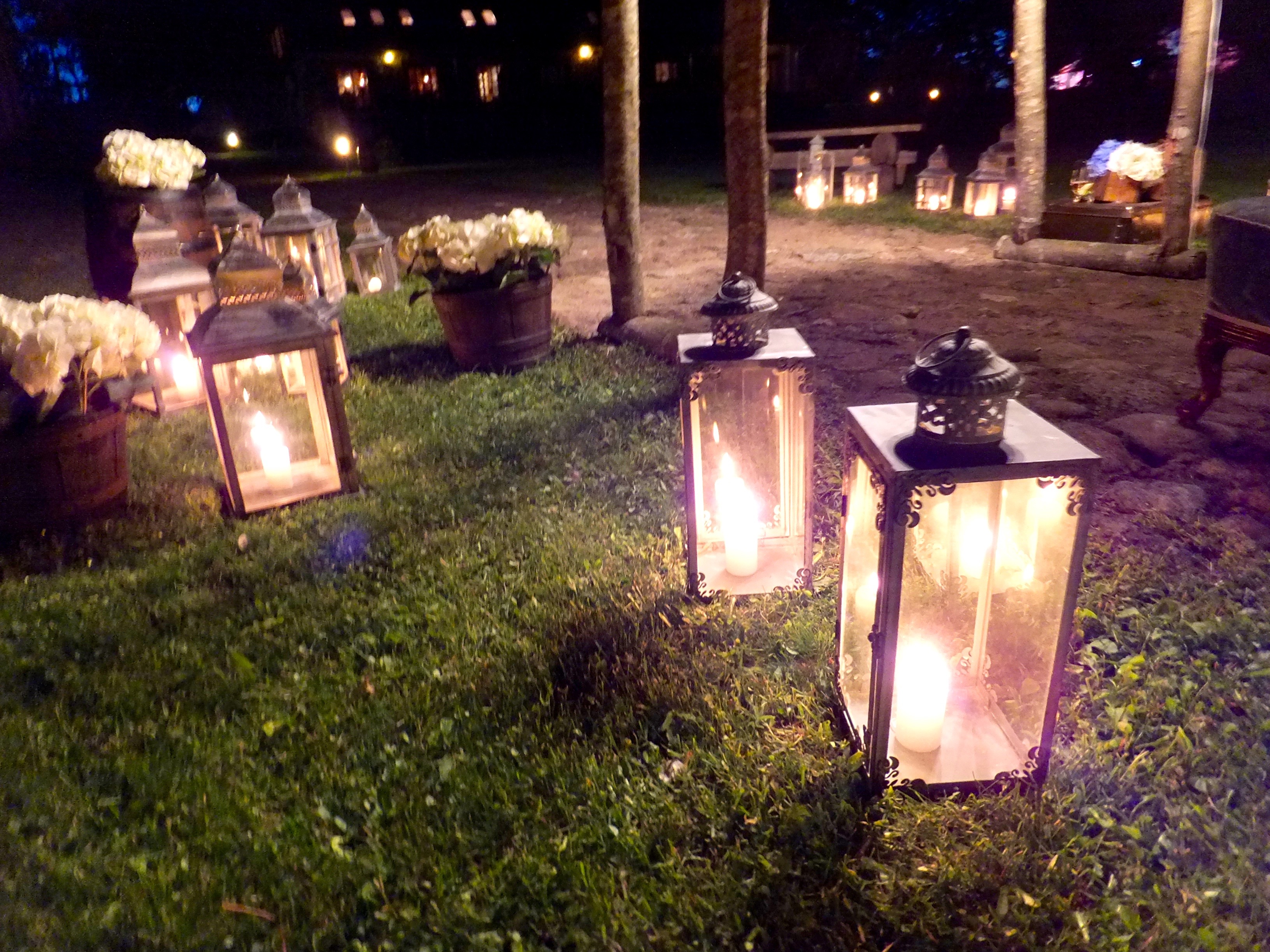
Just before midnight, the band music stopped. All of the guests were ushered from the party tent, down the hill, to the wedding site near the lake. Glowing candle lanterns lit the darkness. Blankets were offered for the cool evening air. There was a young man playing soft guitar music. Two chairs had been placed beneath the framework of boughs and flowers. The mothers of the bride and groom were instructed to sit on the chairs. Then our children sat on our laps. No one understood what was happening, but we were entering an ancient Latvian myth.
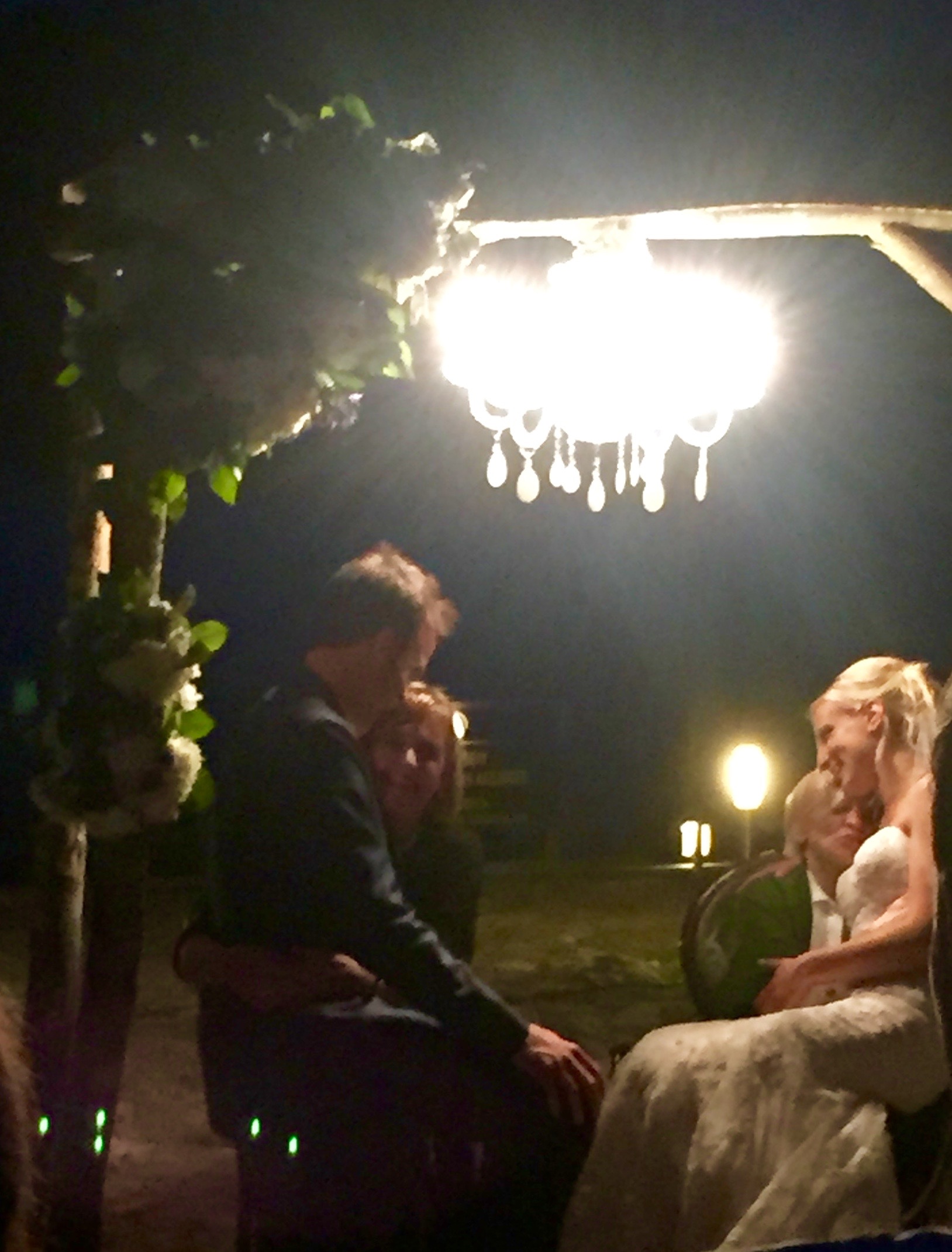
Mičošana [pronounced “Michuashana”] is a Latvian wedding tradition that dates back to [pre-religious] pagan times. It symbolizes the moment when the bride becomes a wife and the groom a husband. It is a way of saying “goodbye” to childhood and home. In this enactment, there was an unspoken tribute to both mothers as we held our children one final time before they passed into adulthood and the creation of a new family. It is a sweet, sad, and somehow romantic experience.
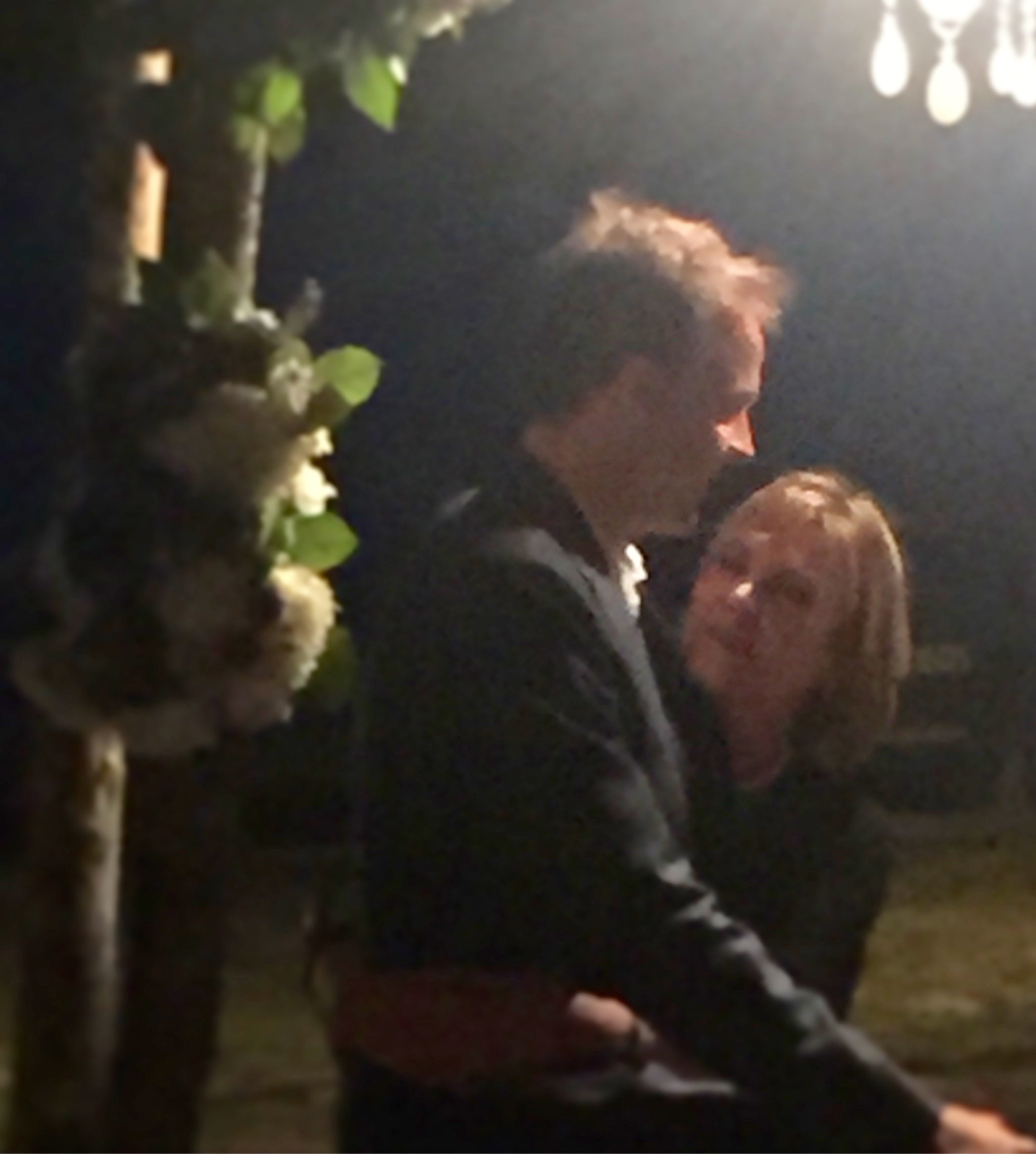
Historically, Latvia was a country of peasants living and working on large farming estates under a feudal system. Girls typically married boys from settlements far away. Mičošana became a ritual of farewell. After marriage, the bride would live on her husband’s settlement, rarely seeing her own family again. The ceremony symbolized “giving the bride away” because it severed ties between the girl and her family.
Here is how it went 21st century style. Midnight–the end of the day and the beginning of a new day. With soft background music and married children on our laps, the bride’s mother took off her daughter’s veil and placed it into a box. She tied a ruffled apron around her daughter’s waist.

I placed an engraved wooden pipe in my son’s hand. The bride and groom stood together with their symbolic accessories and read aloud the roles they would now assume. This was the lighthearted version of contemporary Mičošana, with laughter too. Choosing from a basket of printed cards the bride read, “I will drink beer and be the master of the remote control.” The groom, “I will always be very pretty and sweet.”
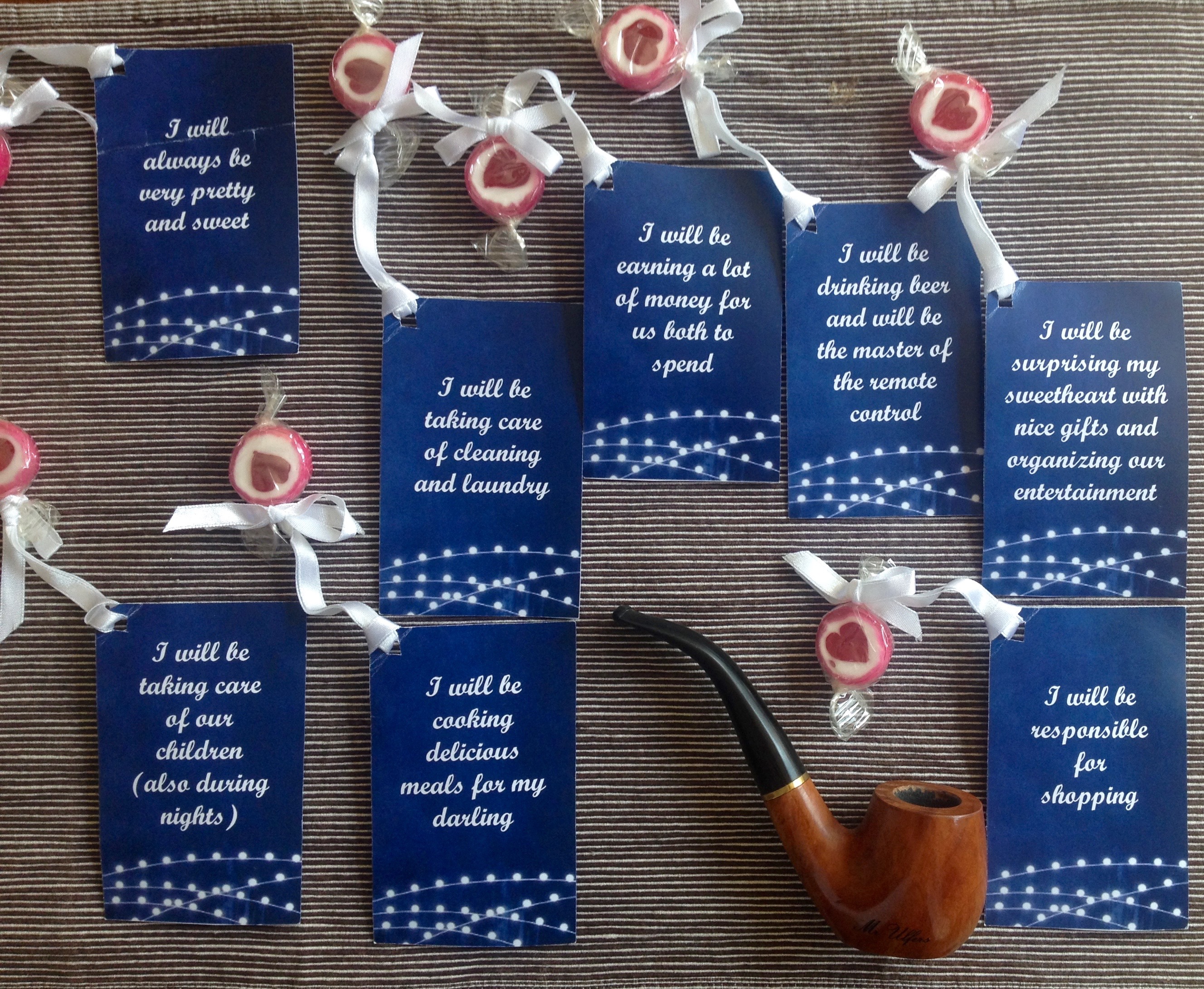
The readings went on for several minutes. The bouquet was tossed by the bride as the guitar music faded. People began to drift uphill to the tent where the party continued until the sun rose. But something very special had happened. I didn’t know what it meant. I didn’t have words to describe it. I only knew how it made me feel. And I couldn’t stop thinking about it.
Walking across the grassy field, the bride’s mother and I linked arms. She turned to me and said softly in her rudimentary English, “Wendy, when babies come, 50/50, okay?” I wrapped my arm around her shoulders and said, “Of course, Tanya. 50/50. Always.” It was another unexpected moment. Her overture touched me. The meaning behind the words was heartfelt and real. First women, then mothers, and now a multi-cultural family bound by our children.
As I learned more about Mičošana, the symbolism became clearer. Our son and his wife have assumed roles in an international marriage. It will take our daughter-in-law far from her Latvian family home. She will undoubtedly see her parents and family less and less often. The bittersweet midnight ceremony was the same parting experienced by generations of brides over thousands of years.
I believe Campbell. Myths are important. Rituals are important. Poetry is important. Symbolism runs through ceremonies from ancient times to the present. Because of our thinking nature, we strive to understand the meanings underneath. This helps awaken us to our place in the circle of life.
Campbell’s words, again: “…by participating in the ritual [with intention]…you are being put into accord with the wisdom of the psyche, which is the wisdom inherent with you anyhow. Your consciousness is being reminded of the wisdom of your own life.”
This is what we hope for all of our children. We wish for them to grow into the wisdom of their own lives.

SOLYANKA [pronounced Sahlahnka] aka HANGOVER SOUP
Partying continues well into the day after a Russian/Latvian wedding. A thick hearty soup of salty, cured meats and sausages is usually on the menu after a night of drinking. It hits the spot with its rich meaty stock, briny pickles and vegetables, garnished with sour cream. Although there is a vegetarian form, meat solyanka is more common. I fell hard for this delicious taste at Jumurda Manor. Anna and I made a version in her London kitchen. The key is a lot of sour and salt in a rich broth. Ingredient proportions are flexible. Rice can be substituted for potatoes. This is an “everything but the kitchen sink” kind of soup. It tastes so much better than you think it will!
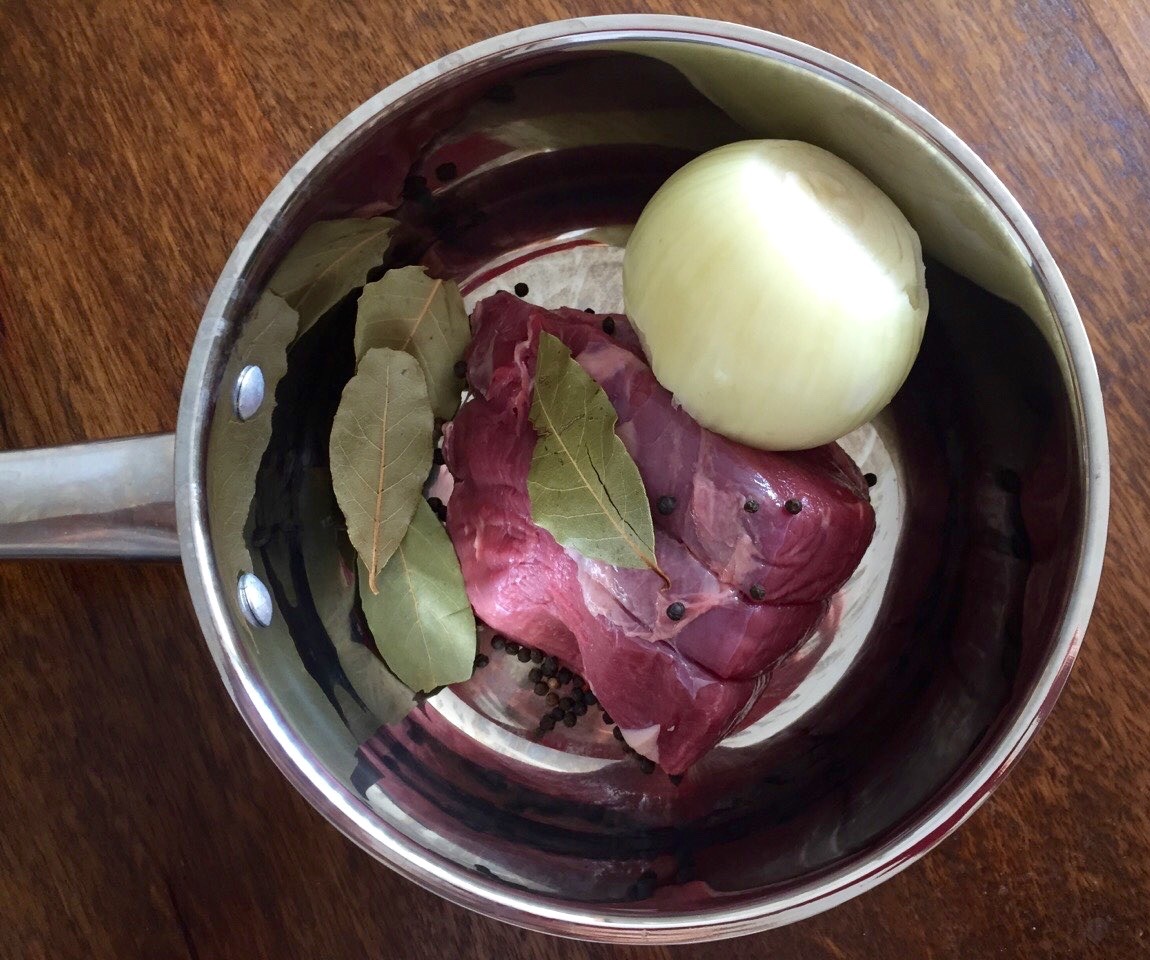
MAKING THE BROTH
- 300 gm lean beef rump
- 1 whole onion, peeled
- 4 bay leaves
- 1 T. whole peppercorns
In a saucepan, cover broth ingredients with water. Boil uncovered over medium heat for 30 minutes. Take out onion and discard. Continue boiling until the meat is cooked through, about 1.5-2 hours. Add additional water to keep meat covered and to build up broth. When meat is tender, take out to cool slightly. Skim fat off top of broth.
NEXT STEPS
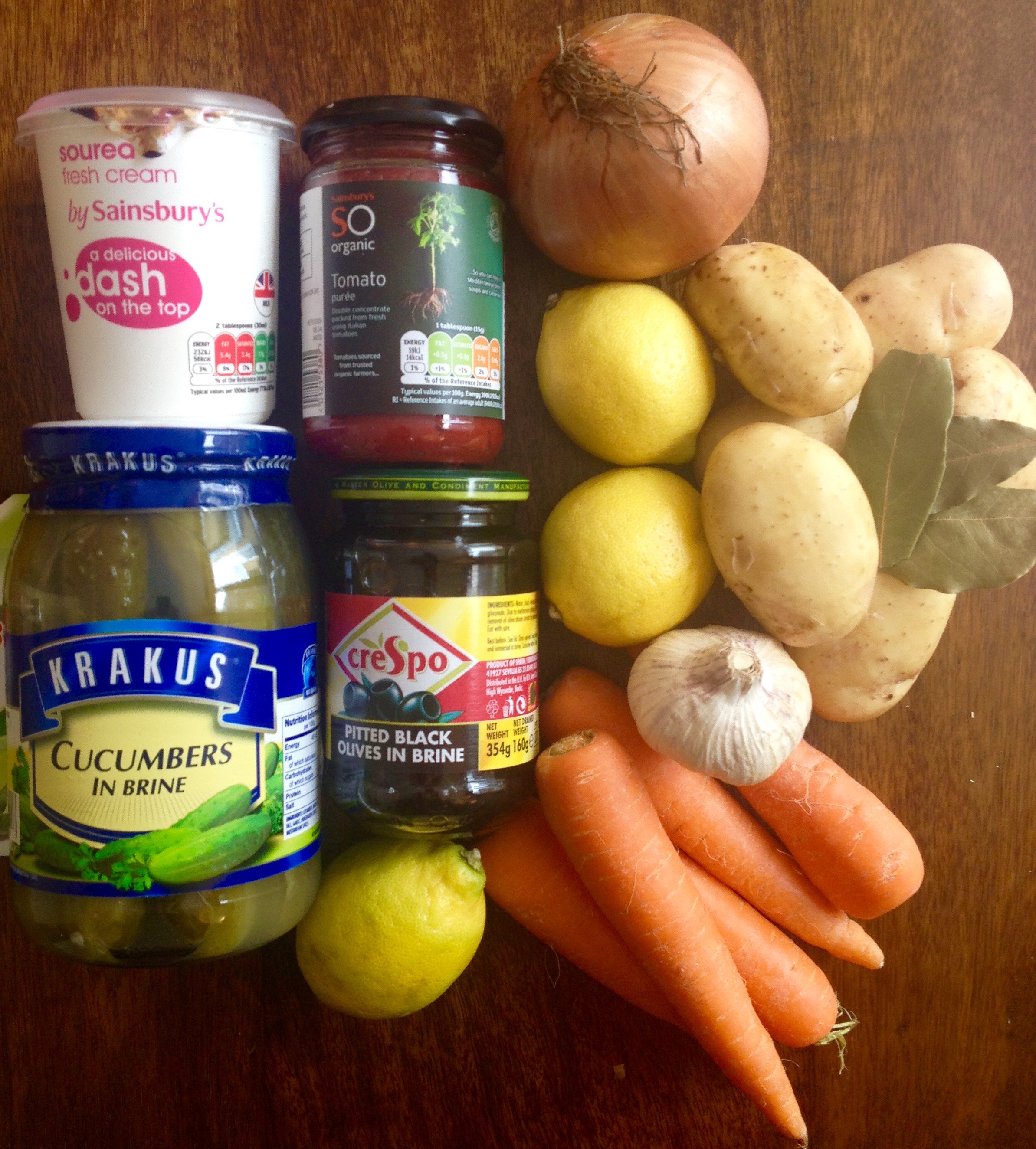
- 200 gm Polish sausage
- 100 gm good German ham
Cut cooled beef, sausage and ham into julienne strips. Cube some potato. Place in broth to simmer.

Chop ½ onion and sauté in olive oil. Add julienned carrots and ¼ cup [or more] tomato paste. Continue sautéing for a few minutes then add all of this to stock.
Place sliced meat in skillet to warm slightly. Then add to stock.
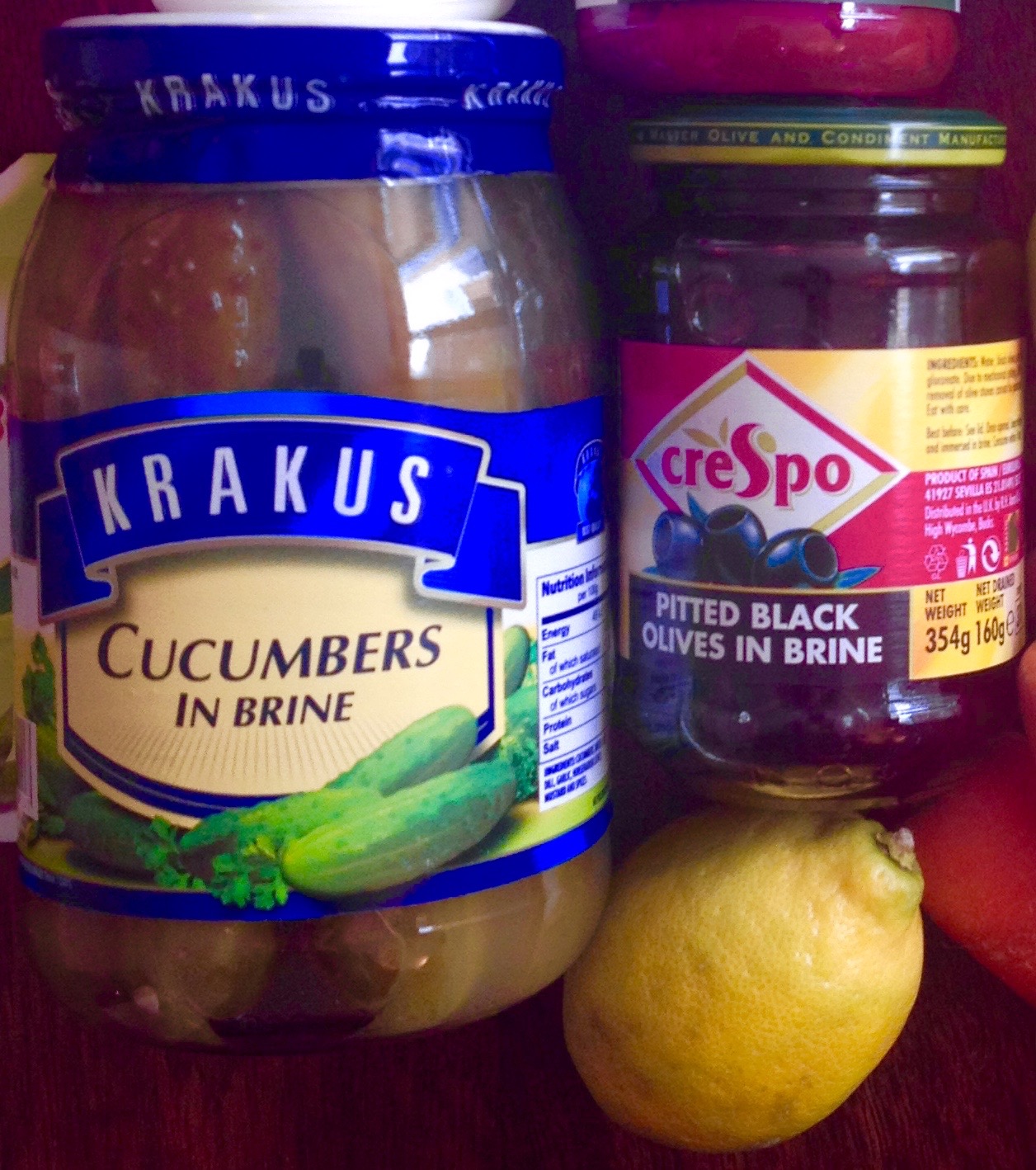
IMPORTANT FINAL INGREDIENTS
- Jar of cucumbers in BRINE. Different from regular pickles. Saltier. Brinier. See photo.
- Black olives packed in BRINE
Stir in julienned cucumbers, whole black olives and ¼ to ½ cup [or more] of the brine.
When potatoes are cooked, turn off heat. Salt and pepper to taste.
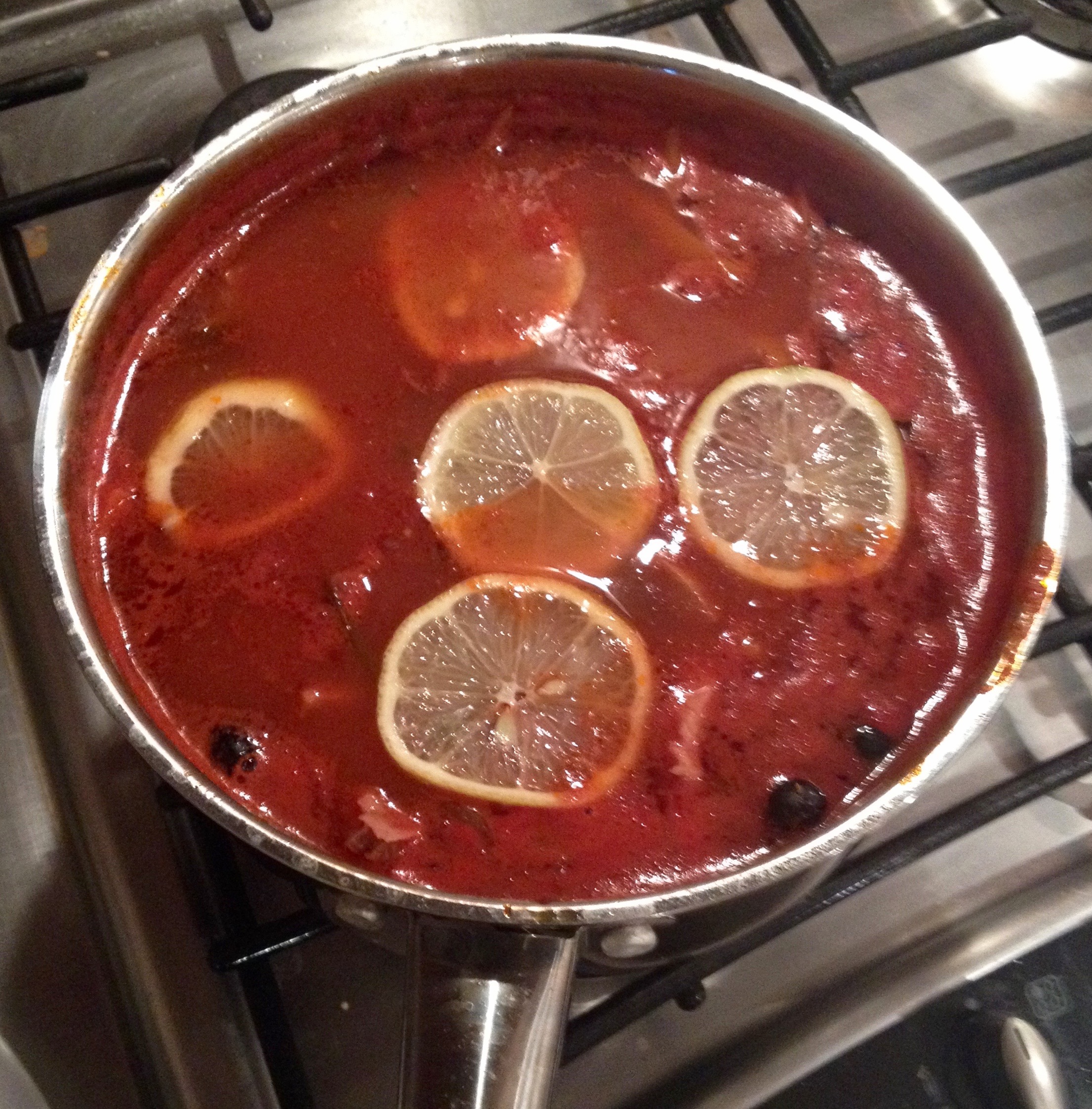
Slice fresh lemons into circles and place over top of soup. Cover pot and let sit about 30 minutes. Remove lemons. Serve garnished with a large dollop of fresh sour cream.
Delicious and nutritious even without the hangover.

Discover more from A Taste of Mind
Subscribe to get the latest posts sent to your email.


Absolutely your finest effort! I am still laughing, crying and remembering-it was certainly a touch of magic for all of us❤️Molly
LikeLike
Wendy- a magnificent piece. I enjoyed so much learning about the myth and ritual you entered into. I can tell from your writing that you sensed the unique and powerful energy that events like these provide. Thanks for giving us a glimpse. Aaron
LikeLike
Wendy – what a beautiful story about traditions and your son’s wedding. Congratulations! It sounds wonderful and special. Hope all is well in Paris.
LikeLike
What a wonderful and special wedding! Thank you for sharing this. I am not sure that I would do very well with having my son (either of them) on my lap.
By the way, I do hope the soup tasted better than the ingredients sound- I am struggling a bit with the briny cucumbers.
LikeLike
Lisa, The soup is truly delicious! Don’t think so much about it, just try it and see. You can alter the ingredients and flavors to your tastes, but the briny cukes and olives are a MUST. This one can’t have too much salty sourness. And the sour cream on top smooths everything together in a creamy way.
Also, that lovely tall young man used to fit quite nicely on my knees or cradled in my arms or piggy-back. And that is what I was remembering that night too…
LikeLike
Wendy – Your story makes my heart sing!! I can feel the love that surrounded you and Adam as your family grew to include Anna and her family. Congrats to you – and thanks so much for sharing your amazing life – much love to you –
LikeLike
Gail, my heart sings too when I hear from overseas friends! Thank you for being part of the extended blog “family”.
LikeLiked by 1 person
Lovely….
Your description of the wedding was wonderful. I felt as if I was right there.
Thank you for sharing. Blessings on this beautiful couple.
The “hangover” soup sounds delicious. Counting on you to concoct it for me one day…not so sure I can find those briny pickles and olives at my local Harris Teeter so leaving this challenge up to you!
LikeLike
“Walking back across the grassy field, the bride’s mother and I linked arms. She turned to me and said softly in rudimentary English, “Wendy, when babies come, 50/50, okay?” I wrapped my arm around her shoulders and said, “Of course, Tanya. 50/50. Always.” It was another unexpected moment. Her overture touched me. The meaning behind the words was heartfelt and real. Women, then mothers, and now a multi-cultural family bound by our children.”
…..To me, this was the heart of the story. Congratulations on years of love, understanding and always 50/50.
LikeLike
Diane, You are good at picking up themes of a “story within the story”. Although I probably won’t have frequent contact with Tanya, we will always have this special connection that remains true…
LikeLike
Wendy, Food and the written word. Both great gifts to share with others and two presents that you continue to wrap so very well! Enjoyed the article very much and cannot wait to hear more about the wedding.
LikeLiked by 1 person
Congradulations to Anna and Adam!
Thank you for sharing such lovely thoughts on their beautiful wedding ritual.
LikeLike
What a gift to transmit the depth and stirrings of such personal, yet universal moments, The poignancy of the instant shines through brilliantly from the cloud of the mutitude of memories which vie for attention as such events are revisited.
The richness of food and ritual in bonding disparate people is palpable. The power of childrens’ choices imposing challenges and changes to parents’ lives (in ways never imagined as they wended their way through child-rearing) is transmitted with deserved love and respect. Rites of passage are not trickle-down, but overflowing, touching the many who stand along the shores watching and loving and hoping and caring. Long and happy life to the newly weds and to their parents!
(Perhaps the ritual Solyanka should be rechristened Joseph Campbell’s Soup?!
LikeLike
Karen, I like your idea of renaming the soup [Joe Campbell] for our family’s purposes. Great metaphor and imagery! Done.
LikeLike